2010 Issue 1
March 01, 2010
Commodore Cathyann White's new-year message, a young North American B Fleet champion's training routine, the baseline hull-measurement of Ovington hull 8149, first impressions of the new GBR Ovington Albacore, Team Spot's 2009 season recap, a Canadians regatta report, Andrew Alberti on mark-room rules, and the 2010 executive.
Message from the Commodore
Ahoy Sailors and Happy New Year!
I hope you had a restful and happy holiday season and best wishes from the Canadian Albacore Association Team for a Healthy Happy and Windy 2010!
Your CAA Executive has been working on establishing a new list of events for the 2010 season. Thank you to our 2009 executive members who have passed on their torches; Michelle Arnot (training), Allan Measor (race calendar) Jelina Balic (Shackles) and Henry Pedro (class promotion). Welcome to our new executive members, Sarah Bury, Jefferson Hall and Ken Yamazaki. Sarah has some cool things planned and is lining up a team of expert facilitators while the snow falls. Jefferson Hall is also busy working on the coordination of the 2010 Race Calendar and is evaluating venues for the 2010 Provincial Championships.
I have been working through the International Albacore Association issues with our Chief of Specifications and Chief Measurer and team in the hopes that we may be able to move the situation forward in a positive way. You may recall, at the AGM in Hamilton in September, Raines Koby outlined some of the challenges we face as an International organization. Since then, meetings have taken place with the IAA and the USAA and now we are reconnecting with our UK counterparts to describe our needs and to devise a permanent solution. I plan to communicate with our CAA membership in a separate mailing on the status of this situation once we get a response to a recently sent letter with our recommended approach to get your feedback.
Until we resolve the administration of our Class issues, we are really unable to alter or re-define our current rules and so we are now trying to establish some clear deadlines for the IAA, RYA and NAA to follow in advance of the next season's start.
If you are in the mood for some great sailing - consider the Mid-Winters in sunny, warm Sarasota, Florida, March 19 - 21. I hear a number of Canadians plan to make the trip south to get in some early sailing. Stay tuned for a pre-CAA Training event planned for early spring.
I like to take the winter to re-connect with all those non-sailing friends I have abandoned during the regular season, do some curling and read sailing books - it helps me pass the time as I wait to get back on the water.
We will have a presence at the Toronto International Boat Show from January 9 - 17 as well, stop by the booth to say hello if you are in the neighbourhood. This is an annual event for us, and last year we connected with a number of folks who had lost track of the Albacore Class and ended up re-joining after making this connection at our booth.
Hey - have you checked out our new website? We are delighted to say that the re-launch of our new website has been completed and in the off season we will continue to update and add new content to populate this site. We think the new site is great! Henry Pedro, formerly our Class Promotion Chair began the work on the re-launch of our site some time ago. Warner Monteiro then approached us to let us know he was working with the USAA on a similar website re-launch and using a common program, was willing to have both sites hosted by the Waverate server at no costs.
This offered us a unique and cost effective way to realize our goal. Both Henry and Warner have spent a considerable amount of volunteer time to make this happen and now Ken Yamazaki assumes the role for Class Promotion and will take-over the continuation of the revamping of our website.
We now want to send out a proper public thank you to Henry and Warner for this effort and generous support of the Class.
Thank you to Warner Monteiro, Henry Pedro and Waverate Communications!
Otherwise - Stay warm and dream of sailing….
Till the snow melts,
Cathyann White
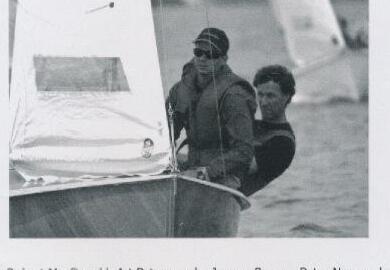
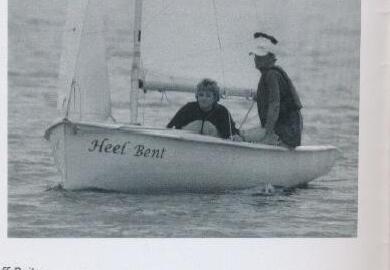
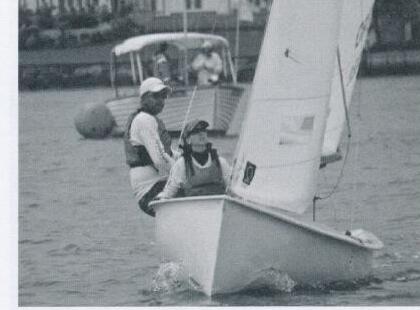
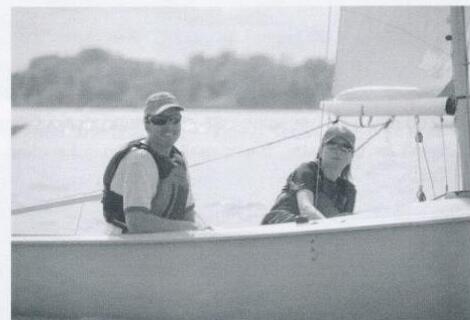
Editors' note: photos provided in this issue with thanks from; Tim Fisher, Robert MacDonald, Art Petrosemolo, Joanna Beaver, Peter Norwood, Jeff Beitz
Sincerely,
Cathyann White and the CAA Executive 2010
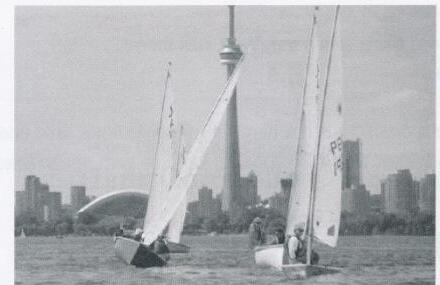
2011 Albacore Internationals
in Toronto
Come Sail with Us !
September 16 - 24 2011
Getting to Know a 2009 Canadians / USA / North American B Fleet Champion
Congratulations on winning the Albacore North Americans, Canadians and USA Nationals in 2009
What do you feel attributed to your success? How did you keep it together with the tricky conditions?
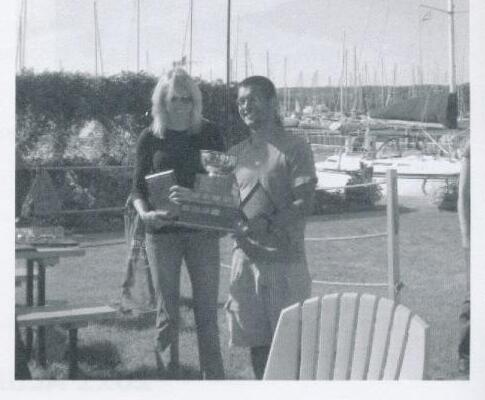
Time on the water, I think was one of the most important things that I could have done in 2009. Second, find someone who is as enthusiastic as you are and who is willing to commit to learning together. Third, remember that if your outhaul is set perfectly but you hit the leeward mark, you have just lost all that you gained on the down-wind leg, so keep your head outside the boat. I also kept a log of all the good tips that I received from various sailors and reviewed our mistakes. I believe that debriefing after each race is quite important and making notes so you can remember the good and bad points of each race.
In the Albacore it seems that "the more you know, the more you realize how much you don't know".
How long have you been sailing?
The 2009 season marked my third summer sailing. It all started at Mooredale Sailing Club the summer of 2007.
How did you get interested/involved?
Being from Rio de Janeiro a coastal city in Brazil, I have always been in contact with boats and the sea. It was something that I always admired. My father used to race a catamaran much like our famous George Carter but that was never passed down so I imagine with some subconscious "issues" (LOL) and the passion for the water, it was really easy to get sucked into our Albacore community, then when my competitive nature kicked in, 3 years have passed by and I can't get enough.
How much time did you put into your sailing in 2009? Days per week etc.
I have put a fair amount of time to improving my sailing. I attended every seminar that the CAA hosted and practiced as much as I could.
The weekly routine was something like:
Monday: Racing training at Mooredale
Tuesday: Race or trained with my usual crew (squeeze 30 minutes of practice before the race)
Thursday: Race or trained with my Friday Night crew (squeeze 30 minutes of practice before the race)
Friday: Friday night race series
Saturday: If the wind was blowing and there was a regatta, I was there!
Sunday: Harbour Master race series
I have always been involved in competitive sports so it is not hard for me to dedicate time and effort, it is the only way to become better. I know I am not a natural sailor, so I knew that if I wanted to keep up with my archrival (Jason McVeigh) I would have to practice, study and put the time in.
Training?
I think training is super important and I see a lot of people just racing and ignoring the benefits of going out there with another boat and just doing roundings and tacking duals, it is so beneficial.
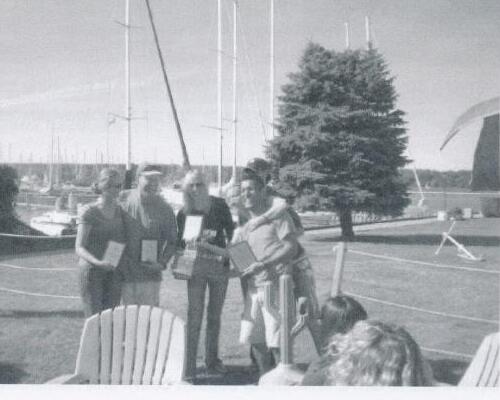
One of my coaches (Teresa Miolla) said that I had to have boat handling skills as if they were second nature. I always try before any race to do 10 tacks and gybes and different round markings. A couple days before a large event I like to go out and just practice the basics just to make sure that when we are in the "heat of the battle" we do not have to think about how to gybe around the mark but rather think on how we are going to catch the next boat.
Racing?
I love it. The feeling and adrenaline of the time counting down with 50 boats on the start line is what I wait for the whole week.
The 2011 Albacore Internationals are 2 years away, are you planning to attend? If so, how are you planning to prepare?
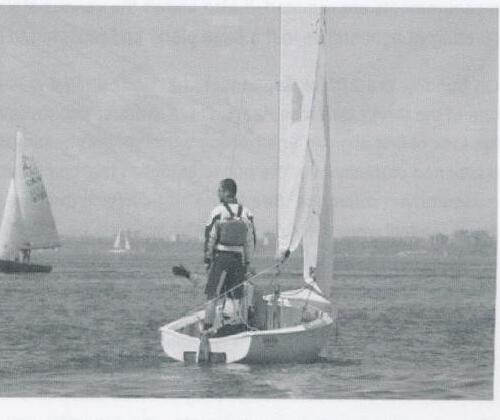
This is a little bit of a change. George Carter and I are putting a team together (7982). The Albacore fleet will have to deal with a British and a Brazilian trying to understand each other (this should be quite comical for the ones watching).
We, (actually George) have acquired an Albacore and we intend to learn everything about the boat by re-rigging, fairing the haul and updating the boat. This should provide enough of a challenge and we will spend enough time trying to figure things out that we should develop a sound knowledge of the Albacore boat.
We also have plans to practice twice a week with other teams and have the mechanics and communication in the boat sorted out.
We do believe that some form of physical conditioning is important during the long multi-day regattas so I might be banned from drinking beer during the week (but we will see..).
Note: the top of this article's title banner was clipped by the original scan/print margin — the interviewee's name is not recoverable from the source, though the subtitle and byline context ("North American B Fleet Champion") are intact.
Baseline Measurements of Ovington Hull 8149
Photos by Jeff Beitz, Article & Diagram by George W Roth
In August of 2009, the container returning from the International Championships held in Largs Scotland, arrived in Toronto with a new hull from Ovington Boats. This GRP 'cored' hull was built in England. Andrew Callum and Jeff Beitz purchased the hull with the provision that they would receive a record of the 50 data baseline measurement points as required by the International Albacore Class rules for an approved hull shape. These measurements were to have been completed in England.
The measurements are necessary for a hull to be certified by any one of the three National Albacore Class Associations. Due to a misunderstanding between Ovington, Speed Boats and the RYA, this measurement data was not available, so this hull baseline data measurement had to be undertaken in Canada.
Ontario Yachts is licensed by CAA to build Albacores in Canada and once a mould and production technology has been demonstrated to produce hulls which consistently meet both the letter and the spirit of the measurement rules, the difficult and time consuming job of carrying out a full 'template check' of all the hull baseline measurements is not considered necessary for every 'cored' GRP hull produced by OY. Since molded plywood hulls are so flexible when released from their mould, such full template checks are required for every such hull.
As Chief of Specifications for the CAA, Dave Weaver carried out a full template check on a 'cored' OY hull as well as several other wooden hulls for comparison purposes in 1989. The results proved the value of the measurement process in maintaining uniformity of hull shape (fair sailing). Incidentally, they also proved that the hull shape of the Mark II Woof hull measured had nothing to do with its apparent superior performance since its baseline measurements were as near perfect (down the middle of the tolerances) as any boat measured to date.
For the purpose of facilitating full template hull measurements, Dave Weaver developed some tooling which includes a 17 foot long, 5 inch square aluminum architectural section beam and hardwood fixtures for hull datum locations. These are used to establish the 'base plane' reference from which all of the measurements are taken. The enclosed diagram shows the fifty points on the hull where these measurements are required. It also shows the various stations on the accompanying profile diagram. The measurements are taken carefully at right angles to the base plane and recorded to the nearest millimeter as prescribed by the Class Rules.
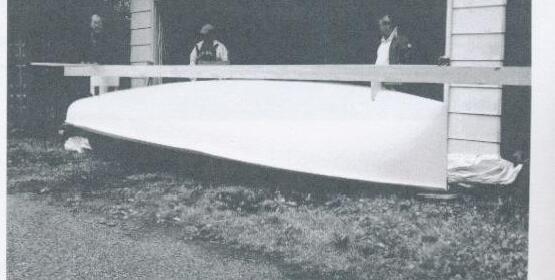
On Sunday, the 27th of September, Jeff Beitz arrived at Dave Weaver's Cambridge residence with the bare Ovington hull. John Morgan, one of the CAA class measurers, Dave Weaver and myself then set about the task of first aligning and making sure that the measurement jig was positioned correctly over the hull to establish the 'base plane' for measurement reference. See Photo 1. Following that, the station points along the hull were carefully measured from the transom (Aft Measurement Point) as specified in the class rules. Then the depth measurements below the base plane were taken at each of the required measurement points at each station along the hull. See Photos 2 & 3.
The process of data collection is necessarily rather slow to ensure the accuracy of the measurements. They showed that this Ovington hull shape is within the class requirements, and generally very close to the mid-point of the fifty points that define the Albacore hull shape.
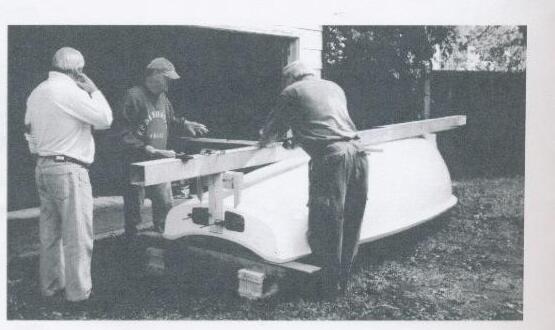
This means that this hull is basically down the middle of the target hull shape as specified by the rules, the way Ufa Fox had intended his initial design to be. It also makes it consistent with the data records of the OY hulls, and wooden built hulls by Richard Woof, Don Young and Knight and Pink.
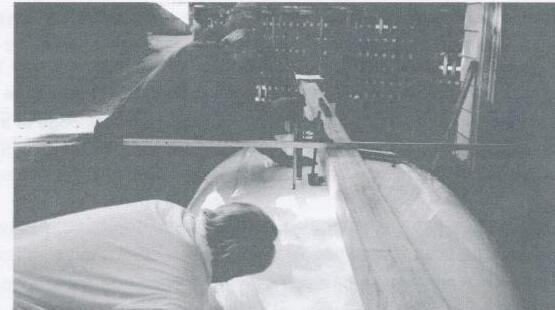
The photo on the right: Taking a measurement from the port 300 mm athwartships point at Station 5
Over the coming winter, Jeff and Andrew will complete the rigging of hull 8149. In the spring the remaining 65 measurements covering the interior, spars, foils, and sails will be completed. If all measurements are within specification, a Measurement Certificate will be issued the owners, allowing the boat to compete legally in Albacore class sanctioned regattas nationally and internationally. Thus, the Albacore Class in Canada will have a boat from a new builder on the scene.
Jeff Beitz and Andrew Callum are considering the importation of more of these hulls for rigging and resale under the banner "Georgian Bay Racing/Ovington" Albacore. See the press release within this edition of Shackles and Cringles.
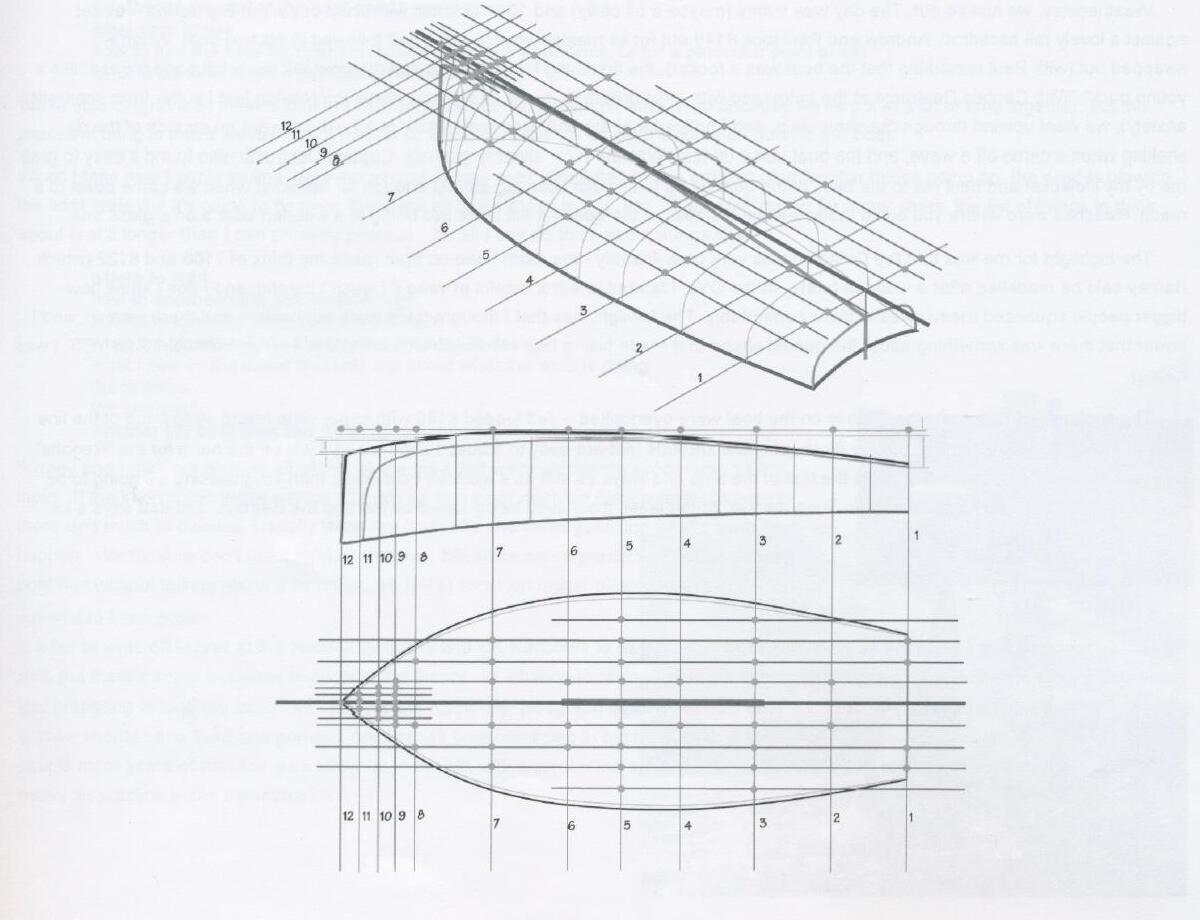
The fifty baseline measurement points, shown in 3D perspective and as profile/plan station diagrams.
The New GBR Albacore
Driving it like we stole it (except the owners are following us around in a motor boat)
It was suggested that I lay out my Albacoring experience so you know where I'm coming from. So, I did a year in various OY boats at Westwood Sailing Club, spent a season in 8030 (an OY), did the 2008 Ontario's in 8122 (HAPCO), and now crew in 7166 (JD Young). But please also bear in mind that I have the technical knowledge of a Ritz cracker (so Jeff Beitz has kindly helped me fill in some gaps). Also, I stupidly allowed David Harris to read this and some of his input has been incorporated (just to humour him – like how I pretend to listen to him when we're racing).
There is nothing better than sailing a brand new boat…except for sailing a brand new boat that doesn't belong to you. So when Jeff Beitz generously invited people to try the new GBR (Georgian Bay Racing) Albacore by Ovington Boats that he and Andrew Callum will be selling in North America, I said I'd be there along with my second string helm, Captain Destructo (his name has been changed to protect the innocent parties – namely me). With giant cups of coffee in hand, the Captain and I left Toronto bright and early for Parry Sound in the Captain's daddy's supercharged Range Rover that he didn't exactly have permission to take. But we figured that since we were driving a boat that wasn't ours, we'd do the same with the car.
My first impression of the boat when we rolled into the Georgian Bay Marina was that it was really shiny (remember, Ritz cracker). Paul Smith, also up to try the new boat, drew my attention away from the gleaming hull to point out the full bulk head, which was tied into the mast step, side tanks, side deck, foredeck and mast partner, creating one solid piece that eliminates any twist or distortion of the hull. This also means that the GBR boats will be able to carry a mast ram (it's generally not recommended for glass boats because of the load on the deck).
Weatherwise, we lucked out. The day was sunny (maybe a bit chilly) and 10 – 12 knots with chop out in the Big Sound – all set against a lovely fall backdrop. Andrew and Paul took 8149 out for its maiden voyage while Jeff followed in his taxi boat. When we swapped out (with Paul remarking that the boat was a rocket), the first thing I noticed was that the boat felt really light and moved "like a young buck". With Captain Destructo at the helm (and with strict orders to do his best David Harris impression lest I suffer from separation anxiety), we went upwind through the short chop, and I noticed that the boat was remarkably quiet – there were no sounds of the rig shaking when it came off a wave, and the boat came up fast. With the nice, slippery gunnels, Captain Destructo also found it easy to grab me by my lifejacket and haul me to the back of the boat as he felt I wasn't coming aft fast enough for his liking when we came down to a reach. Reaches were where you could really feel the stiffness of the boat – it felt more like being in a wooden boat than a glass one.
The highlight for me was that the Ovington was very crew-friendly - the room I had up front made me think of 7166 and 8122 (which Barney said he modelled after a wooden boat). In the OYs, I tended to eat a faceful of vang if I wasn't careful, and I don't know how bigger people squeezed themselves in there comfortably. The lowlight was that I thought there were cupholders and there weren't, and I swear that there was something about the gunnel shape that made hiking less comfortable (not that it is ever comfortable. And YES, I was hiking).
The cupholders aside, no other details on the boat were overlooked – Jeff loaded 8149 with super wide hiking straps, top of the line Harken cleats, continual rigging, buttery jib sheets, and shrouds that are easy to adjust. I understand it will be the norm for the "Regatta" versions of the GBR. If the GBR stands the test of time and stays as stiff as a wooden boat does, then I'm guessing it's going to be quite a competitor in the North American Tuna market. At the least, it survived being sailed by me and the Captain, and that says a lot.
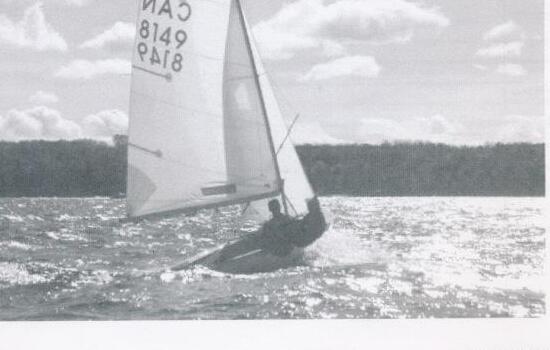
Team Spot – Oh What a Year!
2009 was busy year for Team Spot. Internationals this year at Largs was yet another opportunity to try to do what hadn't been done before: win the Internationals in the UK by a team from elsewhere. After three failed attempts (1997 at Hayling Island, 2001 at Torquay and 2005 at Looe) we finally pulled it off.
Preparation started in earnest after US Nationals 2008, planning to get 25 days in the boat together before the first race of Internationals. At this point we know the drill. Barney does lots of driving and I buy lots of plane tickets -- one every month for the first 10 months of 2009. A couple of long weekends of practice in Florida, Midwinters, Passover weekend in DC, MidAtlantics, North Americans and finally we loaded the container heading to Scotland.
Almost certainly it was our most successful year since we finally accomplished something we've been after for so long. Barney has been in possession of all major Albacore trophies before, but Sarah Bury and John Hudson (North Americans) and Will Gulliver and Steve Graham (UK Nationals) kept that from us this year. Still though, the UK Internationals win tops the list for us.
So what's different about this year from the others? Certainly as time goes by and we accumulate more time sailing together, we're likely to improve. After looking back over our preparation, our methods haven't changed much but we've put one goal above the rest: clear the mind. Apparently nothing to do with sailboat racing but somehow when we win we're not distracted by anything other than the race at hand. And when we don't win, there are always other things on the brain.
To illustrate this, I'll answer a question we've been asked before: What do Barney and I talk about it in the boat? I think it's actually more helpful to discuss what we don't talk about. Here are some things we don't talk about:
- what we're going to wear
- whether some part of the boat needs working on
- what sails to use
- how to trim the sails for optimum speed given the conditions, or for a particular point of sail
- what to do to execute a particular maneuver
We're able to ignore all these things (or maybe better, perform them on auto-pilot) because we've put in a lot of time together, but the important thing is that it leaves lots of mental space to concentrate on what's going on outside the boat.
When I take new people sailing, they are almost always over stimulated by the amount of unfamiliar things going on: the wind is blowing, the boat feels like it's going to tip over, there are all these ropes to pull, etc. Even after racing for many years, the list of things to think about is still longer than I can properly process. It's all I can do think about things like:
- where to start
- how to approach the first weather leg
- how to respond to other boats in the race
- what the clouds tell me about what the wind is doing
- what I see on the water that tells me about what the wind is doing
- the telltales
- the compass
- whether the boat feels like it's at its top speed
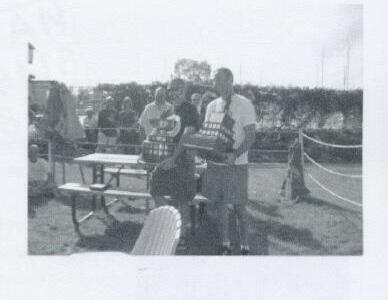
Barney and I may not discuss all of this all the time, but we're constantly processing all this input. If the information we're getting all adds up to a clear decision (which rarely happens), there isn't much to discuss. Usually there are tradeoffs and we're guessing what's more likely to happen. We for sure don't get it right all the time, but since we've practiced enough to keep the boat fast without talking about it as much, we get to focus on bigger picture issues with more of our limited brain power.
Is it fair to write off losses at the North Americans and UK Nationals to distraction? Not completely as the people that beat us sailed very well, but there's some evidence to support the theory. In addition to racing the North Americans, Barney dealt with delivering a new boat and preparing to load the container. For the UK Nationals, jetlag and dealing with the stuff we forgot to pack at the NAs, a vang that broke that we should have fixed and perhaps not enough time practicing in big breeze kept us from focusing on the racing. Perhaps with a couple more years of practice we'll show up in the UK with a clear mind and ready to go. Anyone want to head to the Gorge for some heavy air practice in the meantime?
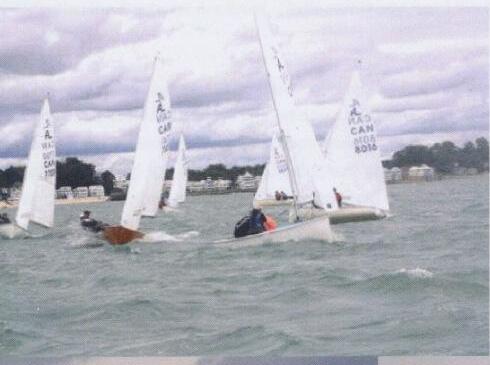
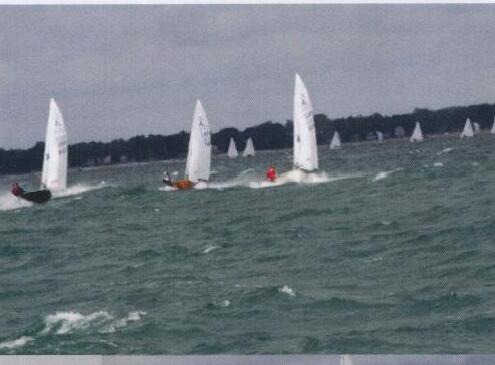
2009 Albacore Canadians
Abby and I found the starts very difficult. I felt the line was short for the number of boats. I now have OCS phobia so we were holding back more than normal. To make matters worse the first beat was short due to the mid leg start position so you did not have much time to recover from a bad start. I'm not a fan of mid-line starts/finishes. Our recovery strategy from a bad start, and we had a few, is to keep tacking and taking transoms until we could find a lane. That's critical. If you are second row or worse you can't stay in bad wind.
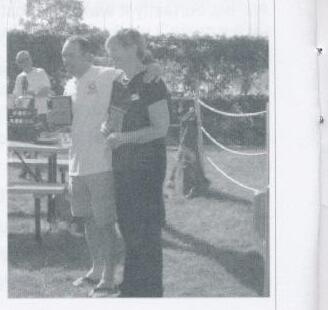
Upwind legs offered a lot of opportunity to make gains on shifts, especially the first day. Just as important on the first day was pressure. In fact it was more important to be in pressure at times than the lifted tack. If you got it right you could pass a ton of boats (i.e. Barney/David did all regatta long) or get passed. While we always say starts are critical, Barney/David proved that picking off shifts and pressure can easily make up for a bad start. Seldom did they come around the first mark top five and often were out of the top ten but they just kept knocking off shifts and gaining. You have to do your pre-start homework with your compass and establish means to help you figure out the shifts, otherwise you are lost.
Reaches seemed like a parade. I didn't see much change in positions in the top ten. As usual, a clump of boats would sail high and punish themselves and others they took with them. Usually on the broader reaches the low road paid dividends. On the other hand runs seem to shake up the positions more frequently. Just as we tack on shifts upwind so should we gybe downwind. I struggle with this one but Barney/David were masters and finding a clear lane to the mark and staying on the headed gybe. They gained huge every race on the run and this was probably the main reason they kept coming back to win races. With that long finish line figuring out which end was favoured gained you a boat or two over those who did not. For those photo finishes, and there were many, shooting the finish line is a must. That's where you head the boat directly and aggressively into the wind as you are about to cross the line to cross it sooner.
With regards to boat set up it's hard to get specific as everyone's boat is different. The biggest gears for us were pins up (minimal rake position) on Friday and Saturday and we pinned down a little on Sunday. On Sunday I vanged moderately in the puffs and right off in the lulls upwind. On Sunday we shifted our weight aft when sailing upwind through the chop to keep the bow clear. Sunday also required a lot more concentration and steering to keep the boat at max boat speed upwind. I was bearing off to keep speed after getting hammered or in anticipation of being hammered by chop. I imagined the heavier crews had ram on upwind for more power but we did not.
Know Your Rules — Don't Tack Within Three Hull Lengths of the Mark
In the past nine months I have covered this year's changes in the rules. The biggest changes were in the mark rounding rules. Sometimes I find that a very simple version of the rule, while not always accurate is an easy way to learn the basics. My favourite of these is one that I first started to teach in 1997 when the rules went through a major rewrite. In those days I taught "Don't Tack Within Two Boat Lengths of the Mark". While there are many times when you can (and sometimes have to) tack within two boat lengths of the mark, it is surprising how often the simple rule could be applied to a protest and it would have the same final result.
The simple rule of course, changes this year to "Don't Tack Within the Zone" where the Zone is almost always three hull lengths (Two for match racing and team racing, four for radio controlled boats and two or four if specified by the sailing instructions which will be pretty rare).
The main rule this comes from is rule 18.3.
18.3 Tacking When Approaching a Mark
If two boats were approaching a mark on opposite tacks and one of them changes tack, and as a result is subject to rule 13 in the zone when the other is fetching the mark, rule 18.2 does not thereafter apply. The boat that changed tack
(a) shall not cause the other boat to sail above close-hauled to avoid her or prevent the other boat from passing the mark on the required side, and
(b) shall give mark-room if the other boat becomes overlapped inside her.
13 WHILE TACKING
After a boat passes head to wind, she shall keep clear of other boats until she is on a close-hauled course. During that time rules 10, 11 and 12 do not apply. If two boats are subject to this rule at the same time, the one on the other's port side or the one astern shall keep clear.
It is also in part based on the first part of rule 18.1
18.1 When Rule 18 Applies
Rule 18 applies between boats when they are required to leave a mark on the same side and at least one of them is in the zone. However, it does not apply
(a) between boats on opposite tacks on a beat to windward,
(b) between boats on opposite tacks when the proper course at the mark for one but not both of them is to tack,
18.1 says in simple terms that rule 18 (the mark-room rule) does not apply between boats on opposite tacks at the weather mark. Once one of the boats tacks, so that they are now on the same tack, rule 18.3 kicks in. The words "is subject to rule 13" really means has passed head to wind and not yet at a close-hauled course, in other words finishing a tack.
2010 Canadian Albacore Association Executive
Commodore
Cathyann White — [email protected]
Past Commodore
Teresa Miolla — [email protected]
First Vice Commodore
Jefferson Hall — [email protected]
Second Vice Commodore & Website
Ken Yamazaki — [email protected]
Third Vice Commodore & Training Officer
Sarah Bury — [email protected]
Rear Commodore
Kevin Soldaat — [email protected]
Specifications Chair
David Weaver — [email protected]
Chief Measurer
George Roth — [email protected]
Editor - Shackles & Cringles
Christine Short — [email protected]
Secretary
Alison Goodwin — [email protected]
Membership
Christine Short — [email protected]
Treasurer
Mary Free — [email protected]
IAA Treasurer
Raines Koby
IAA Representative
Teresa Miolla
Canadian Albacore Association
970 Queen Street East
PO Box 98093
Toronto ON M4M 1J0
www.albacore.ca