Issue 1 2012
April 01, 2012
A commodore's season kickoff, the 2012 education and racing calendars, a look at "what's important today" in race tactics, two Know Your Racing Rules columns on outside help, a debate on open vs. closed class rules, and Evolution Sails on its new computer-generated radial mains.
Message from the Commodore
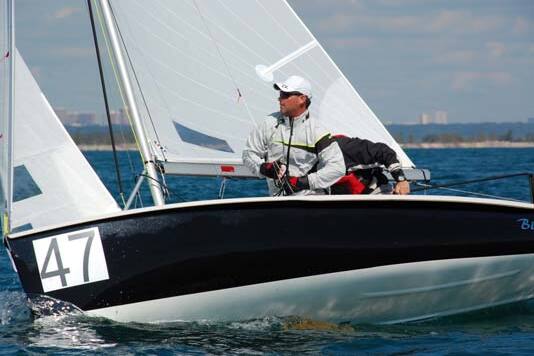
Welcome to the 2012 Albacore sailing season. It has been an unusual winter and many of us will be putting our boats together and be on the water sooner than expected. Your Executive has put together another full calendar of sailing events starting with the Ontario's in Parry Sound June 2-3, followed by the North American's August 24-26 at Buffalo Canoe Club then capped off with the Canadian's September 21-23 in Kingston.
The season kicked off for us this year with the Toronto International Boat show in January. This year St. Jamestown Sailing Club provided the Class with one of their 2011 Ovington's to put on display. The feedback and comments were excellent and for the first time in a long time we came away from the show with a sale of a new boat that will be delivered this spring. A special thank you goes to Sarah Bury for stepping up and organizing the booth and display.
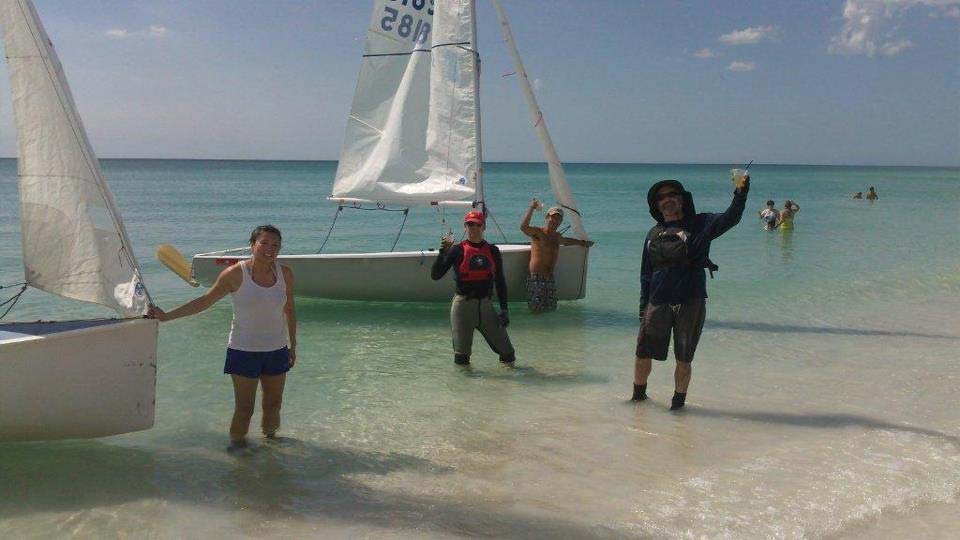
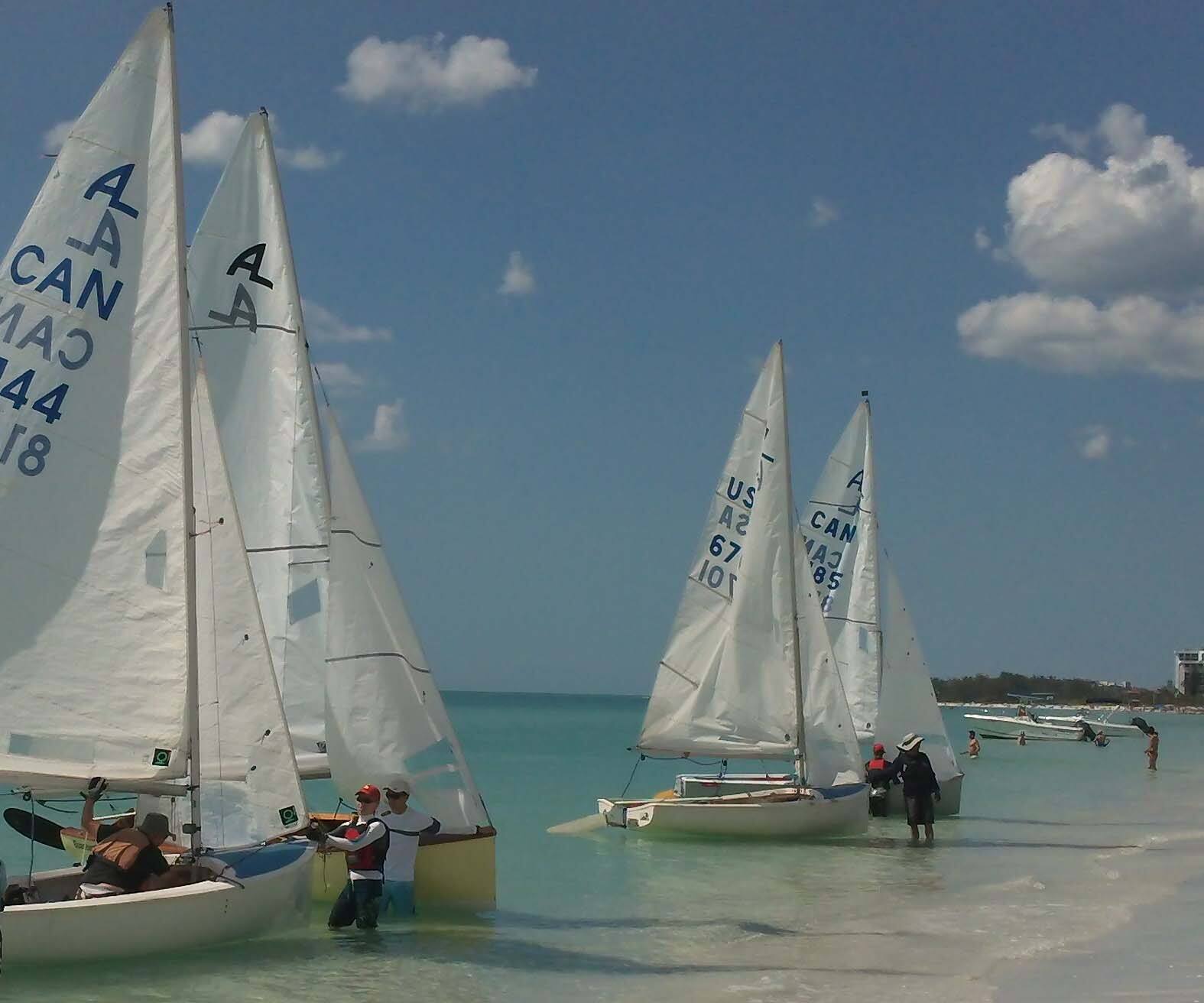
Many of us have just arrived home from the Mid Winters in Sarasota, Florida. What can we say about this event...fantastic weather, great wind (all ranges) and a very friendly and welcoming sailing club. If sailing with dolphins and Manatee appeals to you, you will not regret going (oh,...the racing isn't too bad either).
Although this might be a bit premature to discuss in detail at this time, the Executive has been actively pursuing and discussing with boat builders a potential build of an all new Canadian Built Albacore. Currently we are discussing in detail with one builder our objectives and goals for a Canadian built boat. We will be visiting the manufacturing plant in the next few weeks and we hope to be a few steps closer to securing a relationship and commencing the project. We have assembled a “Sub-Boat Committee” comprised of Allan Measor, Ken Yamazaki, Kevin Smith, George Carter, Jefferson Hall, David Weaver and myself. The intent of this subcommittee is to communicate and work directly with the Community Clubs and private members so together we can create the perfect Albacore for our Class needs. More on this to follow.
The CAA is once again organizing a CAA Day on Saturday, May 5th. There will be several events taking place that day in Toronto's Outer Harbour community; sail measurement, boat repair clinic, race management course, and a BBQ lunch. I hope to see you that day. Please visit our website for updates.
Finally, I do not think we can say this enough, once again, WaveRate Communications has generously provided our very professional web site. I think we all need to thank Warner for offering his time and services to the Canadian Albacore Association. The next time you see Warner, please make a point of thanking him.
Thank you for your continued support.
Canadian Albacore Association's Day in the Outer Harbour
Saturday, May 5th
Sail Measurement
(bring your measurement cards!)
Grounds of Mooredale, JTown, Westwood and OHCC
Boat Repair Clinic Part 2 (epoxy)
Dockside Marine Services
Conducted by Kim Anderson
Westwood Sailing Club
Contact Jeff Beitz at [email protected] regarding fees
Race Committee Officer
Conducted by Ross Cameron and Bill Visser
BBQ Lunch
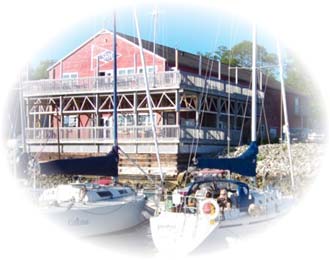
East Coast Albacore Championship – August 31 to September 2, 2012
Mark your calendars and plan to attend the Annual East Coast Albacore Championships in Shelburne, Nova Scotia. 2012 will mark the 5th year for this very popular and steadily growing event and it will be hosted by the Shelburne Harbour Yacht Club and the Sailing School from August 31st to September 2, 2012. With a long history of boat building and competitive racing, Shelburne boasts the 3rd largest natural harbor in the world, great facilities and steady winds, ideal for racing. In addition to some great racing, the weekend will be loaded with events, activities, great food and music to make the Championship a memorable one for the competitors and their families. Invitations and more detail will be sent by CAA as we get closer to the event. In the mean time, please do not hesitate to contact us at [email protected], if you have any questions.
What's Important Today?
If you listen carefully in the boat park you'll hear plenty of rules of thumb, advice, tips, tricks and techniques on how to sail fast.
Here are some of the most common pieces of advice:
Tuning/Boat handling
- Sail with the boat as flat as possible
- Sail with the leeward shroud just slack
- Heel to windward downwind-Sail with both jib telltales flowing straight back
- Make your batten parallel with the boom
- Pre-bend when the crew is sitting in the boat
- Move weight back on planing reaches
Strategy
- Start at the favoured end of the start line
- Sail the lifted tack
- Tack on the headers
Many of these statements can help with your race position, but only apply to specific situations. Applied in the wrong situation, they can hurt racing performance.
Sailing fast starts with solid boat handling skills, this requires an ability to execute all the basic manoeuvres. However, moving beyond that is supported by understanding what's important today, what's important right now in the race. The goal is to assess the situation you are sailing in, then select and apply the principles which are most effective for the current situation.
We can't possible cover all the situations in this article, but we can cover some of the most common. You will notice more relevant/less relevant themes.
| Situation | More Relevant | Less Relevant | Comments |
|---|---|---|---|
| Short Racing Course -Harbour -Under .5 NM | -Boathandling -Starting -Managing/Avoiding traffic/Clear Air -Learning and using geographic shifts | -Micro tuning -Watching a compass | -Short courses offer much less time and opportunity to pass other boats -Less time for winds to phase through phases -Increases in dirty air/fewer less on a compressed course |
| Long Course Racing -Lakes -Over 2/3 NM | -Straightline Boatspeed/Tuning -Shift Management, head out of the boat -Using a compass, managing risk/leverage -Creating space from other boats | -Starting, right on the line, being aggressive | -A good start will help (clean air, on the line) but much less critical than short course -More room to operate reduces zones of dirty air |
| High Winds Over 18 knots | -Proper rig tuning, provides a forgiving sail plan -Searching/sailing lifted tack -Boathandling (coordination) | -Managing dirty air situations -Sailing in the highest pressure | -Boat more likely to be sailing at hull speed, gains made from sailing at better angle, than searching out pressure -Higher wind velocities reduces dirty air |
| Moderate Wind -5-15 knots | -Using shifts -Finding and staying in clean air | -The great equalizer, the easiest sailing conditions with the most compressed feet, more boats sailing fast. | |
| Light Winds -0 to 5kts | -Searching and sailing in pressure -Focus on boatspeed and getting into/staying in pressure | -Searching out sailing the lifted tack, and the next shift | -Small changes in pressure, from 2 to 4 knots is a 100% increase in wind speed |
| Oscillating -Typically comes from a NW or offshore situation | -Shift Management (anticipating) and compass use | -Constant rig tuning | -Shift can have a oscillation phase, or long phase. Use the prestart to determine the timing, and hi/low. -Direction and pressure constantly changing, a more flexible rig setup can be beneficial |
| Wave/Swell | -Wave Management --Surfing down wind --Avoiding pitching upwind | -Sailing absolutely flat | -Waves and help or hinder progress, orient to boat to maximize speed |
A few common quotes:
Sail as flat as possible. In general a very solid guide to follow, except when using all sail controls (vang, bender, outhaul, c/ham) the main leech still stays closed (light winds). Then a heel to leeward adds gravity, opening up the leech.
Sail downwind with a windward heel. Again, useful advice in many conditions, except in waves which aid in speed (surfing), or marginal planing conditions. Albacore hulls plan more easily when dead flat, heeling to windward when you can surf or plane can be slow
Put pre-bend on when the crew is in the boat. Each crew weight is different, sails are different. Pre Bend is meant to open the leech, which is usually light wind, when the crew is in the boat. But sometimes the leech is fine with the crew not hiking, so decide on its use based on sail shape.
Sail with the centreboard raked forward in under 8 knots....or was that 6 knots. To be honest with you, I haven't fully figured this one out yet, but continue to experiment. I definitely don't rake forward in bigger breezes (above 12kts)
Sail the lifted tack vs dirty air on short course. Example: The Toronto Harbour in a SW wind is only 2300 Feet wide (150 boat lengths). A boat sailing the middle compared to one that is over to one side are 35 boat lengths apart. A 5 degree shift will cause one boat to gain 4 boat lengths compared to another on the same tack, abreast. Sailing in dirty air on the lifted tack will cost 4 boats lengths very quickly. Many weeknight races are sailing in similar conditions, races of 30 mins.
Sail the lifted tack part #2, short courses. Example: The Toronto Harbour in a SW wind is only about 0.5NM long, with a boat speed of 4-5 knots, the upwind leg takes around 10 minutes. This a small amount of time to catch shifts, you may only get one shift (non-geographic) in that time. With the crowding in the Harbour, it's likely more important to be on the right tack, rather than digging in further to a persistent shift (fastest course without boats). Manage your position relative to the fleet as much as or more than the absolutely shift. The best track around the course will take into consideration all the traffic.
My all time favourite....Whats your rake? Crew weights are different, sail shapes, hulls/foils are different, what works for one boat may not work for another. The main goal is to setup the boat with maximum power in lulls Experiment with rake comparing boat speed with pointing in a few different conditions to determine your base rake. Base rake is the highest pin position (light winds) and work down from there as the wind builds.
Assess the conditions prior to and during the race to determine what's important, and focus on those to sail your fastest.
Sail fast in 2012.
Education and Training Portfolio Update
We have a great line up of “Rock Star Sailors” to get your race on this year.
First, Introduction to racing by AKA “Big Bad” Ian Brayshaw from OHCC
Introduction to Racing
Conducted by Ian Brayshaw
Date June 16th
Time 9:00 am-4:00 pm
Location and price TBA on CAA website
Intermediate Racing by George Carter from Mooredale
Intermediate Racing
Conducted by George Carter
Date May 26th
Time 9:00 am-4:00 pm
Location and price TBA on CAA website
Advanced Racing from Geoff Moore of North Sails
Advanced Racing
Conducted by Geoff Moore
Date April 28th
Time 10:00 am-3:30 pm
Location and price TBA on CAA website
Each one of these guys are accomplished sailors with a life time of sailing experience to share with you.
For those of you who have ever ran a race or have had an interest in running races we have a solution to be able to run races with confidence. Race Committee Officer Level 1 and 2 certification. You will be trained by 2 of Ontario's top race committee instructors and receive a certificate by Ontario Sailing.
Race Committee Officer
Conducted by Ross Cameron and Bill Visser
Date May 5th and 6th
The cost for the course is $45 + HST for Ontario Sailing members and $90 + HST for non-Ontario Sailing members. The course will start at 9am on both Saturday and run until 5pm and most likely until around 3pm on Sunday. Level 2 will start on Saturday at 1 pm and finish 3 pm Sunday.
See online registration at Ontariosailing.ca.
FOR MORE DETAILS: CONTACT DARREN MONSTER AT: [email protected]
Racing Portfolio Update
The 2012 Friday Night Series begins at 6:45pm Friday May 4th with St Jamestown hosting. Please be aware of the change to the sailing instructions for this season. Rule 30.3 will always be in effect. No longer will one General Recall be needed to invoke a Black Flag start.
The Harbour Masters Series begins Monday May 21st at 1pm with Mooredale Sailing Club running the two races.
Ontario Albacore Championship
June 2-3
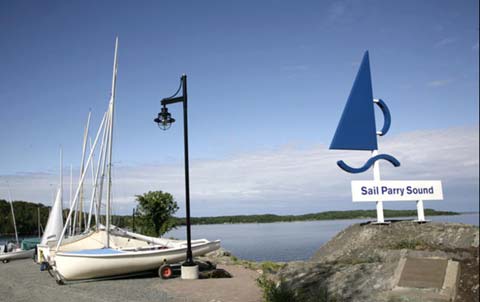
Open the regatta season with two days of racing on some of the best fresh water sailing in existence. Join your fellow racing enthusiasts for a down to earth regatta on the picturesque Georgian Bay. We have secured some excellent room rates so book early to avoid disappointment.
The NOR and entry forms are included but here are some early details:
Seven races over two days
Travelers Hotel $65 per night & Bayside Inn $93 per night – rates guaranteed until mid April
$90 entry fee until May 5, $110 until May 31
North American Albacore Championship
August 24-26
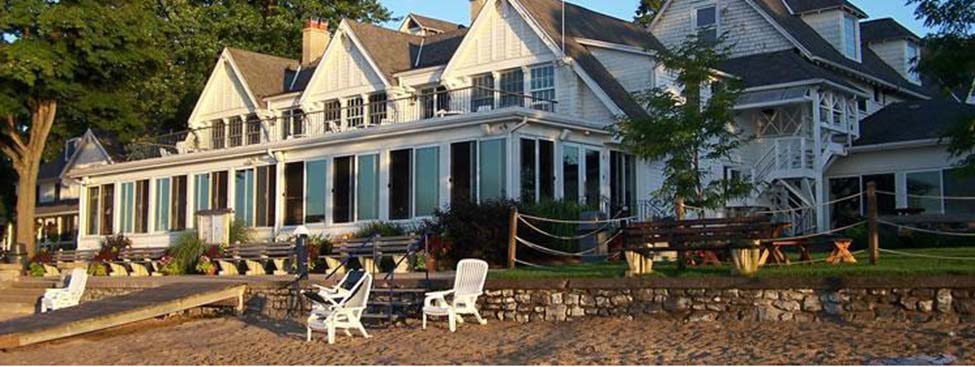
Hosted by the historic Buffalo Canoe Club join us for three days of racing on the exciting waters of Lake Erie. This venue always has something to offer, with challenging racing, wonderful sand beach launching and a fabulous setting for relaxation off the water. BCC has been host to an extensive list of championships for many classes and boasts some serious pedigree amongst its racing sailors.
The NOR will be available by the end of May but here are some early details:
* Full Buffet Breakfast will be available in the Clubhouse both Saturday and Sunday morning from 7:30am
* BBQ Dinner on Friday - on East Lawn or under tent on Germaine Lawn
* Buffet in the picturesque outer boathouse on Saturday night
* House band, The Stompers, in club bar on Friday night and music by Kevin McCarthy Saturday night in club bar.
Gooderham Series
The Gooderham Trophy (a.k.a Travelling Trophy) was established in the memory of Bill Gooderham to encourage Albacore sailors to attend Regattas across Ontario. It is awarded annually to the helmsperson who achieves the best result in the series of annually designated races.
Notice of Race
1 Rules
1.1 These regattas are governed by the Racing Rules of Sailing (RRS), the prescriptions of the Canadian Yachting Association and the current Albacore Class Rules including any temporary class rules and interpretations published on www.albacore.org. The class rules and interpretations may be amended by this Notice of Race and by the Sailing Instructions.
1.2 The host clubs for each event listed in section 4.1 are the organizing authority for their individual events and the Canadian Albacore Association is the organizing authority for the Gooderham Series. This document will be published on the CAA website. Other electronic and physical copies may be distributed for convenience, but the version on the official website shall govern.
2 Eligibility and Entry
2.1 The series is open to all members of the Canadian Albacore Association.
2.2 There are no restrictions on the number of boats that may be considered for the Gooderham series.
2.3 All helmspersons meeting the criteria in section 2.4 & 2.5 will be considered for the Gooderham series.
2.4 To be considered for the Gooderham series, the helmsperson must be registered in a minimum of four of the events listed in section 4.1 and be present at the starting area for at least one race in each.
2.5 Events 1 & 6 (Ontario & Canadian Championships) are required to be included in the series.
2.6 There is no penalty for sailing five or all six events. All scores will be counted.
3 Fees
3.1 There is no direct fee for the Gooderham series.
3.2 Required fees will be applicable with each event that is part of the series.
4 Schedule
| Event # | Event | Club - Location | Dates |
|---|---|---|---|
| 1 | Ontario Albacore Championship | Sail Parry Sound - Parry Sound, ON | June 2 & 3 2012 |
| 2 | Nepean One Design Regatta | Nepean Sailing Club - Nepean, ON | June 23 & 24, 2012 |
| 3 | J Town Regatta | Saint James Town Sailing Club - Toronto, ON | July 14, 2012 |
| 4 | North American Albacore Championship | Buffalo Canoe Club - Crystal Beach, ON | August 24-26, 2012 |
| 5 | QCYC Open | Queen City Yacht Club - Toronto, ON | September 8 & 9, 2012 |
| 6 | Canadian Albacore Championship | CORK – Kingston, ON | September 21-23, 2012 |
5 Sailing Instructions
The sailing instructions will be available in relation to each event that is part of the series. There will be no specific sailing instructions produced for this series.
6 Scoring
6.1 The High Point scoring system will apply, subject to the criteria listed in this section 2.
6.2 Each boat will receive point(s) equal to the number of boats she beat, plus one point. Race scores will be determined based upon the following calculations:
Define 'N' to be the number of boats that compete in a particular race. Each boat finishing a race and not thereafter retiring or being disqualified will be scored as follows:
Finishing place Score
First N
Second N-1
Third N-2
Fourth N-3
and so on.
All other boats that compete in that race, including any that finish and thereafter retire or are disqualified, will score 0 points. Boats that do not compete in that race (DNC) will not be scored.
6.3 The series score will be the sum of all the points of the individual races. The series score for each eligible helmsperson will be the sum of their race scores. The qualified helmsperson with the highest series score is the winner, and others are ranked accordingly.
6.4 There will be no exclusions (throw outs).
6.5 Race ties will be broken using rule A7. Series ties will be broken using rules A8.1 and A8.2. Rules A1, A3, A5, A6, A10 and A11 also apply
7.2 Gooderham Series Albacore Championship
This trophy will be awarded to the highest place helm in series based upon the scoring criteria in section 7.2 and will be presented following the Canadian Albacore Championship.
8 Disclaimer of Liability
Competitors participate in the regatta entirely at their own risk. See RRS rule 4, Decision to Race. The organizing authority will not accept any liability for material damage or personal injury or death sustained in conjunction with or prior to, during, or after the regatta.
9 Further Information
For further information please contact [email protected]
5 Little Things — Dave Perry — Winning in One Design
Starting
- Avoid gybing before a start. In light air it can take you farther from the line than you think, and in a breeze it's too easy to dump or break a boom or take on water.
- Most boats with a main and jib slow faster by luffing the jib rather than the main. To stay high in a hole on the starting line, overtrim the main and luff the jib. To accelerate, trim the jib and ease the main.
- Get land sights through both ends of the starting line.
- Practice two or three times runs at the line. Use the watch and your land sights to be at an exact place at an exact time, preferably the place you plan to start. This gives you a great feel for how the wind is shifting and the effects of the current, as well as giving you faith in your line sights and
- practice in accelerating and slowing.
- Tape one stopwatch to the mast or some highly visible place, so everyone knows the time and can see it at a glace.
The following excerpt is from Dave Perry's Winning in One Design available from US SAILING by calling 1-800-877-2451 or ordering on-line from http://www.ussailing.org
Know Your Racing Rules
Outside Help
The articles primarily consider the right-of-way portion of the rule book (Part 2 When Boats Meet). That section of the book is seven pages and has fourteen rules. If I also include the definitions (four pages) and the fundamental rules (two pages), I am pretty sure that I have covered most of them by now at least a few times.
Regular readers should expect the same subjects to come up again and again, as they seem to be the subjects that either cause the most confusion (e.g. marks and mark-room) or the most collisions (e.g. port – starboard).
This month I will cover a rule that I don't think I have covered before, rule 41, Outside Help.
PART 4
OTHER REQUIREMENTS WHEN RACING
Part 4 rules apply only to boats racing.41 OUTSIDE HELP
A boat shall not receive help from any outside source, except
(a) help for an ill or injured crew member;
(b) after a collision, help from the crew of the other boat to get clear;
(c) help in the form of information freely available to all boats;
(d) unsolicited information from a disinterested source, which may be another boat in the same race.Racing A boat is racing from her preparatory signal until she finishes and clears the finishing line and marks or retires, or until the race committee signals a general recall, postponement or abandonment.
There have been several references to this rule in the on-line discussions recently. The line honours winner in the Rolex Sydney Hobart Race was protested (though the protest was eventually dismissed) for allegedly breaking this rule.
The rule is designed to make sure that sailors are racing on their own and not using help from their shore team. Some breaches of this rule would be hard to detect, but we have to rely on sailors follow the basic principle that they are expected to follow the rules and retire if they break a rule.
BASIC PRINCIPLE
SPORTSMANSHIP AND THE RULES
Competitors in the sport of sailing are governed by a body of rules that they are expected to follow and enforce. A fundamental principle of sportsmanship is that when competitors break a rule they will promptly take a penalty, which may be to retire.
The first thing to notice about the rule is that, as with all rules of part 4, it applies only to boats that are racing. Boats are racing from the preparatory signal (usually 4 minutes before their start, 3 minutes on an RCYC Midweek Race). You can get help from your friends, other boats or a coach up until the preparatory signal. If you damage some equipment, you can get replacements up until the prep signal. If you want weather observations from your coach boat at the weather mark, you can get them up to the same point. If there is more than one race in the day, you are allowed help between races. At one of the recent America's Cup competitions some of the teams had extra crew who would be on board until just before the prep signal. They would then jump over the side with the extra radio and weather gear. Some classes put more severe restrictions on what is allowed and don't allow coach-boat support before or between races.
During the race you are allowed to see what everyone can see. You can look at the windmill at the CNE to figure out the wind (though I find it pretty unreliable). You can look at the clouds and the flag on the Club flagpole. You are also allowed to receive freely available radio signals.
The subject of radio information has led to several appeals and requests for interpretation over the past few years. ISAF Case 100 makes it clear that asking another boat for information and then receiving it breaks this rule. CYA Appeal 76 says in summary “Radio communications do not necessarily constitute outside help, but a boat which engages in them does so at some peril.” The Rolex Sydney Hobart winner, noted above, came close to disqualification for a radio discussion of a competitor's sails.
You can have a conversation about your dinner plans for tonight, but it is probably not a good idea to ask the wind speed by the dinner tent if that might provide a benefit in the race. US Sailing Appeal 93 (US Appeals are not authoritative in Canada) discusses the meaning of “freely available”. Even though you have to pay to own a VHF radio, the public weather forecasts it receives are still “freely available”. This is true of Internet signals even if you have to pay for the laptop or smartphone and their connectivity. If you have to subscribe to a special weather service then that is not freely available. If the connectivity and/or device is sold to you by the weather-service provider then that is also not freely available. Nothing specifically bans cell phone calls during races but you should not discuss anything which might improve your position in the race.
If you have a coach on the water, he or she can take video and write down observations, but can't share them with you until after the race. They are not allowed to signal to you which side of the course you should go to or which sail you should be flying. Some regattas put restrictions on where coach boats can be during the race (or ban them altogether). I believe that the Optimist Green Fleet (the youngest and least experienced sailors) are allowed coaching during the race.
Another subject of confusion is coaching from competitors in your own race. Generally, unsolicited information is acceptable. If the race committee uses the radio to hail boats that are over early on the start, then that is freely available information. Responding to it is not receiving outside help. Calling the race committee and asking them if you were over early would be receiving outside help (if they answered). Having a competitor yell at you that you were over early is also not outside help. Asking them if you were and getting an answer probably would be.
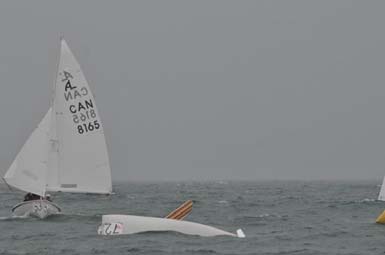
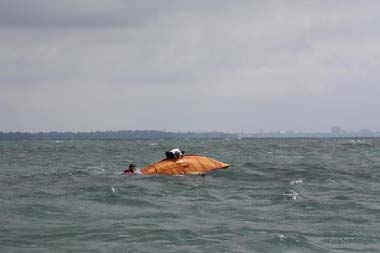
Finally there is the subject of help when you are in trouble. If a crew is injured or ill, you can receive outside help (see 41(a)). If two boats have a collision, then the crew of the other boat can help get the boats clear of each other. If a boat or its crew are in danger, then other boats are required to give all possible help, but it is possible that the boat receiving the help may have to retire after having received it. I know that when I was judging a Europe National Qualifying regatta on a very windy day, we would stand by a capsized Europe dinghy but we wouldn't do anything unless it was clear that they wanted help.
Is It Time to “Close” the Rule Book?
The opinions expressed in this article are mine alone and do not necessarily reflect the opinions and policies of the Canadian Albacore Association.
Although we often refer to the Albacore as a one design class, it isn't, really. In the strictest sense “one-design” means, for all intents and purposes, that nothing on the boat may be changed, altered, added or subtracted. Many classes operate this way, going so far as to restrict the purchase of boats, sails and spars to a single maker. The most popular boat of this type is most probably the Laser. There is only one supplier of Laser sailboats and that is Laser Performance. The same can be said for sails and hardware. Some of the items may be made by other companies, but they eventually get branded with the Laser logo and sold through Laser performance. The advantages here are that a theoretical level playing field is achieved since all the equipment is supposedly made equal.
The Albacore class has always been a “restricted” class rather than a strict one-design. In this setup, the rules are written such that every boat has to conform to various sets of minimum and maximum dimensions, and the associated sails and hardware are more loosely controlled. The hulls, sails and hardware may be obtained from any maker. Apart from the hull, which has to be manufactured by builders licensed by their respective national class associations, sails and hardware may by purchased from any maker, and the boats themselves may be fitted out and finished by anyone, including the hobbyist.
This can make for a great compromise. The class can operate similar to a one-design class while allowing the boat owners choices in where to obtain rigging, foils (even if they make them themselves), sails, spars, and fittings. Most importantly it allows flexibility in the layout of the rigging so that boats may be tailored to the individual preferences of each sailor.
Since the inception of the Albacore class and the initial writing of the class rules, they have been “open”. That is, if something is not mentioned in the rules then it is left uncontrolled. This has led to many developments over the years while leaving the basic boat largely unchanged.
Many important innovations have come from this openness of the rules. Spars have changed from wood/aluminium composite to aluminium alloy, centreboards and rudders have changed from steel to wood, to GRP (fibreglass), fittings have gone from brass to stainless steel, and hulls have changed from wood to single layer GRP, to foam sandwich GRP, and even combinations of wood and GRP.
One of the more recent developments that came about as a result of having open rules is the “jibstick”. At the time the rule (Rule 11 ca 1990) that controlled the whisker pole said that it had to be 1830 mm in length and not much else. When the Racing Rules of Sailing deleted the rule that stated that spinnaker poles had to be sheeted only to windward, someone in the Albacore class decided that it would be a good idea to fly a shortened whisker pole to leeward on a reach to improve the trim of the jib. Up until then this was accomplished by the use of barber haulers, but a shortened whisker pole sheeted to leeward was far more effective at looser reaches. As this idea evolved it became fully adjustable so that you could essentially have perfect jib trim from beat to run and all points of sail in between.
If the rules had been closed, this might not have been possible. However, some lively discussion arose from several sailors using a second, shorter whisker pole aboard and using it as a reaching pole during competition. It was decided to clarify rule 11 and this led to the creation of rule 11.1: “A headsail pole may be used to sheet the headsail to windward or to leeward. No part of the headsail pole or its fittings may extend more than 50 mm outside of the headsail clew.”
In a closed rule system, it is understood, and declared, that anything that is not specifically allowed is therefore disallowed.
Around 2005 the Royal Yachting Association (RYA) to decided to force all UK National classes (including the Albacore class) to re-write their rules to conform to a common ISAF standard. This in itself seemed like a pretty good idea but the RYA doesn't recognize the existence of any of their “National” classes outside of the UK, so a class like the Albacore with an international presence could not be recognized by the RYA as existing outside of the UK. So that meant that the existing rules (that had variations written into them for the US and Canada) were rejected by the RYA. Also, somewhere in this process the RYA decided to require that the rules be in a closed format.
So under the threat of being removed as an RYA National Class, the UK National Albacore Association (NAA) felt they had to comply with the RYA's demands. The US and Canadian Albacore Associations didn't share this opinion. This necessitated the creation of the “International Albacore Class Rules” which were to be separately administered by the International Albacore Association (IAA). During this process there were disagreements between the UK National Albacore Association (who went along with the RYA's closed rules requirement) and the North American Albacore Associations who the favoured an open rule format. The rationale at the time was that the existing rules were “open” and the new reformatted IAA rules should be also.
In the end two different sets of rules were written. The US and Canada have the “International Albacore Class Rules” (open) and the UK have the “RYA-National Albacore Class Rules” (closed).
If this makes little sense to you the reader, it makes even less sense to me, the writer.
The case for Closed Rules
Having a common closed rule book would simplify things immensely. Rules could be written in a simpler fashion; knowing that if something is done that is not written into the rules then it is by definition, prohibited.
This doesn't have to stifle the rigging freedoms we currently enjoy. Compare these two rules:
UK Rule D-9.1 (Hull) Fittings:
(a) Optional unless Specified
Can-US Rule D-9.1 (Hull) Fittings:
(a) Reserved for use with the UK national variation
In other words, since D-9.1 doesn't really exist (there is nothing actually written in the Can-US version of this rule) it leaves it wide open to use whatever fittings the owner sees fit, pending other restrictions written elsewhere (such as the prohibition of certain materials and other dimensional rules). But the UK rule accomplishes essentially the same thing. The words “Optional unless specified” means that the boat owner can do pretty much anything she wants (also pending other similar restrictions).
For rules that have the same intent, a closed rulebook makes a lot of sense since it can be written much more simply.
For example:
UK Rule E-3.2 (centerboard) Construction
(d) rule is vacant
Can-US Rule E-3.2 (centerboard) Construction
(d) A centreboard shall have no moving parts or devices to change the angle or pitch in the transverse plane.
Translation: Gybing centreboards are not allowed in the US and Canada by virtue of the fact that they are prohibited in the rules.
Gybing centreboards are not allowed in the UK by virtue of the fact that they are not mentioned in the rules. Another advantage of a closed rule book is that it mitigates opportunistic and questionable interpretation of the rules to create technical advantages that conform to the letter of the rule but not the spirit of the rule. For example a number of years ago a couple of competitors showed up at a UK Nationals with deck stepped masts. There was nothing written in the rules that disallowed deck stepped masts, and a deck stepped mast has considerable advantages with the adjustment of mast rake while under way. (The UK rules allow you to adjust the shroud length during a race). To many sailors this seemed to be a bit sneaky and the class associations agreed that it broke the spirit of the class rules, and gave unfair advantage to those who could afford to modify their boats. The practice was banned and the rule was clarified to explicitly disallow it.
There have been many such rule changes in the past. Theses practices continue to this day. As recently as a year ago, a competitor arrived at a UK Nationals with an “improved” jib. (Some have dubbed it the “Roman Nosed Jib”.) It just so happened that this competitor won the regatta. Whether or not it was attributable to the jib is not really relevant, but it caused a bit of a stir with the measurers. Even though the jibs could technically measure in depending on how a measurer interpreted the rule, they were obviously quite a bit larger in sail area. The existing jib measurement rule is not well defined enough to restrict maximum sail area. By modifying a feature in an un-measured area of the jib these jibs were measured to have the correct sail area, but still be quite a bit larger. A good set of well-written closed rules might have prevented this sort of thing from happening.
What About Innovation?
To address the concern that a closed rule book would stop development and stifle creativity, I don't think that closed rules will stagnate the class. There are still mechanisms to change things in the rules if that is the wish of the members of the class. One of the great features of the new ISAF formatted rules is that they include a set of rules and processes defining the methods and procedures for having rules changed, if so desired by the class as a whole. A case in point was the process to allow double window jibs. This was proposed well ahead of time at a General Meeting and was debated and discussed before any serious sail modification and development actually happened.
The rationale used by the proponents of this change was that as materials technology had advanced it would be possible to have a double window jib (and thus improve sailing safety) without causing significant premature deformation of the sail shape. The class and rules committee agreed to allow this sort of experimentation for a period of time, and analyze the life span of double window jibs versus single window jibs. Finally, the rules committee reported back to the class, and the rule was ratified by all the class associations. This sort of orderly progress is far preferable to the reactive (and potentially knee-jerk) responses to ad-hoc changes often made on the fly.
In my relatively short time sailing the Albacore, the class associations have chased innovators for doing things they felt may (or may not) contradict the spirit of the rules. Many rules changes have come about because someone did something creative and caused a stir on the racecourse. Closed rules would not (and should not) necessarily stifle this type of creativity. What it would do is allow the rules administrators to design ahead instead of designing behind.
The Albacore class has matured quite a bit in the last decade. We've seen many improvements in rigging, sails, hull construction and foils. I'm quite satisfied with the state of the boats, and with a few small improvements the Albacore can be truly world class. That said, I say it's time to close the rule book. This would take a snapshot of the way the class is today, formalise it and going forward, any changes would be done in a controlled steady manner. I'm not saying close the rules and be done with it. If there is a desire to change, improve or delete a rule, it should be brought up, debated, discussed and then voted upon in an orderly manner.
Besides, I think it's far more important to adopt a good common rule book than to muck around with different rules for different countries. I think it's also important to have a closed rule book. Even though we can't adopt the UK's RYA class rules word for word (since they include some minor rules that are specific to the UK specifically, like the UK life jacket rule), we can certainly adopt a common rule set where it comes to the construction and sailing of the boat itself. In all things that matter, a closed set of rules and a closed, common specification set makes tremendous sense.
Evolution Sails Develops New Computer Generated Albacore Sails
Recently, we reached out to the Albacore sail lofts for an update on their development, here is the most recent from Evolution. We hope to provide more from the others, when we receive them!
Since 2003, the sail loft of Evolution Sails (formerly Quantum Sails) has been servicing the Albacore class in North America with high quality sails with a keen attention to customer service. The Evolution Sail loft located in the West end of Toronto is one of a few sail lofts in Toronto that still designs and cuts sails. The Albacore class has been an important aspect of our business and we want to stay number one in this class explains John Dakin of Evolution. We started out with sail patterns from Michael McNamara sails from the UK, which we still use. Users of these sails have found them to be easy to set, easy to use, excellent competitive sail life and quick on the race course.
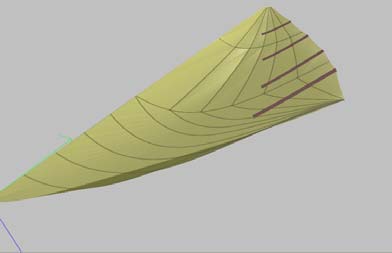
In 2009 we were approached by a Canadian Albacore team requesting us to develop a new sail for them. We discussed the goals of this new sail and it was thought that a Radial designed main sail might be worth exploring. Aided by the latest computer sail design software, we came up with a Radial design for all of us to look at. Having the ability to look at this sail on the computer three dimensionally at all angles we made a few modifications and sent the new main to the plotter for cutting. The use of computer designed sails allows us to design, cut and assemble a sail eliminating much of the trial and error from hand designed sails.
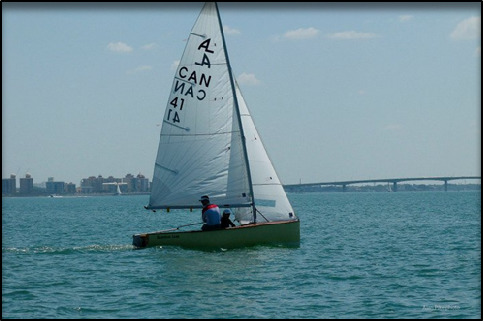
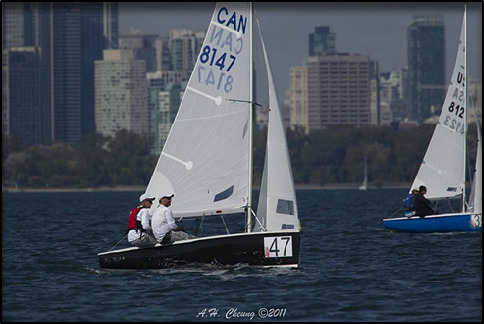
Can 7000, our first Radial main cut in March 2011 and tested in Florida at the 2011 Mid winters CAN 8147, our finial version. Not too different from the original design. 2nd place finish at the 2011 Albacore Internationals.
What's Next for Evolution and the Albacore Class?
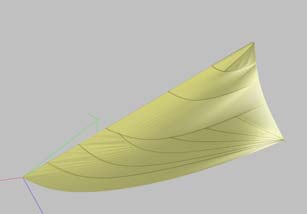
The success of the radial main has prompted us to look at expanding our Radial sail development. We have just finished designing and building a new radial/crosscut Low Aspect jib tested at this year's 2012 Mid Winters.
Why Radial Cut?
It is all about reducing stretch.
Low aspect sails benefit the most from radial construction. An aspect ratio of 3:1 (luff/foot) is about average, the Albacore main is less than 2/1.
On a tall skinny sail the sheet angle is almost vertical, and load is pretty much along the same path. As the foot gets longer, relative to the luff, and the aspect ratio is reduced the sheet angle and the load path flattens out, becoming much less vertical. There is still lots of load on the leech, but now there is also more pull into the body of the sail, approaching 45 degrees. A cross cut sail can distort in this situation as there is now significant bias load on the panels. The radial construction takes care of this.
In our standard Albacore sails we use Dacron that is heavily resonated, very stiff cloth, this greatly reduces the bias stretch, and the sails have been pretty successful without the costlier radial designs.
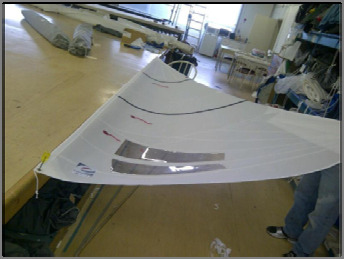
What's the difference?
So does this make your cross cut sails obsolete? No, of course not. As we mentioned above, it's all about reducing stretch. Reducing stretch helps the sail stay competitive longer and retains it's shape longer in heavy breeze. With the radial design there is more waste in sail material and as well increased labour costs to build, this translates into a more expensive sail. Is it worth the extra money? We guess that answer will be answered in time, can you get two years of competitive life out of a radial designed sail? Time will tell.
2012 Canadian Albacore Association Executive
| Commodore | Jeff Beitz |
| Past Commodore | Cathyann White |
| First Vice Commodore & Race Chair | Jefferson Hall |
| Third Vice Commodore & Education | Darren Monster |
| Rear Commodore | Sarah Bury |
| Chief Measurer | Ken Yamazaki |
| Specifications Chair | David Weaver |
| Editor – Shackles & Cringles | Christine Short |
| Secretary | Susan Higgins |
| Treasurer | Nora Hoffer |
| IAA | Cathyann White, Andrew Callum, Ian Brayshaw |
| Membership | Jenny Gibbons |
Canadian Albacore Association
970 Queen Street East
PO Box 98093
Toronto, ON M4M 1J8