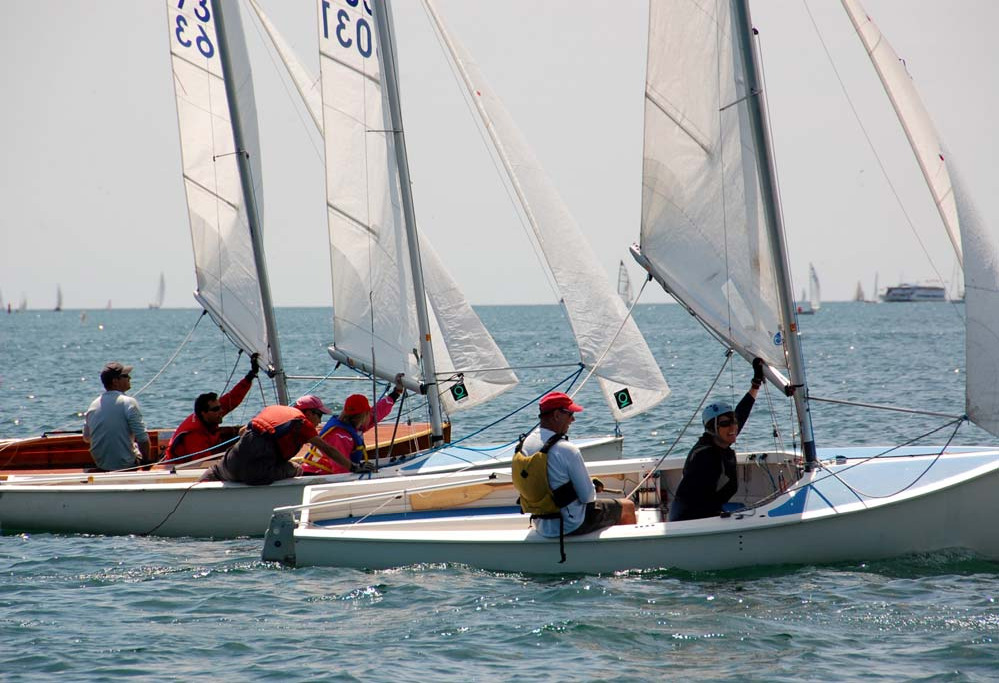
Issue 2 2011
November 01, 2011
The CAA's 50th-anniversary issue: a commodore's message looking back on the 2011 Internationals, a CAA Day recap, Pat Healy's "pattern" for the racing rules, a road trip to Pointe Au Baril, light-weight racing tips from Teresa Miolla, two rules columns from Andrew Alberti on mark-room, an IRC ruling on "Roman nose" headsail measurement, and the 2011/2012 executive.
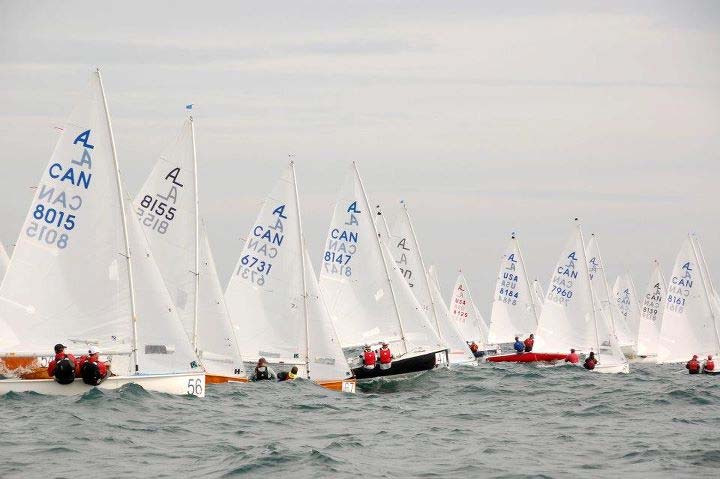
Message from the Commodore
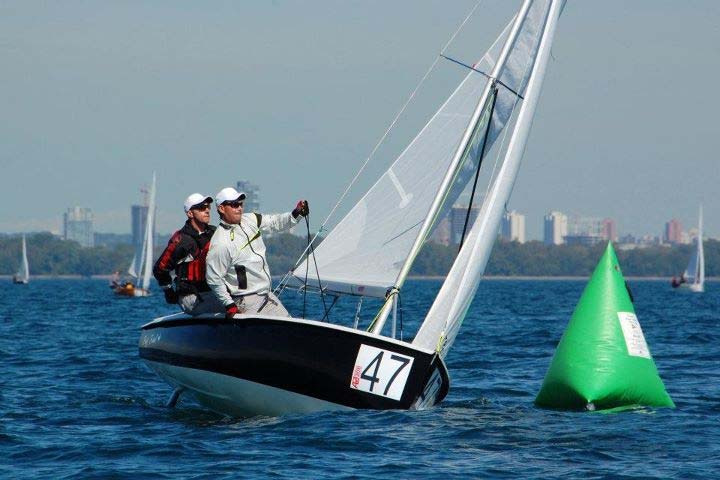
As I write this, many of you are making plans for your winter storage of your boats and reflecting on the past season. The CAA had a great year and we are pleased with our accomplishments; we started the year at the Toronto International Boat Show organized by Ken Yamazaki; in May, we held the Annual CAA Day in the Outer Harbour; Sarah Bury was busy in June with 2 Intensive Race Training weekends, and Race Management Courses; Jefferson Hall planned the road trip to Kingston for the Ontario’s Regatta in August; and in September the week-long event of the combination Canadians and 2011 Internationals Regattas were held, organized by Teresa Miolla and Christine Short.
I would like to take this opportunity to thank Teresa and Christine for their countless hours committed in making the Internationals such a success. Everyone had a great time, the Race Committee from RCYC was excellent, every night prizes were handed out, and the Community Clubs opened their doors for the social nights. Thank you to the many volunteers required to execute such a fantastic week. That you to David Weaver and his measurement team, 72 boats in less than 13 hours is a lot of measuring! Thank you to the travelers who came to Toronto. Thank you to the many sponsors - please continue to support our sponsors! The Canadians regatta held a record number of boats on the starting line of 72. We have not seen this for a Canadians regatta in a number of years.
As many of you are aware, due to economic changes, Ontario Yachts will no longer be working out of the Oakville location or building the Albacore. The Ontario Yachts building is for sale and a small part of the operation will be moved to a shared location in Mississauga. The Albacore moulds are for sale and if not sold they will be put into storage.
The CAA Executive is continuing to discuss with potential builders. A new Canadian Albacore build presents many challenges with our current economic climate. The Canadian dollar exchange with the U.S. dollar and the British Pound actually put Canadians as buyers at an advantage to buy “out of country”. As a Class we need to be very aware of this as it is our goal to offer a Canadian made Albacore that meets the needs of our market and as well be price competitive.
The new CAA Executive is meeting next week, and already we have many exciting things planned for the 2012 season. We are making some changes and updates to our website, so don’t forget to send your photos and videos to the webmaster! Stay tuned!
Thank you for your continued support,
CAA Day
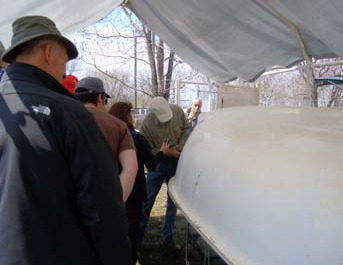 On May 7th, The CAA hosted its 2nd annual “day” in Toronto’s Outer Harbour. Considering the wet, challenging spring, the sun god was in our favour.
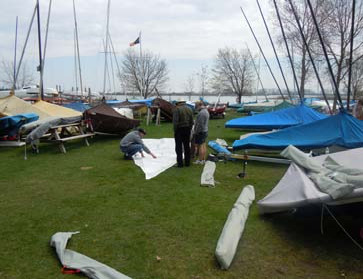
It was a day that was filled with many activities. New Measurers were put to work measuring new sails, and a hull. Members attended an Assistant Race Officer Clinic which provided a solid knowledge of timing, flags, and sound signals, all required in racing. Kim Anderson from Port Credit Marine Survey presented an intensive boat repair clinic for fiberglass boats. Peter Epstein from Fogh Marine and Colin Clark from Gill North American displayed the latest in dinghy apparel. A barbeque lunch was enjoyed and at the end of the day a special presentation was bestowed.
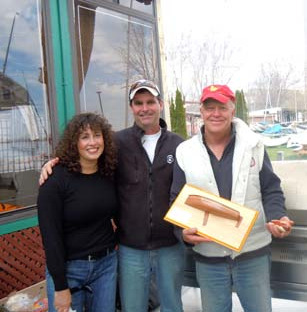
George Roth was presented a special award in appreciation for his + 30 years of service to the Canadian Albacore Association. George has dedicated immeasurable amounts of hours and contributions to the Class for which we all are very appreciative. Thank you George!

Believe it or not, this is the pattern for the Racing Rules of Sailing.
Learn more on the next page.
The Pattern of the Racing Rules of Sailing
A large part of racing sailboats is pattern recognition, especially tactics and rules. The first person to recognize the pattern that is setting up, can begin to position their boat so that when the pattern does materialize, they are in the best able to take advantage of the situation.
Tactical patterns are based upon the racing rules. If things were different and starboard tack had to keep clear of port tack, starting lines and upwind marks would look very different. Therefore, it makes sense that if you want to improve your tactics, you should become more familiar with the thirteen rules of Part 2 of the Racing Rules of Sailing. (If you don’t have a copy of the rules you can download one at: http://www.sailing.org/tools/documents/RRS20092012with2010changes-[8222].pdf)
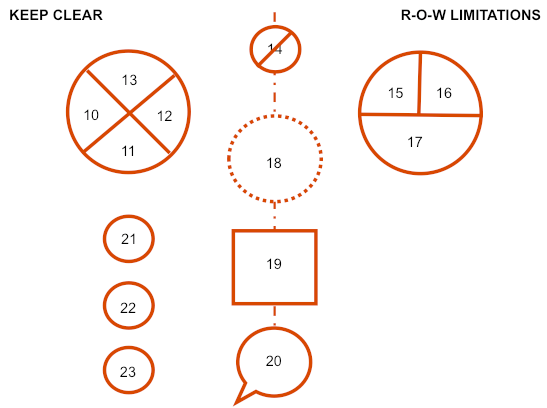
This is the pattern of the Racing Rules of Sailing. A study look might help you better see how the boat versus boat rules of Part 2 fit together.
Instructors and books usually start off by making a mistake when they teach the rules. For any situation they first ask, “Who is the Right-Of-Boat?“
That is the wrong question. The rules are designed to put the responsibility to get out of the way– to keep clear – to one boat.
The left hand side is the “Keep Clear” side. Rule 10 is Port/Starboard and says, “… a port-tack boat shall keep clear of a starboard-tack boat.” Rule 11 is Windward/Leeward – “… a windward boat shall keep clear of a leeward boat. Rule 12 for boats not overlapped and Rule 13 says a boat tacking shall keep clear of one that isn’t. These four rules are simple, if you are the keep clear boat, you must, until your last breath, do everything possible to keep clear.
Rule 14 says sailing is not ice hockey – no collisions. It is in the middle and gives responsibilities to both the Keep Clear boat and the R-O-W boat.
The right hand side, rules 15, 16 and 17, limit what the R-O-W can do. If a boat tacks onto starboard if front of a port tack (keep clear) boat, the tacking boat should give the other boat room to fulfill her new responsibility. If a R-O-W boat alters course, she should give a boat that has to keep clear, room to keep clear.
Like rule 14, rule 18, the mark rounding rule, spells out responsibilities to both the Keep Clear and R-O-W boats. It is a bit confusing because the rule writers didn’t follow the sequence on the water when they broke down the rule into paragraphs. A good group exercise over beer is to figure out what is the paragraph order that a crew goes through while approaching and rounding a mark.
Rule 19 is almost like rule 18 except it describes how to successfully avoid an obstruction instead of a mark.
And, rule 20 is one of the few rules when a hail is required and tells what both boats must do.
Look at rules 21, 22 and 23. Rule 21 is important if you are OCS – after you turn back to restart you have to keep clear of the world. I would bet that you have never had to think about either of these requirements. They rarely apply.
If you want an exercise to get better, get a copy of the rules. First read a rule. Then see where it fits in the pattern. Again I would bet that you cannot help seeing a situation when you and another boat were in this situation. (Sport Psychologists call that “visualization” and charge a lot of money to help you get good at it.)
Once you have worked through the six pages of Part 2 rules you will be better prepared for your next race. Get to the boat ten minutes early, use the time to review the above pattern, and you will be surprised how much sooner you see what’s developing and recognize what to do.
Road Trip to Pointe Au Baril
The annual Pointe Au Baril (PaB) regatta was held Saturday, August 13th. Pointe Au Baril is a cottage community located within the 30,000 islands district of Georgian Bay and just north of Parry Sound. The PaB Sailing Club members are area cottagers and the fleet consists of Albacores, Lasers and Flying Scots. They hold races every Saturday throughout the season and an open regatta every year, typically on the second Saturday of August. Like all Albacore regattas they welcome out of town sailors to participate in this event.
Two boats from Westwood entered the regatta and we were greeted on the Friday at the marina by the PaB Sailing club commodore Reid Bowlby (wooden Albacore 5600). Reid had arranged billeting for us with club members and since there are many channels, shoals and islands the host cottages are accessible only by water. Since it would be a trying sail Reid towed us out to the cottages and the ride was enjoyable as the landscape is characterized by beautiful cottages, clean, clear waters and the granite rocks and pines of the Canadian shield.
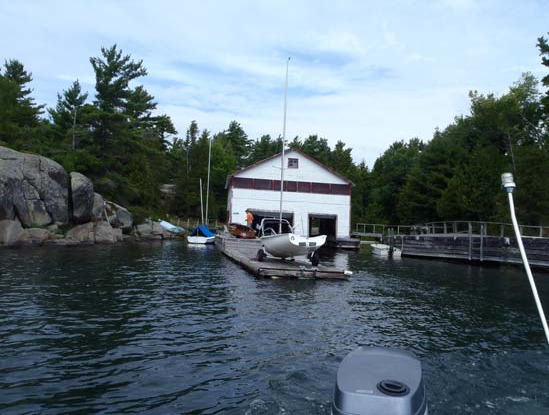 The next morning we awoke to heavy rain showers but the 30 minute tow out to the race course was just as enjoyable. The moment we unhooked from our tow the clouds moved out and the sun and the loons moved in. The race course was strategically set in an open protected bay that was close to a club member's cottage. The winds were light westerlies for the first race and this was immediately followed by a picnic lunch. The lunch is a club ritual - everyone sails in as close to the shore as possible without grounding, hooks up to anchored power boats, motors in to the cottage and picnics on the rocks. Everyone is required (encouraged) to drink a beer.
After lunch we sailed back out to the race course for the final two races. The winds had filled in and continued building up to a steady 12-14kts. There were 9 boats in the Albacore fleet – 7 locals and the two Westwood boats. Kudos to the junior team of Matt Bowlby and Graham Pitfield. Brock Munro and Margaret Cyrzan from Westwood won the regatta with two bullets and a 2nd.
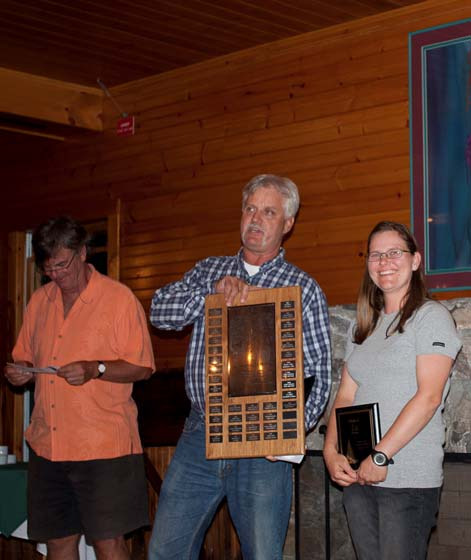 The awards dinner was held the same evening at the historic Ojibway club which is also accessible only by boat. The club is a 100 year old lodge that was purchased, restored and is maintained by area cottagers. It serves as a private recreational facility and as a home base for the PaB sailing club.
On a final note a special thank-you goes out to our hosts the Bowlby's and the MacLeod's for their warm hospitality and to all of club members for making us feel so welcome. They are keen to have more guests next year and we would recommend this as a five star event.
Light Weight Racing for Dummies
I have never been called a light weight before but when it comes to racing an Albacore it seems I fall into this category. Depending on who you talk to, the ideal crew weight is approximately 330-350 pounds. Over the years I have sailed with a combined crew weight of around 300 pounds making the boat slightly over powered for my weight. Since the Albacore goes fastest when it is flat and you can only let the main out so much other methods needed to be explored.
Boat Set Up
There is excellent boat tuning guides online. Pick one, preferably the one that matches your sails. Measure everything and mark your settings, by writing them down in a boat book. Go out sailing and see how it feels. The two things I play with are the poke of the spreaders and the length of the shrouds. Pinning down in heavy air and raising in light air. Once you come up with a formula that makes you fast, write the markings on the boat with a permanent marker and record them in your boat book.
Physical Fitness
Since lightweights have to work a bit harder, good physical condition is a must. The primary areas are the core, quadriceps and shoulders. I find that with less then 15 minutes exercise a day these areas can be kept in top shape.
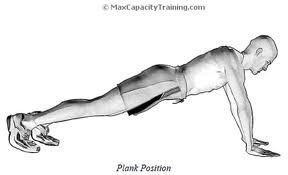
For the core, do a plank, start with 1 minute and work your way up to 4 minutes.
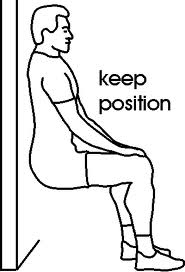
Wall squats, again start at 2 minutes and work your way up to 10 minutes (you can add in some bicep curls for fun).
Push ups or pull ups. When I decided to sail my first International regatta in Torquay and heard that the breeze was going to be punishing (they didn’t let me down) I started to train my shoulders and arms by doing pull ups. I could do 1, when I first started but after 6 months I worked my way up to 8. It doesn’t seem like much, but it really made a difference when I needed to pull the crew back into the boat ;-)
Finally, I believe your body must be flexible and there is nothing better than yoga. I’m not talking hot yoga but rather something gentle like Hatha yoga where you spend minutes in a pose, lengthening and strengthening your muscles. It is the ultimate challenge of allowing your breathe to lead your body and not use your muscles. It changed my life and I still do it with regular frequency. Besides which your muscles will be long and lean and supple.
Boat Handling
Kick the board up to 30 degrees back before any sideway slippage starts.
Depowering the sails in the traditional way: outhaul on, Main Cunningham on, then you can try the releasing some rig and vanging on or I have found that putting more rig on and not as much vang allows me to control the boat a bit better. There is not a wrong or a right just try what works best for you. Keep your head out of the boat, look for the puffs on the water and get the boat flat, before the puff hits. It’s always harder to get the boat flat after the puff hits and a lot easier to be flat before the puff hits.
Hiking Pants
It was Chris Cook who suggested hiking pants many years ago and I can’t tell you what a difference it makes. The legs don’t fatigue as quickly and I can hike for a long time. Also try crossing your ankles and switching often helps you be able to hike for longer periods of time. The proper way to hike is to have your knee joint butting up against the gunwale, and then you can droop hike or straight leg hike. The hiking straps need to be long enough for you to get your feet almost 90 degrees to your knees. As a helm you should find the position that enables you to see waves, puffs and the ticklers on your shrouds.
Happy flat sailing,
T
Port Over Starboard
The first right-of-way rule that most of us learned is that port-tack boats keep clear of starboard-tack boats (currently rule 10). There are, however, exceptions – that is, situations where starboard-tack boats have to give room to port-tack boats. In this article I will look at the exception created by the rule governing mark-room, rule 18.

In the diagram, the blue boat on port tack gets to the zone (3 lengths from the mark) clear ahead of yellow, on starboard tack. Blue and yellow are required to leave the mark on the same side, and blue is about to enter the zone at position one, so according to rule 18.1,, rule 18 applies between them (the rest of 18.1 lists exceptions that don’t apply here, but will be discussed next month). Rule 18.2(b) says that if a boat is clear ahead when she reaches the zone – as blue is – a boat clear astern at that moment – yellow – shall thereafter give her mark-room, which is room for blue to sail to the mark and then sail her proper course when she is at the mark. At position 3, yellow forces blue to alter course away from the mark. This means that she is not giving blue room to sail to the mark. Here, blue breaks rule 10 since as port-tack boat, she is not allowing yellow to sail her course. Rule 18.5 exonerates blue for breaking that rule, though, since yellow was not giving blue the mark-room to which she is entitled. Even as a starboard-tack boat, yellow cannot sail the course that she wants to because she is required to give blue the room needed to sail to the mark. (Blue, on the other hand has no obligation to allow yellow to sail to the mark, so yellow must sheer off.)
10 ON OPPOSITE TACKS
When boats are on opposite tacks, a port-tack boat shall keep clear of a starboard-tack boat.SECTION C
AT MARKS AND OBSTRUCTIONSSection C rules do not apply at a starting mark surrounded by navigable water or at its anchor line from the time boats are approaching them to start until they have passed them. When rule 20 applies, rules 18 and 19 do not.
18 MARK-ROOM
18.1 When Rule 18 Applies
Rule 18 applies between boats when they are required to leave a mark on the same side and at least one of them is in the zone. However, it does not apply(a) between boats on opposite tacks on a beat to windward,
(b) between boats on opposite tacks when the proper course at the mark for one but not both of them is to tack,
(c) between a boat approaching a mark and one leaving it, or
(d) if the mark is a continuing obstruction, in which case rule 19 applies.
18.2 Giving Mark-Room
…
(b) If boats are overlapped when the first of them reaches the zone, the outside boat at that moment shall thereafter give the inside boat mark-room. If a boat is clear ahead when she reaches the zone, the boat clear astern at that moment shall thereafter give her mark-room.
18.5 Exoneration
When a boat is taking mark-room to which she is entitled, she shall be exonerated if, as a result of the other boat failing to give her mark-room, she breaks a rule of Section A, …
…
Mark-Room Room for a boat to sail to the mark, and then room to sail her proper course while at the mark. However, mark-room does not include room to tack unless the boat is overlapped to windward and on the inside of the boat required to give mark-room.

The second diagram shows a slightly simpler, but less common situation that only happens with a leeward mark that is to be left to starboard, which may happen around a gatemark and in match racing. The green boat is on starboard, while the red boat is on port. As they get to the zone they are clearly overlapped so rule 18.2(b) entitles red to mark-room. Although red is entitled to sail to the mark, she is still port-tack boat and is thus not entitled to hold the course seen at position 1 or 2, which might give her a better gybing angle. As with yellow in our first example, and despite being the starboard-tack right-of-way boat, green must give mark-room to the port-tack boat,
Before I continue with situations where starboard tack has to give way to port tack, I want to show two situations that may seem similar to the situations above but which are not. In the previous situations, starboard had to give “mark-room” to port according to rule 18.2. Rule 18.1 describes when rule 18 applies and more importantly where it does not.
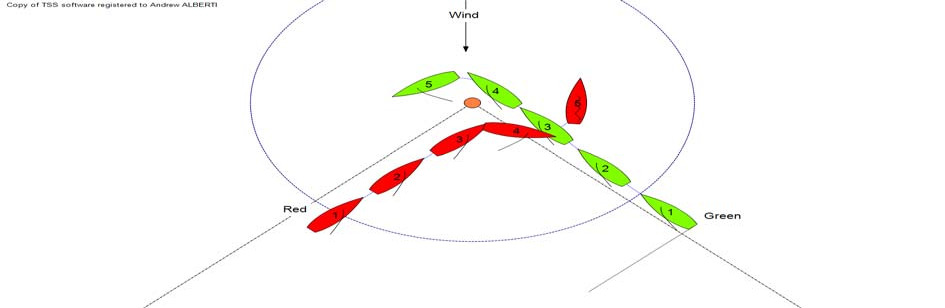
In the diagram we have the red boat on port tack approaching a weather mark. Green is approaching on starboard tack. They are therefore on opposite tacks on a beat to the windward and the proper course for the red boat, but not the green boat, will be to tack to round the mark, so rule 18 1a. And 181b. both say that rule 18 does not apply. This means that the green boat will not have to give mark-room to the red boat as the port-tack boat, red will still have to keep clear ( just as if the mark was not there).
IRC Interpretation on ‘Roman Nose’ Headsail Measurement
Background
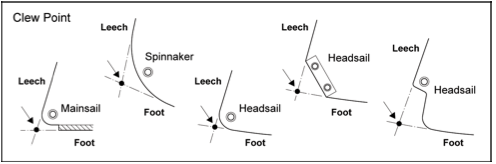
It has come to the attention of the IRC that a headsail was used at the recent UK Nationals which featured a stiffened region above the clew cringle (grommet for sheeting the headsail) and, in particular, a section of sail which defined the widest part of the sail (luff perpendicular) well above the clew cringle. This portion of the sail would extend aft of the straight line between the aft head point (as defined in the ERS) and the clew cringle. For discussion purposes, I have dubbed this a ‘Roman nose’ headsail. Apparently, this sail was measured using this widest part of the headsail as the luff perpendicular (LP) which has the effect of defining this ‘Roman nose’ as the Clew Point, and permitting a significant part of the sail below this point as unmeasured area.
Albacore Rule A.1.3 states: These class rules shall be read in conjunction with the ERS and RRS. Except where used in headings, when a term is printed in “bold” the definition in the ERS applies and when a term is printed in ”Italics” the definition in the RRS applies.
Albacore Rule A.1.2 states: The word “shall” is mandatory and the word “may” is permissive.
Albacore Rule G.4.2(c) states: The leech shall not extend beyond a straight line from the aft head point to the clew point. (note that clew point is ”bold”).
ERS G.4.1 defines the clew point as “The intersection of the foot and the leech, each extended as necessary”, and provides a figure with 3 different possible configurations as seen below. The second figure from the right is very similar to the ‘Roman nose’ headsail in question. The clew point is very clearly defined at the intersection the extended foot and leech lines, not the widest part of the sail above the clew cringle.
IRC Interpretation
The Albacore Rules make it mandatory that we define the clew point in accordance with the ERS. The only guidance provided by the ERS regarding the clew point is given by ERS G.4.1 and the accompanying figures. All Albacore headsails used at the 2011 Internationals were measured in accordance with these rules.
ERS G.4.1
2011 Canadian Albacore Association Executive
| Commodore | Jeff Beitz |
| Past Commodore | Cathyann White |
| First Vice Commodore & Race Chair | Jefferson Hall |
| Second Vice Commodore & Promotions | Ken Yamazaki |
| Third Vice Commodore & Education | Sarah Bury |
| Rear Commodore | Christine Short |
| Chief Measurer | David Weaver |
| Specifications Chair | David Weaver |
| Editor – Shackles and Cringles | Christine Short |
| Secretary | Susan Higgins |
| Membership | Julie Postil |
| Treasurer | Mary Free |
| IAA | Teresa Miolla, Andrew Callum |
| IAA Representative | Cathyann White |
Canadian Albacore Association
970 Queen Street East
PO Box 98093
Toronto ON M4M 1J8