Issue 3 2011
December 01, 2011
A commodore's year-end message, an In Memoriam for Peter Vasoff, the IAA's 40th-anniversary recognition of its long-serving contributors, some winter reading recommendations, a two-part "Finishing Lines" column on finish-line rules and mark-room, the Albacore's return to QCYC's junior fleet, and the 2012 executive.
Message from the Commodore

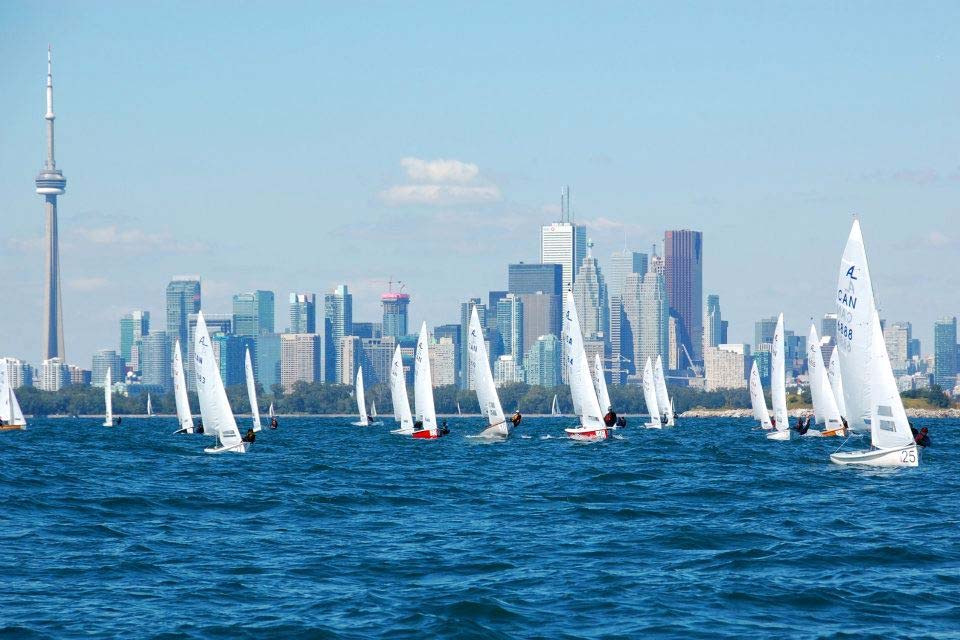
As 2011 comes to a close we can look back on the year with much pride as our fleets are expanding, our regattas are successful and we are obtaining new members from other classes. While some classes and fleets are losing members, the Albacore class is growing. Many of our members have introduced new people to our great sport and to the Albacore, which can be rigged as a simple sailing boat or a high end racing machine.
I would like to take this opportunity to thank Mary Free and Julie Postil for their contributions to the CAA, as they are stepping down from their respective portfolios. Mary was the Treasurer and kept us in line with her good humour and business acumen. Julie handled membership services and class enquiries.
I would like to welcome Darren Monster, Jenny Gibbons and Nora Hoffer to the 2012 Executive. Darren is managing the Training/Education Portfolio and has an exciting year planned, perhaps you have seen some of his youtube videos. Jenny will be overseeing the membership portfolio, and Nora will be keeping our accounting books in line.
Returning to the Executive:
Cathyann White – Past Commodore
Jefferson Hall - First Vice Commodore & Race Chair
Sarah Bury – Rear Commodore
Ken Yamazaki – Chief Measurer
David Weaver - Specifications Chair
Susan Higgins – Secretary
Christine Short - Editor
Thank you for your continued support.
Happy holidays !
Winter is coming but we’re still thinking SAILING !
In Memoriam
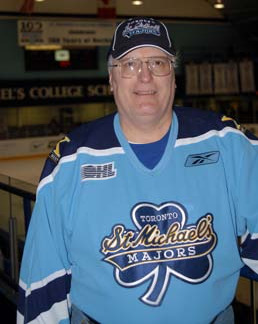
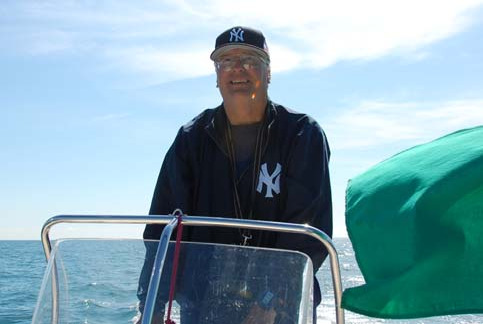
With great sadness we announce the passing of Peter Vasoff at his home after a brief illness on October 26th at the age of 60. Peter will be greatly missed by his adoptive family at the St. James Town Sailing Club in Toronto where he was a member for the past 35 years. Peter was an active member and supporter of the albacore class, and held the Chief Measurer position for several years. This past summer Peter dedicated himself to the Albacore Internationals, assisting with the measurement of 72 boats as well as manning a safety boat all week.
Peter’s passion for sports exceeded beyond the waters of Lake Ontario. Peter was an avid Toronto Argos fan as well as a St. Michael’s Major’s supporter.
The Canadian Albacore Association has commissioned a trophy in Peter’s Memory which will be awarded at the Canadian’s Regatta. Peter will be greatly missed at every race.
Save the Dates
| Mid Winters Regatta March 16—18 Sarasota, Florida | RCYC Open, Toronto June 9-10 | Nepean One Design Regatta, Nepean June 23-24 |
| Mooredale Regatta, Toronto August 11 | North Americans Championship Regatta August 24-26 (3 days) Buffalo Canoe Club |
Recognizing Contributors to the International Albacore Association
If you attended the awards dinner at the RCYC ballroom at the 2011 Canadian Championships, you may recall my presentation that night recognizing individuals who have made outstanding contributions to the International Albacore Association (IAA). If my rambling presentation put you as sleep, read on I’ll attempt to sedate you again!
While the current situation of the IAA is in a state of flux, not to be addressed in the article, over it’s 40 year history it has managed very well our beloved one design class. Like any one design association things don’t get done if people don’t volunteer, or are shanghaied via peer pressure and libation, to join the executive. Once on board some individuals are really passionate and devote countless and thankless hours. Why? So the rest of us can show up at regatta and have fun. Essentially I believe that’s what it’s all about and I for one have had a lot of fun racing these teched-up old school dinghies. I’ve participated in a number of one design classes over the years, and the Albacore class measures up just fine.
The inspiration for the award evolved from my days on the IAA executive. I witnessed firsthand the tremendous time and energy some of my colleagues (not the author) were devoting to our class. Quite frankly I was blown away they could put out so much given the regular demands on our time we all face in life. Because I was a member of the IAA I knew how much these individuals were putting out but figured class members had no idea and thus concluded they need some recognition. I’m pleased to say that those individuals were nominated by their respective national associations and became recipients of this new award.
That was the genesis for this award and as Abby & I drove home from the 2007 Internationals in the Chesapeake, (the regatta where blue boats receive a complimentary OCS), we put some structure into the award. Structure you say? Well it wouldn’t be right just to recognize individuals from current years. Yep, we had to back to the very beginning. Damn, perhaps I need to nominate myself, because this simple little award emerged to become a big ass project. Idiot! Yes I did deserve that OCS.
We decided that the award would recognize 3 individuals per decade starting in the 60’s with one person from each respective country: UK, US & CAN. This means a total of 15 recipients had to be nominated. Each national association was responsible for selecting individuals from their country. Scotland was included with the UK’s association. After much badgering I received the nominees from the associations. Now we just needed a trophy and Internationals to make the presentation.
I commissioned long time Albacore sailor from J-Town, David Mathews aka Klinger, to construct one of his beautiful Klinger awards utilizing exotic woods to fashion half model relief of an Albacore. As usual he came up with a beauty including a nifty padded case to store the trophy.

Unfortunately we just missed obtaining the trophy in time to make the 2009 Internationals in Largs. So this year’s Internationals in Toronto was it.
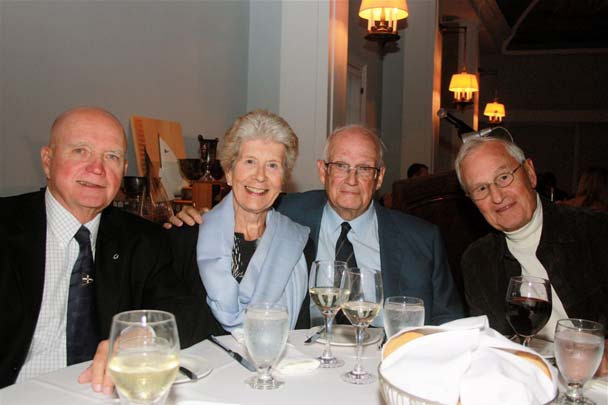
Knowing this year’s International’s was the 40 anniversary of the first Albacore World Championships hosted in Toronto by RCYC, gave thought to getting Albacore racers and spouses out from yesteryear to attend the award ceremony. Of course all the recipients of the award were invited attend and receive their due recognition. We had a good turnout of yesteryear sailors including 8 of 15 recipients. It’s clear being a sailor is good for health has all of the recipients are still alive, the eldest Tony Griffin a 100 birthdays old and still sailing! Think about that the next time you say you’re getting too old to sail.
The recipients who attended we’re asked to say a few words about their experience as a member of the IAA executive. Essentially what we hard was memories about how much they enjoyed the Albacore class all the camaraderie it entailed over the years. Peter Duncan said it best, something to the affect that “the boat is ok but it’s the people who make it a great class.” Clearly we would all be hanging around if we were not having a good time racing these boats. But again we give thanks to those who bust their butts for the class so we can have that fun.
The award will be presented next at the 2019 Internationals to honour the next decade of recipients. Join the IAA executive and put out. The association can always benefit from new group of energetic volunteers who have their heart in the right place. Here are the recipients:
60’s:
Ken Aryton – United Kingdom
John Duncan – United States
Jack Langmaid – Canada
70’s:
Dave Innes – United Kingdom (Scotland)
Dave Wallerstein – United States
Tony Griffin – Canada
80’s:
Peter Fontes – United Kingdom
John Laurd – United States
Dennis Sherwood – Canada
90’s:
Jonathon Weeks – United Kingdom
Barney Harris – United States
Ian (Buck) Rogers – Canada
00’s
Michael McNamara – United Kingdom
Peter Duncan – United States
David Weaver - Canada
As a closing foot note, it has to be recognized that there are other members of the IAA executive over the years that are equally deserving of this award. To them we also express recognition and gratitude for all they have done. Future issues of Shackles will feature some of the interesting and entertaining responses from recipients who could not attend the awards but forwarded comments to share about their experience. As well we will feature some history of the class and members who contributed.
What Are You Doing This Winter?
Oh the weather outside is frightful, But the fire is so delightful, And since we’ve no sailing to do
Learn something new! Learn something new! Learn something new!
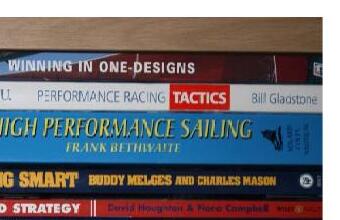
The winter is a great time to catch up on some reading so John and I wrote some reviews of sailing books that are on our bookshelf.
Winning in One Designs by Dave Perry
I first met Dave Perry in the spring of 2008, when we were just starting up a match race program at RCYC and he had come to teach an introductory clinic. Dave is a hugely knowledgeable educator, whose enthusiasm and passion for the sport is clearly evident when he coaches. He has written many books on sailing and the racing rules of sailing, including my favourite – Winning in One Designs. The book is great tool for those who are starting to race, as well as seasoned racers who need to re-confirm what they already know. One of the main reasons why I like this book is it doesn’t hold the magic answers or talks in terms of absolutes. It provides general principles and considerations for various situations on the race course and Dave goes on to explain and demonstrate through examples why utilizing those general principles can make you more successful on the race course. As well, Dave does not touch merely on how to win through perfectly executed tactical situations, but he describes how winning is an overall process. The book describes wining in terms of preparation, teamwork, boat speed, tactics, psychology and safety.
Fatal Storm: The Inside Story of the Tragic Sydney to Hobart Race by Rob Mundle
I read this book in 2004 when I was living in Sydney and had just watched the start of that year’s Sydney to Hobart race. The book tells the story of the race in 1998 when a huge storm developed during the race to Hobart and 5 boats sank and 6 people died. It is written by a reporter who has covered the race and it details the event chronologically from the perspective of those on land, those sailing and the rescuers that saved the lives of many people. The reason why I would recommend this book is that it really reminds you about the dangers of sailing and how wind and weather can turn so quickly. Almost all of the sailors involved were very experienced, but no amount of experience when faced with the horrible conditions which developed during the race would be a match for the power of nature.
North U Performance Racing Tactics by Bill Gladstone
Level: Beginner/Intermediate
A concise, no nonsense reference for sailors just starting to race and intermediate racers. Plenty of diagrams of the most common situations you’ll encounter on the race course.
Sailing Smart by Buddy Melges and Charles Mason
Level: Intermediate racer
Sail controls and special situations round off this accessible book in addition to the usual tactics and strategies discussed in other books.
High Performance Sailing by Frank Bethwaite
Level: Advanced sailor
Dense but thorough reference for dinghy and high performance boats. Covers weather patterns, wind and waves, rig and sail trim. Great for technical sailors, lovers of vectors and polars or those that have difficulty falling asleep at night.
Positioning: The Logic of Sailboat Racing by Stuart Walker
Level: Intermediate/Advanced
The anecdotal writing style of this book is not for everyone, but Stuart Walker presents a logical set of principles to get you around the course as fast as possible. One of my personal favorites.
SB note: Stuart Walker has written a host of other books about sailing; another good one is The Tactics of Small Boat Racing. In this book Stuart Walker again writes in an anecdotal style where he describes a certain race and describes what he did correctly or most often then not what he did incorrectly and how one can learn from his mistakes. It is nice to read about such an accomplished sailor and to read that sometimes he makes the same mistakes we all do!
Finishing Lines
This issue we are going to look at the finishing line. First we will look at errors on the finishing line then the subject of mark-room at the finish. I was recently asked a question about finishing and what to do if you make a mistake at the finish.
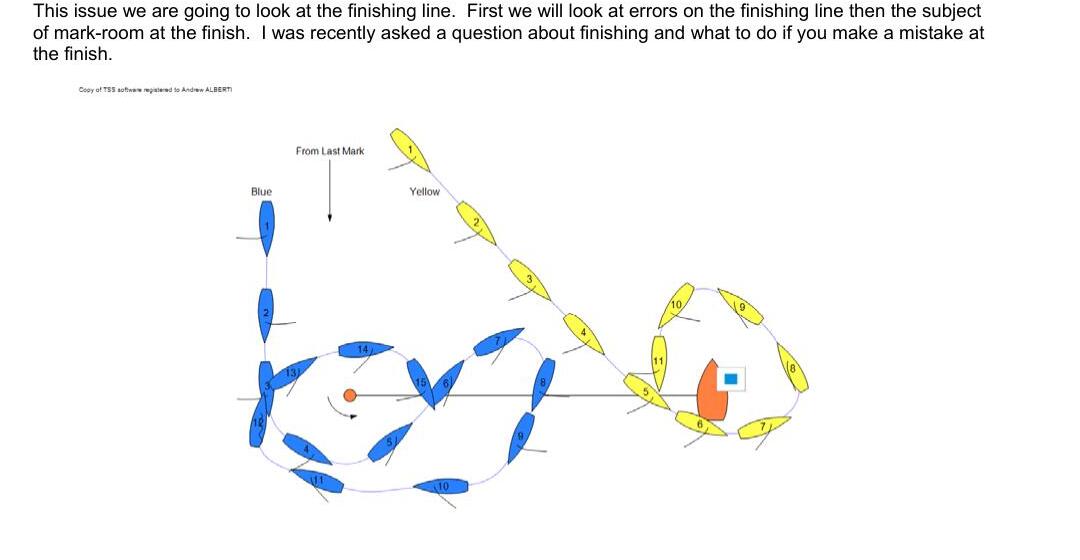
In the diagram two boats are approaching a leeward mark that they expect to leave to port. All previous marks had been left to port. As the boats approach the mark there is a race committee boat sitting on the port side of the mark flying Code Flag S. Code Flag S is a shorten course flag.
32.2 If the race committee signals a shortened course (displays flag S with two sounds), the finishing line shall be,
(a) at a rounding mark, between the mark and a staff displaying flag S;
(b) at a line boats are required to cross at the end of each lap, that line;
(c) at a gate, between the gate marks.The shortened course shall be signalled before the first boat crosses the finishing line.
Finish A boat finishes when any part of her hull, or crew or equipment in normal position, crosses the finishing line in the direction of the course from the last mark, either for the first time or after taking a penalty under rule 44.2 or, after correcting an error made at the finishing line, under rule 28.1.
28 SAILING THE COURSE
28.1 A boat shall start, leave each mark on the required side in the correct order, and finish, so that a string representing her track after starting and until finishing would when drawn taut
(a) pass each mark on the required side,
(b) touch each rounding mark, and
(c) pass between the marks of a gate from the direction of the previous mark.She may correct any errors to comply with this rule. After finishing she need not cross the finishing line completely.
31 TOUCHING A MARK
While racing, a boat shall not touch a starting mark before starting, a mark that begins, bounds or ends the leg of the course on which she is sailing, or a finishing mark after finishing.
44.1 Taking a Penalty
A boat may take a Two-Turns Penalty when she may have broken a rule of Part 2 while racing or a One-Turn Penalty when she may have broken rule 31. …
44.2 One-Turn and Two-Turns Penalties
After getting well clear of other boats as soon after the incident as possible, a boat takes a One-Turn or Two-Turns Penalty by promptly making the required number of turns in the same direction, each turn including one tack and one gybe. When a boat takes the penalty at or near the finishing line, she shall sail completely to the course side of the line before finishing.
According to rule 32.2 the finish line is between the mark and the staff displaying the flag. According to the definition of finish the boat finishes when she “crosses the finishing line in the direction of the course from the last mark”. The blue boat doesn’t see the shorten course flag or doesn’t realize which direction she should finish. She passes the mark to port and then crosses the line in the wrong direction at position 6. At position eight she finishes since she crosses the line the direction from the last mark. At that point she has broken rule 28.1. If a string following her wake was drawn taut, it would lie outside of the finishing line. If she sailed away at this time she would have finished but she could be disqualified if she was protested for breaking rule 28.1. Instead she goes back around the mark and finishes at position 15. She has corrected an error made at the finishing line, under rule 28.1. Once she finishes at position 15, her crossing at position 8 is no longer a finish.
The yellow boat spots the shorten course flag and cross the line in the correct direction and finishes at position 5. At position 6 before she has cleared the finishing boat she hits it. Since she hit a mark she breaks rule 31 and has to take a penalty. Her penalty for breaking rule 31 is a “One-Turn Penalty” which has to include a tack and a gybe. The yellow boat tacks between position 7 and 8 and gybes between position 10 and 11. She can then finish. It is important that she completes her gybe before she crosses the line again. Her cross after position 11 replaces her cross at position 5 as a finish.
It is obviously easier and quicker to finish correctly the first time, but if for some reason you cross the wrong way or hit a finish mark it is important to know how to correct your error.
Next I want to answer a question that I am frequently asked. Is there mark-room at the finishing line? The simple answer is yes.
SECTION C
AT MARKS AND OBSTRUCTIONS
Section C rules do not apply at a starting mark surrounded by navigable water or at its anchor line from the time boats are approaching them to start until they have passed them. When rule 20 applies, rules 18 and 19 do not.18 MARK-ROOM
18.1 When Rule 18 Applies
Rule 18 applies between boats when they are required to leave a mark on the same side and at least one of them is in the zone. However, it does not apply(a) between boats on opposite tacks on a beat to windward,
(b) between boats on opposite tacks when the proper course at the mark for one but not both of them is to tack,
(c) between a boat approaching a mark and one leaving it, or
The introduction to Section C says that Section C rules do not apply at a starting mark. They don’t say anything about the finishing marks. Rule 18.1 says that “Rule 18 applies between boats when they are required to leave a mark on the same side.” Boats are required to leave finishing marks on the same side and none of exclusions in 18.1 are relevant so rule 18 does apply.
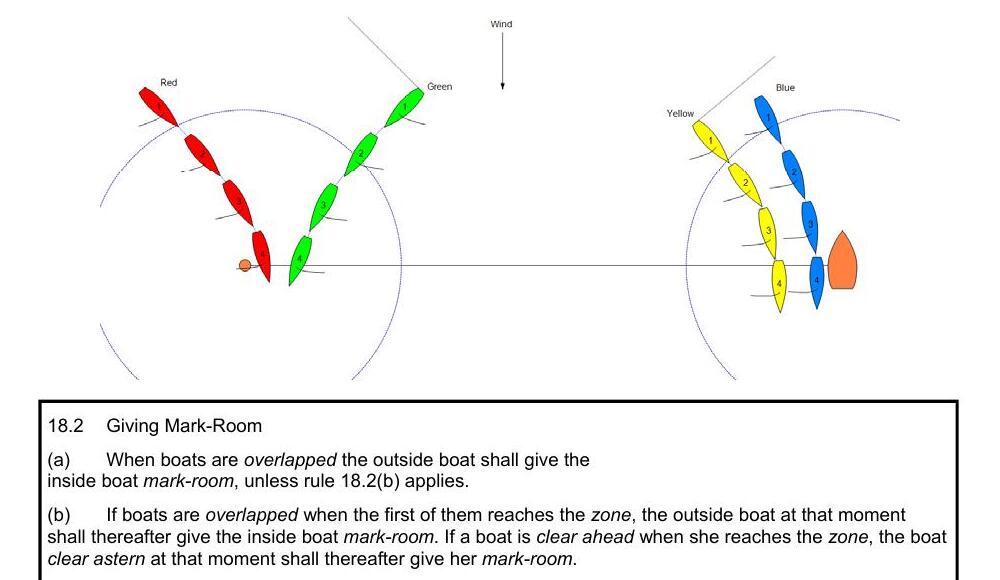
In the diagram the red boat and the green boat are overlapped when they reach the zone. The red boat on port tack is entitled to mark-room from the green boat that is on starboard tack. The yellow and blue boats are overlapped when they reach the zone. The blue windward boat is entitled to mark-room from the yellow leeward boat.
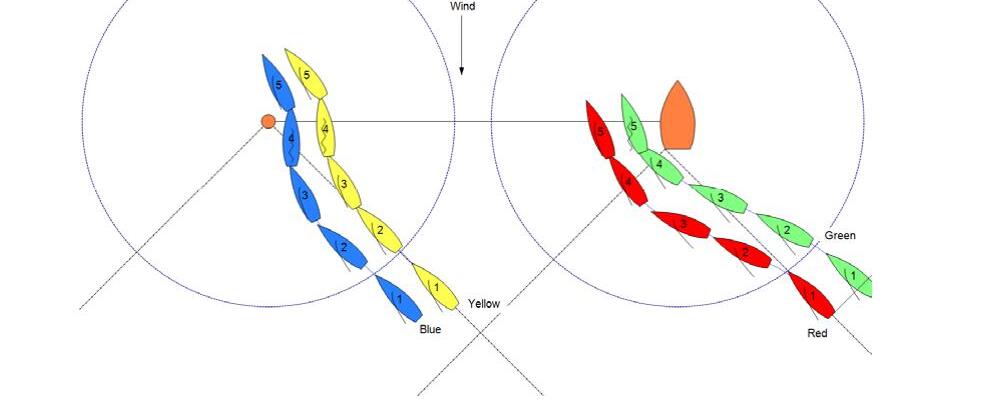
In the second diagram we are looking at a windward finish. The green boat has slightly overstood at the committee boat end. Since she is overlapped with red, she is entitled to mark-room even though she is the windward boat. Red must give her room to sail to the mark. Blue is the leeward boat and she entitled to mark-room. She uses her momentum to shoot the mark and yellow must keep clear. Blue must make sure that she does not cross head to wind.
This article is based on some articles written by the author for The RCYC Magazine Kwasind. Copies of the original articles these were based on along with animated diagrams can be found at www.rcyc.ca > Sailing > Know Your Rules.
The Albacore Has Returned to QCYC
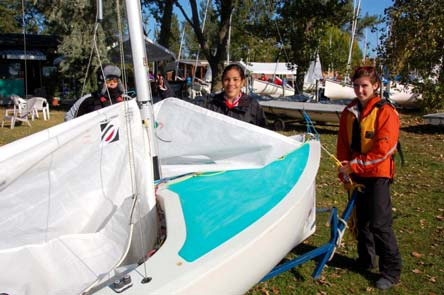
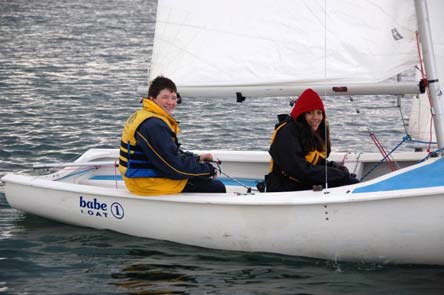
Ten years after its demise, the Albacore has returned to Queen City Yacht Club's (QCYC) junior fleet. The venerable Toronto Island club last used Albacores in the 1990s before replacing them with the more popular youth training boat, the Club 420.
But this year the Albacore returned when two boats were bought by a group of enthusiastic junior sailors. The rebirth of the Albacore began this past summer when QCYC head coach, Michael Weber, joined Westwood Sailing Club, one of the four Toronto-area community clubs with Albacores. "When I joined Westwood I discovered a vibrant Albacore racing scene that was friendly and very competitive," says Weber.
Weber quickly saw the Albacore as an asset to his junior sailing program. "There is a well established junior 420 and Laser racing circuit, but these regattas are restricted to kids and only occur in July and August," Weber says. "With its busy May to October racing schedule, adding the Albacore extends the sailing season and lets young sailors race with adults. And it's right in front of our club."
QCYC's first boat was bought by 15-year-old Daniel Sheedy with the help from longtime Albacore sailor, Henry Pedro. Sheedy plans to do some upgrades over the winter in preparation for next year. Rachel Harris, 16, bought the second boat. "I wanted a boat that I could sail with my friends and get more racing experience, " explains Harris. "The 420 is too small but the Albacore can easily fit three people and its stability is perfect for teaching my mom and dad."
Rachel bought Dave Provan's 7942 and her inaugural sail was during Monster's Halloween Regatta when she raced to a respectful mid-fleet finish with fellow QCYC junior sailor, Richard Evans.
Weber says the kids' response to the boat has been very positive. "Even with some deep finishes at the International Regatta, they enjoyed the racing and social scene. While most junior sailors stopped sailing on Labour Day our juniors have been playing on Albacores all fall."
He is particularly impressed at how the fleet has welcomed the kids. "Fleet members have lent the kids boats and asked them to crew. The kids feel comfortable asking questions. It adds an entire new learning realm outside of their sailing school."
Weber plans to continue to promote the Albacore at QCYC in 2012. "I would like to see a couple more families buy boats and race next summer and get more of our coaches racing with the kids."
For the junior race team, Weber explains that the Albacore will compliment its program as a training tool. "The 420 will continue to be our primary training boat and the 420 youth regattas our end goals. The Albacore will allow the kids to sail after sailing school and on weekends while increasing their water time."
Weber forecasts that the Albacore will eventually be reintroduced to more Toronto area junior programs. "Sure, it's an old boat that the coaches will be quick to mock. But it's a hot topic right now that the best way to promote sailing is to get kids racing with family, friends, and adults, which the Albacore does perfectly.
"You couple that with almost a hundred races in the Toronto area every summer and it's a no-brainer if you want more kids sailing--and sailing faster."
For more information on QCYC's junior program, visit its Facebook page: QCYC Junior Sailing
2012 Canadian Albacore Association Executive
| Commodore | Jeff Beitz |
| Past Commodore | Cathyann White |
| First Vice Commodore & Race Chair | Jefferson Hall |
| Third Vice Commodore & Education | Darren Monster |
| Rear Commodore | Sarah Bury |
| Chief Measurer | Ken Yamazaki |
| Specifications Chair | David Weaver |
| Editor – Shackles & Cringles | Christine Short |
| Secretary | Susan Higgins |
| Treasurer | Nora Hoffer |
| IAA | Cathyann White, Andrew Callum, Ian Brayshaw |
| Membership | Jenny Gibbons |
Canadian Albacore Association
970 Queen Street East
PO Box 98093
Toronto, ON M4M 1J8