January 1999
January 01, 1999
January 1999 issue of the Canadian Albacore Association newsletter (Vol. XXXIX No. 1) — Gordon Chu's Commodore's Corner, three "lost and found" regatta results (PABAR, St. Jamestown, Mooredale), a Barney Harris letter previewing the 1999 Internationals in Rehoboth Bay, Peter Vasoff's "Obstructions, obstructions" rules Q&A, Part I of Barney Harris's Albacore Tuning and Sailing Guide, the 1999 Preliminary Race Schedule, and Notices of Race for the Mid-Winter Regatta and the 1999 International/USAA National Championships.
The Albacore Advantage
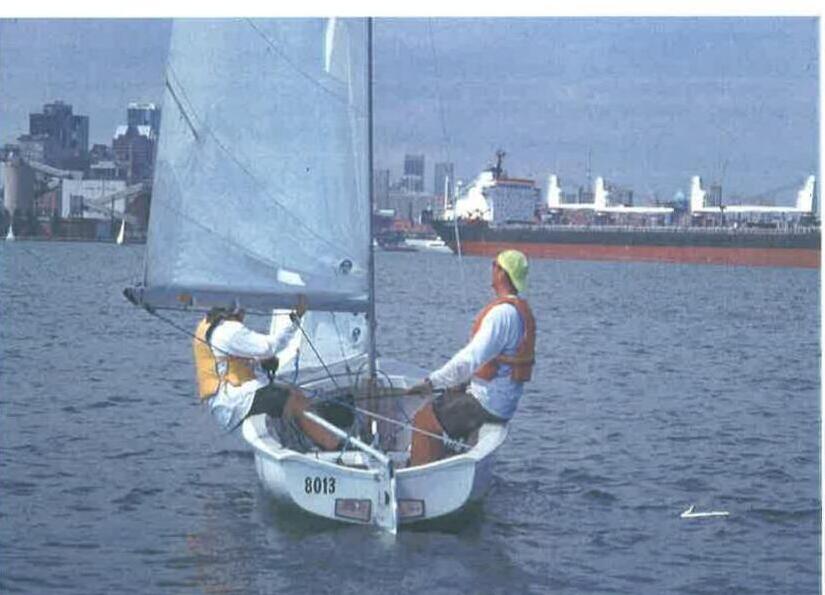
A One-design Boat
- no unnecessary expense of constant upgrades in design
A Safe Boat
- large air-filled tanks give excellent buoyancy
- hull shape gives stability on the water
- self-rescue after an unexpected puff is easy
A Light and Manageable Boat
- tongue load of less than 100 lbs gives ready trailerability
- launching and retrieving are a breeze
A Comfortable Boat
- large, open cockpit
- benches on port and starboard sides
A Performance Boat
- seriously campaigned by major sailmakers
- planes in moderate winds
- buoyant heavy-air hull shape
Ideal for Junior Clubs
- 4 to 5 juniors will fit easily
- will stand up to heavy use
A Vibrant Class Association
- well organized and vital
- recognized by the International Sailing Federation
- strong fleets through Ontario, Canada, US, Great Britain, Ireland and Bermuda
- top notch competitive sailing
- junior programs in some areas
1997/98 Canadian Albacore Association Executive
| Position | Name | Address | Contact |
|---|---|---|---|
| Commodore | Gord Chu | 310 Durie St. Toronto, ON M4J 1X9 | H (416) 760-8778 W (416) 733-6851 F (416) 733-6777 [email protected] |
| Past Commodore | Bob Stiff | 20 Southlea Avenue Toronto, ON M4G 3L9 | H (416) 423-3294 W (416) 482-6002 F (416) 482-5040 [email protected] |
| First Vice Commodore, Marketing | Laurie Harrison | 24 Noble Street, unit 410 Toronto, ON M6K 2C8 | H (416) 536-7025 W (416) 946-3778 F (416) 536-8196 [email protected] |
| Second Vice Commodore | Michael Leishman | 94 Harris Avenue Toronto, ON M4C 1P6 | H (416) 899-8100 W (416) 622-7354 F (416) 368-0956 [email protected] |
| Chief Measurer | Rick Clayton | 362 Brookdale Avenue Toronto, ON M5M 1P8 | H (416) 783-9194 W (416) 932-4427 F (416) 932-4342 [email protected] |
| Treasurer | Jason G. Roth | 60 Cheviot Cres. Brampton, ON L6Z 4G7 | H (905) 840-5395 W (416) 675-4826 F (416) 674-6849 [email protected] |
| Specifications Chair | David Weaver | 14 Lansdowne Rd North Cambridge, ON N1S 2S8 | H (519) 623-4402 W (905) 525-9140 ext 24907 F (905) 572-7944 [email protected] |
| Secretary | Raines Koby | 5 Coedale Place Palgrave, ON L0N 1P0 | H (905) 860-1866 W (905) 264-6123 F (905) 264-2944 [email protected] |
| Editor, Shackles & Cringles | Nona Arneson | 88 Wellesley St. E., Apt. 505 Toronto, ON M4Y 1H4 | H (416) 972-0415 W (416) 586-8642 [email protected] |
| Membership | Rose Anne Mallett | 22 Ridley Blvd. Toronto, ON M5M 3K9 | H (416) 486-0515 [email protected] |
| Rear Commodore | Heather Macnaughton | 99 Harbour Square, Unit 1812 Toronto, ON M5J 2H2 | H (416) 367-9898 W (416) 868-8205 F (416) 868-3817 |
| IAA Representatives | Rosemary Helmer, IAA Secretary Ian Rogers, IAA Treasurer | 264 St. Clair Ave. W. Toronto, ON M4V 1R7 155 University Ave #1600 Toronto, ON M5H 3B6 | H (416)964-8427 W (416) 410-4644 F (416) 961-4644 H (416)485-5136 W (416) 361-0626 F (416) 361-6303 |
| IAA Chief of Specifications | David Weaver |
Shackles and Cringles is a quarterly publication of the Canadian Albacore Association.
Deadlines for publication are January 15, April 15, July 15 and October 15.
Commodore's Corner
Toronto Boat Show
The January Boat Show in Toronto is just underway as I write this. Raines Koby and Laurie Harrison are very active again this year putting together the Albacore display. Thanks to Ron Batt for offering his boat to be used for the display. We thought we would use a wooden boat this year for a change. With all the snow we have had so far, we hope this does not adversely affect attendance.
Spring Tune-Up Meeting
This year we will hold a session in late April with some interesting and informative speakers. The venue, time and speakers have not yet been finalized but we expect this to be in Toronto in the last half of April. This will also be a chance for Albacore sailors to mingle and get excited about the coming season.
International Albacore Championships
Rehoboth Bay, Delaware
The Notice of Race for the back-to-back USAA Nationals and International Albacore Championships has been issued and are included in this issue of the newsletter. The US Nationals will be from Sat. Oct 9 to Mon. Oct. 11. The Internationals will be from Tues. Oct. 12 to Fri. Oct. 15. The USAA and their committee have chosen to make the Internationals this year an open event. There is an early-bird deadline of June 30, 1999 to take advantage of a reduced registration fee. Given that there will not be any limits set on the number of Canadian boats which may enter the event, there will not be any need to continue with the qualification process which was started last year. You do need current full membership, a valid measurement certificate, a legal boat and proof of 3rd party liability insurance in order to take part in this exciting event. The Notice of Race mentions full or associate membership in order to be eligible. However, in the case of Canada, associate membership does not include the ability to participate in a CAA or IAA sponsored event and we have asked the USAA to make a clarification of this. (Associate members who are also members of a community club are however considered full members, provided their club has taken out full membership for their boats.)
So this is it! Start saving those US coins and booking your holidays. It should be a terrific time.
Executive Resignation
It is with regret that we announce the resignation of Mike Leishman as the 2nd Vice-Commodore in charge of coordinating the racing schedule. It will be effective March 31, by which time he expects to have completed the 1999 race schedule. He is leaving due to family and work commitments. Mike joined the executive in the fall of 1995 as Rear Commodore and was responsible for organizing the Canadian Championships at Geneva Park in 1996 and at Hamilton in 1997. In 1998 he switched to the 2nd Vice Commodore's role. We thank Mike for his contributions to the class and we wish him the best.
This will be a short column this month because of a very special reason. My first child, Samantha was born on January 1st. As you can imagine this has very much been a big change for Christine and me. However, we both expect to be out on the water this summer. I guess we'll have to go for quality instead of quantity.
Canadian Albacore Championships in 1999!
CORK @ Kingston, Ontario
August 27-29th, 1999
Watch for details in the next issue of Shackles & Cringles
Regatta Results - Lost and Found
PABAR - August 15, 1998
Pointe au Baril, Ontario
| Rank | Sail # | Helm | Crew | Race 1 | Race 2 | Race 3 | Final |
|---|---|---|---|---|---|---|---|
| 1 | 5923 | Dennis Wetlaufer | Laurie Harrison | 2 | 2 | 4 | 8 |
| 2 | 7384 | Rosemary Helmer | Bruce Nash | 3 | 3 | 3 | 9 |
| 4 | 7166 | Steven Bretherton | Kevin Smith | 11 | 1 | 1 | 12 |
| 3 | 6216 | Bob Mosley | Leanna Foster | 5 | 5 | 2 | 12 |
| 5 | 7438 | John Lawler | Jamie Isbester | 1 | 4 | 9 | 13.5 |
| 6 | 7961 | Evelyn Simpson | Bob Silverberg | 4 | 7 | 5 | 16 |
| 7 | 5502 | Bill Foster | Cherricee Foster | 7 | 6 | 6 | 19 |
| 8 | 6731 | Mike Leishman | Stephen Sherk | 6 | 8 | 7 | 21 |
| 9 | 6626 | Diana Dempsey | Andrew Rogers | 9 | 9 | 8 | 26 |
| 10 | 6580 | Warren Wilkins | Willy Wilkins | 8 | 11 | DNS | 31 |
| 11 | 438 | Michael Wilkins | Jeff Wilkins | 10 | 12 | 10 | 32 |
| 12 | 3709 | DNS | 10 | DNS | 34 |
St. Jamestown Open Regatta - July 25-26, 1998
Toronto, Ontario
| Rank | Club | Sail # | Helm | Crew | Final |
|---|---|---|---|---|---|
| 1 | OHCC | 7166 | D. Harris | K. Smith | 18.5 |
| 2 | WSC | 8014 | D. Smith | A-M. Carey | 19.5 |
| 3 | RCYC | 7630 | K. Clarke | K. Mullin/S. Palmer | 27 |
| 4 | STJSC | 8019 | P. Nurse | F. Stacy | 29.5 |
| 5 | OHCC | 7977 | D. Bussin | R. Bussin/S. Bussin | 36 |
| 6 | TISC | 7954 | G. Chu | C. Mehling | 37 |
| 7 | OHCC | 6700 | G. Bain | S. Davidson | 40 |
| 8 | MSC | 7527 | J. Gilchrist | A. MacInnes | 45 |
| 9 | OHCC | 7400 | G. Roth | C. Rutherford | 47 |
| 10 | TISC | 8009 | F. Koehlmann | M. A. Edmonstone | 50 |
Mooredale Sailing Club Open Regatta - August 8, 1998
Toronto, Ontario
| Rank | Helm | Crew |
|---|---|---|
| 1 | Ken Clarke | Sharon Palmer |
| 2 | Ann White | Gord Frith |
| 3 | Tim Broughton | Karen Marshall |
| 4 | Dave Smith | Carolyn Quintin |
| 5 | Bruce Withrow | Sandy Swiatlowski |
| 6 | Gary Bain | Sylvia Davidson |
Thank you very much to Ian Rogers for finding the lost Pabar results, George Roth for St. Jamestown results and Todd Johnstone for Mooredale results.
Letters to the Editor
1999 Albacore Internationals: The Best Yet
I can still remember Mike MacNamara's polite admonition - "Barney - - Barney, now don't you dare!" on the starting gate of race #1 of 1995 Albacore World Championships. I was hopelessly stuck between the then current world champion and the guard boat - with nowhere to go. Hitting the mark boat meant instant disqualification with no alternate penalty - so I opted to run down poor Mike instead. He bore away to avoid a collision and said nothing; I felt like a moron and I did a 720. Despite the bad start, we (David Byron and I) managed to finish 3rd in that race.
We sailed into Kingston, Ontario's Portsmouth Olympic Harbor following that race. It was sunny - and there were Albacores everywhere. I thought - what a wonderful way to spend a week – in the sun, warm fresh water, with a bunch of sailors…Then it hit me like a ton of bricks. I'm 35 years old - I'm going to be dead soon! There is only another 35 to 40 years of time in which I can race Albacores. You see, I had quit racing about 5 years prior. It seemed like the correct thing to do at the time - after all, ALL I did was sail; and I was missing out on many things. On that day in 1995 I realized that all the crap I had been spending my time on during that 5 year sabbatical from sailing was an utter waste of time. I concluded that all I really wanted to do for the rest of my life was race dinghies in general - and Albacores in particular.
It's four year later - and all I can think about is Albacore Internationals 1999 in Rehoboth Bay. This year should see the best event yet for a number of reasons.
RACE MANAGEMENT: John Duncan has graciously accepted the position of Race Committee Chairman for this event. John's understanding of the Albacore is rooted in his 30+ years in the class. He was instrumental in bringing the Albacore into the United States during the late 1960's. John is an expert sailor, but more importantly, he knows how to manage the assets on the course to run a great race. Do not be late - the races will start on time!
THE VENUE: Rehoboth Bay is arguably one of the best racing venues in the Eastern United States. The Albacore class lucked into Rehoboth in the late 1980's, and have become regulars over the years. Other classes have asked to have events scheduled there, without success. Rehoboth is a great place to race with plenty of open water, steady winds, a lack of geographical effects, and little current. The Albacore Class is privileged to have the host club, Rehoboth Bay Sailing Association or RBSA, welcoming us back once again.
THE TOWN: Dewey Beach, Lewes, and Rehoboth, are the names of the surrounding towns. This is a resort area with loads to do and see. October is late in the season, so it will not be too hot, and will be very reasonably priced. The prime attractions are the beaches and ocean, but there is much more. Major metropolitan centers like Washington, DC and Baltimore are only a few hours drive. New York City is a four hour drive to the north. The local area is awash in antiques, factory outlet stores, and cheap T-shirts.
THE COMPETITION: The UK already has one full container arranged, to be packed with 8 boats. Several Brits are organizing a second container. This could mean up to 16 boats from the UK alone. We expect several people to charter boats as well. The Albacore is undergoing a bit of growth lately in the United States - particularly in the Washington, DC area. We have several new members with impressive intercollegiate racing backgrounds who bought boats last year and we expect several more to do so in the near future. I expect this Internationals to have more depth than any in recent memory.
AN OPEN REGATTA: This year's Internationals will be different for one more very important reason: it will be an open regatta. This will be the first Albacore Internationals for which class members do not have to qualify for in advance. Every full member of a national Albacore association with a legal boat is eligible - and invited. This means that everyone can make their plans earlier, arrange vacation, work with crews, and decide to do this with total certainty that they will be able to participate. Every class member now is in control of their own plans. As a corollary benefit, the Albacore class no longer must expend the energy to track and qualify people. Relieved of this, we all can refocus our energies on how to get more people to attend instead.
A week of International competition is a great experience. You will see many other boats, different rigging styles and tricks, and the opportunity to race against and befriend people from all over the world. It certainly beats the heck out of any rafting trip.
-Barney Harris, USA 8011
I asked, Peter Vasoff Answered
Obstructions, obstructions
Definition – "Obstruction"
"An object that a boat could not pass without changing course substantially, if she were sailing directly towards it and one of her hull lengths from it. An object that can be safely passed on only one side and an area so designated by the sailing instructions are also obstructions. However, a boat racing is not an obstruction to other boats unless they are required to keep clear of her, giver her room or, if Rule 21 applies, avoid her1,2."
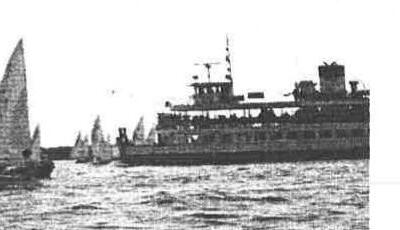
The ferryboat is definitely an obstruction because an Albacore would not be able to pass a ferry without making a substantial course change if she were sailing directly towards it and only one hull length (15 feet) from it.
Another comment I would like to make regarding the Obstruction Definition concerns starting lines that begin approximately half way up the weather leg. If you recall the North American's regatta (hosted by Westwood Sailing Club and ably run by Steve Jonjev) the Sunday portion of the regatta was sailing out on Lake Ontario. Steve had a combination Start/Finish line. This line was about halfway up the weather leg. The sailing instructions described this line as an obstruction meaning you could not sail through this line unless you were starting or finishing. At other times you were required to sail outside of this line. Steve was taking advantage of a phrase in the obstruction definition…an area so designated by the sailing instructions are also obstructions…
Think of it this way. If you were sailing on the Irish Sea, not necessarily in an Albacore, and you were approaching Fastnet Rock, would you pass it on one side or the other, or would you sail right through it?
Keep the above example in mind if you experience any more Start/Finish lines as described above. Remember, if the sailing instructions are silent on the Start/Finish line intentions of the Race Committee then you may proceed through it at any time.
Keep the questions coming and good racing to you all.
1 Changes to the ISAF/CYA Racing Rules of Sailing for 1997-2000 effective January 1, 1997.
2 Note: The changes in the Racing Rules of Sailing for 1997-2000 that are effective on January 1, 1998 are shown underlined in the above text. The above definition is taken from
Albacore Tuning and Sailing Guide - Part I
Setting up the Albacore
The Albacore is a great boat for racing. It's rounded hull sections, deep airfoil centerboard and rudder make the Albacore exceptionally maneuverable - a roll tacking machine. The powerful, rig and easily driven hull give excellent performance over a wide range of conditions. The Albacore will handily outperform other similar two person boats such as the Snipe or Jet, or any of the new generation of classes such as the Vanguard 15 or JY15. The tapered mast and modern, adjustable rig permit the boat to be raced competitively with a wide range of crew weights in all but the most extreme conditions. The Albacore's large reserve buoyancy and adjustability enable it to handle high wind and rough seas. Indeed, the Albacore was originally designed for the cold, rough conditions off the English coast which are characterized by high winds and steep chop produced by shallow water and high current. I would sail an Albacore in almost any conditions.
I have created this document based on my experiences with the Albacore class, which began in 1983. It is based on the North Sails Albacore Tuning Guide in circulation in the late 1980's. I originally had difficulty with many of the schemes North used to set up the boat, and worked to resolve them with North around the time they sold KC 6660 "Beast of Burden" (or was it "Cunning Stunts" - I can not remember). I asked them to clarify their settings via numerous telephone conversations and faxed sketches, until I could understand and repeat them. I have refined this basic set up over the past 10 years to my particular weight, sailing technique, and biases. North has not done any Albacore sail development in the past 10 years. The down side of this is that the state of the art in Albacore sails has not advanced since 1988 or so. The good news is that every time one buys a new set of sails, they look exactly the same, so you can build on anything you have learned while using your last several sets.
There are many ways to set up any boat to make it perform well, and the Albacore is no exception. The only commonality is that the entire boat, rig, crew, sails, must function as a system. That is, one can not expect to use the boat set up and sailing style based around one sail maker's design and expect it to work well for another. The following tuning guide is based on a post 1989 Ontario Yachts cored hull, Superspar M2 mast, and North championship main and low aspect jib.
Setting up the Albacore
Mast
Most Albacores are equipped with either the Superspar M2 or the Proctor D tapered mast sections. Some older boats are equipped with a non-tapered or straight mast. Some very old boats [1950's vintage] have a two-part mast, the bottom consisting of a straight aluminum tube, and the top of wood. It is critically important that the mast extrusion is straight. If it is not, gently bend it back into shape or get a replacement.
Spreaders
Spreader length and draft have a pronounced effect on mast bend. Spreader length is the minimum distance between the shroud and the mast. Draft is the minimum distance from the mast to a line connecting the shrouds where they pass through the spreaders. Shorter spreaders will permit more side to side bend; longer spreaders tend to constrain the masts side to side bend. In general, bending the mast to windward will flatten the main, reduce pointing, and de-power the rig; bending the mast to leeward will have the opposite effect. More spreader draft permits the mast to bend more as vang and jib halyard tension are increased, flattening the main sail and depowering the rig. Conversely, less spreader draft will reduce the mast's bend and maintain power in the rig. A good starting point for spreader length and draft is 17 inches and 6.5 inches respectively. These settings are good values to begin with, but one should fine tune them to the sailing conditions and crew weight: specifically, more drat in high wind and flat water with light crews and less draft in steep chop.
Mast Step
Set the mast step as far forward as permitted by the class rules - 3350 mm from the aft face of the transom to the forward side of the mast. Set this location by adjusting the pins on the mast step. Note that the pins may wear a notch in the mast foot casting. Either sleeve the pins with some small aluminum stand offs, or use 0D inch square aluminum to make a stop. This is only required on the forward side. It is important that the mast not be able to rotate about a vertical axis while sailing. Verify this by grabbing the mast with both hands and twisting it - there should be no perceptible motion. Either pinch the sides of the mast step aluminum channel with a pair of pliers, use shims, or tighten the fasteners in front and behind the mast so the mast's base casting fits tightly into the step. Be sure the mast base casting is securely riveted to the mast to gauge rake using the forestay and shear line mark on the mast. The shear is an imaginary curved surface resulting from the intersection of the deck and hull. The shear is where everything else on an Albacore is measured. To find the shear's intersection with the mast, place a straight object on the deck just aft of the mast. Measure vertically from the ends to the shear, which will be near the edge of the foredeck. Now, average the left and right measurement and measure down along the aft side of the mast. Mark this location - unless it has already been marked. To measure rake, place the boat on its trailer or dolly. Raise the jib and tighten the jib halyard until the tension in each shroud is 100- 200 lbs. Disconnect the forestay and swing it to the forward side of the mast and mark the location of the shear line. Swing the forestay to the jib luff and measure from the shear mark to the tip of the foredeck at the bow. Adjust your shrouds symmetrically until you have a measurement of 6 inches for newer design Ontario hulls, or 7 inches for older Skene hulls.
View the boat on its trailer, no mainsail, with the rig tensioned; note the shrouds where they pass through the spreaders. Sight from the shroud at deck level to the mast track. Now, without changing your position, look up the mast and shroud: they should lie more or less in the same plane. Now look at shrouds where they enter the deck, and follow them up to the mast. The two shrouds should lie in one plane from the deck to the hounds - and not be pulled either forward or aft at the spreaders. If the shroud is being pulled forward at the spreader tip, increase spreader draft and vise versa. The mast should be perfectly straight both side to side and fore-n-aft - when sitting on the trailer. Furthermore, its straightness should not change with jib halyard tension. This will constitute your nominal setting; mark these pin locations. Note that any variation from these settings will be to rake the mast further aft in the boat, and so you will need at least 2 lower pin locations on the chain plates. This may require that the chain plates be relocated, typically lowered. Accomplish this by bolting the top two holes on the bottom holes in the hull, and drill one new hole. Be sure to seal the holes with silicone or epoxy.
Partners
The partners are the area of the fore deck through which the mast passes. The partners constrain the masts side to side motion, but permit it to move fore-n-aft. Ensure the mast can move fore-n-aft the maximum permitted by the class rules. This dimension is the distance from the transom to the forward side of the mast and ranges from 3225 mm to 3330 mm. Maximum range of motion is important to allow the mast to bend in heavier winds, and to be rammed aft in moderate to light conditions when sailing off the wind. It is interesting that the newer boats being built in England are arranged with a flat foredeck, which ends up with a lower mast deck opening, permitting a greater range of motion. The mast partners should not constrain the mast's motion fore and aft, that is the mast should move freely in the partners by either affixing Teflon pads or spraying with McLube.
Shrouds
The mast must be set up perfectly straight. It is constrained by the step, partners, spreaders and hounds. It is unlikely that any boat will be perfectly symmetrical, so the shroud and possibly spreader may have to be individually adjusted to compensate. Check this with the mast in the boat. Hoist the jib halyard until the shrouds have around 100 pounds, or so, tension. Now sight up the aft side of the mast with the boat level on its trailer. You should not be able to perceive any side to side mast bend. Check this by pulling the main halyard tight and pressing it into the sail track with your thumb. It should lie in the track all the way from top to bottom. It is improbable that the shrouds will be on the same pin setting, as the boat, its mast step location, the partners, chain plate locations and shroud lengths are not perfectly symmetric and / or aligned. Do not be concerned if the boat is a little asymmetric - the key it to get the mast straight. Check the shroud through deck locations that tey are equidistant from the mast sail track and transom. If not, plug and re drill them. Some older Albacores are equipped with 3/32-inch wire shrouds. Most new boats use 1/8 inch wire rope or 1/8 inch dyform wire. I switched my first boat (US 7109) from the 3/32 inch to the 1/8 inch wire. The difference was quite noticeable - the rig seemed less "spongy."
Rake
Now, with the mast straight in the boat, we can set the rake. Rake is a measure of how straight the mast is in the boat for-n-aft. There are several methods to determine rake. One is to simply measure from the mast head to the inside corner of the transom. Another is to measure the difference between the mast height above the step and the distance from the head to the transom. These methods have the fundamental flaw that the distance from the step to the masthead is not the same for all Albacores. I prefer
Controls
In contrast to many new one-design classes, the Albacore class does not restrict the manner by which an owner can rig controls. Most new one-design "builders" classes subscribe to a strict one-design nature - that no one can get an edge over anyone else because any alterations to the basic boat are prohibited. This holds great attraction for some, that the lack of freedom will keep the cost low. However, there is a down side: an owner can not alter the controls to suit his / her strength, weight, or other preference. Furthermore, the lack of adjustability constrains the conditions in which lighter weight crews can compete since the rig can not be de powered as effectively. These classes can only be competitively raced with a relatively narrow helm + crew total weight range.
The Albacore rig is "restricted" as opposed to "one design." The Albacore class rules have been carefully crafted to prevent enhancements which will result in any tangible advantage, but with enough freedom so each owner can set up his / her boat as they please with almost total freedom as to purchase, where cleated, and line size and type. No one will, by virtue of expending large amounts of money, obtain a meaningful advantage on the racecourse.
Jib Halyard
The Albacore is very sensitive to jib halyard tension or actually - jib luff sag. Greater luff sag will increase the jib's draft and therefore power at the expense of pointing. Tensioning the jib halyard will reduce luff sag and flatten the sail entry, permitting the boat to be steered closer to the wind, but with less power. I recommend a 12:1 jib halyard using a triple cascade system with control lines lead to the thwart, permitting its adjustment at all times.
Arrange the forestay to pass through a small pulley at the jib tack, to a length of shock cord, to the mast and down past the deck partners to the halyard exit on the side of the mast. Now changes in the jib halyard setting will be replicated in the forestay, which will be held at a near constant tension by the shock cord, and will provide a steady reference from which the helm can gage jib luff sag.
One can not get the most out of the Albacore by merely setting the jib halyard on a number read off a sheet - you must understand what it does to the rig, and adjust it optimally while sailing. A reasonably good starting point is to seek between one and two inches of jib luff sag - if the boat feels slow ease the jib halyard a bit. If you can not point as well as other boats, tighten it a bit. In moderate to high winds the jib halyard can be adjusted to just bring the leeward shroud almost tight - more than this will depower the boat too much.
Jib Leads
The jib track should be installed fore-n-aft on the inboard edge of the seat. Install a small Harken hexaratchet on the adjustable slide. The jib sheet is lead from the jib clew, through the ratchet block, and to the crew's hands. I prefer that the crew NOT cleat the jib, particularly when sailing up wind. The jib lead must be set while sailing. You must have three sets of tell tales: two sets on the luff, spaced to approximately trisect the luff, and one on the trailing edge arranged to be visible through the window on the main. Begin setting the jib lead by locating it so the upper and lower jib luff tell tails break evenly while luffing up from a close hauled course. Now trim the jib in hard - the trailing edge tell-tail should fly until just before the sheet comes tight. If the jib trailing edge tell tail does not stall, move the jib lead one pin forward from this point. If the trailing edge tell tail stalls too early, move the jib lead one pin aft. I have found that it helps to move the leada pin forward in wind over 18 knots. I have never found it advantageous to move the lead aft in high wind. I have experimented with barber haulers with mixed results. I have not been able to improve the boat's performance by moving the jib leads outboard in high winds, but I have heard it works well in some conditions.
Vang
Correct vang adjustment is as critical as the jib halyard. As with the jib halyard, it is not possible to convey a perfect how to setting. Its effect on the boat must be learned and its effects understood. Tightening the vang will pull the boom down and forward into the mast. This has the compound effect of tightening the mainsail leech and bending the mast. As described previously, mast bend is resisted by the shrouds and spreaders - you can see this with the boat on a trailer. Apply some jib halyard tension and pull the vang. Note how the shroud angles at the spreader tip, tending to constrain the middle of the mast's forward motion. The vang should be arranged to be easily adjusted while sailing, and should be at least 12:1. I prefer a 16:1 arrangement using a triple cascade system. Set the lower connection as low as possible on the mast.
Cunningham
Adjusting the Cunningham changes tension in the sail cloth on the luff. More tension tends to move the sail's draft forward, open the leech, and flattens the main. In light winds it should be adjusted to not quite remove the wrinkles along the luff. In moderate wind the Cunningham should be pulled until the wrinkles are completely removed. In extreme wind the Cunningham should be pulled as tight as possible. Doing so will depower the main by opening the leach and, in combination with added rake, further bend the mast. The Cunningham should be rigged as a 2 or 4 to 1 and lead aft into the boat.
Outhaul
The outhaul is of secondary importance on the Albacore. Rig the outhaul with a 4:1 purchase lead to the foreward end of the boom or to the centerboard cap. Tightening the outhaul will flatten the lower 1/3 of the main and open the leach a bit. When sailing upwind, the outhaul should be pulled tight in light winds, eased off a bit in moderate wind, and pulled very tight in heavy winds. When sailing off wind the outhaul should be released such that the foot is completely slack and heavily wrinkled. A shock chord take up will help it release.
Mast Bender
This refers to the group of devices and/or schemes, which are used to control or limit the fore-n-aft location of the mast at deck level. Prebending the mast flattens the main, opens the leach. It also pulls the mast forward against the shrouds. This makes the jib luff respond more directly to changes in the jib halyard, and tends to decouple the jib luff sag from main sheet tension. Ramming the mast aft will tighten the leech and increase power in the main.
Mechanisms to control the mast at deck level could consist of a deck mounted magic box, mast ram, or other system. The simplest method is to place wooden blocks behind the mast at deck level. Tighten the boom vang to bend the mast, then drop blocks in between the aft side of the mast and the gate, and release the vang. Prebend the mast in light winds to open the leech and reduce the main's draft. Ram the mast aft when sailing off wind to power up the main by simultaneously increasing its draft and leech tension. The mast should be rammed fully aft when sailing on run wing and wing.
Main Sheet
There are many different mainsheeting systems, which can be classed as mid boom or end boom. Mid boom systems may use a traveller, adjustable pendants lead from either side of the bilge, or a metal hoop installed in such as was as to only control the boom's angle to the centerline, but to not tension the mainsail leech. End boom systems can also use a traveller, have an adjustable bridle, or have a simple split tail.
I prefer a split tail main sheet, arranged with each tail dead ended on the deck about 6 to 8 inches forward of the transom. Lead the main sheet from this point vertically to a block near the boom's aft end, then forward to a second turning block, and down to a third turning block on the centerboard cap. I believe it is important that the main sheet runs vertically between the boat and boom, so that tension in the main sheet does not pulls the boom neither forward nor aft when center lined.
Jib Sheets
I arrange the jib sheets with a brummel or sister clip attachment to the jib clew. This makes it easy to attach/detach the jibsheets, making it easy to wrap the jib around the forestay after racing. I do not have cleats for the jib, so an easy to grab jib sheet is appropriate for high winds. I prefer the jib sheet to be of minimum length; otherwise it gets tangled in the crew's feet! The minimum jib sheet length is limited by the need to sail wing on wing. Determine this length by setting the jib on the whisker pole to starboard and pulling the starboard jib sheet. Now, tie a figure 8-knot in the port jib sheet, and cut off the remainder. Perform this for the opposite hand.
Main Halyard
Most Albacores are equipped with a simple fiber line main halyard which is lead internal to the mast from the top either out the side just above the step, or through a turning block in the mast base. My last boat had a wire halyard that ran out the mast side to a "rake" riveted to the side. When sailing in high wind, the main halyard can stretch some. I have found it to be very slow to have the main only partially hoisted. If you find the main sail headboard below the upper black band by more than an inch, adjust (hoist) the halyard a bit to bring it back up. In high wind the combined vang and Cunningham tension will stretch the halyard; pretensioning the halyard while rigging is a good idea. Place a small wood dowel in the mast track at the head arranged such that the mainsail headboard can not be hoisted above the upper black band. Now pull the main halyard as tight as possible while rigging. This will reduce or eliminate the mainsail dropping due to halyard stretch.
1999 Preliminary Albacore Race Schedule
| Date | Event | Host Club | Location | Contact Name | Phone | ||
|---|---|---|---|---|---|---|---|
| G | March 22-26 | Mid Winters | SSS | Sarasota, Florida, USA | Rosemary Helmer | 416.964.8427 | [email protected] |
| May 30 | Harbour Master 1-2 | RCYC | Toronto, Inner Harbour | Rosemary Helmer | 416.964.8427 | [email protected] | |
| G | June 5-6 | Tarts & Balls | TS&CC | Toronto, Humber Bay | Derrek Griffiths | 416.944.1353 | [email protected] |
| June 5 | Peterborough Examiner | PSC | Clear Lake | Harold Briggs | 705.742.2746 | ||
| June 12-13 | RCYC Open | RCYC | Toronto, Inner Harbour | Rosemary Helmer | 416.964.8427 | [email protected] | |
| G | June 19-20 | Nepean Open | NSC | Nepean | |||
| June 20 | Harbour Master 3-4 | TISC | Toronto, Inner Harbour | Maggie Penhallow | 416.964.9280 | [email protected] | |
| G | June 26-27 | LSSA | ABYC | Toronto, Ashbridges Bay | Debbie Thomas | 416.461.7420 | |
| G | July 4 | Centennial Regatta | PSC | Clear Lake | Harold Briggs | 705.742.2746 | |
| July 4 | Women's Helm | StJSC | Toronto, Outer Harbour | Marek Balinski | 416.214.0437 | [email protected] | |
| July 10 | OHCC Open | OHCC | Lake/Outer Harbour | Zsolt Kecskemeti | 905.201.9796 | ||
| July 11 | Harbour Master 5-6 | MSC | Toronto, Outer Harbour | Steve Quick | 416.937.3572 | [email protected] | |
| July 17 | Westwood Open | WSC | Toronto, Outer Harbour | Steve Goode | [email protected] | ||
| July 18 | Harbour Master 7-8 | TISC | Toronto, Inner Harbour | Maggie Penhallow | 416.964.9280 | [email protected] | |
| July 24 | St. Jamestown Open | StJSC | Toronto, Outer Harbour | Marek Balinski | 416.214.0437 | [email protected] | |
| G | Aug 1 | Balsam Lake Open | BLSC | Balsam Lake | |||
| Aug 7 | Mooredale Open | MSC | Toronto, Outer Harbour | Steve Quick | 416.937.3572 | [email protected] | |
| Aug 8 | Harbour Master 9-10 | WSC | Toronto, Outer Harbour | Steve Goode | [email protected] | ||
| G | Aug 14 | PABAR | PABSC | Georgian Bay | Jeff Wilkins | 416.496.1000 | [email protected] |
| Aug 14 | New Skipper's Race | WSC | Toronto, Outer Harbour | Steve Goode | [email protected] | ||
| Aug 15 | Harbour Master 11-12 | OHCC | Toronto, Outer Harbour | ||||
| Aug 21 | Toronto Island Open | TISC | Toronto, Inner Harbour | Maggie Penhallow | 416 964.9280 | [email protected] | |
| Aug 22 | Harbour Master 13-14 | MSC | Toronto, Outer Harbour | Steve Quick | [email protected] | ||
| Aug 26-28 | Canadian Championships | CORK | Kingston | Rosemary Helmer | 416.964.8427 | [email protected] | |
| Sep 4-5 | RCYC Albacore Weekend | RCYC | Toronto, Inner Harbour | Rosemary Helmer | |||
| G | Sep 4-5 | Fanfare'97 (Area 10) | NSC | Nepean | Ed Nicholas | 613.738.7050 | |
| Sep 11 | Round the Island | StJSC | Toronto, Outer Harbour | Marek Balinski | 416.214.0437 | [email protected] | |
| Sep 12 | Harbour Master 15-16 | StJSC | Toronto, Outer Harbour | Marek Balinski | 416.214.0437 | [email protected] | |
| Oct 9-11 | US National Championships | RBSA | Dewey Beach, Delaware USA | Joanna Byron | 703.276.3867 | [email protected] | |
| Oct 13-15 | International Championships | RBSA | Dewey Beach, Delaware USA | Joanna Byron | 703.276.3867 | [email protected] |
Please Note: This schedule is subject to change.
1999 Albacore Mid-Winter Regatta
Notice of Race
Date: Tuesday, March 23 - Friday, March 26, 1999
Host: Sarasota Sailing Squadron
Location: East End of City Island, Longboat Key, Sarasota, Florida, USA
Jointly Sponsored by: Canadian Albacore Association, US Albacore Association
Regatta Schedule:
Registration: Mon. March 22, 10am - 12 noon and 2pm - 4pm
Racing: 8 races, 1 drop, 7 to count. Only 3 races are required to complete the Regatta.
| Tues. March 23 | Skipper's Meeting | 9:30 am |
| 1st race | 11:00 am | |
| 2nd race | Immediately following 1st race. | |
| Wed. March 24 | 3rd race | 11:00 am |
| 4th race | Immediately following 3rd race. | |
| Thurs. March 25 | 5th race | 11:00 am |
| 6th race | Immediately following 5th race | |
| Fri. March 26 | 7th race | 11:00 am |
| 8th race | Immediately following 7th race | |
| Free Afternoon |
Note: The Race Committee in consultation with the Regatta Chairperson reserves the right to condense the schedule in response to weather conditions, if this will enable the Regatta to be completed.
Eligibility:
Sailors with valid USAA or CAA membership and current measurement and buoyancy certificates may enter the Regatta by mail postmarked no later than Fri. March 5, 1999 thereafter by registering at the Regatta with US CASH!
Rules:
The regatta and all races will be governed by the ISAF Racing Rules of Sailing 1997-2000 including the CYA Prescriptions, the Albacore Class Rules, the CAA & USAA Membership rules and the Regatta Sailing Instructions.
Launching:
Competitors can launch off the beach in front of the Squadron or off the ramp at the south east corner of the clubhouse as suits their equipment and preference. Competitors should be aware that the race course situated north of the Squadron clubhouse in Sarasota Bay requires a sail of 3/4 to 1 hour to reach depending on wind conditions and therefore they should be prepared to launch in sufficient time to reach the race course in time for the start of racing. There is a long sandbar to sail around to get to the site of the races.
Entertainment:
This week tends to be quite spontaneous and competitors are encouraged to venture out to see the local sites and restaurants. To get you started in the right frame of mind we have the following activities planned.
Daily – Attitude Adjustment Hour (Immediately following racing). Keg of Beer or Soft Drinks & Shoot the Breeze!
Tuesday – BBQ at SSS or A Host Member's home
Friday – Dinner and Awards Night (Casual Attire)
Accommodations:
Alternately, you can camp at Sarasota Yacht Squadron. (Most of us do!) The Sarasota Yacht Squadron has a large lawn which can easily accommodate 30 tents. Both USAA and CAA members have usually camped. Also, located on the premises are showers and hot water for washing and cooking.
For those less adventuresome and who prefer their creature comforts but want to be on site you could rent a Winnebago and park it in the parking lot at SSS. For local hotel or housing information, visit http://www.insarasota.com/default.asp or call the Sarasota Convention & Visitors Bureau at 1-800-522-9799. Chris & Cassie Gorton have offered to help with local accommodation information Call: 1-941-362-4883.
Directions:
Local instructions are: If coming south on I-75 from Tampa, take State 780 exit west to downtown Sarasota. If coming south on US 41 (Tamiami Trail) go west on State 780, which crosses Sarasota Bay on a causeway. At St. Armands Circle (a traffic circle) merge right and go North toward New Pass Bridge and Longboat Key. Do not cross New Pass Bridge, but when you come to the Bridge, turn right and continue east until you see the Sailing Squadron on the left near the end of the road.
For Sale/Wanted
The Toronto Island Sailing Club is updating its fleet and has for sale two boats with sails. A 1987 Albacore #7470 and 1990 Albacore #7634. Boats have been maintained and are in good condition. Asking price is $2500 per boat. Also available for sale are a number of sets of sails starting at $250 per set.
For more information contact Elizabeth Fedorkow, Fleet Captain TISC at 416-766-7833 day or evening or by e-mail at [email protected]
Notice of Race
1999 International Albacore Championships and 1999 USAA National Albacore Championships
October 8-15, 1999
Organizing Authority: United States Albacore Association
Club/Host Organization: Rehoboth Bay Sailing Association, Dewey Beach, Delaware
Notice of Regatta:
- Rules: This regatta will be governed by The Racing Rules of Sailing for 1997-2000, the prescriptions of the US Sailing Association, and the rules of the United States Albacore Association, except as any of these are altered by this notice, and by the sailing instructions.
- Eligibility and Entry: This event is open to all Albacore boats helmed by a member (associate or full) of the United States Albacore Association or any other national Albacore Association. All registrations must be paid in full and postmarked by June 30, 1999 to receive the discounted rate. This championship will be a Category A event as it relates to advertising. All competitors must provide proof of 3rd party insurance.
The US National Championship event may be split into two fleets (the Presidents Fleet and the Challenger Fleet) at the discretion of the organizing authority.
The International Championship will be sailed in one fleet. - Number and Schedule of Races
Measurement
All boats and equipment will be subject to measurement (as described in paragraph 7 below). Competitors must be available for measurement during one of the measurement periods.Friday Oct. 8 1500 – 2000 Registration and Measurement Saturday Oct. 9 0800 – 1100 Registration and Measurement Monday Oct. 11* 1500 – 1700 Registration and Measurement * only for those competitors who did not participate in US Nationals.
US National Albacore Championships
Seven (7) races are scheduled. Several races may be sailed on any day at the discretion of the race committee. The warning signal for the first race on each day is scheduled as indicated below.Saturday Oct 9 1100 Skipper Meeting
1220 Warning Gun for Race 1, other races to follow.Sunday Oct 10 0950 Warning Gun for 1st race of the day, others to follow. Monday Oct 11 0950 Warning Gun for 1st race of the day, others to follow.
Awards immediately following racing.
No race will be started after 1330 on Monday, October 11.International Albacore Championships
Tuesday Oct. 12 1000 Skippers Meeting
1120 Warning gun for Race 1, others to follow.Wednesday Oct. 13 0950 Warning gun for 1st race of the day, others to follow. Thursday Oct. 14 0950 Warning gun for 1st race of the day, others to follow. Friday Oct. 15 0950 Warning gun for 1st race of the day; others to follow if necessary. - Social Schedule
Saturday Oct. 9 Informal dinner at RBSA Sunday Oct. 10 Nationals Dinner/AGM Monday Oct. 11 Evening Free Tuesday Oct. 12 Informal dinner at RBSA Wednesday Oct. 13 IAA Meeting Thursday Oct. 14 Evening Free Friday Oct. 15 Internationals Banquet and Awards - Advance Registration: Sailors must register in advance by completing the attached registration form and mailing it along with the entry fee. (Address on registration form). All registrations must be postmarked by June 30, 1999 to receive reduced rates.
- Fees: The entry fee, in US dollars, is as follows:
Before June 30 After June 30 US Nationals: $115 $140 Internationals: $160 $185 Both Events: $275 $325 US Nationals registration includes 2 dinners for skipper/crew. Internationals registration includes an additional 2 dinners for skipper/crew.
- Measurement: All boats must be accompanied by a valid measurement certificate with a current buoyancy endorsement. All boats must comply with the US specifications for this event. No provision will be made for issuing new measurement certificates or endorsements at the regatta. All measurement must be complete in advance of the event. Each participating boat will be subject to a partial measurement which may include hull weight, sailing weight, hull and spar dimensions, and sail dimensions. Equipment may be spot checked during the regatta. Shroud adjustment (use of shroud levers, etc.) is not permitted during a race.
- Safety Equipment: Each boat must carry safety equipment according to the class rules. In addition, each boat must carry on board during the regatta a tow line of at least 30 feet, 3/8 inch thickness must be carried.
- Sailing Instructions: Sailing instructions will be available at registration.
- Scoring: The low point system of Appendix A of the racing rules as modified by a 1/4 point bonus for first place will apply.
- Crew Changes: Crew changes during an event may not be made unless permission is granted by the organizing committee in advance.
- Trophies: There will be separate awards for the International Championships and the US National Championships.
- Launching: Crane or beach. Dollies are recommended.
- Accommodations: Prudential/Gallo Realtors has houses/condos for rent for the week. Accommodations are available for 4-10 people per house. Please arrange your own house-mates. Call 800-997-5529 and speak with JoAnn Bacher. She can also be reached at JA [email protected]. Please book early as the summer season is getting extended and houses will fill quickly! Rooms are usually available at the Bay Resort Hotel. Reservations may be made by contacting the Bay Resort, Dewey Beach, DE. Phone: 302-227-6400.
- Boat Charters: A few boats will be available for charter. Contact Barney Harris at (703) 838-0644 (h) or email him at [email protected].
- Further Information: contact Joanna Byron by phone at (703) 276-3867 (w), (703) 536-2030 (h), (703) 528-1290 (fax), or by email at [email protected]