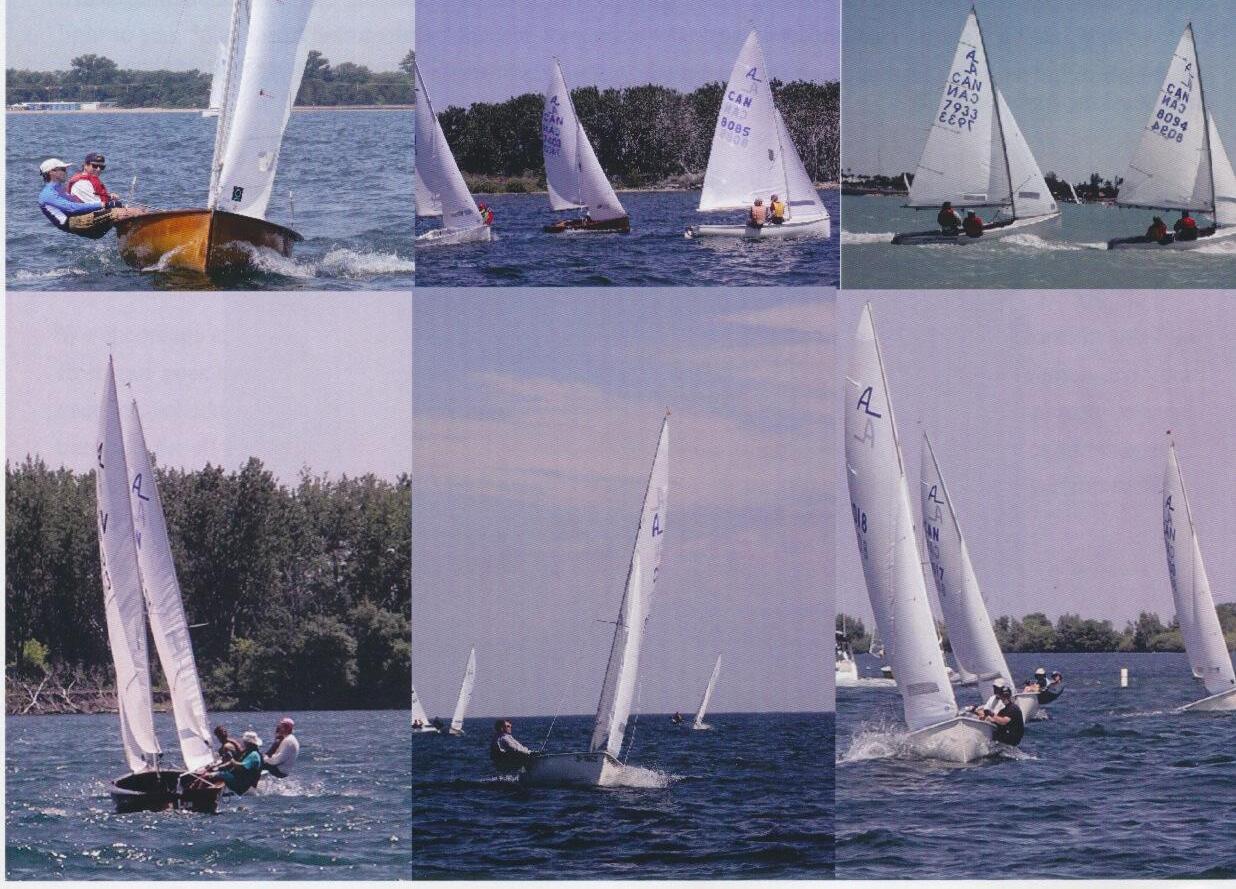
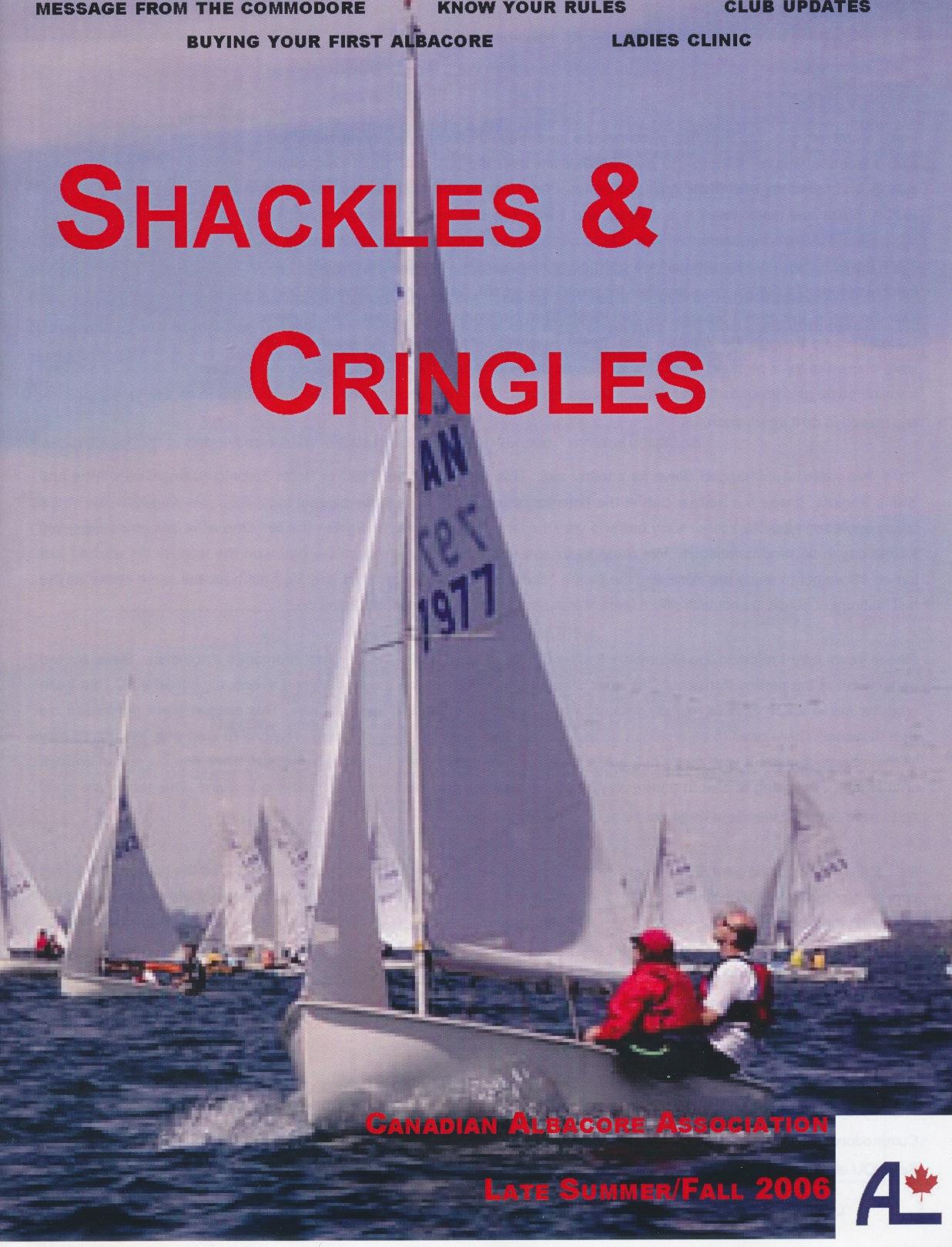
Late Summer/Fall 2006
September 01, 2006
Commodore Barrie Farrell's farewell message, PABAR and Peterborough club reports, a Ladies Albacore Training Clinic recap, Andrew Alberti on proper course at the gybe mark, Peter Duncan's guide to buying your first Albacore, the 2007 Internationals preview, and the 2006 measurers and executive.
Message From The Commodore
 August 1969
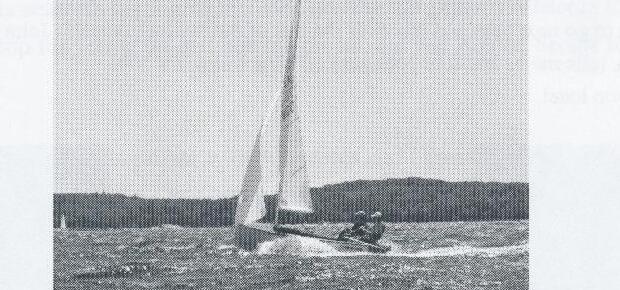
I was pretty nervous. My Dad had given me the go-ahead to take the family Albacore for a sail. I was too unsure of myself to grab another kid from the National Yacht Club Sailing School, so I called my best friend and land lubber, Steve Goode and said that we were going sailing. Steve had never been in a sailboat and I was just one year in sailing school. The Albacore seemed so big compared to a couple of 13 year olds but I had to be brave for my Bud. It was blowing pretty good but we seemed to manage OK. Steve liked the hiking so I thought we should put up the spinnaker for more excitement. Yup, the old Albacore had a kite. So did all the ones I learned on (Old Whitbys) at National. It was great. Two clueless Dudes blasting through the Western Gap, beam reaching with a shoot. All good until we were blanketed by a big keel boat. I wish I could move that fast these days. We survived, sailed to Centre Island and followed some girls around. Never actually talked to them. We were way too shy. We sailed back in an even a bigger wind and vowed to do it again soon.
1974 - five years later I bagged Steve for another sail. This time it was the TISC or North Toronto Sailing Club's Wine and Swine Regatta. It was the hottest club at the time for racing and this was the biggest local Albacore Regatta. We had a candy apple red Allen Albacore. Very fast and very modern. It had a lever to tighten the jib. One snap and you were ready for the day in all wind conditions. We came fourth and you would have thought we had won the worlds! As we had just turned 18 we got to enjoy the Wine and the Swine. Steve had taken off his shirt and fried his back the same colour as the hull that day - I guess we couldn't afford team shirts. Am I rambling? Yeah, but hang on.
Fifteen years later I rejoined the Mooredale Sailing Club and have had a million great memories since then. Steve started to hang out at the parties (for about five years everyone thought he was a member) and eventually joined MSC. It's been great for me to watch Steve's journey through White Sail to sailing in the Internationals. This season Steve purchased his own Albacore. There used to be a slogan for the Albacore advertising: The Albacore, The one to start with, the one to stay with. I always thought it was dumb but guess what? That's exactly what I and many others have done. It's sure enough boat for me. The racing is next to none - one for sheer numbers and the level of competition is divine. The people are great and I have fantastic friends in three countries because of this boat.
It's been a honour being your Commodore for the last three years. I have a huge appreciation for all the past Commodores and everyone who volunteers for the CAA Executive. My job was made very easy by the virtues of the amazing group of people on the Executive. I just want to thank them all for their time, ideas and workload. These people believe in the class and giving you all a great season. It's a labour of love and I'm glad to have been the captain of the CAA ship for a while. I'd also like to thank all the CAA members for their support of all things Albacore (and me).
 The class is healthy and membership is growing. We have to keep up the good work but I'm sure that the next Executive will do just that.
Thank you all. It was good clean fun! And some Dirty!
Commodore Bear
See YOU at the gybe mark.
Message From The Editor
Hello Sailor, I hope that you enjoyed the 2006 sailing season, it was a full year. Thank you for the support and contributions to the S & C newsletter, email updates and regattas. Please continue to send us your articles and club/regatta updates, anything albacore is always appreciated. On the race training front, the CAA hosted a Tactics Seminar with North U, which was an all day in class session we had 27 members attend. We couldn't have asked for a better weekend for our on the water training session held the last weekend of May. Thank you to the coaches Allan Measor, Jeff Beitz, Van Sheppard, Raines Koby and Tim Broughton and to Mooredale, J-Town and Westwood sailing clubs for supplying their boats and club houses. Tim Broughton and Steve Goode also went to Hamilton in August for a training session as they did last year, thanks guys for helping the steel city fleet. Keep yourself up to date on events by visiting the the CAA website www.albacore.ca Happy Sailing, ChristineCustom work on Albacores
Refinishing * Re-Rigging * Rig Set Up
Dealer for: Harken, Ronstan, Seldon, Holt, Marlow
Fall Booking special on Seldon Cumulus Albacore Masts and Seldon Booms
Call for pricing and spring delivery
99 Rose Point Road Parry Sound, Ontario
705-746-9559 [email protected]
PABAR 2006 Worth The Drive
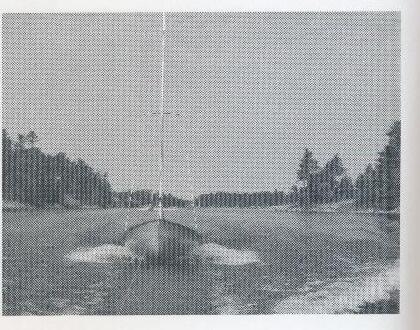
If you have never done a cottage regatta before please take note you may as well start with one of the best - PABAR. It's is worth all the effort it takes to trailer your boat to one! What's so special about a cottage regatta? It's the fun of being in that magical cottage environment. Beautiful lake, nice cottages, happy cottage folk, adventure, discovery, swimming, regatta party and throw in a little around the marks racing for good measure. I had the pleasure of attending PABAR (Pointe au Baril Albacore Regatta) this year with my 16 year old daughter as my crew. Pointe au Baril is roughly half way up the east shore of Georgian Bay – about a half an hour north of Parry Sound. It's a stunning area that makes up part of the Thirty Thousand Islands. The islands are wind swept smooth, Canadian shield granite covered with those classic Group of Seven wind bent pines. The cottages are designed to blend in with the environment not dominate, like some places I know. Pointe au Baril has had an active Albacore fleet dating back to the sixties. Ian "Buck" Rogers and his wife Joan, for years have promoted Albacore racing in Pointe au Baril. PABAR came into existence in the early seventies and is the marquee race of their Saturday race series. Today, their association has the strong backing of the next generation of sailors. Six new Ontario Yachts Albacores found their way to cottagers this past year. Part of the PABAR experience is towing. It was a 20 minute tow by boat to the Boyle cottage where we stayed. Then it's a tow to the race course Saturday morning, back to the cottage after racing and back to the Station on Sunday. I consider it just more adventure and enjoy watching my Albacore plane at 20 knots. Yes I'm easily amused. Racing is held in Shawanaga Bay, just big enough to house a decent race course. Typical PABAR wind is light building to breezy by the last race. This year the system wind fought the local thermal to keep wind light and at times nonexistent; however the RC persisted and pulled off the three scheduled races. A total of 14 Albacores competed, plus a second start for the Flying Scots and Lasers. Lunch is scheduled after the first race. Everyone congregates at the Bradshaw's island to enjoy picnic lunches along with family and friends. The regatta dinner party is held at the historic, beautiful and newly renovated Ojibway Club. The Ojibway was previously a hotel dating back to 1906. In 1965 the hotel ceased operations and has since served as the center for the Pointe au Baril Cottage Association. We enjoyed a delicious multi course meal in the charming dining room followed be a very entertaining prize giving. Sunday is cottage chill-out time. Unfortunately, that's when the real PABAR wind came up. I could go on but I urge you to go next year and discover the rest of the fun for yourself. John Hassard, Commodore of the Pointe au Baril Sailing Club, tells me he has four cottagers offering billets for 2007. As they say, if you snooze you lose!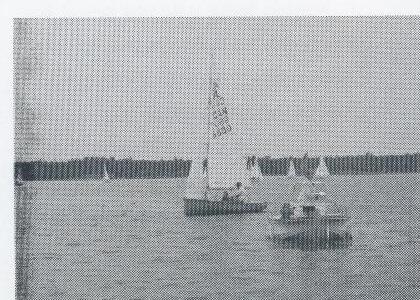
Peterborough Update
Peterborough Sailing Club has been actively promoting sailing in the Kawarthas for more than 40 years. It was established in 1965, largely by a group of co-workers at Canadian General Electric who shared a keen interest in sailing. The Club has been and continues to be the beneficiary of the hard work, enthusiasm, and vision of those founding members, and many other members over the years. For all of those 40 years, the Club has thrived and continues to fulfill its mandate of providing affordable access to the sport of sailing. For most of this time Club members have enjoyed the use of the club property located on Clear Lake, just north of Young's Point. The Club property features 150 feet of shoreline on the best sailing lake in the Kawarthas – wide open, no rocks, few weeds, clean water! There are facilities to dry sail approximately 50 dinghies and boats can be dolly-launched or launched using a unique roller-ramp system. With the support of the Ontario Trillium Foundation, 120 feet of brand-new docks provides plenty of preparation space, as well as a great place for family members to enjoy the water and cottage atmosphere. The original 1950's cottage has been updated throughout the years for use as a clubhouse and still maintains that "cottagey" feel.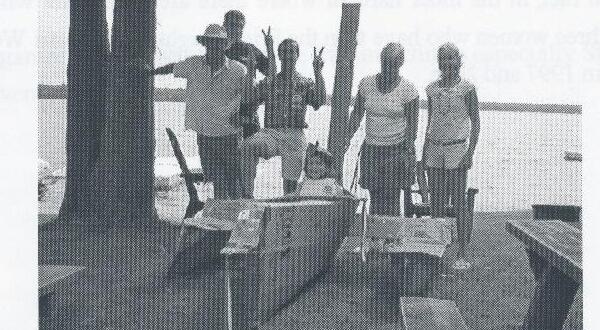 With a membership of approximately 45 families, we are a small, friendly group. Despite our size, we offer a full calendar of sailing activities that include racing, fun sailing events, social events, and sail training for both children, youth and adults. Some of this season's highlights included hosting the Ontario Albacore Championships, a Laser race training weekend workshop for young up-and-coming racers, the 2nd Annual Scouts Regatta, and the Great PSC Cardboard Boat Regatta.
Our fleet is somewhat mixed, but consists primarily of Albacores and Lasers. A few others, such as WayFarers and Hobie Cats, add interest to the mix on race nights (we're still working on converting those hold-outs over to Albacore sailing – we had one Laser sailor who saw the light this year!).
PSC always welcomes visiting sailors – so please consider this an invitation to come and visit our club. We hold two open regattas each year, as well as regular racing on Sunday afternoons and Wednesday evenings. Visitors are welcome at our start line anytime! For more information, visit our website at www.peterboroughsailingclub.org.
Ladies Albacore Training Clinics
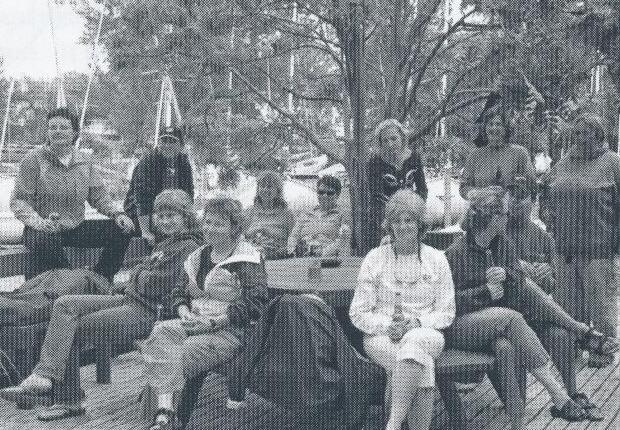
This past August, two weekends were dedicated to a Ladies Albacore Training Clinics. The weekends were organized by Stephanie Mah and Ann White. The following comments are a brief summary from the weekends. Ann discussed three fundamentals of racing - the things to think about before you get into tuning, boat handling, etc. First, you have to know the wind - know where it's coming from and what it's going to do (or what you think it's going to do). Second, you have to have a strategy. You have to decide on the course that will get you around the course the fastest, and make adjustments for other boats/shifts as you go, but you have to have an idea in your head of what your course is going to be and stick to it. Third, you have to get a good start. This means figuring out where you want to be during the last 30 seconds - use the pre-start time to figure out how long it will take you to accelerate based on wind strength, where the favoured end is, where the first shift is likely to be, etc. Female sailors should worry less about the weight issue and just race and have fun. The weight issue does not prevent you from winning, in fact, in the inner harbour where there are often light wind conditions it can be an advantage. There have been three women who have won the Friday night series Kerri Weller (Jtown), Ann Savege (Mooredale) and Ann White in 1997 and 2006.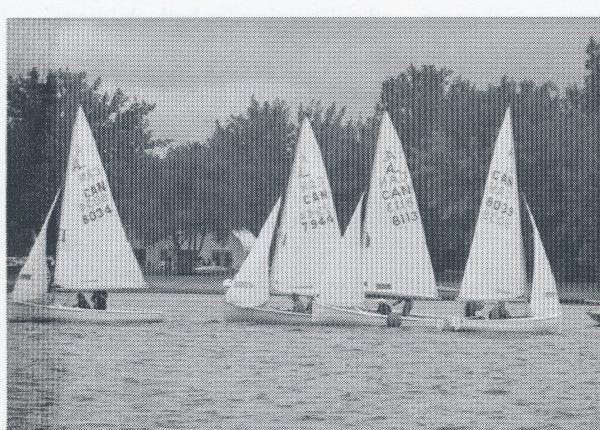
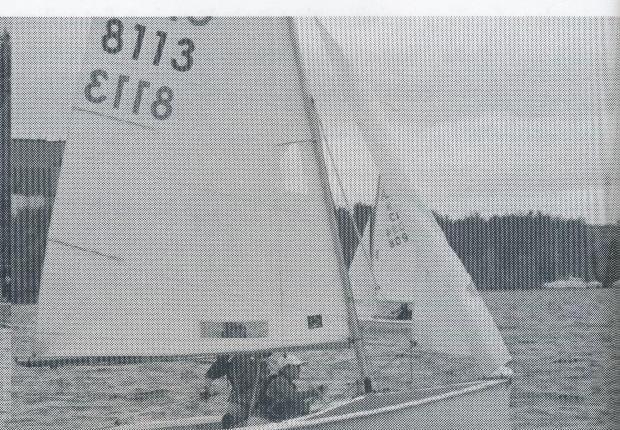
In gusty conditions the jib is only eased to prevent a capsize. To prevent a capsize it is just as important to ease the boomvang. Easing the boomvang luffs the top of main and lifts the boom so it doesn't drag in the water.
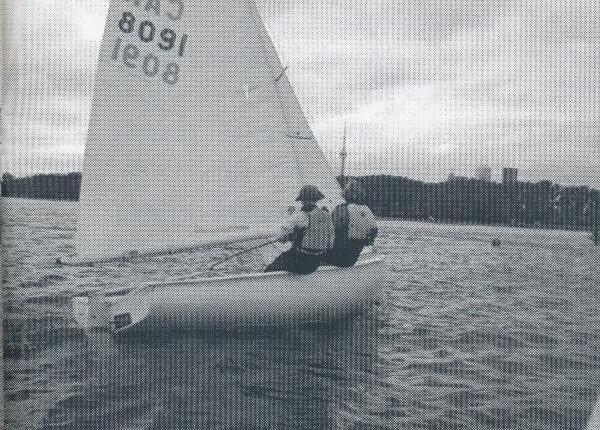
There were also some good tips for dealing with the shifty gusty north winds. A lot of consideration of the local geography is important. It is important to deal with the gust when it first hits, but also to be ready to sail in its aftermath - in the lulls that follow, be ready to power up again fast.
Lighter helms don't necessarily need a heavier crew to do well (it just takes a bit more work). In heavier air, lighter crews will have to compensate by de-powering more than a heavier boat. Dont be afraid to ease the main in gusts. The ideal combined crew weight suggested was 300 - 340 lbs - but again, lighter crews can still do well, and for new helms, light crews also force you to make adjustments faster and be more sensitive in heavier air.
Thank you to all of the organizers and volunteers for the training clinics especially Stephanie Mah and Ann White. We look forward to this event next year!
Know Your Rules: Proper Course at the Gybe Mark
This article was originally published in the RCYC Kwasind newsletter.
This article is based on a situation that I saw recently. This situation happened at the gybe mark. Rule 18.4 only applies at a gybe marks.18.4 Gybing
When an inside overlapped right-of-way boat must gybe at a mark or obstruction to sail her proper course, until she gybes she shall sail no farther from the mark or obstruction than needed to sail that course.
Proper Course A course a boat would sail to finish as soon as possible in the absence of the other boats referred to in the rule using the term. A boat has no proper course before her starting signal.
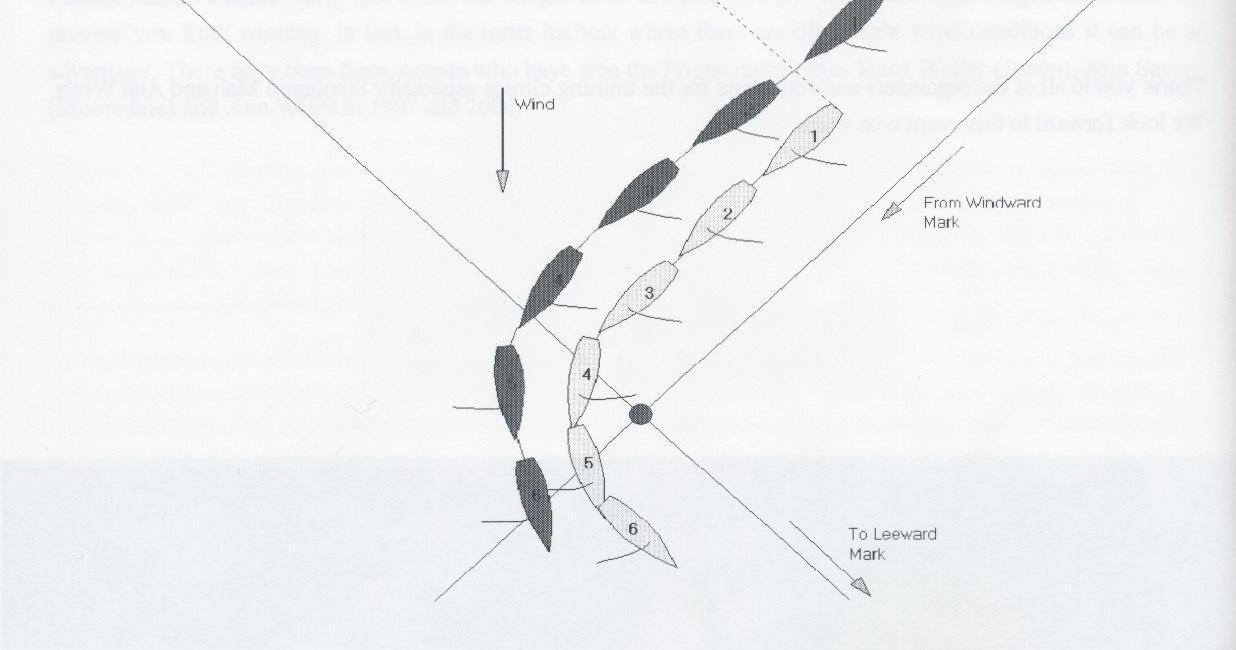 Let's take a look at the diagram. Both boats are approaching the gybe mark. Red establishes an overlap from windward from clear astern. Yellow is the leeward boat and has luffing rights. According to Rule 18.4 - since the proper course on the next leg is a reach on port, the proper course is to gybe. Yellow must sail no further from the mark than her proper course until she gybes which she does between position 4 and 5. At the time she becomes the give way boat
Now let's look at a similar but slightly different situation. The difference here starts with the angle of the legs. Either due to the shape of the course, or a windshift, the first reach is tighter and the second reach is very broad. Most boats don't sail very quickly on a broad reach particularly when sailing whitesail. Since the proper course is the course that you would sail in the absence of the other boats, it is unlikely to be straight to the mark. In this case the green boat, the black boat and the grey boat are all sailing proper courses. Directly downwind (probably wing on wing) and tighter reaches on either tack are all legitimate routes to get to the leeward mark. Given the bias to port tack, boats choosing to reach would probably spend more time on a port reach (like green) than on a starboard reach (like grey) but there would be some time on each tack.
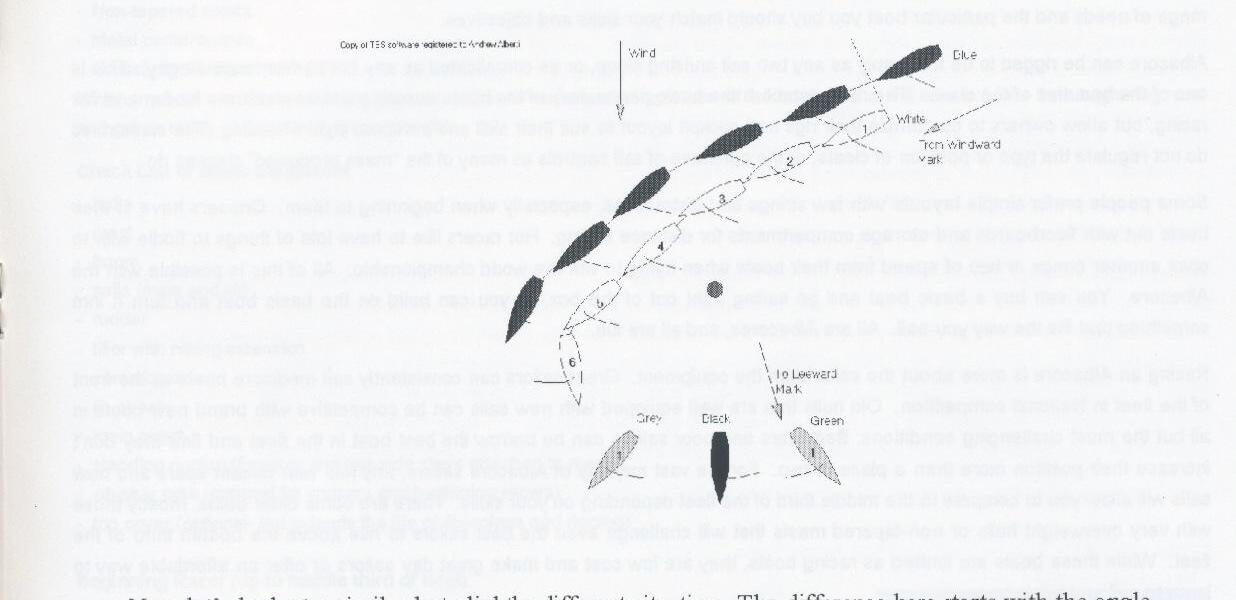 Going back to the two boats approaching the mark, blue establishes and overlap from clear astern to windward of white. White is therefore a leeward right-of-way boat with luffing rights. When she gets to the mark she can chose her proper course. If she chooses to follow the path that grey is taking or even the course that black is taking, then she does not have to gybe to get to her proper course. In this case Rule 18.4 does not apply. Since she still has luffing rights, nothing requires her to even fall down to the proper course. She can continue on her original course or even luff up higher. Eventually she may choose to bare off toa proper course or even to gybe but she can choose when to do that.
The key here is to look forward at the second reaching leg and determine whether the proper course could be on either tack or whether it requires a gybe. If the inside boat can justify a proper course that does not require a gybe (based on actions of other boats, normal sailing angles, path the previous time down the leg etc.) then she does not have to gybe at the mark.
Buying Your First Albacore
What is you objective? What is your budget? How much are you willing to work on a boat? The Albacore can cover a wide range of needs and the particular boat you buy should match your skills and objectives. Albacore can be rigged to be as simply as any two sail cruising sloop, or as complicated as any hot performance dinghy. This is one of the beauties of the class. The rules establish the basic parameters of the boats ensuring similar platforms for fun and fair racing, but allow owners to customize their rigs and cockpit layout to suit their skill and personal style of sailing. The class rules do not regulate the type or position of cleats, or the purchase of sail controls as many of the "mass produced" classes do. Some people prefer simple layouts with few strings and distractions, especially when beginning to learn. Cruisers have fit their boats out with floorboards and storage compartments for distance sailing. Hot racers like to have lots of things to fiddle with to coax another ounce or two of speed from their boats when trying to win the world championship. All of this is possible with the Albacore. You can buy a basic boat and go sailing right out of the box, or you can build on the basic boat and turn it into something that fits the way you sail. All are Albacores, and all are fun. Racing an Albacore is more about the sailor than the equipment. Great sailors can consistently sail mediocre boats at the front of the fleet in National competition. Old hulls that are well equipped with new sails can be competitive with brand new boats in all but the most challenging conditions. Beginners and poor sailors can be borrow the best boat in the fleet and find they don't increase their position more than a place or two. For the vast majority of Albacore sailors, any hull with decent spars and new sails will allow you to compete in the middle third of the fleet depending on your skills. There are some older boats, mostly those with very overweight hulls or non-tapered masts that will challenge even the best sailors to rise above the bottom third of the fleet. While these boats are limited as racing boats, they are low cost and make great day sailors or offer an affordable way to learn to sail and begin to race. While there are plenty of exceptions, the following descriptions can be used to guide for those buying their first Albacore to find a boat that is well suited to your needs. This article focuses on boats commonly available in the North American market (there are many more types of wood boats and fewer fiberglass boats available in UK). All prices are estimated ranges based on market values in 2004. Prices are shown for boats complete with sails. New boats are priced with new sails. Used boats assume used sails with at least several seasons of use. The value of trailers, covers and other extra equipment is discussed in separate section.Beginner or Cruiser (minimal intention to race)
Most Albacores will be fine. Even boats 30 years old are usually sound and can get you started in the class. Boats built by Grampion, Whitby, McGruer & Clark, Skene and others from 1960's and 1970's (sail numbers from 700-6300) are examples of boats that are well suited to getting you started at low cost. You can even begin racing these older boats with low level rigging, and should be able to compete in bottom third of National competition once you develop your boat handling and racing skills. New boats with simple rigging are also available. Depending on level of rigging and cosmetic condition of boat, prices for these boats (in 2004) should be in the US$400-1200 range for used boats and US$7,200 for a new boat. Of course, beginners or cruisers could also use all of the boats that follow in this list, but they will cost more and may have more sophisticated rigging that can be a distraction for those just learning the sport.Things to look for in used beginner/cruising boats:
- Does it have all basic equipment- see checklist (link to list below)
- Air tanks sound
- Bailers leak?
- Condition of standing rigging and halyards
- Condition of wood reinforcement used in construction of hull- wet or rotten?
- Structural condition of rudder and centerboard (no cracks or failure points)
- Top cover?
For those who are considering some racing, the following items will limit your performance:
- Non-tapered masts
- Metal centerboards
- Grossly overweight hull > 275 lb
While any boat can be raced, if you think this will be a major part of your use of the boat, look at the criteria below for a beginning racer and get as many of these features as possible.
Check List of Basic Equipment
- hull
- mast
- boom
- sails (main and jib)
- rudder
- tiller with hiking extension
- centerboard
- jib sheets
- main sheet
- standing rigging (forestay and two side stays attached to mast)
- whisker pole (optional for cruisers and beginning racers)
- top cover (optional- but extends the life of fiberglass and rigging)
Beginning Racer (up to middle third of fleet)
 Objective at this level is learning to race sailboats. The beginning racer plans to go in local races and eventually work up to regional and national competition. They have an expectation of reaching consistent performance in middle third of the fleet, with occasional higher finishes as their skills improve.
Skene or Ontario Yachts hulls with numbers > 6800 (built from 1980's to present). Tapered mast, aerofoil shaped centerboard and rudder (not metal), sails with < 3 seasons use. Powerful (> 8:1) adjustable vang and adjustable jib halyard (> 6:1). The vang should be located for easy adjustment by the skipper while racing. The jib halyard needs to be adjustable during the race, but it need not be lead all the way to the skipper or crew position. Other equipment described for the accomplished racer is a benefit as long as it is not a distraction as you learn to race. Used boats for US$1,500-3000; new boats for about $7,500.
Things to look for in used Beginning Racer boats:
- Does it have all basic equipment- see checklist (link to list below)
- Tapered mast?
- Air tanks sound (link to floatation and safety section below)
- Bailers leak?
- Condition of standing rigging and halyards
- Condition of sails
- Condition of centerboard and rudder
- Adequate vang and jib halyard controls
- Weight < 260 lb.
- Top Cover (link to top covers section below)
Accomplished Racer (consistently in to top third of fleet)
This level assumes that the owner knows how to race and has an objective to enjoy competitive sailing and place consistently in the top third the fleet. The most important thing is to have a sound boat with relatively new sails (< 2-3 seasons of light use), good foils and equipment that allows the full range of adjustments to be made while underway. Suitable hulls will generally be Ontario Yachts (with numbers > 7300). In many cases these will be hulls constructed with foam cores (most, but not all above #7352). Foam core hulls will retain stiffness longer under heavy use and tend to show a small performance edge in conditions over 18 knots or substantial chop. A few lightly used or well maintained Skene boats (6800 to 7300) can perform at this level with a skilled team and excellent tuning. Most wood boats (including those from Young, Woof, Knight and Pink, and modernized Fairey Marine) are suitable for this level. To be competitive at the top end of the range, boats should have at least two suits of sails with the better suit having no more than two seasons of light use. Foils should be in top conditions showing minimal nicks, scratches or dings. Boats should be equipped with wide range adjustable jib halyard (~ 12:1 with 14-18 inch travel) and powerful vang (~ 16:1 vang that covers full range). Other sail controls (cunningham, outhaul, jib tracks, mast pre-bend, mast ram) should be sufficiently powerful and positioned so that they can be adjusted while racing. Boats should be equipped with jib stick/whisker pole. Mast and boom should be straight and free of dimples or repairs. They should also not have excessive holes from relocating fittings. Standing rigging should be in sound condition and sufficient (at least 1/8" 1 x 19 flexible wire or 3/32, 1 x 7 dyformed stainless steel wire for side stays) to hold up in all racing conditions. Used boats that meet these criteria are generally priced US$3,000 to $6,000. New boats for about $9,000.Things to look for in used Accomplished Racer boats:
- Does it have all basic equipment
- Does it have some items on advanced
- Tapered mast
- Air tanks sound
- Bailers leak?
- Condition of standing rigging and halyards
- Condition of sails
- Good condition of centerboard and rudder
- Full range powerful vang and jib halyard controls
- Hull stiffness?
- Weight 240 - 250 lb., less is always better
Other equipment that can be beneficial:
- Launching dolly
- Top and bottom cover
Top National/International Competitor
Objective is to be in top 10% of National or International competition. At this level you are aiming to win the event or at least place in the top five. Under the right conditions with a very skilled crew, almost any Albacore could in theory win at the National level. In practice, however, you will find most competitors will have the following equipment. Start with a stiff and well faired hull. This usually means an Ontario Yachts foam core hull (> #7700) or a modernized wood boat (Woof, Young, Knight and Pink, Kingsfield, etc.). New or lightly used sails are essential. Spars should be in top condition. Mast should be snuggly chalked to restrict side-to-side motion, but should able to traverse the full range of fore and aft motion allowed by the rules. A system for controlling mast bend at deck (mast ram or puller/pusher) is important (and it is critical for some brands of sails). While all forms of sail adjustment are not required, most top boats will have all of these rigged and available for use as needed. Most of these controls will be lead to skipper or crew positions for easy access in all conditions, including while fully hiked out. Boats should have excellent foils. They should be stiff, have precision aerofoil shape and mirror like finish free of all nicks and dings. Used boats that meet these criteria are generally priced US$5,000 to $10,000. New boats for about $9,500.Things to look for in used Top National/International Racer boats:
- Does it have all basic equipment- see checklist
- Tapered mast?
- Air tanks sound
- Bailers leak?
- Condition of standing rigging and halyards
- Condition of sails
- Excellent condition of centerboard and rudder
- Hull stiffness?
- Weight < 240 lb. With correctors to bring up to 240 lb. class minimum.
- Launching dolly
- Top and bottom cover
- Practice sails for use in 2nd tier events
Check List of Advanced Equipment
This list is in addition to basic equipment (above). It is recommended for those sailing at "Accomplished Racer" level and virtually essential for sailing at "National Champion Level"
- full range powerful sail controls
- mast pre-bender
- mast bend restraint capability (mast ram or blocks)
- adjustable jib stick
Buoyancy Apparatus and Safety
All hulls have positive buoyancy and won't sink. Class rules require builders to build in sufficient foam to keep a fiberglass boat afloat even if all tanks rupture. Wood boats are inherently buoyant and do not require foam. When inspecting a fiberglass boat, be sure that the required foam is still intact. Some owners unknowingly remove this foam, especially if it gets wet or damaged and fail to replace it. Many builders sealed foam "peanuts" inside seat tanks, so it may not be obvious unless you look inside the tank. In order for boat to be safe and pass measurement, this foam must be in place. If you find an Albacore does not have required foam, replace it with a closed cell foam that will not adsorb water. In addition to the requirement for positive foam buoyancy, the class also has a rigorous requirement for integrity of the air chambers (seats, tanks and airbags) to assure that the boats can be self-rescued in the event of a capsize. Details can be found in the class rules. Annual tests are required with annotation on measurement certificate to qualify a boat for racing. When purchasing a used boat, it is reasonable to review this measurement card to ascertain if the boat has recently passed the annual buoyancy requirement (measurement card should transfer to new owner with purchase of boat). If this card is not available or not current, it is reasonable to perform a buoyancy test to assure the boat does not have leaky tanks. Leaky tanks can be repaired and and details can be found on the CAA and USAA web site.The Dinghy Boat Cover Specialist since 1969
[email protected]
905-277-3306 Mississauga, Ontario
2007 Albacore Internationals
The International Albacore Association and the US Albacore Association are well into planning for the 2007 Albacore International Championship, and we invite all Canadian Albacore sailors to join us for a wonderful holiday and a week of sailing on the East Coast of the USA. The championship will be held at West River Sailing Club in Galesville, Maryland and racing will be on the Chesapeake Bay about five miles south of Annapolis off the Thomas Point Light. The event is scheduled for October 5-12, 2007 to draw the maximum participation. No need to put your boat away after Canadians in 2007. You can extend your season and enjoy sailing over the Canadian Thanksgiving weekend (we'll provide the turkey). With advanced planning and no conflicts with needing the boats at the community clubs that we will see at least all the Canadian teams that came to Kingston in 2003. We are planning on at least 65-75 boats, but can accommodate well above that number if the enthusiasm builds. We hope to have at least one container (12 boats) from the UK and more attending in charter boats. Preliminary analysis of wind data collected from Thomas Point shows that winds during sailing hours on two-thirds of the days in October were between 5 and 18 knots with average velocity of 12 kts. Water depth is 20-40 feet over most of the course area and we have a full compliment of rescue boats so there should be no need to postpone the racing if we a few days of 25 knot winds behind a strong front. Water temperature is typically 17-19 degrees Celsius with daytime air temperature ranging from 15-25 Celsius with the average in the upper teens. In short, the weather forecast is for plenty of wind to race with a low risk that any days are too light to sail. John Luard, a long time Albacore competitor who has frequently been in the top three at Albacore Internationals, will be our PRO and assure we have first rate committee work and get the most out of the week of sailing. Off the water there is plenty to do. A full social program is planned at the club for half of the evenings. On the other nights, Annapolis is 20 minutes away and will be packed with activity as it will be hosting the biggest sailboat show in the USA the week of our regatta. We encourage and look forward to a large contingent from Canada to make this a truly international event. The first gun goes in less than 12 months. Now is the time to begin organizing trailers, transportation and your vacation schedule. With some proper planning and a few multi-boat trailers we should be able to arrange transport for all who need it. I recommend each club put someone in charge of transport logistics and they start collecting the names of all who would like to go. The entire planning committee will make every effort to make your visit fun, easy and trouble free.See you at West River in 2007!
Event site link: www.albcore.org2006 Canadian Albacore Association Measurers
George Wm Roth
212 Willowdale Ave
Waterloo, ON N2J 3M1
519-746-1300
[email protected]
Dave Weaver
14 Lansdowne Rd, N
Cambridge, ON N1S 2S8
519-623-4402
[email protected]
310 Durie Street
Toronto, On M6S 3G3
Sailing Club: Outer Harbor Centreboard Club
416-760-8778
[email protected]
362 Brookdale Ave
Toronto, ON M5M 1P8
Sailing Club: Outer Harbor Centreboard Club
416-783-9194
[email protected]
635 Broadway Avenue
Toronto, ON M4G 2S6
Sailing Club: Outer Harbor Centreboard Club
416-422-5830
[email protected]
298 Tompkins
Ottawa, ON K1E 3K7
Sailing Club: Nepean Sailing Club
613-834-1702
21 Rosethorn Way
Kanata, ON K2M 1R1
Sailing Club: Nepean Sailing Club
613-270-8791
[email protected]
2006 Canadian Albacore Association Executive
Barrie Farrell
416-529-2952
[email protected]
Past Commodore
Ann Savege
416-361-1808
[email protected]
First Vice Commodore & Secretary
Teresa Miolla
416-769-0990
[email protected]
Second Vice Commodore & Website
Henry Pedro
416-465-7563
[email protected]
Christine Short
416-703-2086
[email protected]
Rear Commodore
Van Sheppard
613-270-8791
[email protected]
Specifications Chair
David Weaver
519-623-4402
[email protected]
Chief Measurer
George Roth
519-746-1300
[email protected]
Janet Duff
416-760-7254
[email protected]
Treasurer
Jason G. Roth
905-840-5395
[email protected]
IAA Treasurer
Raines Koby
905-880-1866
Canadian Albacore Association
47A Harbour Square,
P.O. Box 81085
Toronto, Ontario M5J 2V3
www.albacore.ca