May 2014
May 01, 2014
Robert Macdonald's guide to sailing photography, Andrew Alberti on tacking at the windward mark, an introduction to the newly-rejoined Kanata Sailing Club, and the CAA's new membership benefits.
Message From The Commodore
Hi Everyone,
Sailing is well underway here in Toronto after a long winter a bit of which I spent in the UK. (The picture is of me and my niece in the rescue boat for races on the Thames in March). Some CAA events have already taken place such as a great Advanced racing clinic with Geoff Moore, and many are still to come.
The Ontario's will be held this year on June 14th and 15th at the Toronto Sailing and Canoe Club on Humber Bay in conjunction with a Wayfarer regatta to give us some new friends to socialize with after the sailing. If you are from out-of-town and need somewhere to stay for the regatta, let me know and I will see what can be done in terms of finding a room with other Albacore sailors. The North American will be at CORK (Kingston) in August and the Canadians in Nepean in September. There are Intermediate and Beginner race training sessions being held in Toronto in the next few weeks and if you would like to see similar training in area just get in touch.
Travelling Albacore sailors who are visiting from out of town may wish to take advantage of two new CAA initiatives in conjunction with various Albacore clubs. One is to go have dinner, and at some clubs a sail in their boat, when you are in the neighbourhood. The other is to keep your boat at a club for a couple of days (and launch it), when you are visiting. For more information go to albacore.ca/benefits.
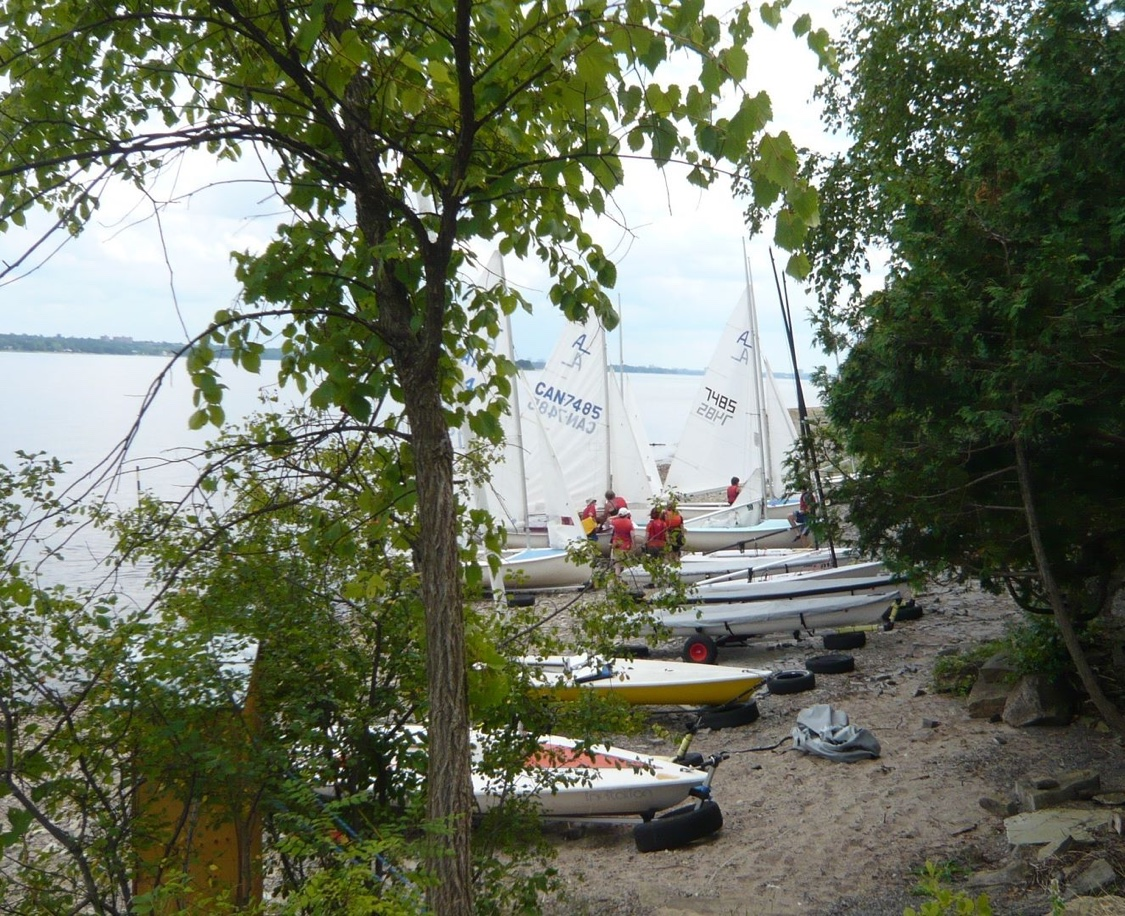
This issue contains an article about Kanata Sailing Club that rejoined the CAA after some year. The cover picture is of Kanata SC. Welcome back to all members of Kanata SC. To everyone who hasn't been there it is a delightful friendly club in the Ottawa area that you might want to visit and have dinner (see above).
I am glad to report that Ovingtons in the UK will be producing Albacores for the Canadian market late this year. Unfortunately delivery will be after the sailing season is past. However, new boats will be coming which is great. The CAA is looking into how to best assure that reasonably priced new Albacores are available in Canada.
Over a month ago the CAA sent out draft revised by-laws for the organization to meet the requirements of the new Federal Non-Profit Act to both individual members and member clubs. To date no one has registered any concerns. If you have any please let us know now or if you want a copy get in touch with John Cawthorne at [email protected].
Lastly, I will not be running for another term as Commodore in the fall. Please consider if you would like to run for the position and let me know. I am happy to answer any question you may have.
Wishing you a wonderful sailing season and lots of beautiful sailing weather,
Mary
Mary Neumann, Commodore
Robomac Guide To Sailing Photography
The first rule for sailing photography is, go hop in the motorboat with your camera whenever there's sun and lots of boats. A sunny Friday evening in Toronto, with the Albacore fleet mixing it up, is a wonderful place for this.
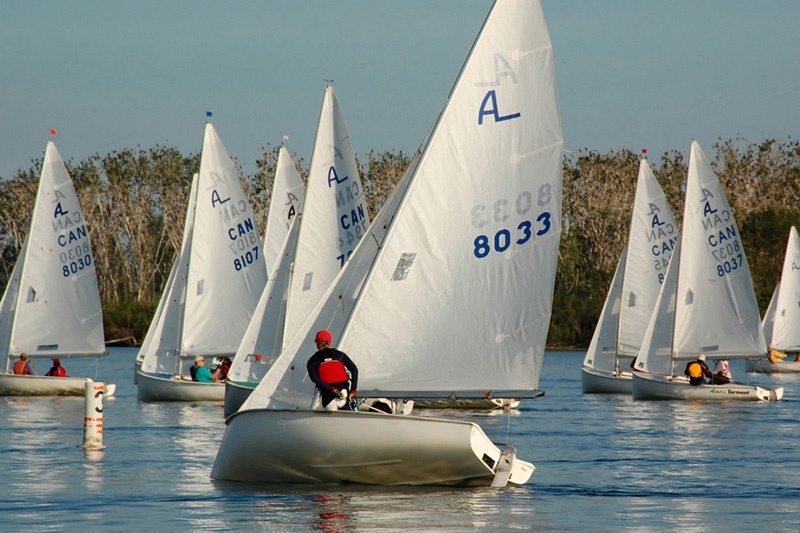
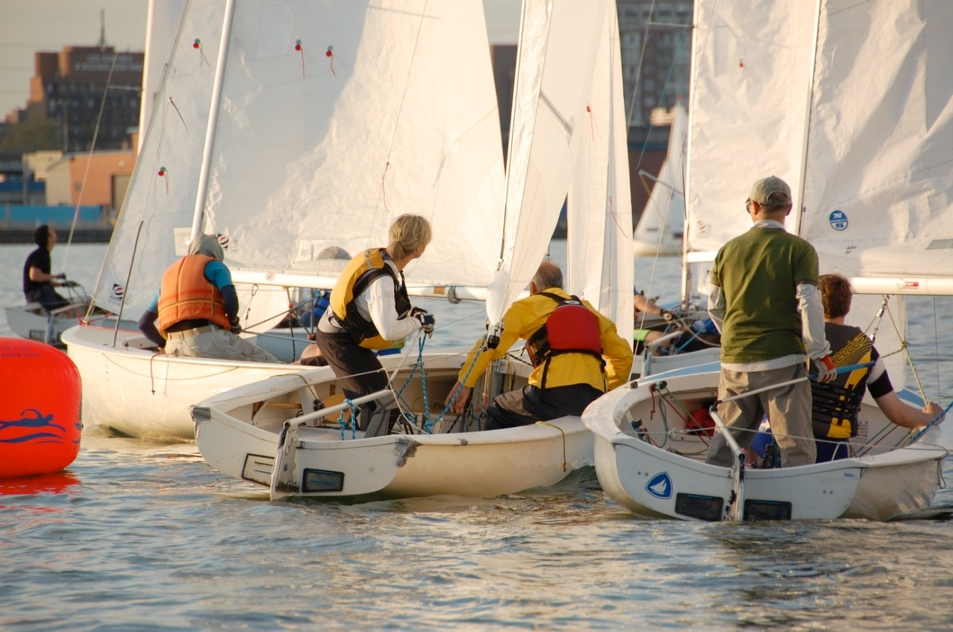
Closeup pictures jump out in their composition and colour and sharpness. The closer you are the better. The course marks are a great place for this, as long as you don't drift too close and cramp the racing.
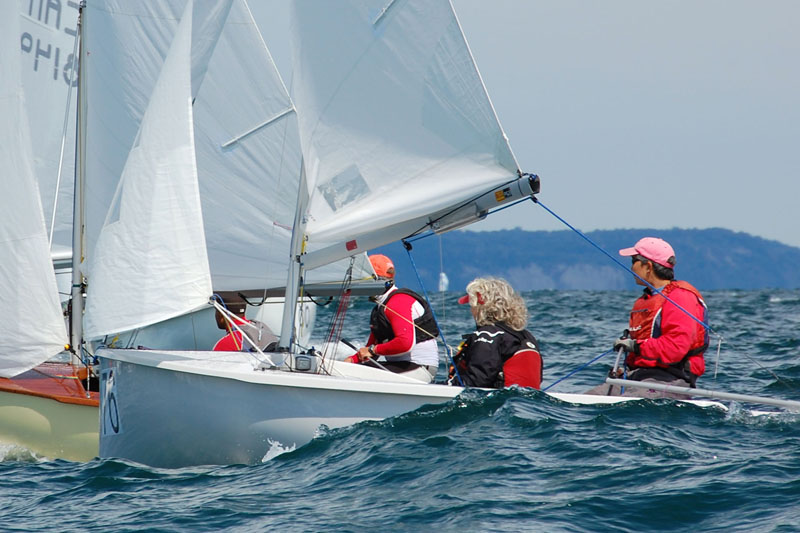
Look for moments of interest and promising composition. People are more interesting when they're facing the camera, or smiling, or focussed on their actions. Boats are more interesting when they're overlapped, and when they're heading the same way on the same tack.
You should know the control basics of your camera. Set the white balance for sun or cloud. Bump the ISO sensitivity up a little to get a faster shutter speed and less shake. Check the LCD display a lot to see how the last picture looked, and tweak the exposure up or down to get what you want. Try shooting manually if you're comfortable with it. There's a rule of thumb for manual exposure called Sunny 16 -- set your shutter speed the same number as your ISO and the lens aperture at f/16 for subjects that are frontlit in the sun. So set the shutter speed at 1/200 of a second if your camera is at ISO 200, and set the lens at f/16. Because I want to keep shake down, I set my camera at the same exposure of 1/400 and f/11.
Cull your picture collection from an event down to the best ones, then do it again. Your worthwhile pictures will look better if they're not mixed with weaker ones. Especially sailing pictures, the worst of which are often of blurry dots in the distance. Keep variety in mind, it brings life to your finished album. When you have several pictures that are alike, try to choose one and let the others go.
Edit your pictures. Straighten the horizon, crop to bring out the subject and the composition, tweak the levels to fix underexposure. Like culling, it makes the whole album stronger.
Pictures that make gentle fun of people are welcome. Pictures that make severe fun of them, catching them at the wrong moment or not looking their best, should go in the trash folder.
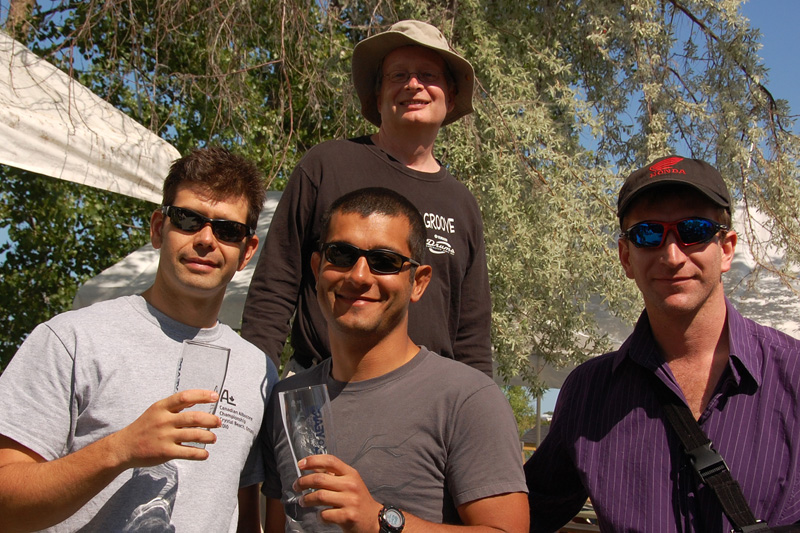
If you're taking pictures for your club, include the sailors from the other clubs, at the front of the fleet and at the back. People like their friends across the board in the sailing community, and they like to see everyone's picture.
NOTE: The CAA would love to have copies of your photos. Please try and remember to take photos of events, people and places that have to do with the Albacore fleet and send them in to [email protected] or post them on the CAA website.
Tacking At The Windward Mark Reviewed
This article is based on the September 2012 article written by the author for Kwasind published by The Royal Canadian Yacht Club. Copies of the original articles along with animated diagrams can be found at rcyc.ca > Sailing > Know Your Rules.
This issue I will return to a topic that has been “over-embraced”, if I may coin a phrase, the issue of tacking at a mark. In some articles I wrote elsewhere a while ago, I proposed a rule of thumb – “don't tack within three boat-lengths of the mark” for those who don't want to follow the complex rules. Now this is a rule of thumb, not an enforceable rule, but these articles are being quoted as evidence that this is utterly illegal – which it is not. While it is simpler and safer not to tack within three boat-lengths of the mark, there are several ways to do so while staying within the rules.
In the diagram, the Yellow boat has clearly overstood the mark and is coming in below closehauled on starboard tack. The Blue boat approaches the mark on port tack below the port-tack layline. When she gets to the starboard-tack layline, she tacks and passes head to wind between position 2 and 3 within the zone. She completes her tack at position 4. Yellow has time to avoid her but chooses not to, yelling “I am holding my course – you have no rights.” Blue does in fact have rights. Blue has a restriction under rule 18.3(a) not to cause Yellow to have to sail above close-hauled to avoid her, but, at the same time, she is a leeward boat and Yellow is a windward boat. Yellow is required to head up to avoid Blue and as long as she doesn't have to go above close-hauled, Blue is quite legal. In the diagram, Yellow does not have to sail above close-hauled, so no crime has been committed.
Note that there is a difference between Blue's action being legal and it being a good idea. Blue may find it difficult to prove that Yellow did not sail above close-hauled if it is close, since Yellow has a much clearer picture of her own course. Yellow really should avoid Blue and in doing so, prove that she had to sail above close-hauled.
18 While Tacking
After a boat passes head to wind, she shall keep clear of other boats until she is on a close-hauled course. During that time rules 10, 11 and 12 do not apply. If two boats are subject to this rule at the same time, the one on the other's port side or the one astern shall keep clear.18.3 Tacking In The Zone
If a boat in the zone passes head to wind and is then on the same tack as a boat this fetching the mark, rule 18.2 does not thereafter apply between them. The boat that changed tack
(a) shall not cause the other boat to sail above close-hauled to avoid contact or prevent the other boat from passing the mark on the required side, and
(b) shall give mark-room if the other boat becomes overlapped inside her.
In the second diagram, Red crosses head to wind between position 2 and 3 all within the zone. The Red boat is ahead of the Green boat when she completes her tack (at position 4) and remains ahead as she rounds the mark at position 5. Green may have had to avoid her at position 6, but clearly does not go above close-hauled to do it, so Red has not broken rule 18.2(a). Their next leg is a reach to the offset mark. At position 7, they have both passed the mark. Red is the leeward right-of-way boat and as we have discussed the last couple of months, she has “luffing rights” since the overlap was established by Green to windward from clear astern. Red executed a quite-legal tack within three boat-lengths of the mark and now has right-of-way.
A few people have asked if the windward mark and the offset mark are really part of the same mark. The answer is no. They are two separate marks with a short leg in between. There will be a new mark-room situation at the offset mark.
© Copyright 2012 and 2014 Andrew Alberti
Benefits Of CAA Membership
Involvement With The Albacore Community
- You will receive a subscription to our newsletter ‘Shackles & Cringles' and get emails on matters of interest to Albacore sailors between issues of Shackles and Cringles
- You may vote at the Annual General Meeting and run for the Executive if you are a Full Member, and everyone is welcome to share their opinions with the Executive.
- You are invited to attend social dinners during the sailing season at the following clubs. Please get in touch with the contact person first.
- Toronto
- Mooredale SC (Outer Harbour) dinner on Wednesday. Contact [email protected]
- J-town (Outer Harbour) dinner on Wednesday. Contact [email protected]
- Westwood SC (Outer Harbour) dinner on Thursday and also there is the possibility of a sail. Contact [email protected]
- Toronto Island Sailing Club Tuesday, Wednesday or Thursday dinners. Bring your own food plus something to share. Contact [email protected]
- Ottawa
- Nepean YC – Albacore sailors gather on Wednesday evenings to sail and have a meal. Contact [email protected]
- Kanata Sailing Club: Albacore (and Laser) sailors gather on Monday evenings to race and enjoy an après-sail BBQ on the deck overlooking the Ottawa River. Contact Robert Bryar at [email protected].
- Hamilton – Hamilton Bay SC has potluck dinners on Friday evenings and also there is the possibility of a sail. Contact [email protected]
- Toronto
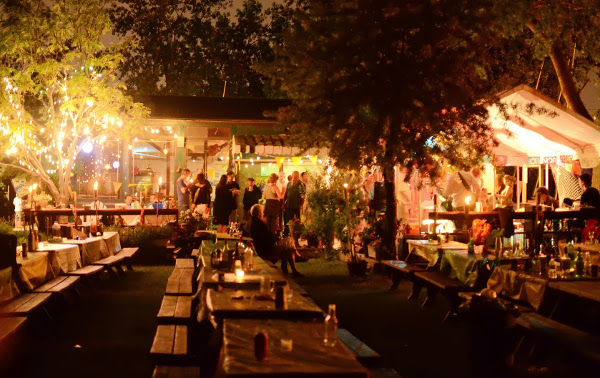
- You are invited to store and/or launch an Albacore at the following Toronto Outer Harbour clubs for two or three days once a year for recreational sailing or to join the club racing. Arrangements must be made in advance. Contact:
- Mooredale – [email protected]
- J-town – [email protected]
- Westwood – [email protected]
- Outer Harbour Centreboard Club – [email protected] or [email protected]
This is beyond the normal practice at regattas of providing space to participants to store and launch their boat.
Assistance
- You can ask questions and receive answers to questions on rigging, boat purchases, finding a boat or crew for regattas and all other Albacore related issues
- You can get help with finding free accommodation for regattas and other races/events with members of the Albacore community
Training
- You can take training courses offered by CAA on such issues as race training (beginner, intermediate, or advanced), race officials, dinghy rescue, boat repair etc.
- You can request that the CAA provide race training and other workshops (e.g. boat repair, rigging, skills development), in your location
- You can have access to existing training materials for member provided training events.
Racing
- You can participate and/or helm at CAA regattas and series
- You can request hull and sail measurements for your Albacore
Loaner Albacores
- You can use a loaner Albacore for recreational sailing and/or racing in Toronto and Ottawa depending on availability. Requires prior arrangement and depends on known or demonstrated sailing ability. Contact [email protected] for Toronto and [email protected] for Ottawa
Introduction To Kanata Sailing Club
(Kanata SC recently rejoined the CAA. This is an introduction to the club for those who know little about this wonderful place)
The Kanata Sailing Club, tucked up against the Ottawa River in a serene, secluded spot affording views of striking sunsets, has had a colorful evolution from its humble beginnings in 1975. The genesis of the club was, fittingly, a sailing expedition by Doug Milne, who sailed his Tanzer 16 upriver from Lac des Deux Montagnes, later describing the experience in a Kanata Standard article. That piqued the interest of a handful of sailing enthusiasts, who, together with Milne, gathered to form a club and entice 100 new members paying $2 annual dues.
However, they couldn't find an affordable, suitable site, despite extensive searches on snowmobiles and on cross-country skis (with the skier insisting on a very long tow-rope due to somewhat worrying ice conditions). Finally a “temporary” solution was found, proving to be as “temporary” as certain wartime buildings in Ottawa. The club was given permission to locate on the easement for the Riddell Drive extension, which runs straight to the Ottawa river. Shortly thereafter, a fortuitous landslide created a natural ramp, still in use today.
Equipment was gradually added: a crash boat, a floating dock that didn't and a modest sail shed. For several years, the shed was the sole refuge for sailors in inclement weather. Boats were consigned to a sagging old barn on loan from the neighboring YMCA outdoor camp.
What started as a no-nonsense two-member Board grew into a larger structure as membership and the scope of operations grew. Successive lists of directors read like a history of Kanata with many Commodores imposing their personalities on the club, badgering the directors (“for heavens sake, decide, so that we can go sailing!”), and acting as lightning rods for every bright idea and every complaint. Some of their innovations, like Albacore football and moonlight cruises, have died but others have survived.
In 1979 the club was incorporated as a not-for-profit with three main objectives in its mission statement: encourage sailing, provide instruction and promote a high standard of safety and skill.
By 1979 the club, as many others in the region, suffered a declining membership. To redress the trend, the newly-named Kanata Sailing Club (KSC) built a clubhouse, deck, offered more social activities and structured training with a bigger and more varied fleet that included Catamarans for the first time.
Present day qualified members have unlimited, free access to a varied fleet, providing a range of sailing experiences: 12 Albacores, 7 Lasers, 2 Bytes, 3 Tasars and 6 Hobie Catamarans (3 H16s and 3 H18s). KSC offers lessons for all levels, either in groups or one-on-one. New programs this year include free rigging clinics.
As a family cooperative sailing club, KSC continues to hold to its founding mission of offering affordable sailing, including Friday night social sailing and potlucks. The Club is also known for a friendly racing environment, with Monday evening races open to all mono hulls, a long distance race, and regattas -- including the Labour Day weekend Open Regatta, with onshore lunch provided.
Full-time students demonstrating proof of registration benefit from a discounted membership (unchanged from 2013) of $215 plus HST. Sailing is an exhilarating way to escape the stress and screens!
The club's location on the Ottawa river is ideal for day sails to nearby locations such as historical Pinhey's Point, 12 Mile Island and to KSC's neighbouring sailing clubs in Nepean, Aylmer, Lac Deschenes and Britannia, fostering a wider community of people drawn to the exhilaration of mastering wind on water.
KSC is hosting an open house on Saturday, May 3, noon to 4:00 pm. All welcome!
For more information, visit: kanatasailingclub.com
Upcoming Dates
For all upcoming training and regatta dates visit www.albacore.ca
Saturday May 31st – Introduction to Racing with Ian Brayshaw and Jenny Gibbon (at OHCC) contact [email protected]
Saturday June 7th – Intermediate Racing with George Carter (at OHCC) contact [email protected]
June 14th and 15th – Albacore Ontario Championship at Toronto Sailing and Canoe Club. Register at albacore.ca
August 1st to 4th – Camping at Cape Croker
August 16th and 17th – Albacore North Americans at CORK (Kingston)
September 19th to 21st – Albacore Canadians at Nepean YC (Ottawa area)
New Event: Fun CAA Camping On The Bruce Peninsula
Join other Albacore Sailors on the August 1st long weekend for the first ever (I believe) recreational Albacore sailing getaway.
The plan is to sail, explore, swim, eat, maybe have silly races and generally enjoy ourselves on, off and in the water. Albacores and other small boats are welcome. We hope there will be enough boats for everyone to sail together, but if not the idea is to share so everyone can get out on the water. Please let us know if you can trail a boat.
The CAA has reserved ten waterfront tent sites, each of which can accommodate four adults, at the Cape Crocker campground, close to Wiarton. This waterfront spot is relatively private, has a boat launch, a pavilion, lots of shade and space to pull boats up on a dolly right by the tents.
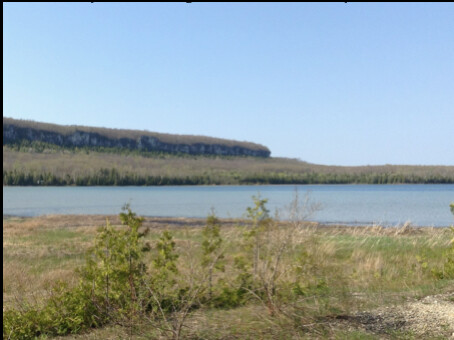
The Bruce Trail goes right through the park where the campground is situated and the views of the escarpment and Georgian Bay are wonderful. There are special events that weekend at both Lions Head and Wiarton, for those who like to explore by car. More details on price, activities and how to reserve will be coming soon on the CAA website and either by email or your club newsletter. In the meantime mark the date (August 1-4th) in your calendar, and email Kirstie Fraser to let her know if you are interested and whether you could help with planning.