Spring 2007
April 01, 2007
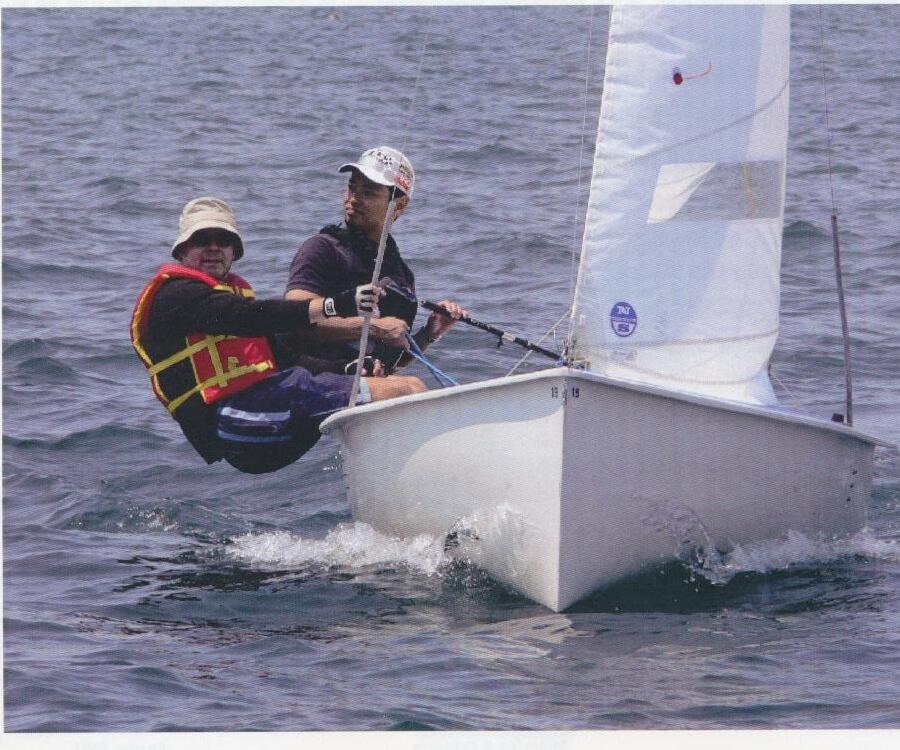
Weighing in on crew weight, starting-line and mark-room tactics, downwind speed, wood-cored foils, and the 2007 Albacore Internationals in Annapolis.
Message From The Commodore
Hey Sailors….
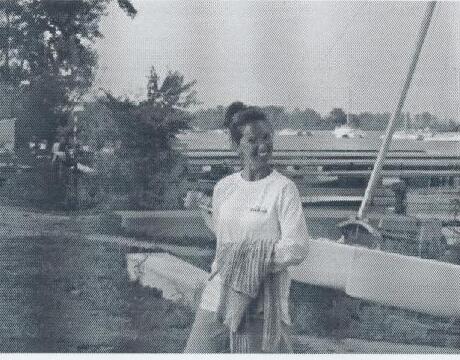
It came so quickly, my heart skipped a beat…was spring here already? No it was the old fake out but it didn’t stop me from having a look at “Beaver Tales” and dreaming of things to come.
Our executive has been busy planning, organizing and discussing all things Albacore. Thanks to Henry and all the volunteers who helped man the booth at the boat show in January. This is a great opportunity for member clubs to obtain new members at no cost to them. Allan has organized and posted the regatta schedule on the website (www.albacore.ca). There are a number of great regattas planned; particularly the Ontario’s which will be hosted by Sail Parry Sound at their new facility which should be complete by the time we arrive. The jewel in the crown is, of course, The Internationals being held at West River Sailing Club in glorious Galesville, Maryland on the Thanksgiving weekend. This is great opportunity to meet Albacore sailors from around the world. The Brits (rumour Michael McNamara, Neville Hebert, Jean Simmons) have a container organized, to ship their boats over. There is no excuse for not travelling to these events, there are many unused trailers available and if you need a crew or skipper we can help!! So mark a few “travellers” in your schedule. Stephanie has organized 2 training weekends in preparation for the Internationals; there are deadlines, qualifications and limited number of spaces which you can read about on the enclosed flyer. There is also a Women’s Boat Handling Seminar, hosted by yours truly and other women from the Outer Harbour, focusing on confidence building, boat handling skills and discussion on shore. You don’t have to come as a team; we will rotate people around and open to both skippers and crew. It’s free but you have to be an associate member of the CAA. Which brings us to Janet’s membership drive, please see enclosed flyer. Once again a huge thank you to Quantum Sails who have donated a jib for our draw, full and associate members are eligible for the draw so sign up today its easy on-line. While you are on our website, check out the forum, ask a question, solve a problem or just get caught up on the local “stuff” and if you’re not already on the albacore mailing list do it now so you don’t miss any notices and important information, its all free and well organized by our gang.
On a sad note, one of the founding members of the CAA in 1961, Don Giffin, passed away on December 31, 2006. Don was an avid sailor and volunteer dedicating many years of service to the Canadian Yachting Association. Anyone who has completed a White Sail Class probably has one of the two books he authored: Basic and Advanced Sailing Skills. Donations can be made in his honour to Canadian Yachting Association or Alzheimer’s Society of Canada. In an effort to preserve his memory the CAA will be rededicating one of its trophies in his honour.
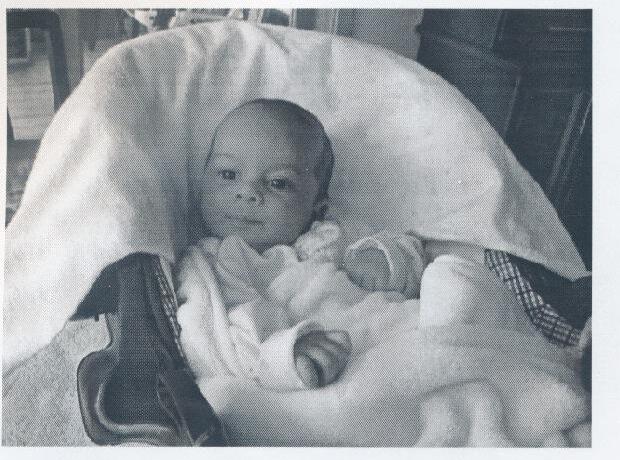
On the lighter side the albacore class continues to grow, our latest addition is Cristiano, the proud parents Warner (Monty) Monterio and Sonja McCauley.
Now back to planning for the Midwinter’s, do I take my shortie wetsuit or a bathing suit? The 50 SPF or the illegal 2 SPF baby oil that Sandy usually wears? Shall I camp as close to the ocean as I did last year, or shall I be smarter and set up the tent in a sheltered area? What if we get those tornado warnings we got a few years ago? Maybe I better take some gloves and worry about the bruises and tan lines later!
Ready to go,
T
Does Might Make Right?
Barney Harris is a voracious reader of women's magazines. Well, he might be. Since most women's magazines are chockfull of tips on how to lose (and sometimes, although rarely, gain) weight, it's very possible that Barney (or any other skipper looking for that edge) might find something useful in the pages of Vogue, Chatelaine, or Elle (in addition to enjoying some of the fashion spreads). This is because it's no secret that all dinghies (and even some keelboats) have a recommended or ideal crew weight — that is, the combined weight of the skipper and crew that will result in the maximum boat speed, and the albacore is no exception. Top performers in the fleet agree that the magic number to make the tuna fly is around 330 pounds, but should you be worried if you fall short of (or exceed) this number? Ultimately, the answer is that it depends on what you are trying to achieve.
Go Big or Go Home?
If what you are ultimately after are consistent finishes at the top, then adding (or losing) weight has to be seriously considered. The consensus among the top sailors is that the closer you are to 330 (erring on the side of more meat rather than less), the better off you'll be. And, they add, there is a greater advantage to being heavier in heavy winds than the disadvantage heavy sailors suffer in light winds. There are several reasons why "might makes right" in the albacore.
Keep it flat
Unless you are roll-tacking, the cardinal rule for sailing the albacore upwind is to keep it flat for maximum speed. In moderate to big breeze, the big boys have the advantage. Kevin Smith, one of the top albacore skippers in the outer harbour, explained why this is: "During an upwind portion of a race with moderate to heavy breeze, the most important ratio is sail area/righting moment, with the Righting Moment being equal to crew weight times hiking leverage (RM = CW*HL). Hiking leverage means how far outboard you can hike." In non-engineer (a.k.a. English), this basically means that the more weight you have and the further outboard you can place it, the more sail area you can carry and still keep the boat flat. So in big breeze, even if they can straight leg hike the entire upwind leg, lighter crews will still need to dump the sails to keep the boat flat, thereby losing speed and point to their heavier opponents.
Big waves for the big boys
A rough sea state will also give heavier crews an advantage. Kevin notes that, "Lightweights can’t win races in winds fully hiking with waves. In flat water, lightweights can hang on but won’t win races." Ann has the same sentiment, stating that "In any kind of waves there is a benefit to having extra weight in the boat. A heavier boat more readily displaces the water represented by a wave and the boat goes faster. A lighter boat is stopped by a wave."
Would Starr Jones and Al Roker (pre-op) Stand a Chance? Probably
If being in the neighborhood of 330 gives you maximum speed, what about if you are sailing over that weight? Are the fatboys necessarily at a disadvantage when conditions are light, especially downwind? The standing in past events don't really seem to suggest this is the case, as crews that likely exceed 330 consistently do well (Measor/Piercey; Broughton/Harrison; Harris/Byron; Brayshaw/Beitz). Although it seems somewhat counterintuitive, a heavy boat in light winds doesn't necessarily move slower than a light boat. And in heavy air, notes Ann, "[t]he heavier a team weight in strong wind … the better. Strong wind in many respects requires the least amount of skill. In strong wind heavy teams with decent sailing ability who stay upright win."
See http://www.dinghyshop.co.uk/classes/ for a list of dinghies and suggested crew weights.
But that’s not to say the big boys don't also have issues. Richard Piercey, the better (?) half of 8018, says:
"I feel the extra weight hurts us the most in the medium wind. While other teams are fully hiked upwind, I end up sitting in the boat watching the other teams sail faster and higher. Because the boat sits lower in the water, it makes a bigger wave. A bigger wave means more energy is being dissipated into the water and therefore you don't go as fast. In light air, there is no wave and in heavy air, we just hang that meat out there and power through it."
Kevin also points out another David-killer: for big regattas that take place over several days, more races will invariably be run on windier days than light ones; so even if the light sailors dominate the light wind races, statistically the advantage again goes to the Goliaths.
But it's not just size, it's where you put it
Of course, being the heavies doesn't necessarily mean that you can sit back in big wind and laugh at the lighter crews as you whiz by. While Ann admits that weight plays an important factor in her and J.P.'s ability to consistently do well, she adds that there are other things to consider, including effective weight placement. She says,
"At 330-340 JP and I are in an ideal weight range but we have to work with our weight distribution in all kinds of weather. We still have a lot to figure out in this realm. Part of the reason we go faster in 7414 than in 8034 is because the thwart is 4" further back in 7414. JP and I are automatically further back in the boat and it really helps our all around speed."
Ann believes that the ideal set up is to have a heavier helm and lighter crew. This provides more stability in the boat as the helm tends to move less than the crew. According to Ann,
"The team I see with the ideal team weight distribution is Tim Broughton and Laurie [Harrison]. I think it is part of why they are a great upwind sailing team. Without making any adjustments in their positions, the boat remains stable, goes fast and Tim drives upwind brilliantly."
Something else to keep in mind is that the more you go over the recommended weight, the more susceptible you become to capsizes during heavy weather gybes, especially if it's the crew who significantly outweighs the skipper.
Conclusion
All of this is not to say that being a lighter team means it's impossible for you to win - it's just a bit harder (especially on the abs, as you'll be hiking like crazy). Ann, for instance, recalls a U.S. Nationals where she and her crew, Todd Johnston, topped out at 275, and still placed third in one race with 20 knots of breeze and heavy chop. "There are techniques for sailing with a light crew weight and you also need to focus on sail shape and tuning in heavy air."
And it shouldn't be entirely about winning anyway. Sure, it's important, but having a good time on the racecourse is (and should be) the priority. In fact, teams having fun might discover that winning is a nice bonus. Or as Ann puts it, "[t]eamwork and having fun may keep you at the top whereas a poor team at the 'right' weight may result in mid-fleet misery."
MEASOR AND PIERCEY WEIGH IN:
Allan Measor and Richard Piercey, who combined are pushing 380 (which I have a hard time believing, although they note this is post-holiday weight), took some time to answer some questions about sailing when you are a couple of big boys, with special thanks to Kevin Smith, Ann White, Allan Measor and Richard Piercey for their invaluable contributions.
What off-season activities do you engage in to keep in racing form?
Allan: We donated a ping-pong table to St. Jamestown and we play weekly to hone our reaction skills and keep us in peak athletic condition.
Richard: Curling. It's a few hours of intermittent effort followed by six hours of beer. If you really think about it, it's the closest thing to sailing without the boat.
When sailing in light winds, what are the key things to consider?
Allan: Weight distribution and coordination. We are of similar weight which really helps, either one of us can move boat without help from the other. Teams with larger weight differences face a tougher time with one person dominating the boat balance. In these situations, slow movement and communication is critical so the other can counter balance.
Richard: When sailing with a guy like Al who has the grace of a hippo in the boat, you need to move quickly to keep it upright. And since he doesn't communicate, I'm guessing all the time.
What conditions are the most difficult for you and Richard?
Allan: The most difficult conditions for us are the 11-13 knots days with deep reaches, we have difficulty getting the boat on plane. It forces us to luff windward boats regularly.
Richard: I think it's the mornings after I've had a heavy night of drinking. Combine that with Al's "constructive criticism" about jib trim and it gets testy.
What rig setup are you using for light sailing, under 8 knots? And what about heavy air?
Allan: We switched to Quantums last year and felt like we were searching for power more frequently. We set the rake to 16.5 along with moving the mast max aft and it seemed to help us in most condition, although it can get difficult above 18 knots. I know other sailors think the rake it's excessive.
Richard: Excessive? So is our weight.
What do think the most important thing is for heavier teams who regularly sail together?
Allan: Make sure the boat weighs close to 240 pounds, you can't afford extra weight.
Richard: We lost 40 pounds by switching boats last year although I'm sure it came back in other areas. The bow storage tank is coming out this year, and that will save another five pounds. After that we start shedding clothes
TIPS
While we wouldn't suggest you run out do something extreme to pack on weight before an upcoming regatta (like get pregnant - Monty and Sonja, we're looking at you), there are some tips for the lighter crews:
- Eat more;
- If you aren't prepared to do #1, then hike harder. In order to most efficiently distribute the weight, the hiking should be straight-legged. For a useful article off the net, see: http://www.roostersailing.com/articles/Hiking_Style.html. Taller crews also have more leverage, so if you can't pack it on, then go for that growth hormone. Or platform shoes;
- Pray for lighter winds;
- Concentrate on strategy - make sure your starts are solid because if you have to play catch up in big winds, you're probably looking at a throwaway;
- In a blow, tighten up everything that will tighten (vang, cunningham, outhaul) and get those pins down;
- Make up for the distance you lost on the upwinds by making the most of the reaches and runs;
- Just remember that if it's really blowing hard, the big guys are just as screwed as you are (although they might be able to get their boats up faster than you).
Similarly, being beyond the recommended weight also requires some skills that ideally weighted teams don't need to have. Some tips include:
- Eat less;
- Be careful when you move around in the boat; too much rocking can slow the boat down;
- Be cognizant of where your weight is positioned. As Ann notes: "Albacores, particularly the Ontario Yachts glass boats, are bow heavy relative to the balance points dictated by the thwart, so a heavier crew in the front sinks the bow." See her comment about the thwart on 7414.
- If the crew outweighs the helm, be extra careful when gybing in heavy winds, because, as Richard notes, while having a heavier crew makes gybing easier, if you aren't careful where that weight is going, you become more susceptible to capsizes.
From The Top Guns
The following question(s) was asked of a couple of the fleet's top sailors.
When you are on a starting line, and you lose your hole - (spot to leeward) where do you shift your attention? Do you just go with the pack to stay in the first row? With the hole gone, you do even bother to time your start anymore? Do you just make sure you step on the gas with everyone else? What's your thinking after your position is gone, with 15 seconds left? You've worked hard to get a good spot…(you think) how do you defend and when someone steals it from you what are your options…?
There are many variables to these questions.
Jeff Beitz
* If your going to stall at the line you are going to be very close to the line, almost on it.
* The person coming in or trying to come in should be identified prior to them slipping in and given a stern warning that you are not going to allow them in. The skip should be heading down to close the door and then right back up as soon as the "stealer" has moved on.
* If a boat does slip in then you have to assess the situation. If you know the boat, and know that they love to pinch as much as they can out of their boat and they will toast you if you cannot hold your lane or keep bow out. If you know that you have better boat speed and pointing then leave the "stealer" and yourself there, use him to affect the boats to leeward and the second row.
* If we see the trigger being pulled early and we know we are on the line then we will not go with the fleet. I guess here we are trusting the RC will call the offending boats or call a General.
Raines Koby
* If there is enough time left and the loss of the hole is going to hurt us bad I bail out if possible. If I can't bail then I try to stay nose to nose with windward and leeward boats. The challenge is to keep the boat moving before it's too late. I never give up. You never know what can happen. I have had times when I thought 'we're screwed' and came out fine and vica versa.
* The way to defend your hole to leeward is bear off as much as you can, given, you don't have rights on a boat to leeward. If someone is coming up from behind to grab the spot to leeward I start sailing ahead of them. I'd rather they pull back to windward of me.
Tim Broughton
* Obviously our attention was in the wrong spot(s) because we missed someone trying to sneak in. In that nasty and hopefully avoidable situation, we try to stay in that very narrow window between the boat above driving over us, and the boat below getting us in a leebow. The first answer is to stuff up the boat above, buying a little more breathing space below, then using that space for acceleration in order to stay ahead of the leebow of the boat below. We'll also shift into pointing mode, if we weren't in it already. The aim is to stay even or slightly ahead of both adjacent boats at the gun, then pray for better pointing and/or speed to get out of the sandwich. Obviously, time-to-the-start and distance-to-the-line are key constraints. Attention is split between the boat above and the boat below, while trying to avoid an OCS. One consideration is to look at the "runway" below the boat below us. If they have a big acceleration runway, we can count on them using it, so we'll wait until they get a bit further "below" before accelerating, so they are ahead, but we are far enough to weather to stay out of their leebow. The other thing we'll look for is a Plan B - what do we do if we get buried. Usually, it's a stall-out to get room to tack to port, so we'll try to figure out if that option even exists.
It helps to know the sailors around us. The good sailors can be relied on to get up to speed on time, and get away from the start line cleanly. They understand that the start is something to get away from, not get stuck in. Other sailors will focus on stuffing up the boat above, trying to dirt someone, etc., rather than working to get clear. Sailors who focus on tactical battles over strategy are best avoided.
"Do you just go with the pack to stay in the first row?" Yes, we'll go with the pack. If it looks like the pack is going to be over early, we'll just hide in the middle and hope for a general recall, barring circumstances like the evil black flag. There's really not much of a choice. One caveat: if the right side is clearly the place to be, then we'll let the fleet start ahead, then flip to port and take transoms in order to get to the right side.
Why are we willing to let someone else "win" the start? The mantra, "You can't win a race on a start line, but you sure can lose one on a start," are the words we sail by. Only on a very badly skewed line will we try to be within five boats of the favoured end. Only one boat will win the pole position, while a dozen will be stuffed and going slowly. Even the boat that wins the pole might be jammed by another boat. Trying to win the favoured end is a high-risk, low-yield gamble.
The favoured end might also be the wrong place to be. Strategy takes precedence over tactics at all times, and the start is just one big tactical fight - best to stay out of it. We try to start close to the favoured end, but outside the inevitable crowd that develops at the favoured end. On most of our start lines (kudos to our race committees, their lines are usually close to square), this entails giving away less than a boat length. In return, we get clean air, freedom to tack, and the opportunity to hit the line at full speed. We get the boat length back in a hurry, and we are in a position to sail our strategy rather than engage in tactical battles.
"With the hole gone, you do even bother to time your start anymore?" Yes, if for no other reason than to know if we had to risk an OCS in order to stay clear. When buried in a crowd, their sails block the view of the pin, boat, and any transits, so we don't know for sure if we are OCS - it's just gut feel.
"Do you just make sure you step on the gas with everyone else?" Yes. As indicated above, we must stay at least even with the two adjacent boats, again barring a black flag. We try to keep in mind that an OCS is not the end of the world, it just burns your "drop". If we don't get called OCS once in a while, we're not trying hard enough.
"What's your thinking after the hole is gone, with say 15 seconds left?" As above, with the additional "Sorry, Laurie, but your helm is a blithering idiot who just toasted a start." We go into "recovery mode", which has two steps (kind of like rehab): first, try to minimize the damage and see if we can hang in (all the things noted above). If that doesn't work and we are in serious trouble, then we'll take a different strategy, often involving major gambles that we wouldn't otherwise take, in order to try to get back into the top half-dozen. At this point we are looking at a poor result, so a wild gamble that doesn't work has no effect - it's still a drop race.
Just to be clear about this, we try very hard not to be setting up for the start too early or too close to the line. That is just making us a target for someone looking to steal our space.
Typically, we are the ones looking to steal space. With 90 seconds or so, we are almost always on port tack below the line, watching the fleet form up and commit to their starting positions. Then we can identify the holes and go take one. Warning: it sounds very tempting and easy, but it requires very good boat handling teamwork ("Don't try this at home, kids!"). We often go from coasting on port to full speed on a port reach, then a hard dial-up to close-hauled, a high-speed tack onto starboard in the middle of a lot of traffic, then a crash stop, followed by 30 or 40 seconds of defending a hole while moving very slowly (driving with the sails rather than the foils), then hard acceleration up to full speed at the gun. If your boat handling is lacking, your fiberglass repair skills will improve rapidly, not to mention the additions to your vocabulary - sailors are a helpful bunch.
The start line "cat-and-mouse" game seems to want to evolve. Ten years ago, we were one of the very few boats approaching the start on port. In the last few years, a dozen or more boats are approaching on port, so we have had to get to the line earlier, then work on defending, with tactics like spinning the boat down to a beam reach aimed right at a port tacker coming to take our space, forcing them away, then spinning the boat back up, all with little speed in order to keep our "spot". The overall aim is the same: get away clean, so we have a chance to be in the top half-dozen at the first weather mark. If we can be there, then we are in position to get a top-five score, i.e., a "keeper" in a regatta.
The Golden Rules Of Running Downwind
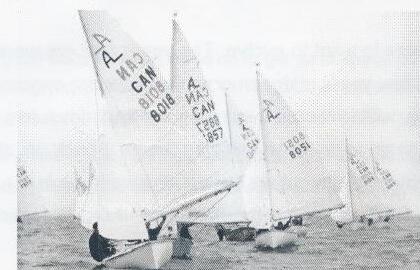
Running downwind in an Albacore and getting to that leeward mark as quickly as possible depends upon the interrelationship between BOAT SPEED, STRATEGY and TACTICS. Obviously boat speed, which is simply going as fast as possible irrespective of what else is happening dominates but the other two aspects compete for priority depending on circumstance.
So, what are the golden rules of running?
Boat Speed
Let the jib halyard tension off until the mast flops aft against the mast gate. This will allow the boom to project as far outward as possible. While it is impossible to get the boom to 90 degrees to the wind when running, letting the jib halyard off to allow the mast to come aft is critical to achieving the maximum boom projection.
Boom should be at 90 degrees to the centreline to get maximum presented sail area.
Use just enough kicker (vang) to keep the leech mobile with say 75mm-100mm of forwards movement in the gusts.
To get maximum projected area the soft lens foot panel should be tight with a horizontal ridge along the boom.
The leech of the goose-winged jib should also have some forward movement. Remember that the jib is not only working in wind which is coming up from astern but it is also using the accelerating air coming off the front of the mainsail.
The jib halyard needs to be tightened just enough and only just enough to stop the luff flopping about and shaking air out of the sail.
Check that the hull is making as little resistance as possible by:
- The helm easing his grip on the tiller extension slightly from time to time because if the tiller then moves one way or the other the flow is not equalized. Change the angle of heel either to leeward or to windward until the tiller stays down the centreline.
- Also, by looking aft at the wash the sailors can change their positioning in the boat to minimize the turbulence coming off the transom.
Strategy (or using the environment to best advantage)
It does not pay to tack downwind in an Albacore because the hull cannot be made to go fast enough to make up for the extra distance sailed. Having said that it is very hard to run exactly at 180 degrees with any accuracy. The optimum angle therefore seems to be when the wind is coming from the windward quarter (the windward corner of the transom).
As sailing the minimum distance is so important, constantly ask the question “is my bow pointing closer to the mark on this gybe or would it be closer on the other gybe?” This means that both sailors should know where the leeward mark is at all times.
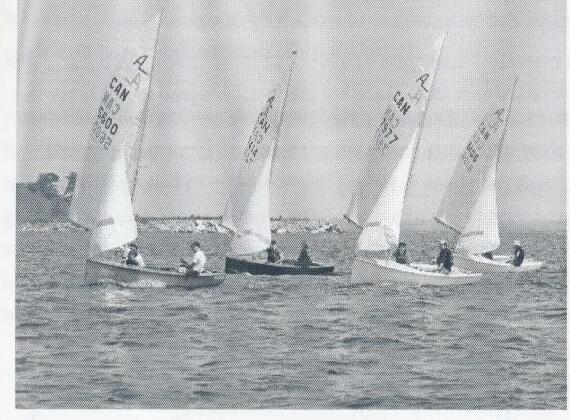
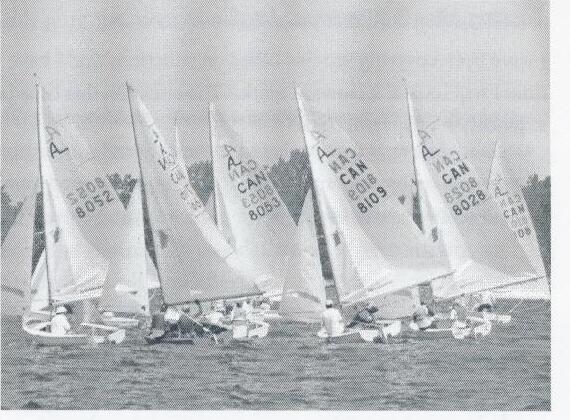
The previous beat will have given clues on wind variations and strength, which can be used on the run. For example if the boat has been mostly on starboard up the beat then it will go down the run mostly on port.
In a shifting wind stay away from the lay lines.
If the leeward mark is not exactly 180 degrees down wind take the longest leg first, as there is less chance of sailing further than you should and over standing the mark.
The approach to the windward mark can help decide which gybe to go on first. If the boat is being headed into the mark the boat should start the run on the same gybe. If on the other hand the boat is being freed into the mark it will have to start the run by gybing.
Tactics (against other boats)
The aim in boat-to-boat tactics is to maximise the detrimental affect of ones boat on the opposition whilst at the same time minimising their effect on you.
Boats behind have the advantage, as they are able to cover boats in front. To find out whether a boat is being covered or not (apart from it going slowly that is) look at the wind indicator of the covering boat. If it is pointing at the other boat and they are within, say 10 boat lengths then that boat is being covered.
Boats that are being covered should move urgently one way or the other until the indicator of the covering boat is not pointing at them.
Boats grouped together will be going slower and be in less wind than boats by themselves because they present a barrier to the wind, which lifts off the water long before it gets to them.
Use the last quarter of the run to organise being on the inside at the leeward mark.
And so finally with all that lot going on its going to be great getting to that leeward mark and to get on to the beat……….FOR A REST!
Know Your Rules: Tacking After The Leeward Mark
This article was originally published in the RCYC Kwasind newsletter.
I have been covering articles based on situations that I have seen recently. Last time I covered a situation at a gybe mark, this time I will look at a leeward mark. The situation this time is not exactly as it took place but has been adapted to allow for the explanation of several rules.
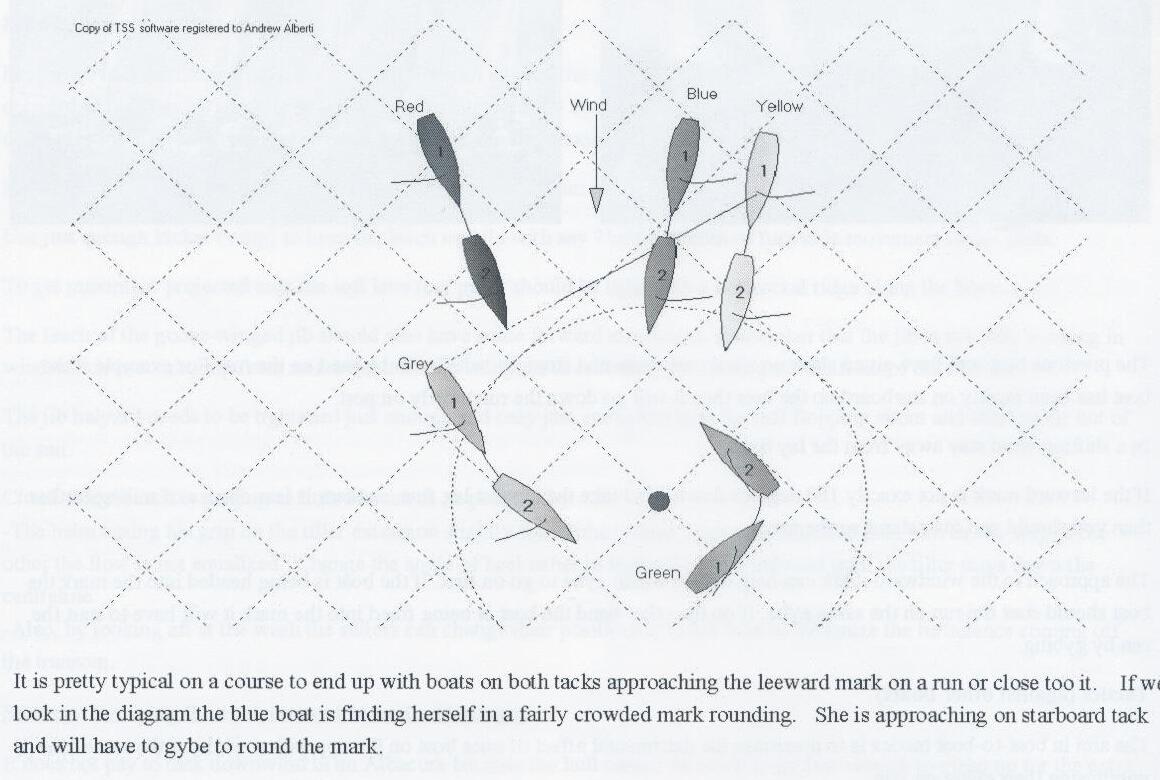
It is pretty typical on a course to end up with boats on both tacks approaching the leeward mark on a run or close too it. If we look in the diagram the blue boat is finding herself in a fairly crowded mark rounding. She is approaching on starboard tack and will have to gybe to round the mark.
Let’s look at her situation relative to grey. Prior to position 1 grey is on port tack and blue is on starboard so blue has right-of-way (rule 10). At position 1, grey reaches the two length zone and blue is not overlapped with grey so is not entitled to buoy room (rule 18.2c). Blue will have to go outside of grey if she gets there while grey is still there.
Now let’s look at blue relative to red. Red is on port and blue is on starboard so blue is right-of-way (rule 10). This time blue also has an overlap on red when blue reaches the two length zone. Blue is therefore entitled to room (rule 18.2b). We had a discussion of rule 18.4 last time, so we know that since blue has to gybe to round this mark, she can’t sail further from the mark than her proper course before gybing.
When we look at yellow we see another starboard tack boat. Yellow is leeward of blue, so yellow has right-of-way (rule 11). Yellow is also inside at the mark so is entitled to room (rule 18.2b) from blue, red and grey (she is overlapped on grey at position 1 even though red and blue are not.) Yellow also has to sail no further from the mark than her proper course before she gybes (rule 18.4).
So to sum it up blue has to give room to yellow, stay behind or outside grey, get room from red and sail no further from the mark than her proper course before she gybes.
Now blue is probably so caught up on this she is likely to miss the biggest problem. Green was well ahead coming down the leg. Now she has tacked around the mark and is coming back on starboard. She is leeward to yellow and blue and therefore right-of-way (rule 11). Yellow will probably see green first. She may have two options. She can bare off and go astern of green or she can head up and stay above green until green passes. If yellow goes down she must give blue room to do the same thing. Grey is a right-of-way boat to blue and yellow and therefore an obstruction (see definition of obstruction), so blue is entitled to room at an obstruction (rule 18.2a). If yellow goes up blue will also have to go up since yellow is leeward boat.
15 ACQUIRING RIGHT OF WAY
When a boat acquires right of way, she shall initially give the other boat room to keep clear, unless she acquires right of way because of the other boat's actions.
Green is right-of-way, but when she tacks she has an obligation under rule 15 to give all of these other boats (yellow, blue and red) room to keep clear. The closing speed between the boats going downwind and green coming upwind may be significant, so there may not be much time. The time given must be such that not only red and yellow can react, but blue can react based on their reaction. If yellow decides to head up for example she has to give blue time to respond. Whether green’s tack was legal depends upon the time it is going to take for the boats to converge and the time it is going take all of the other boats to respond. It is a risky maneuver on green’s behalf, but given enough time it is a legal one and one that boats sailing downwind, particularly those who are on the inside of the course coming in on starboard must be aware of.
One Design Boat Covers
Hans Gottschling
The Dinghy Boat Cover Specialist since 1969
[email protected]
905-2770-3306
Care & Feeding Of Wood Cored Foils
There was a time, not that long ago, when the typical sailboat foil was shaped from a plank of mahogany or similar wood, varnished, and then you went sailing with it. If you were lucky the plank was ripped into strips and glued back together with quarter-sawn (vertical) grain, each alternate strip being flipped end to end to resist warping of the overall structure.
[For the sake of simplicity, the term “foils” in this article refers to rudders, centerboards, and daggerboards]
The foil would swell or shrink a bit with changes in moisture content; it was expected, and nobody got too fussed about it. These dimensional changes were fairly uniform across the foil as there were few materials used in its construction (just the wood, glue, and varnish).
Few serious racers today that would use such a simply constructed foil unless forced to by class rules. Most foils today are a composite of a laminate (fiberglass and/or carbon fiber and/or aramid) over a core (most commonly foam or wood). Composite construction gives a potentially lighter, stiffer, and stronger product that's low maintenance and dimensionally stable.
To steal a phrase, wood is now an exotic material. Good clear planks of tight grain are rapidly increasing in price as supplies dwindle. It is more time consuming to work with (the blanks must be strip laminated prior to machining, and can require machining at a slower rate than a softer foam product). And a wood core encapsulated within laminated skins must be treated with care to ensure that no moisture can get to it.
So why would anyone in this day and age build foils with wood cores when it is so much simpler to use foam instead? There are a few reasons, the two big ones being:
1) Weight: there are many sailboat classes that specify minimum foil weights. Some of these date back to the days of varnished mahogany and have never been updated. The most reasonable way of getting these foils up to minimum weight is by using a wood core (something heavy like Mahogany or Douglas Fir). The fiberglass skins can be fairly thin then as they're primarily used for water-proofing rather than contributing significant strength.
2) Mechanical properties:
- Stiffness: the stiffness of a beam goes up with the cube of its thickness; if you are restricted to a thin foil, then it is hard to beat the stiffness offered by a wood core.
- Flexibility: seemingly at odds with stiffness, wood is also quite flexible (within reason). More to the point, wood cores can be flexed over and over and over without fatigue.
- Compressive strength: the most common place for a foil to fail is in point load on the compressed side (such as a daggerboard entering the hull, or at the lower fitting of a transom-hung rudder). If the point load is high enough to compress the core, the skin will buckle and the unit will immediately fail. Wood has amazing compressive strength for its weight. This is the number one reason why some of Phil's Foils' highest performance products will have at least some wood in the core.
Now that we know WHY wood is still used, what's to be done to make sure your wood cored foil(s) stays in shape over time? You must be a stickler for detail when first installing your new foils, and later with maintenance down the road, or BAD THINGS WILL HAPPEN.
Really, the worst thing you can do for your foils is put them in the water. But since that's going to happen, we have to stop the water from getting into the core. Every single hole you drill into your new foil must be drilled oversized, filled with epoxy, and then re-drilled to the proper size once the epoxy has cured. To do it right, first coat the inside of the (oversize) hole with unthickened epoxy, let that soak in, and then fill with thickened epoxy. Yes, even if you're just putting a pull-up rope into the handle, or screwing on a fitting, you MUST do this. Or BAD THINGS WILL HAPPEN. Regularly inspect your foils for nicks and dings that might have compromised the skins, and fix them right away. A casual look at the centerboard during a capsize is not good enough! Also remember – wood is an organic material. It moves, especially with changes in humidity and temperature. Don't bake your centerboard in the trunk of your car, and don't leave it to freeze in the centerboard trunk over the winter. If keeping the boat in the water, use a proper barrier coat before applying antifouling. A bit of care goes a long way.
What are these BAD THINGS? Composite products are exactly what their name implies – a composite of different materials, each of which reacts differently to changes in moisture content – a worse situation than in the simple days of varnished mahogany. Odds are that the humidity in your boat park (or worse, in your lake) is not the same as the humidity in my workshop on the day that I laminated your new centerboard. So even though the wood was stacked in the shop for several months and quite stable in moisture content at the time the centerboard was constructed, any exposed end grain is going to act like a sponge and soak up moisture if at all possible. Wood strips are now bonded with epoxy. This soaks a small distance into the wood at the bond, resulting in stable glue lines. But the wood in between will swell. The result of moisture ingress will be distinct waves along the sides of the foil. While the fiberglass laminate is happy to “go along for the ride” on the flat port and starboard sides of the foil, at the edges it is being asked to stretch. Fiberglass doesn't stretch, it breaks. Don't underestimate the power of a swelling wood strip, it CAN break the laminate. Then more water gets in and the whole process snowballs.
Or if you're in an extremely dry environment (or cooking the centerboard in the trunk of your car) moisture can be driven out of the core instead and you'll end up with shrinking (cupping) of the wood strips.
The fix involves sanding it down to bare laminate, giving it several months for moisture content to stabilize (preferably in your air conditioned basement), then resealing the core and performing any necessary repairs to the skins. Then re-fair and paint again. A slow process and costly if you have to pay to have it done. It is much easier to ensure that the problem never happens in the first place.
One last thing – in the long term you may find that you have some minor cupping or swelling of the wood strips no matter how well you've maintained the board. It does happen, and it happens to every builder of these things. Contrary to popular belief, epoxy is not 100% waterproof. Over time water vapor can migrate through the skins and get into (or out of) the core. Then its time for a light sanding and repaint – usually by then the foil will have stabilized and will not change further.
NEED RUDDER?
Rudders/Centerboards/Daggerboards
Custom work is our specialty!
1st 2005 Albacore Canadians
2nd 2003 Albacore Internationals
Phil's Foils & Composites
(613) 599-6951
www.philsfoils.com
Don't Miss The 2007 Albacore Internationals
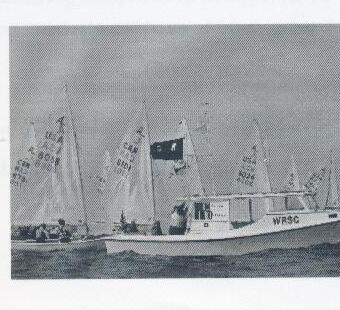
The Preliminary NOR is out, online registration is nearly ready to go and plans are coming together for an excellent International Championship in October 2007 on the Chesapeake Bay near Annapolis, MD. The hosts for the event, West River Sailing Club, the International Albacore Association and US Albacore Association extend an invitation to each and every member of the CAA.
Now some of you may be thinking, “that's fine, but really, I'm not a world class sailor.” But this event is for everyone. It will begin with a two day US Championship which will be divided into two fleets, the Championship fleet, for those who want to try to be the first Canadian team to capture the President's trophy since 1992, and the Challenger fleet for those who would like a smaller fleet to warm up for the Internationals. The beautiful Harwood Challenge tray, which has been won by Canadians only eight times since 1969, will go to the top team in the Challenger Fleet. And there will also be daily prizes awarded to participants throughout the fleet.
After two days of warm up, the Internationals begins in earnest with a plan to hold two races a day on Monday through Friday with a lay day planned for Wednesday. What will you do on your day off? Could go into nearby Annapolis and explore the state capitol, Naval Academy or other historic buildings. The Annapolis boat shows will be in full swing during the entire week we are racing, so you can catch the sailboats early in the week and luxury yachts at the end of the week, or the inevitable parties in the pubs and restaurants of Annapolis most every night. It is less than an hour drive to visit Washington, DC or the Inner Harbor and sites of downtown Baltimore. Off the water there is sure to be activities with fun for everyone.
But what should you expect on the water? Will it be too windy? Or will there be no wind at all. Of course either could be the case, but fall on the Chesapeake is one of the best times of year to sail. The change of the seasons brings cool air and the regular passage of weather fronts every 3-4 days. We can expect two systems to pass over the area during week of sailing bringing a wide variety of winds. In recent years the median velocity in early October has been 8-11 knots with two-thirds of the sailing hours clocking winds in the 3-20 knot range while air and water temperature averages about 20-25 C. In short, it should be a “goldilocks” scenario: not too much and not too little wind….something for everyone.
So do you have a good reason not to spend your Thanksgiving Holiday playing in sailboats? It had better be a good excuse, because nothing lame will be tolerated. For a few this regatta will be about trying to be among the best. Who knows, maybe you will be the first Canadian to break the drought and win the Governor General's trophy for top spot in the Albacore world since John Clark/Jaime Day took the honors in 1989. But for the rest of us it is about spending a week renewing old friendships, sailing on new water, making some new friends and having a blast. If you have any doubts about how much fun an internationals can be, just ask those who went to UK in 2005…and this one you can do without shipping your boat across the ocean.
This is it, the real deal. So get your boat in shape, do your buoyancy test early, line up your crew, figure out trailer logistics and get your time off. It is going to be a great event, and you don't want to hear that everyone was there, and you missed it.
For more information go to www.albacore.org/usa/internationals07/ or e-mail [email protected].
Cristiano Monteiro
Future Helm or Crew?
Georgian Bay Marina
Custom work on Albacores
Refinishing * Re-Rigging * Rig Set Up
Dealer for: Harken, Ronstan, Seldon, Holt, Marlow
99 Rose Point Road Parry Sound, Ontario 705-746-9559
[email protected]
2007 Canadian Albacore Association Executive
| Commodore Teresa Miolla [email protected] | Specifications Chair David Weaver [email protected] | Membership Janet Duff [email protected] |
| Past Commodore Ann Savege [email protected] | Chief Measurer George Roth [email protected] | Treasurer Jason G. Roth [email protected] |
| First Vice Commodore Allan Measor [email protected] | Rear Commodore Sandy Swiatlowski [email protected] | IAA Treasuer Raines Koby |
| Second Vice Commodore & Website Henry Pedro [email protected] | Editor – Shackles & Cringles Christine Short [email protected] | IAA Representative Barrie Farrell [email protected] |
| Third Vice Commodore Stephanie Mah [email protected] | Secretary Cathyann White [email protected] | Canadian Albacore Association 47A Harbour Square, P.O. Box 81085 Toronto, Ontario M5J 2V3 www.albacore.ca |