Spring 2009
April 01, 2009
A commodore's spring welcome, Andrew Alberti's two-part breakdown of the 2009 racing rules changes (the buoy-room "zone" rewrite and the new Outside Help/Obstruction wording), Barney Harris on sailing the 2009 Internationals venue at Largs, Scotland (plus a container-shipping logistics update for getting boats there), the CAA's 2008 membership survey results, Henry Pedro on the improved 2009-model Albacore, notes from the top Canadians, a Toronto Boat Show recap, and the 2009 executive.
Message from the Commodore
Your CAA Executive has met three times since September and we have completed our first order of business: the development and administration of a survey to learn what current and former members feel are the most valuable components to a CAA membership. The results influenced our workplan and I am pleased to share with you a few of the highlights! A more comprehensive article about the survey results is found inside this edition along with articles on initiatives we have worked on to date.
Members felt we should promote Junior Sailing. We will try to organize a Canadian Junior Sailing Championship Event this season. We know the schedule is full but we want to encourage the many talented young sailors to sail in the class – even if this first time is a one day event!
We have established a technical committee to solicit feedback from members, fleet captains and sailors at large on perceived opportunities that exist to improve the construction, design and performance of the boat. Meetings have taken place with our boat builder, Ontario Yachts, and Henry Pedro's article outlines the feedback he is already working with. We will offer an Open House Event this spring for sailors to tour Oakey's shop, speak to him and see some boats currently being constructed.
We are looking at new initiatives to promote the Class, and dinghy sailing to folks who either sail in other classes or have never tried sailing before. Inviting sailors from other classes to sail the Albacore in some of our competitions is one way to promote this. Stay tuned for special events we are working on to this end.
Finally, we will continue to offer a selection of at least three Skill Building workshops or Clinics to sailors at various ability levels and we are lining up a list of excellent guest facilitators.
The racing calendar is UP and we have secured fantastic venues for the Provincials, the North Americans and the Canadian Championships. Buffalo Canoe Club, RCYC and Hamilton Bay Yacht Club have all committed to ensuring top notch events and warm hospitality.
Travelling sailors, check out the East Coast Championships in August with our friends out in Shelburne, NS. Of course, Largs, Scotland figures high on many sailors' radar for this year's World Championships!
If you can't wait for all that, don't forget the Mid Winters – an awesome way to start your season before the ice has melted in most parts of Canada. It promises to be an action packed season!
We hope you are as excited as we are! Read on……
On The (frozen) Water…
For the 2009 Sailing Season we are pleased to have Tim Broughton take on the Racing 101 workshop… we all know Tim has a few tricks up his sleeve! And we are honoured to have Canadian Olympian Chris Cook join us to coach the Top of the Fleet workshop on the June 6/7 week end. We will update the details on all our workshops (i.e. more to come!) through our website. So – keep doing your push ups, sit ups and pull ups so when…
Rules Changes for 2009
The sailing rules go through changes every four years, just after the Olympics. The new rule book will be published soon and takes effect on January 1, 2009. For those of us stuck in Toronto, the changes won't matter until May, but those sailing elsewhere this winter should start studying early. The new book is available on the web at www.sailing.org/rrs and is available from the CYA and at some sailing stores.
The big change this year is in rule 18, the buoy room rule. In practice there are very few changes in the way we will sail around marks, but the wording of the rule has changed a lot. This rule was completely rewritten in an attempt to make it clearer and easier to understand. The most obvious change is actually in the definitions.
Old Rule (2009-2012):
Two-Length Zone The area around a mark or obstruction within a distance of two hull lengths of the boat nearer to it.
New Rule (2009-2012):
Zone The area around a mark within a distance of three hull lengths of the boat nearer to it. A boat is in the zone when any part of her hull is in the zone.
The rule has changed from two hull lengths to three. This sounds like a huge change. The first reason it is not so important is that most people can't judge two boat lengths and were probably calling it at three boat lengths anyway.
The second more important reason is in the start of rule 18. The old rule said that it started “when the boats are about to round… a mark.” This could actually be well before the two-length zone, particularly with faster boats.
Old Rule (2009-2012):
18.1 When This Rule Applies
Rule 18 applies when boats are about to round or pass a mark they are required to leave on the same side, or an obstruction on the same side, until they have passed it. However, it does not apply….New Rule (2009-2012):
18.1 When Rule 18 Applies
Rule 18 applies between boats when they are required to leave a mark on the same side and at least one of them is in the zone. However it does not apply….
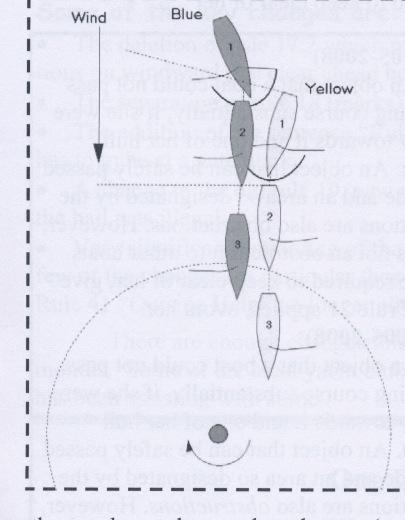
For example, if the boats in the diagram were starting to take down their spinnakers at position 1, approaching a leeward mark to be rounded to starboard, then they were probably “about to round.” This is before two hull lengths from the mark. The challenge is that the determination of whether the inside port tack boat was entitled to room from the outside starboard tack was based on the existence of the overlap at the two-length zone (position 2). The right of way at three hull lengths (or more) before the mark is based on the existence of the overlap at two hull lengths, which is still in the future.
The new rule says it applies when “at least one of them is in the zone,” which is the same time the overlap is determined. The rule writers moved the zone out to three lengths to be closer to matching a boat's “about to round” distance, and they eliminated the problem of the rule starting ahead of the overlap being determined.
Another change I want to concentrate on is based on a situation I discussed in a previous article in this newsletter and which led to an appeal within the Albacore class. My previous article used the diagram to the right:
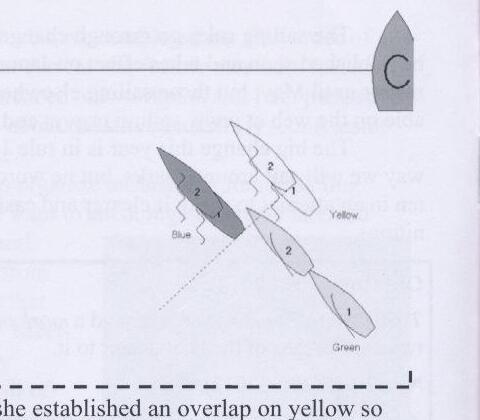
In the diagram, the blue and yellow boats are sitting luffing waiting for the start. The green boat is approaching trying to go between them with more speed. At position 2, green establishes an overlap on yellow. She is still clear astern of blue. This situation shows us quite a few rules which have not changed. At position 1, green is clear astern of both yellow and blue so she must keep clear of both (rule 12). At position 2, she established an overlap on yellow so she is the leeward boat and has become right of way (rule 11). She must initially give yellow room to keep clear (rule 15). She is still clear astern of blue so she must keep clear (rule 12). Blue is leeward of yellow so blue has right of way over yellow (rule 11).
Note that green and yellow both have to keep clear of blue. The definition of Obstruction says that “a boat racing is not an obstruction unless they are required to keep clear of her”.
Old Rules (2005-2008)
Obstruction An object that a boat could not pass without changing course substantially, if she were sailing directly towards it and one of her hull lengths from it. An object that can be safely passed on only one side and an area so designated by the sailing instructions are also obstructions. However, a boat racing is not an obstruction to other boats unless they are required to keep clear of her, give her room or, if rule 21 applies, avoid her.New Rules (2005-2008)
Obstruction An object that a boat could not pass without changing course substantially, if she were sailing directly towards it and one of her hull lengths from it. An object that can be safely passed on only one side and an area so designated by the sailing instructions are also obstructions. However, a boat racing is not an obstruction to other boats unless they are required to keep clear of her, give her room or mark-room, if rule 21 applies, avoid her. A vessel under way, including a boat racing, is never a continuing obstruction. (my underlining).
Old Rules(2005-2008) and New Rules (2009-2012):
11 ON THE SAME TACK, OVERLAPPED
When boats are on the same tack and overlapped, a windward boat shall keep clear of a leeward boat.12 ON THE SAME TACK, NOT OVERLAPPED
When boats are on the same tack and not overlapped, a boat clear astern shall keep clear of a boat clear ahead.13 ACQUIRING RIGHT OF WAY
When a boat acquires right of way, she shall initially give the other boat room to keep clear, unless she acquires right of way because of the other boat' actions.
Blue is an Obstruction for green and yellow. It will take a while for green and yellow to pass blue so she is, according to the old definition of Obstruction, a continuing Obstruction. Under the new definition, she is a vessel underway and therefore specifically not a continuing Obstruction.
In the old rules, rule 18.5 applies. At the moment green establishes an overlap on yellow there is not room for green to pass between the yellow boat and the blue boats. According to the rule, green is not entitled to room and must keep clear of yellow even though green is to leeward of yellow. In this situation, green has to go to leeward of blue or to windward of yellow.
In the new rules, the equivalent rule about continuing obstructions is rule 19.2(c) but as we have just seen, blue is not a continuing obstruction so this rule does not apply.
At position 2, blue is an obstruction, green is right of way over yellow and entitled to room. The restriction on green going in between yellow and blue is no longer whether there is room to pass at the time the overlap is established, but is yellow able to give room. Rule 19.2 (b) says “unless she has been unable to do so from the time the overlap began” so if yellow has to be able to keep clear (rule 15) and give room (rule 19.2(b)). It is still restrictive, but not as restrictive as the old rule. I believe this will change the way that boats approach the start. In this article, I was only able to cover two major changes. One good source for some of the other changes that make a difference is a short extract of game changes by Dave Perry, found at: http://ww.sailingscuttlebutt.com/news/09/0108.
Old Rules (2005-2008):
18.5 Passing a Continuing Obstruction
While boats are passing a continuing obstruction, rules 18.2(b) and 18.2(c) do not apply. A boat clear astern that obtains an inside overlap is entitled to room to pass between the other boat and the obstruction only if at the moment the overlap begins there is room to do so. If there is not, she is not entitled to room and shall keep clear.New Rules (2009-2012):
19.2 Giving room at an Obstruction
(a) A right-of-way boat may choose to pass an obstruction on either side.
(b) When boats are overlapped, the outside boat shall give the inside boat room between her and the obstruction, unless she has been unable to do so from the time the overlap began.
(c) While boats are passing a continuing obstruction, if a boat that was clear astern and required to keep clear becomes overlapped between the other boat and the obstruction and, at the moment the overlap begins, there is not room for her to pass between them, she is not entitled to room under rule 19.2(b). While the boats remain overlapped, she shall keep clear and rules 10 and 11 do not apply.
Some of the key changes are:
- The deletion of rule 17.2 which put limitations on windward and clear ahead boats
- The separation of rule 18 (marks) and the new rule 19 (obstructions). Zones now only apply at marks.
- The addition of the sentence “Rule 18.4 does not apply at gate mark” so an inside right of way boat no longer has to gybe at a gate mark.
- A change to the old rule 19, new rule 20 so that if a boat calls for room to tack, you have to respond even if the hail was illegal.
- Very significant rewording of the mark and obstruction rules (old rule 18, new rule 18 and 19), though only a few of the changes (in particular those listed above) will change the way the game is played.
- Rule 41 “Outside Help” no longer allows a boat to receive help when in danger and then continue racing.
There are enough changes this year that I recommend attending a rule seminar sometime in the next few months. Some of the local yacht clubs and sail makers are scheduling some and the Ontario Sailing Association has been assisting with some.
One Design Boat Covers
Hans Gottschling
The Dinghy Boat Cover Specialist since 1969
[email protected]
Sailing in Largs
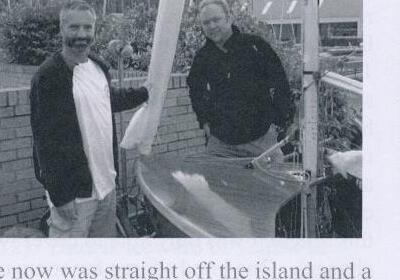
I spent three days sailing in Largs, Scotland, site of the 2009 Albacore Internationals.
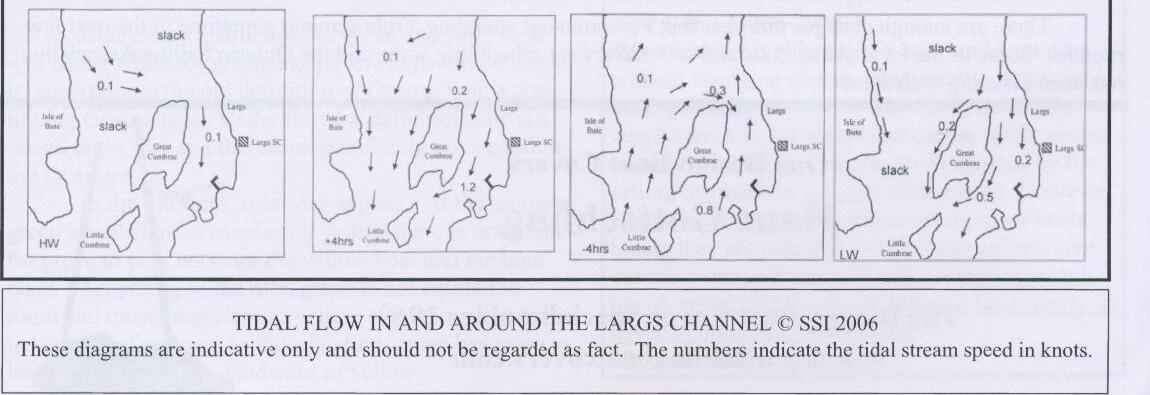
We had a SE breeze for racing on Saturday. It seemed that there was no clearly favoured side of the course. We raced in the channel course area straight off the club, but closer to the Island. At the time, the current was flowing from south to north at probably half a knot or so. I did not notice any shore effects for either wind nor current. Sailing master Dave says that the current is pretty steady in this area. I checked the chart and the bathmetry shows the depth to be fairly deep and constant right up to shore with little shoaling.
On Sunday we had a SW breeze. Phil and I started at the pin and sailed to the left initially and then hit shifts – very small on the order of 5 to 10 deg max and stayed in pressure which seemed to work. Then in one race some dude banged the right corner HARD and was popped out far in front. We saw this and managed to claw our way over there in small knocks and just rounded ahead.
Just when we thought we had figured it all out, it got weird. It shut down in the east and filled in from the western side of the course and then shifted 90 degrees to the right and filled in. One of the few times in my life I have sailed AWAY from a mark to get into new breeze to stay on top of an advancing front of overtaking boats. The breeze now was straight off the island and a bit puffy and shifty. The RC ran a few races in this wind. It seemed that the left was generally favoured but only by a small amount as there were enough shifts and puffs to claw back from the right – but being left was better generally.
In this race we encountered a current shear in the middle of the course – it appeared as a ripple in the water surface. As we sailed over, it was as if we fell of a cliff. We tacked immediately and watched a five boat length lead shrink to a few feet in a couple of minutes. The current velocity differential there was probably 1/4 knot or so.
The take away here is that there are some eddies and weirdness in the current that we need to be aware of. The lesson for the wind is the same. Even when it seems like the breeze has settled in it's still subject to weirdness with all the island hills and weather flux. More data: on the Sunday, the area to the north was pretty much constantly deluged with rain (we could see it) and yet we sailed the entire day in bright sunshine. Weather comes floating through there and can turn the entire situation upside down in just a few minutes. So the trick to sailing at Largs is that there is no trick – the place is very changeable and the way to race is to keep one's eyes open and be ready to take advantage of whatever happens.
Shipping boats to Largs

I am working with Schenker Canada to arrange a container for my boats to the UK and intend to offer remaining space to other Albacore owners. Schenker has provided logistic support for a number of the Canadian Sailing teams that went to past Olympics and they have solid experience getting sporting equipment to events. The following information will also be available on the N American Albacore Forum.
Cost – I revised my estimate to be based on a 40' High Cube container (holds 8 Albacores and their dollies) to take boats from Toronto to Largs, GBR and return. The estimate is still around 1,000 CAD including insurances. By using Schenker, all expenses will be on a single invoice and a single POC in the event of any problems.
14 Jun 09 – Load container at Outer Harbour, Toronto
13 Jul 09 – Container arrives in Largs
18 Jul 09 – International Championships
25 Jul 09 – Load container at Largs
24 Aug 09 – Container arrives at Outer Harbour, Toronto
Schedule – The broker uses a rule of thumb of four (4) weeks for a 21 day shipping time in each direction. Approximately 6-8 weeks prior to loading, the broker books passage with the shipping line. On that day we find out when the boats need to be loaded and when they will arrive. Since we have to coordinate the loading of the container in Toronto and the date for the Internationals is fixed, I think that the schedule posted in the previous S&C is still valid. It is not ideal but it allows us to load at the end of the N Americans (Toronto) and gets the boats there with time to spare. On the return trip, I hope they have over-estimated and we can get the boats to Shelburne, NS (East Coast Championships).
Insurance – You will require the following types of insurances:
- Cargo Insurance – This coverage begins when the doors close on the container with your boat inside and ends with the container delivered at Largs, GBR. It also applies the same for the return trip home.
- Third Party Liability – This coverage protects you in the event you damage or injure someone or someone else's boat.
- Physical Damage / Other-risks – This coverage protects you against damage or loss to your boat as a result of your negligence. It is optional but recommended.
Please indicate your interest by contacting Henry ([email protected]). A non-refundable deposit of 500 CAD is required.
GENCO MARINE – everything for the boater, power and sail
Offers Full and Associate Members of the Canadian Albacore Association a 10% discount on purchases
To receive your discount, show your 2009 membership card
(This offer does not include labour, electronics or sale items)
350 Queens Quay West, Unit 108, Toronto, Ontario, Canada M5V 3A7
1008 Rangeview Road, Mississauga, Ontario, Canada L5E 1H3
www.gencomarine.com
The CAA 2008 Survey
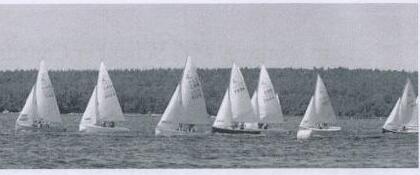
The CAA would like to say Thank You to all 217 respondents to our recent survey. This strong response is an indication of the level of interest and care for a thriving Canadian Albacore fleet. The information and insight received from these efforts is shaping our future strategy and initiatives.
In addition to the scoring we received in the survey, we have some very solid commentary on aspects of fleet growth, membership value, and boat ownership. To our delight the question with the most commentary, which will bolster our marketing efforts, is the feedback on “why I continue to sail the Albacore.” We had over 70 separate comments on that specific question and we will include some of the comments on our website and printed material.
Now a summary of the results:
Respondents: 217 total responses from 9 separate sailing regions, with 70% from the Toronto area followed by 8.5% Ontario "Other" (mostly the Hamilton area) with the third most common area being Ottawa. As this was an open survey, without strict response rules, we received some respondents from the USA and Europe, although in limited amounts. The survey was released to our entire Albacore mailing list which includes anyone with interest in the fleet, non-Canadians, non-members etc…
Boat Ownership: From a boat ownership perspective, 33% of the respondents owned a boat, while only 4% where previous Albacore owners. 61.5% of the respondents are not owners, influenced heavily by the nature of the Community club scene. The top reason why a respondent has never purchased an Albacore is "Community Club Affordability" with 89% of non-owners selecting it as their top choice. This is followed by "Competing Leisure activities."
Demographics: From an age perspective, 30% of respondents identified with the 50-59 category followed by 28% in the 40-49% category. Only 9% of respondents are from the 20-29 age category, which we will address later as part of the fleet growth questions.
Satisfaction with Membership: Over 89% of all respondents indicated they were either "somewhat or very satisfied" with the value of the membership, with 11% signifying some level of dissatisfaction. There was very little difference in satisfaction with value between full CAA members and community club respondents.
Items that came across as high value in the membership features included coordination of sanctioned events (Top Value), coordination of training clinics (2nd), and race result communication. The AGM and discounts to US events were deemed low value.
From an awareness perspective, 19% of respondents where unaware of the Shackles publication, with 20% unaware of the liability insurance in place for sanctioned events which covers the race committee and participants in the event of a tragic event. As part of the 2009 membership mailer, we will highlight in detail all the features of membership to ensure higher levels of awareness.
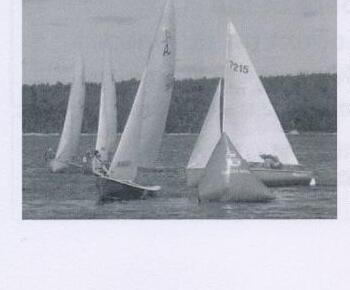
Potential Initiatives: Respondents selected the top three initiatives that would drive growth in the Albacore class. The most common selection, measured by an occurrence as a top three choice, was additional skills building/ training opportunities (120 votes), followed by Junior Membership/Training (82 votes) and additional class marketing/promotion (55 votes).
Membership Profile and Retention: 47% of the respondents are from the community club base, followed by 25% as Full members. Of all respondents who were members in 2008, 95% intend to renew.
Selected Quotations from the Survey:
Why I continue to sail the Albacore….
- Only place in North America where over 35 boats compete every Friday night
- It is a great class for learning how to race tactically in bigger fleets. It is also a good boat for new sailors to develop their skills, especially upwind sailing skills.
- It offers the best regular sailing regattas throughout the summer. Easy and safe boat to learn and improve in.
- Low cost. Boat performance matches my skill level. The people I race against are friendly. I can take the kids out on the boat.
- It is a great class – good for learning (teaching my kids) and good for competition to the highest levels. It is a class for life. Not too expensive. Lots of locations to visit. And it is in my DNA.
On Satisfaction
- Joined the association to take part and gain some knowledge and the members have been quite helpful. For a volunteer type association it is quite extensive and tries to meet the needs across a wide spectrum.
- We really do not have the same membership benefit as someone in Toronto. For example, access to measurers. I realize that training events need a critical mass that may not be available outside of Toronto.
- I appreciate the information made available on the website and I really like knowing there is an association that I can go to for information and that is looking out for the interests of Albacore sailors.
On Growth
- The class runs quite well. Regatta schedule is good and the venues are great. My recommendation is to do lots more to promote the class. More boats, more racers will be a stronger class with better, more competitive racing. It will also mean healthier builders, always a concern to a class.
- No. 1: CAA should take the lead in getting a second manufacturer and/or updated design for the boat. No. 2: Shackles and Cringles published on the internet with back issues and articles available on the website.
- Keep digging out pockets of Albacores that are out there. Burlington, Bala, and light them up like Hamilton and Shelburne. Ontario's is good.
The CAA's next steps….
While we continue to digest the contents of the survey, we have already made some progress on the feedback. We are launching a renewed website shortly, in time for the upcoming sailing season. We are looking for ideas on content, either specific sections or actual content to be posted (pictures, articles, opinion, how-to's). Contact Henry Pedro ([email protected]) to discuss ideas.
We are in the formative stages at looking for Junior events and would welcome any ideas, including location and access to Albacores. Contact Allan – [email protected]
Our 2009 membership mailer will have an insert detailing the benefits of the membership and highlighting some of the items which had low awareness from our respondents.
There is more to come on our initiatives for 2009 (and beyond) and we will continue to provide updates as they form.
Lastly, drum roll please….the winner of the $50 dollar West Marine Card is Rhonda from Toronto. We will be contacting her shortly with the prize.
Once again thank you to all respondents for taking the time to fill out the survey. Happy sailing.
2009 Albacore Looks Like a Winner
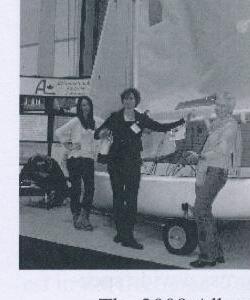
After a one year hiatus on building new Albacores, Ontario Yachts has produced the first of a nine-boat order for 2009. The new Albacore incorporates a host of changes from previously built boats that range from unnoticeable to moderate. In 2008, the fleet captains of all five Albacore community clubs in southern Ontario discussed the way each community club places orders. A standardized method of rigging and setup resulted; each new Albacore will be delivered completely fitted out to the exact same specification for each customer. This was intended to increase the level of quality control and to reduce costs by increasing the economies of scale during the ordering process. The Canadian Albacore Association's Technical Committee also met to discuss perceived and real problems with Albacore construction. A list of concerns was taken to the builder for consideration.
According to Don Oakie of Ontario Yachts, each of the seven hull components must be assembled together as quickly as possible from the time they are laid-up (moulded). The polyester resins making up the structure of the boat take a few days to reach full cure; if adhered together before that, they will stick together better (the adhesives used to “glue” the pieces together are polyester based and can form a chemical bond with the component they are adhered to). Oakie further explains that if you wait too long before assembly, the pieces reach their full cure point and then rely only on a mechanical bond to hold the pieces together. Timing is everything.
The 2009 Albacores also benefit from a number of minor repairs to the tooling or moulds that result in better control over the moulding process and the reduction of sample-to-sample variation – it is more likely that each and every hull produced will be closer together in weight, and that total hull weight is more likely to be lower. This is great news for the racer who values a minimum weight boat. It is also good news for those less concerned with racing because the total boat promises to be more durable since variation is removed from the construction process.
Weight aside, other construction improvements implemented on the new boats include:
- Better resin penetration throughout the laminate which reduces the presence of voids or air pockets (channels) through the fiberglass laminate. This should translate into a boat that tends to absorb less weight in water over the course of time and thus maintain a higher level of performance.
- An inter-layer of vinylester resin has been applied to the cockpit sole to increase adhesion of the cockpit antiskid coating. This will prevent lifting or flaking of the cockpit antiskid coating.
- The buoyancy tanks attachment points on the transom are now “taped” over with fiberglass tape. This should increase transom stiffness somewhat and prevent the occurrence of transom-to-tank de-lamination over the years.
- Centreboard downhaul/brake and centerboard uphaul lines are now standard – good news to those who routinely sail in shallow areas as there is no longer a need for a centerboard pennant cleat which contributes to board damage when accidentally running aground.
In all, OY estimates that several dozen small improvements have been made to the boat's construction, creating a boat that is as good or better than those offered by other builders and at a competitive price. Upon viewing the first of the new production I tend to agree. There has never been a better time to buy a new Albacore.
More changes: The bottom of the centerboard trunk gets new reinforcement where it meets the hull….The thwart has been lightened slightly but maintains full structural integrity… The mast step track has an increased number of adjustment holes for greater adjustability…. The mast pre-bender has been redesigned to reduce the upward pull on the mast step to prevent catastrophic breakages in that area…. Sail controls that are led to the side have been slightly repositioned for better ergonomics…. Jibsticks are now standard (finally!)
Dear Albie: A new year is underway and I've had difficulty picking resolutions. Suggestions? Best of Intentions
Dear Boi: I plan to lose ten pounds of skipper – Richard Piercey…. Use two part expoxy – Teresa Miolla…. To stop using my teeth as a third hand – Tannis Baker….
Words from the Top Canadians
I went into the 2008 Canadians planning on being consistent, wherever I was in the fleet. I just happened to know where to go and when – I had only one race outside the top 5. Starts are important and you can win the start, but if you don't hike hard for at least the next 1-5 minutes you might as well call it a day for making it to the top ten. I'm going to be honest – I didn't have a good start the whole Canadians, at least one that wasn't recalled. If behind, look for clear lanes or make any gains you can on the first leg. Goal setting is also important, but set them too high and you are setting yourself up for a big letdown. At the US Nationals where I finished 3rd, I made several mistakes, but my goal for that regatta was to win a race which I did.
Team work and crew are key. I hear skippers yelling at their crew for whatever reason. But would you sail three days with a power hungry grouch, cursing at the slightest thing that goes wrong? I have heard only one loud word from one skipper (during a mechanical failure). He is very calm, a pleasure to sail against and has had the same crew for as long as I have been in the fleet: Raines Koby and his crew, Abby MacInnes. (I must thank Jennifer Yap who is a joy to sail with and is really getting the hang of it).
My highest recommendation is to practice, practice, and practice more. Before sleeping, visualize a race and getting out of situations. I spent at least 180 days sailing last year and worked on a particular skill each time. I'd start with a warm up and then sail as if I was racing until five minutes before hitting the dock. And at the moment, I am in Miami training for the Miami OCR with Chris Cook coaching – 5th in China, Zach Railey (silver medallist in China) and Ed Wright (2nd in GBR in the Finn to Ben Ainslie) as training partners.
The Champion is the person who made the fewest mistakes. When I recognize a mistake, I finish the race and then figure out a solution or I ask other sailors. (I owe a debt of gratitude to Alan Humphreys for sharing his knowledge with me and helping me fine tune my set up with advice from his crew, John Morgan.)
So keep on sailing hard, hiking fast, and let me cross! Wait a tic, did I get that right, oh well. Cheers, Adam
The Toronto International Boat Show
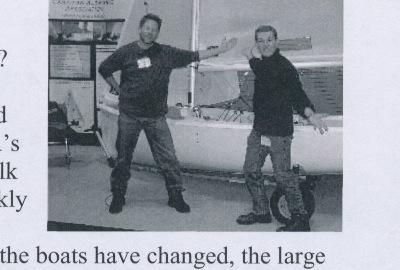
It's an absolutely freezing January day, what is a single city gal to do? Get to The Toronto International Boat Show that's what! I will shamelessly admit that I have attended the Boat Show only once – as an attendee. I located our spot and thought “nobody puts Baby in the corner”, there it was the CAA's booth, right in the corner…but it was a great spot, roomy so people could walk around and inspect the NEW Ontario Yachts Albie. The boat was more sparkly than me, but not as complicated, with the tweaking of new additional lines.
I had a BLAST chatting with Albacore fans, new and old, about how the boats have changed, the large fleet, the camaraderie, the mad mad mad Friday night races, the growth of the Ottawa, Hamilton and Shelburne fleets, road warrior trips, the many events packed into six months, the meeting of spouses (this can be done?) and the shear enjoyment of the Albacore. The opinions of participating in the Boat Show vary – are new members attained? is it worth the time and expense? I gave out many pamphlets from all clubs that had provided them and feel that we must maintain the Albacore presence, otherwise it will be forgotten. A CAA exec member had even met people from Montreal who were interested in starting an Albacore “community club” type program… oui mes amis, how cool would that be! And spread the love, bring a buddy out on the Albacore! Is it sexy…well, what are you wearing underneath your life jacket? Don't tell me or show me, let me be curious.
I left the Boat Show, and re-entered… a snow storm…this gal looked at her daytimer, counted the days to the Midwinters, March 20-22. I will be there with even pouffier hair if you can believe it….humidity… good for the skin, not so much for the hairdo, but it's the start of the sailing season, and all is good.
Thank you to everyone who manned and wo-manned the CAA booth at the Boat Show. A big shout out to Henry Pedro and his crew for a job well done.
2009 Canadian Albacore Association Executive
| Commodore | Cathyann White |
| Past Commodore | Teresa Miolla |
| First Vice Commodore | Allan Measor |
| Second Vice Commodore & Website | Henry Pedro |
| Third Vice Commodore & Training Officer | Michelle Arnot |
| Rear Commodore | Kevin Soldaat |
| Specifications Chair | Dave Weaver |
| Chief Measurer | George Roth |
| Editor – Shackles & Cringles | Jelena Balic |
| Secretary | Alison Goodwin |
| Membership | Christine Short |
| Treasurer | Mary Free |
| IAA Treasurer | Raines Koby |
| IAA Representative | Teresa Miolla |
Canadian Albacore Association
www.albacore.ca
111 Sunnyside Ave., Toronto, ON M6R 2P1
The Royal Canadian Yacht Club Proudly Presents:
ALBACORE NORTH AMERICANS!
JUNE 13–14 on LAKE ONTARIO
$90 CAD includes camping, launch passes for two, two dinners Sat, awards and two days of racing on the lake!
All participants are invited to Camp on the island from Fri June 12th to Sun June 14th – sail in to the club after the Friday night Race!
RCYC tender will be arranged to transport dollies and luggage from the Outer Harbour on Friday night so your luggage will be waiting!
- Hot Showers and Pool available for your use
- Go for a swim after a hot day of racing!
- Oven's room food menu available ($8 for burger and salad or fries and other items available) until 10 pm Friday night and bar open til 12 midnight Friday.
- Hot and cold breakfasts on the verandah/ovens room and bag lunches available for purchase Sat and Sun mornings
- Great Party planned for Saturday night – Fabulous dinner, 2 bands, video show of the days' racing, Rum Sponsor
- Over 700 people in attendance last year for the après party!
- Don't drink and drive – stay on the island!
For further information contact Heather – (416) 209-1072
[email protected] and www.rcycopen.ca