Spring/Summer 2005
June 01, 2005
Progress on the HAPCO prototype hull and the CAN 7000 restoration, thoughts on foil design, downwind tactics, and a Paul Henderson retrospective.
Message From The Commodore
5-4-3-2-Go!!...Clean air, two ugly tacks and I'm inside and to weather of the fleet. The first Outer Harbour Friday Night of 2005 is off and "huh?"..putt putt putt- This can't be good. "Barrie, you are OCS. Please leave the course"! Short but sweet. As Marty Cameron of Westwood SC sails to victory, I get to be the first on the deck with a post-game brew. Hard to have any good stories in a two-minute race but of course you know your Commodore will find a way. Enough whining, it's sailing season.
So, what have your CAA Executives been doing with your hard earned $$$. Partying? Trips? Gifts Galore!! Oh yeah and thanks!
A few weeks ago, a motley bunch (Teresa Miolla, Tim Broughton, Steve Goode, John Gilchrist-heeeeessss back!-and moi) all went down to the Hamilton Bay Sailing Club for a meet and greet session. The enthusiasm was fantastic. Lead by Big Harold, there was a great turn-out to listen and chat about everything Albacore. The Hamilton group are working very hard at bringing some of their Ontario Yachts Albacores back into competitive form. From now on, there will be a major regatta there every year, starting with a Vice regatta (tba) this year. They have a fantastic set up and clubhouse. We exchanged lots of ideas and the whole night was very positive. Especially when they took us over to the Canoe Club next door to use their bar. Sailors-gotta love'em. Next Stop: Ottawa. The Albacore Empire is building.
Our race training for the "moving up the fleet gang" was held on the May 28-29 weekend. All agree it was very useful and that Chris Cook and his helpers Anne White and Tim Broughton did a great job and filled in a big need.
Thank you to all who got their memberships in by May 15th. On June 3rd we held the QUANTUM JIB draw and CONGRATULATIONS to CHRIS SMITH in winning the jib. Cool booty, thank you to the good people at Quantum for making the draw possible. Your fine CAA Executive members were not allowed to enter and are now pouting away the summer.
On a saner note: the Executive has commissioned a trophy for top crew in the Harbour Master Series. This trophy will be named after Al Ostachoff. Al passed away last year after a battle with cancer. Al is remembered for his sense of humour, honour and his dedication in preserving the Toronto Outer Harbour as a place for natural sports and all the feathered and furry friends that share it with us. Money well spent.
Well my friends, it's Friday afternoon and time to sneak out of the office. I have a jib halyard to repair and friends to hang out with. Don't forget the Ontario Championships in Ottawa on June 18/19. Mention this article and I'll let you buy me a pint. Enjoy this issue of Shackles and don't forget to tell Christine Short what a great job she's doing. And send her articles about your Albacore area and activities. We want to hear from you.
"til the next time you luff me up".
I'm Commodore Bear
Message From The Editor
It's hard to believe that one month has gone by since the first Friday night race in Toronto. I have received some photos and updates from some members but I really would like to hear more from our members across the country and receive more photos. Hey, if you want to be on the next cover of Shackles, get someone to take your photo in a portrait format and email to me!
Thank you to everyone who contributed to this edition, and my apologies to those contributors that had to resend their articles, I was having issues with some of my computer abilities or lack thereof! I hope that you are enjoying the CAA Email Updates, again send us your comments or discussion ideas, or articles for future use.
On the Race Training front, we held a New Rules Seminar this past April with guest speaker Andrew Alberti, which was well attended and received. John and Alistair Martin provided a Race Managment Refresher Clinic in early May, and the Race Training Clinic was held on the last weekend of May. Chris Cook was the coach for the Race Training Clinic and 18 boats participated and trained in various wind conditions - we couldn't have asked for a better weekend. I would especially like to thank Ann White, Tim Broughton and Barrie Farrell for making the time and effort to assist Chris over the weekend. It was hard fun!
FOGH MARINE has generously donated $200. worth of gift certificates to the CAA. At the Ontario Championships the CAA will be giving away 2-$50.00 certificates as well as at the Canadian Championships to our eligible participating members.
Happy Sailing
Christine
Photo acknowledgements to: Becky Harris— front & back covers, pages 4,7,9,14,15; Robert MacDonald page 4; Jeff Beitz pages 8&9
The Canadian Albacore Association thanks Fogh Marine for their generous donation and ongoing support
News From The North
Well, I'd love to say that spring has taken hold and sailing has begun in earnest, but the truth of the matter is that spring is struggling to gain a foothold so far this season. It has been cold since early April! In spite of the weather though, the hearty sailors here in Ottawa have begun to stir and set the season in motion. Already there have been Albacore sightings on the water (at least two so far), and activity in the NSC boatyard, and the local community clubs (Sail RA and Kanata Sailing Club) have held their opening days.
At Nepean, the sailing school doesn't start until June, but at Kanata and Sail RA, classes for beginners are well underway, and with any luck next year's keeners are currently learning that the pointy end goes forward and mast in the water is slow (we all relearn this one from time to time)…..
In the local racing fleet, things have been underway for a while. Monty and Ross have had a few trips to Sarasota over the winter for practice and to participate in the mid-winters and are looking to start the season in top form right out of the gate. The rest of the fleet will be playing catch-up from the first time we step into our boats…(Monty & Sonia finished 2nd at the recently held Mid Atlantics).
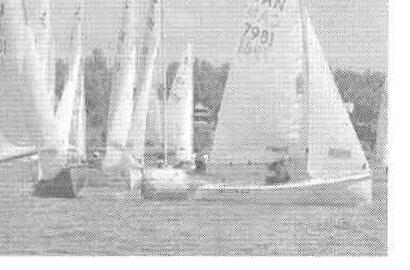
The Ontario championships will be here in conjunction with the Nepean One Design Regatta on the weekend of June 18th. We are looking forward to seeing people from all over the province and perhaps some US sailors come to visit us and partake of our hospitality. Our daiquiris and margueritas after the sailing on Saturday are plentiful and very yummy after a day on the water…..or in the water as was the case for some (many) of us last year!
Our local fleet is expected to grow by at least one boat this season as Kevin O'Rourke has been in touch over the winter and will be bringing his boat down to the club again for the first time in several years! Kevin has told me that he sailed in Toronto for many years, and is probably a name from the past for many of the Toronto fleet. We are working on Kevin to come out and participate in the Ontario's…..
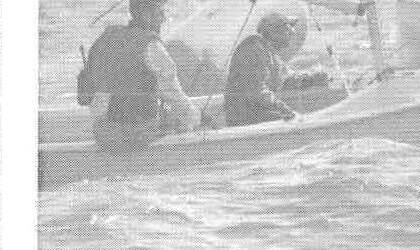
All of the usual faces are expected to be out again this season, and we are looking forward to another year of damn good competition amongst the local fleet. If the competition gets much stiffer, I'll be looking for ways to sneak an outboard onto Bessie's stern. Well, I might not go that far, but with at least 5 boats in the local fleet wearing new sails this season, I'll be looking for extra speed from any source I can.
Given time and some beer, I'm sure I could write more, but I'm distracted by my boat which is sitting upside down in the garage and beckoning to me to complete the work I started back in April so that we can be ready for racing, hopefully by this Wednesday. So I'll be signing off and trading in my keyboard for a piece of sandpaper.
Thoughts On Foils
I was asked to contribute a few thoughts on foils, and will dive right into the subject. Mechanical aspects aside, there are two fundamental aspects to a foil design - the foil section (cross section when viewed from above) and the planform (profile when viewed from the side). All foil designs are a compromise, with the basic goals of trying to maximize lift to windward while minimizing drag. Rudder designs have the additional goal of maximizing the angle at which the foil will stall. I won't get into issues on determining wetted area - on the Albacore centerboard it is tightly controlled, while on the rudder something in the range of 200 sq inches is appropriate.
Designers can spend a great deal of effort choosing the best foil section for the anticipated conditions, and this is always a compromise. Lift/drag curves (plotting lift vs drag at different angles of attack) can vary considerably at different boat speeds - a section that shows high lift with low drag and a high stall angle at lower boat speeds can look terrible when plotted at a higher speed. For a dinghy such as an Albacore it is far more important that the foil is smooth and feels fair to the hand with a nicely blunted "bullet nose" leading edge, than that it conform exactly to a particular section.
When it comes to optimizing foil performance, accept that you can't get lift without drag, and as noted earlier the exact lift/drag tradeoff is a function of the foil section. But there are other sources of drag, and performance gains can be had by minimizing these. Here, planform is much more important than foil section. Frontal drag, the drag felt by dragging a foil through the water at zero angle of attack (no lift being created) is a function of planform area - larger foils create more drag. A great deal of the energy required to pull the foil through the water is recaptured when the water passes the point of maximum thickness of the foil and collapses back around the trailing edge. An Albacore, with its transom hung rudder, loses some of this energy recapture at the waterline when the energy is dissipated as wake. Here a rudder with a thinner section at the waterline can reduce wake drag, but be careful of mechanical strength issues from going too thin. But back to planform choice... the goal is to choose a planform that reduces the big nasty tip vortex at the tip of the trailing edge. There isn't much that can be done with the centerboard - planform is controlled within a 1cm tolerance, with a bit of freedom on how the tip is designed. But the rudder is nearly completely open to experimentation. Higher aspect ratio rudders (long span vs short chord) have lower planform drag than short aspect ratio foils. Vertical leading edges have lower drag than swept back leading edges. Foils with an elliptical pressure distribution will reduce the tip vortex, as flow will go across the foil rather than escaping around the bottom edge. Note that the planform does not have to be elliptical itself in order for the pressure distribution across it to be elliptical; trapezoidal planforms can perform very well, here. For proof, just look to the skies. The Spitfire wing hasn't been seen much since WWII, and current gliders-the cutting edge in foil performance- generally have trapezoidal wing planforms. Compromise still plays a role in planform design - you also want a rudder that doesn't require an Olympic-class helm to control the boat. While high aspect rudders give great feedback that you're heeling, they can stall easier at the gybe mark, and they have very little feel at low speed (think about getting off a crowded start line in a light air-race- that's where you'd be wanting a beavertail rudder!).
A final word is about centerboard stiffness. I build what the customer wants, and in the Albacore class the popular opinion is that stiffer is better. This is contrary to development in some other classes where they've realized that a bit softer centerboard can be much easier to sail in a breeze. Just as in sail and rig development of the "automatic rig" that spills power when hit by a gust, a centerboard with a similar response can be a good thing. The Albacore carries a lot of sail power upwind for a non-trapeze boat, and lighter weight teams could do well to request a centerboard more suited to their weight. Don't confuse stiffness with ultimate strength - after all, its much easier to snap a breadstick than a licorice stick.
HAPCO Albacore Progress (As Of May 2005)
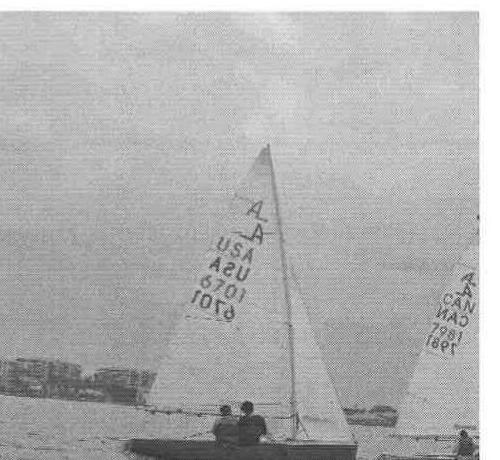
HAPCO continues to make progress towards our goal of a sailing prototype Albacore. I have to admit; I would never have imagined this would take so much time. We started this project about this time last year – in fact the last time I raced 6701 before converting it into and then using it as a plug for the hull and deck molds was the Albacore Mid Atlantic championships. We sailed 6701 this past weekend in this event. It was great to have that boat all back to normal.
Our recent work has been to define the hull laminate, prove out the manufacturing process, and to make incremental progress in fabricating the prototype hull.
We began with several sample laminates using various foam core densities. Most builders use what is called grid scored foam, which is flat panels of foam core which has been cut into small squares and glued to a flexible thin fiberglass cloth. The resulting product can conform to the compound curves of the albacore hull. HAPCO plans to use resin infusion to manufacture its boats. This means that every void will be filled with resin. Our initial experiments showed that this resulted in an unacceptably heavy laminate.
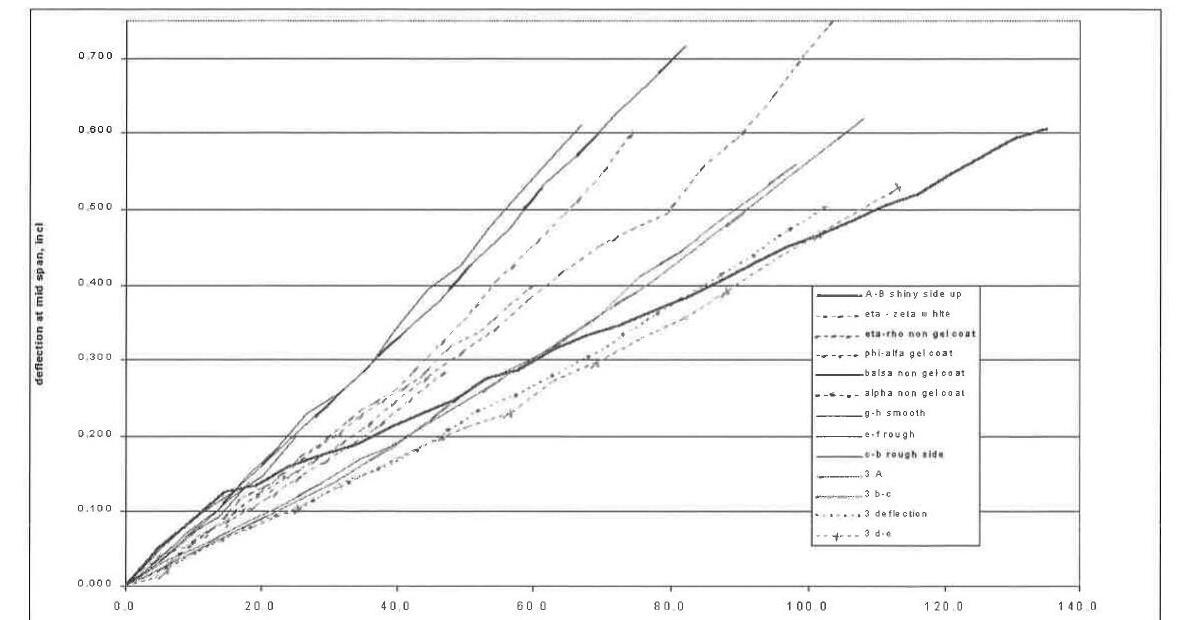
Results of Destructive Flexure Tests on Various Albacore Test Laminates
At the suggestion of our builder, we then looked into thermo forming the core. In this process the core material is purchased in flat smooth sheets and heated to a temperature of 220 degrees F in an oven. At this temperature the core loses its rigidity and can be formed. It is important to have the core thoroughly heated to the same temperature. It is also important to not over heat the core since at higher temperatures the foam bubbles begin to pop.
We then built an oven from plywood and high temperature foam insulation. We fitted this with metal shelves with adequate volume and area to heat enough foam for an entire albacore hull, a little over 100 square feet of surface area. After some gyrations with different heating methods, we had the capability to thermo form the core material.
We then had the builder perform a sample thermo forming and infusion for a 12-inch wide section of the hull near mid ships from the keel to the sheer. This section exceeded our specifications for stiffness, strength, and weight. We felt we had the process defined well enough to build our first part. We elected to do a deck initially, since it has only 1/3 of the hull surface area, and if we are going to screw something up, we should do a smaller less expensive one.
We then prepared a document to define the various reinforcements to be molded into the deck where the headstay connects, mast ram mounting, mast partner, side decks in way of the crew's hiking, and where the shrouds penetrate. In particular, the upper surface of the albacore side decks are highly stressed during sailing from hiking, while rolling the boat over on its side, and also when trailering, when securing straps and or lines are tightened over the side decks. After many revisions between Peter, myself, and our builder, we had a comprehensive document that described the laminates in all areas of the deck.
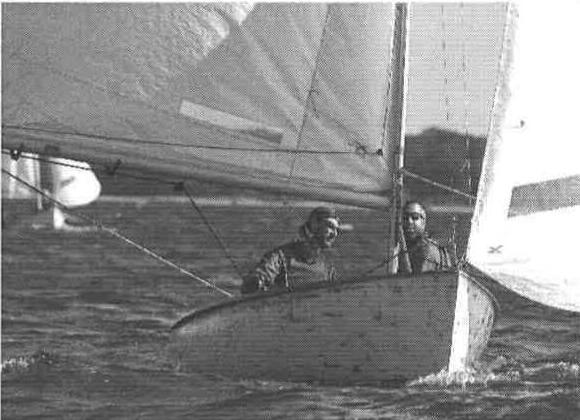
At the present time we have two decks infused. The first one did not quite fully infuse due to a lack of resin pathways. This unit also had some resin pooling. As a result it will require some repairs before it can be used – if it is used. The second deck infused just fine. For this one we increased the number of holes in the core to provide more pathways for the resin. The second deck infused fully and is pretty much ready to be glued to a hull.
Concurrent with all of this, we have been working on the keel insert and laminate spec for the prototype hull. This keel insert will form the centerboard slot and recess for the centerboard slot gasket retaining bands. This part was originally formed inside of the hull mold. We bonded foam core vertically to this part and coated this with filler, and sanded it to form the centerboard slot. As of this moment, the insert has been primed and wet sanded through 220 grit. This revealed some minor imperfections, which must be filled and followed up with another coat of primer, final sanding, waxing, and coating with PVA parting agent.
HAPCO's plans are to complete the above described keel insert, and then to thermoform the core, lay up, and infuse one or two hulls. After this we will fit out the interior, bond the deck, and then go sailing.
Back to its prestine state at the 2005 Mid Atlantics
CAN 7000... A Boat That Was Destined For E-Bay
The Re-Creation Of CAN 7000
Many of you know of our most resent project, a 1980 Bob Whitehouse built Albacore hull number 7000. We have documented most of the stages of reconstruction on the class association web page under the forum section. I have been asked to provide our notes on a few of the details we really paid attention to in efforts to build a boat that will have the capability of sailing in the front of the pack.
The Albacore Class
The Albacore class has to its credit a fantastic core bunch of sailors that are all more than willing to share knowledge and experience. This is evident with the many tuning guides and rigging systems available to ALL class members. With this in mind, the days of winning races by an entire leg are in the past. Each win must be well fought and with today's caliber of Albacore racer, attention to the little details are becoming more and more important if you consistently want to lead the pack. This is where we began with 7000. The project goal was to pay attention to as many little things we could think of as possible. Many questions have been asked and countless hours surfing the net at other classes to further gain knowledge that would help us create "a boat with no excuses".
The Start
When starting this project, we looked at what we considered the most important part of the boat, the HULL! As done on 7414, many hours of sanding, filling and more sanding went into the hull in effort to create a smooth fair surface. Careful attention was given to water flow over the hull and it's appendages (keel band, exterior hull stiffeners, and keel). Our goal was to try and have the water flow as smooth as possible over the hull creating minimal drag. Edges were rounded and fared, the brass keel band was epoxied onto the boat, fared and painted over in effort to make everything one. Finally, the wet sanding, compounding and waxing of the hull have given us a bottom comparable only to a few that I have seen. One area I am experimenting with is the c/b slot gasket. On the O/Y boats, the slot gasket is recessed in the hull and then a piece of aluminum is screwed in place to secure. Similarly, on a wooden boat, brass half round is used to secure the gasket in place creating a bump or an edge for the water to go around. We have done away with this style and have opted to glue (epoxy or 3M 5200) the slot gasket on top of the c/b opening. This will create a perfectly smooth surface for the water to pass over and help decrease resistance through the water.
Our next area of concentration was the rigging of equipment and placement of equipment. On average, each boat carries approximately 20lbs of rigging hardware which help make up its 240lbs race weight. It is always one goal to centralize weight and keep it out of the ends. Does anyone know where the balance point is on the Albacore with the mast up? Find this point and work your rigging and skipper crew weight around it. Low and in the center is where it should be. We are limited with to where we can put some things but paying close attention to a few of the extras always helps. The rigging we put on an Albacore makes up almost 10 percent of the boats weight.
On 7000 a few of the little changes we made were:
- Shroud location, made sure shrouds placement takes advantage of class rules of max fwd
- Transom, cut down to max as per class rules.
- All rigging hardware centralized and kept low as possible (will expand on this point)
- Crew and skipper sailing position, proper placement of weight
- Hull stiffness
When 7000 was built, the Canadian Albacore Association was experimenting with adjustable shrouds. Standard issue on 7000 was the shrouds being led down through the deck to the mast base. In doing this you are in effect taking the rig tension load out of the hull and putting it down at the base of the mast which in turn works against itself. As the wind pressure increases the rig tension increases. The mast is trying to push down through the hull (look at old Allen's) and the shrouds are trying to rip out of the hull. If you join the two, the more the mast pushes down the more the shrouds pull up and ultimately help unload the tension and pressure on the boat. I was always a big fan of the jib bar because it completed the triangle and had every force working against itself.
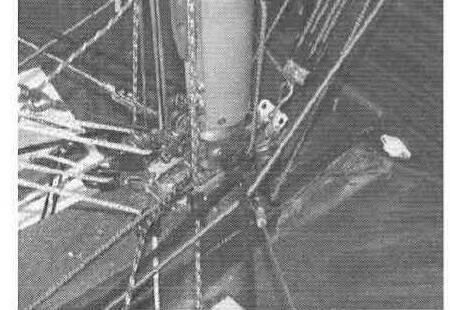
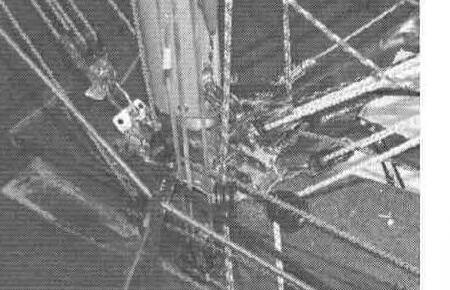
We have maintained the shrouds going down to the mast base and took it a step further and have ALL tension lines coming down to a custom made SST base (see pictures). Shrouds, boom vang, mast bender, mast ram, out haul and of course the biggest load of all, my hiking straps are at this base. The base is mounted under the mast step so all forces are kept at the base of the mast and keeping the boat unloaded. As a bonus for wooden boat owners, the required amount of holes and cut out are dramatically reduced which in-turn should help keep your boat free of moisture contamination (rot).
Finally, with any boat and especially a racing boat, you should be making up a list of 25 things that need replacing, fixing or changed. Do them! Once you have completed those 25 things, make another list of 25 and do those. Keep repeating this until you are down to making sure the screw heads in every screw are all facing the same direction. Remember, "the perfect boat is one that has all the excuses eliminated" Do you have the perfect boat?
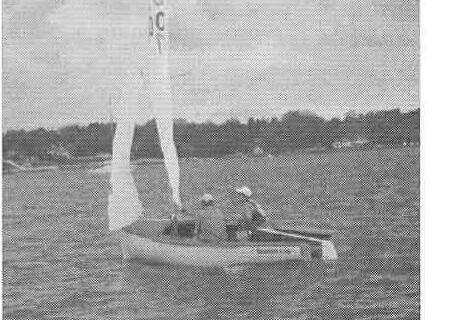
Enjoy your 2005 sailing season! CAN 7000 Quantum Leap
2005 Schedule Of Events
| Date | Event | Location |
|---|---|---|
| June 18/19, 2005 | Nepean One Design Regatta / Ontario Championships (G)+ ** | Nepean Sailing Club, Ottawa |
| July 3, 2005 | Peterborough Centennial Regatta (G)+ | Clear Lake, Peterborough |
| July 9, 2005 | OHCC Regatta | Outer Harbour Centreboard Club, Lake Ontario, Toronto |
| July 16, 2005 | Westwood Regatta | Westwood Sailing Club, Outer Harbour, Toronto |
| July 23, 2005 | J-Town Regatta | J-Town Sailing Club, Outer Harbour, Toronto |
| August 6/7, 2005 | North American Albacore Championships | Ware River Yacht Club, Gloucester, VA |
| August 13, 2005 | Mooredale Open (G)+ | Mooredale Sailing Club, Outer Harbour, Toronto |
| August 13, 2005 | PABAR | Pointe-au-Baril Sailing Club, Shawanaga Bay |
| August 20/21, 2005 | The Don Rantz Memorial | Sail RA, Ottawa River, Ottawa |
| August 27, 2005 | Toronto Island Open | Inner Harbour, Toronto |
| September 2-9, 2005 | International Albacore Championship | Lyme Regis Sailing Club, Lyme Regis, UK |
| September 3/4, 2005 | Kanata Open (G)+ | Kanata Sailing Club, Kanata |
| September 3, 2005 | RCYC Royal Weekend Open | Royal Canadian Yacht Club, Lake Ontario, Toronto |
| September 10, 2005 | Nepean Fanfare Regatta | Nepean Sailing Club, Ottawa |
| September 23-25, 2005 | Canadian Albacore Championships ** | Outer Harbour Sailing Clubs, Lake Ontario, Toronto |
| October 8-10, 2005 | US National Championship | Southern Maryland Sailing Association, Solomon's Island, MD |
(G)+ Races designated for Gooderham Series. The Gooderham Trophy was established in the memory of Bill Gooderham to encourage Albacore sailors to attend regattas across Ontario and is awarded to the helmsperson who achieves the best result in the series of annually designated races.
** These races are sanctioned events by the Canadian Albacore Association.
Outer Harbour Centreboard Club Albacore Regatta – July 9, 2005
| 9:00 a.m. | Registration |
| 10:00 a.m. | Skippers Meeting |
| 11:00 a.m. | 1st Race (2nd Race to immediately follow first Race; lunch time to be determined by the Race Committee) |
| 3rd Race (4th Race to follow 3rd Race, time permitting) | |
| 4:45 p.m. | Cocktails |
| 5:15 p.m. | Dinner, Awards |
Registration: Outer Harbour at OHCC. Races: On the lake, weather permitting. Cost: $55 per boat, includes breakfast (coffee, juice, muffins), happy hour, dinner, and prizes (for best cross-dresser). Lunch: bring your own, on the water. Extra dinner: $15.
All times are approximate and weather dependent. Sponsors: Tabasco, Clamato. (If 4 races, best 3 to count, if 3 or less races, all to count.) For more information call David Harris (416)923-8416 ext. 22 or e-mail; [email protected]
Canadian's Eh? – The 2005 Canadian Albacore Championships
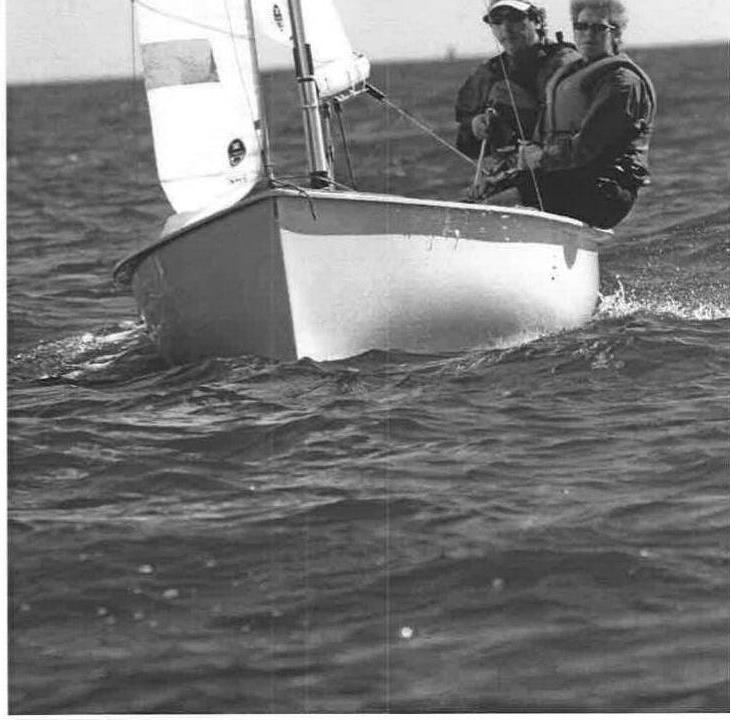
September 23, 24 & 25, 2005, Toronto, Ontario. Registration: Mooredale Sailing Club, 9:00–11:30 a.m. Races: Course 1 – "A" Fleet, on the lake (weather permitting); Course 2 – Challenger "B" Fleet, Outer Harbour. Costs: Pre-registration on the CAA web site – $185 Cdn. per boat (before Sept. 10th). On site registration will be available, entry fee is $205 Cdn. per boat.
Includes: Friday after racing – Happy Hour at Outer Harbour, Buffet & AGM at National Yacht Club. Saturday after racing – Happy Hour at Outer Harbour, Appetizers, Dinner & Dance to Nightfly, Draws at National Yacht Club. Sunday awards after racing.
Lunch: Bring your own. Lunch is on the water. Extra Dinners: $30.00 per person each day.
Everyone is welcome!
For more information contact: Sandy Swiatlowski (905) 665-8867 or email: [email protected]
Know Your Rules: Obstruction Room At The Start
This article was originally published in the R.C.Y.C. Kwasind newsletter.
At a recent seminar I was asked a question about obstruction room coming up to the starting line. This wasn't the normal question about room at the committee boat. It is a question about approaching the gap between two boats.
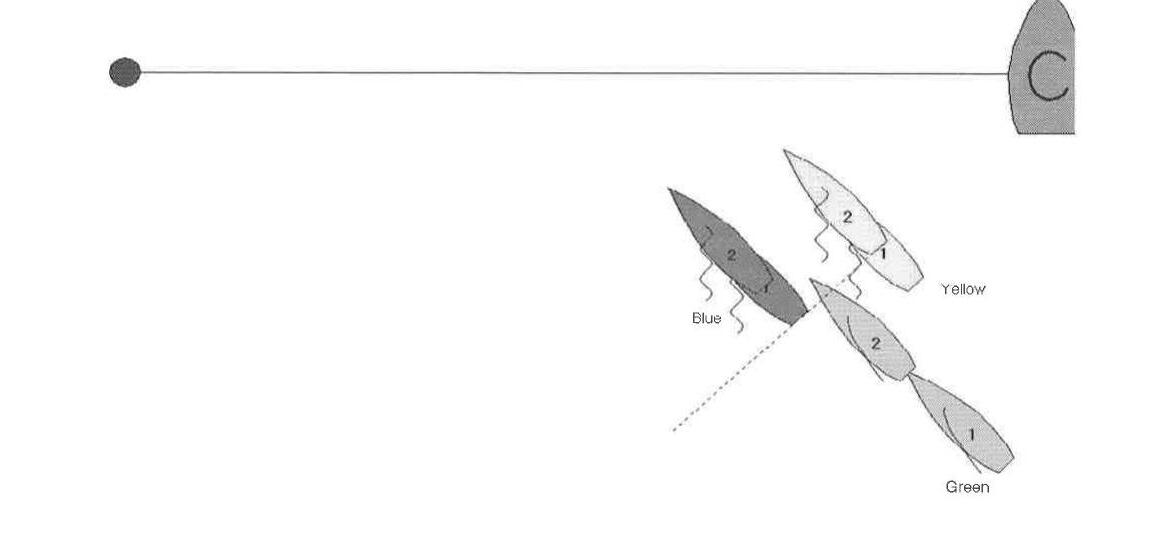
In the diagram the Blue and Yellow boats are sitting luffing waiting for the start. The Green boat is approaching trying to go between them with more speed. At position 2 Green establishes an overlap on Yellow. She is still clear astern of Blue.
This situation shows us quite a few rules. At position 1 Green is clear astern of both Yellow and Blue so she must keep clear of both (Rule 12). At position 2 she has established an overlap on Yellow so she is the leeward boat and has become right of way (Rule 11). She must initially give Yellow room to keep clear (Rule 15). She is still clear astern of Blue so she must keep clear (Rule 12). Blue is leeward of Yellow so Blue has right of way over Yellow (Rule 11).
11 On The Same Tack Overlapped When boats are on the same tack and overlapped, a windward boat shall keep clear of a leeward boat.
12 On The Same Tack, Not Overlapped When boats are on the same tack and not overlapped, a boat clear astern shall keep clear of a boat clear ahead.
15 Acquiring Right Of Way When a boat acquires right of way, she shall initially give the other boat room to keep clear, unless she acquires right of way because of the other boat's actions.
You will note that Green and Yellow both have to keep clear of Blue. The definition of Obstruction says that "a boat racing is not an obstruction unless they are required to keep clear of her". Blue is an Obstruction for Green and Yellow. It will take a while for Green and Yellow to pass Blue so she is a continuing Obstruction and so Rule 18.5 applies.
Obstruction An object that a boat could not pass without changing course substantially, if she were sailing directly towards it and one of her hull lengths from it. An object that can be safely passed on only one side and an area so designated by the sailing instructions are also obstructions. However, a boat racing is not an obstruction to other boats unless they are required to keep clear of her, give her room or, if Rule 21 applies, avoid her.
At the moment Green establishes an overlap on Yellow, there is not room for Green to pass between the Yellow boat and the Blue boat. According to the Rule, Green is not entitled to room and must keep clear of Yellow even though Green is to leeward of Yellow. In this situation Green has to go to leeward of Blue or to windward of Yellow.
18.5 Passing A Continuing Obstruction While boats are passing a continuing obstruction, Rules 18.2(b) and 18.2(c) do not apply. A boat clear astern that obtains an inside overlap is entitled to room to pass between the other boat and the obstruction only if at the moment the overlap begins there is room to do so. If there is not, she is not entitled to room and shall keep clear.
Racing Downwind (Thoughts On Tactics And Boat Handling)
Here are some random rantings on the subject of racing dead downwind.
Get The Boat Going As Fast As Possible. Yah no sh*t. A large part of our racing success is simply due to the fact that the boat goes faster. Here is how: the Albacore runs best with the jib halyard eased off around 12 inches, mast rammed aft against the partner, boom pressed all the way out into the shrouds so that it forms a right angle with the boat's centerline, jib boomed to weather with jib stick or whisker pole at max length, and jib sheet pulled all the way aft, centerboard raised all the way inside the hull. Now move your weight as far aft as possible without pushing the confluence of transom and hull under water, heel a bit to windward, and allow the boat to crab slightly - that is to make a small amount of leeway. Adjust the vang such that the main leech is not hooked but not too twisted - especially in blustery conditions. Keep very still and allow the boat to come to equilibrium.
Keep Your Air Clear. Look behind you and position yourself so that you have a clear view to windward. One only has to be just to the left or right of another boat's wind shadow to sail in essentially clear wind. Person behind will typically attack - the urge to sit on the next guys air is almost as great as the need to breathe. I was late for a start once and was sailing DDW to the start line. Several people were behind us and headed up and onto our air. We heated it up a bit to clear and so did they and we weren't even racing.
Keeping A Clear Lane Within The Crowd. It's possible to simply stay in front of boats and keep clear air. Use their masthead wind indicators to determine their wind shadow location. It will point directly in the direction that their wind shadow extends from their boat. So if it's pointing at you, you are being affected. Conversely if its not pointed at you, you are sailing in only slightly disturbed air and can hang there. The person with the wind indicator is the one who controls where the path of disturbed air is – if they head up a small amount and create apparent wind, shifting the apparent wind ahead, then the wind shadow follows. This is important to know when running, if someone is sailing DDW or lower, then you can exist to leeward of their course line in clear air. Conversely if you are overtaking, then you can steer your wind shadow around by heating up, sailing DDW, or even going by the lee.
High Or Low. Clear air is above or below that guy's wind shadow but think first: going high opens the door for boats astern to gain an inside overlap, to be on starboard at the leeward mark, and sets you up for pain if the breeze shifts to the left by the mark, placing you outside, on port, going slow at just the wrong time. Heading up also places you at their mercy – if they go higher, so must you. Going low at the mark will set you up to be inside and in control at the leeward mark at the expense of initially sailing in disturbed air till you get to a clear lane. I have also noticed that people will readily heat up to match your higher angle, but for some reason the idea of diving slightly by the lee is not as enticing.
Repositioning To Leeward. Put the board down all the way and ease the vang, square the jib back all the way, and press the boom out. This will enable the rig to function at its best when operating at other than optimal wind angle of by the lee. Make a smooth and deliberate correction – but not so far that the jib collapses – and reposition to leeward of the guy behind. Keep heading lower until you are in clear air and then re set for normal DDW mode.
Incite A Riot. If one is behind of a group at the start of a long DDW leg, one good move is to aggressively attach the next boat in the hopes that they will heat up and onto the air of the next boat, and so on. Ideally all of these responses are sudden and not as smooth as they could be. You after inciting the insurrection make a smooth and deliberate alteration down to rhumb line and make a small gain, and are set up inside, in clear air, and steering an un constrained course all the way down. The guys ahead will all be on each others air, be making abrupt moves to keep clear air, losing with every jam of the tiller, and be distracted away from the bigger picture for much of the leg.
On Not Being Outside. So you are coming into the leeward mark in a big crowd. The group rounds and you end up with your bow overlapped to leeward of the next boat. The guy behind you sails in between you and the mark over your objection – but there is nothing you can do about it. Your bow is to leeward of the boat ahead, preventing you from heading up and closing the door on the offending boat. Furthermore, you are in really bad air and can not tack – a bad place all around. Avoid this at all costs. If you owe room to others, wait until then to get around and then round on their tail. One must be careful to defend against others behind while waiting. The two boat length circle is very well defined in this case, since there will be a plethora of boats rounding nose to tail. Anybody can sail in from behind, see four boats lined up nose to tail and rightfully ask for room from the last two – since there is no question where the two boat length circle is. The answer here is a challenge. You must clearly enter the two boat length circle and then hit the brakes and STOP and allow those on the inside to round. Talk to those behind early and often to dissuade them from violating any rules here – and to let you round in the order dictated by the RRS and your juxtaposition to other boats.
The Leeward Mark Pause. Use only when you are trying to fight off someone of similar or better capabilities and who is able to react to changing situations – and who will appreciate this move. The idea is to round in such a way so as to cost the next boat a half a boat length and /or to make it difficult for him to immediately tack away. The point is to round just a small amount wide – not enough to violate any rule, but not within inches of the mark either. As the boat rounds, allow it to heel a bit with the board all the way down. As you heel you will be "storing" energy since the sails will see less wind for that moment, and the boat will slow somewhat. The boat whose bow is inches from your transom will be faced with several options. A high functioning crew will be anticipating this move and be ready to slow and bank energy, nullifying your advantage. A pre-occupied crew may find themselves in the predicament of overtaking the boat ahead and needing to heat up into the area in between the mark and boat ahead and into an instant foul, or down and outside. Obviously, the intention is to force them to make an abrupt un-planned and clumsy bear away at the last moment. You then smoothly roll the boat almost flat as you turn around the mark, the yaw movement induced by the heel both turning the boat and recovering the "stored" energy you gave up to slow in the first place. Note that this does not make you go faster – it only makes you go the same speed a couple seconds later in time. The boat ahead is left making an abrupt alteration to leeward, probably is heeling to windward, and now must overcome the yaw motion, and the turning moment produced by the windward heel to round the mark in your gas and devoid of momentum.
Using Obstructions To Your Advantage. Obstructions include other right of way boats, closed starting lines; an albacore has a relatively narrow range in which one can make ground to leeward. Heading above this course results in higher speed through the water, but this is more than offset by the longer distance and so is slower. The underlying task here is to force another boat into a difficult decision by leading them to an obstruction and then making a move that costs you little or nothing and presents them with the following choices: stay with you but lose ground or allow you to become separated and lose no ground. For example, if you are following a boat ahead on a long run on a course with a closed start/finish line in the middle of the course, one can wait until the boat ahead has made a commitment to which side of the line they are going to pass on and then simply go the other way. Other variants include using boats sailing upwind who may or may not have right of way to obstruct a boat behind who is aggressively sitting on your air. As the starboard tack boat approaches, simply gybe at the moment when, if the boat dogging you from behind were to follow, they would be placed into a collision course with the other boat. They will have to pause and allow you some breathing room.
Rope A Dope. Keep your air clear by sailing a bit high of the rhumb line but about half way down the leg sail just a bit lower – the idea is to entice the boat astern, who will not be able to resist the temptation to sail up a bit higher and squarely on your breeze. As they head up, steer just a bit lower so that you are now to leeward of their course line and gybe into clear air. The idea here is lead the boat astern first to one side of the leg but just keeping your air clear, and then to entice them to make one more alteration to windward before you make your gybe. This sets you up in clear air to the leeward mark. The boat astern will have to sail out of his way to get on your air again, which may be enough to dissuade them. Of course if you are the one behind, you will want to chase the boat ahead to one side then bear away off their wind to be set on their breeze when the boat ahead makes it gybe for the mark. For this to occur, one must overcome the hardwired in desire to sail up and onto the leading boat's wind.
Albacore's Forever
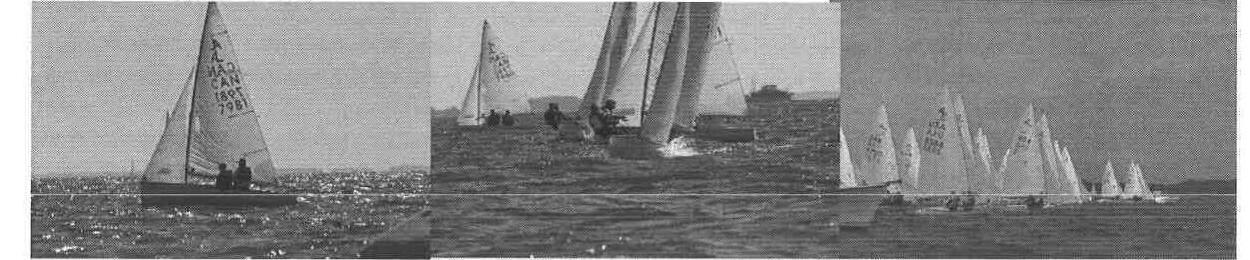
In 1980 Canada boycotted the Moscow Olympic Games which meant that my last chance to compete was finished and I was thinking that really my racing days were suspect. Then two things happened within a day. Martha, my 10 year old daughter, said she wanted to race. Going across on the RCYC ferry, as usual I sat on the front deck, and sitting there was Brian Gooderham. We started to talk and Brian said how much fun it was sailing with his famous father Bill in an Albacore and why did I not buy one and sail with Martha. Brilliant idea. I responded and the next day bought my first Albacore. The next 12 years were the most enjoyable sailing I ever had. We raced in every regatta including the Worlds.
I had originally been a 14 ft Dinghy sailor and the Albacore was exactly the same as the 14 without spinnaker that I sailed in the 50's. The best sailing was with the Outer Harbour Sailing Clubs who really understand the fraternal aspects of sailing. Really they like a good party. Winning "Klingers" was always a coveted prize. While ISAF President, we instituted a category for Classic Yachts which allowed classes which were over 25 years old and had a continuing high level of races to have an annual World Championship without meeting the now standards. The fee was $250 US a year for the ISAF membership and the Albacore class decided against joining even though the Shark and IOD jumped on the opportunity. It was unfortunate that the Class did not avail themselves of this. The Albacore is still a fine dinghy class and the evolution of the Fiberglas model which is equal to the wood boats makes the class even more attractive. My only advice now is: KISS!! Keep It Simple Sailor!!
Many more years of success to the Albacore Class!
Paul Henderson, Former owner of CAN 7141
Past ISAF President and recently the first inductee in Canada's Sailing Hall of Fame
2005 Canadian Albacore Association Measurers
Chief Measurer
George Wm Roth
212 Willowdale Avenue
Waterloo, Ontario N2J 3M1
519-746-1300
Sailing Club: Outer Harbour Centreboard Club
e-mail: [email protected]
Chief Of Specifications, IAA / Chair Of International Rules Committee
David Weaver
14 Lansdowne Road, North
Cambridge, Ontario N1S 2S8
519-623-4402
e-mail: [email protected]
CAA Measurers
Gord Chu, 310 Durie Street, Toronto, Ontario M6S 3G3, 416-760-8778, Sailing Club: Outer Harbour Centreboard Club, email: [email protected]
Rick Clayton, 362 Brookdale Avenue, Toronto, Ontario M5M 1P8, 416-783-9194, Sailing Club: Outer Harbour Centreboard Club, e-mail: [email protected]
Ross King, 635 Broadway Avenue, Toronto, Ontario M4G 2S6, 416-422-5830, Sailing Club: Outer Harbour Centreboard Club, email: [email protected]
Van Sheppard, 21 Rosethorn Way, Kanata, Ontario K2M 1R1, 613-270-8791, Sailing Club: Nepean Sailing Club, e-mail: [email protected]
2005 Canadian Albacore Association Executive
| Commodore Barrie Farrell 416-693-6223 [email protected] | Third Vice Commodore & S&C Editor Christine Short 416-703-2086 [email protected] | Membership Janet Duff 416-760-7254 [email protected] |
| Past Commodore & Current IAA Rep Ann Savage 416-361-1808 [email protected] | Rear Commodore Sandy Swiatlowski 905-665-8867 [email protected] | Secretary Teresa Miolla 416-769-0990 [email protected] |
| First Vice Commodore Ed Young 416-690-1621 [email protected] | Specifications Chair David Weaver 519-632-4402 [email protected] | Treasurer Jason G. Roth 905-840-5395 [email protected] |
| Second Vice Commodore Janet Duff 416-760-7254 [email protected] | Chief Measurer George Roth 519-746-1300 [email protected] | Canadian Albacore Association 47A Harbour Square, P.O. Box 81047 Toronto, Ontario M5J 2V3 www.albacore.ca |
| IAA Treasurer Raines Koby 905-880-1866 | IAA Past President Ken Clarke 905-891-5742 [email protected] |