Summer 2007
July 01, 2007
Experimental jib window test program, reading the wind in Parry Sound, fleet updates from Peterborough / Sail RA / Hamilton Bay, an America's Cup rules breakdown, two Canadians racing in Scotland, and Stephanie Mah on making sailing teams work.
Commodore's Message
Well, we are half way through the year, how are those New Year's resolutions coming along?? If you haven't reached your goals yet, you have PLENTY of time and sailing left in the season. In fact, we are at the point of the summer where every weekend there is a regatta happening.
This past May long weekend, the CAA hosted an intensive race training event with sailing coach John Curtis. The feedback from the weekend was great and the wind gods showed up! The next training weekend is taking place July 21-22, visit the CAA website and sign up! Thank you to Stephanie Mah for all her hard work in planning the training events.
Parry Sound is not only the birth place of Bobby Orr (can you tell I am missing hockey), it was the host of the 2007 Albacore Ontario Championships the weekend of June 23-24th. The weekend was a huge success with boats attending from Ottawa, Toronto, and our very good friends from the US. It was the first major sailing event for Sail Parry Sound to host and everyone who attended had a fabulous time and recommends that Parry Sound hold future events. Thank you to Jeff Beitz and the gang from Sail Parry Sound for supporting the class, hosting the event and melting the icebergs!
My friends, I am running out of ideas (at least ones that can be published) for Shackles. Please send me updates on your club, regattas, your boat, your sailing holidays and pictures —the good, the bad and the ugly….remember Van's centerboard! Send me your stories and ideas, we want to hear from you. If you have sailing questions that need answers, send them my way and I will ask the top guns their advice.
There are many regattas lined up for the rest of the summer. Check the events schedule on the website, be a road warrior, support the other clubs, meet new people, get out of your backyard, and most importantly, have fun!!
As always, thank you thank you thank you to all contributors!
Happy Sailing,
Christine Short
Experimental Jib Test Program
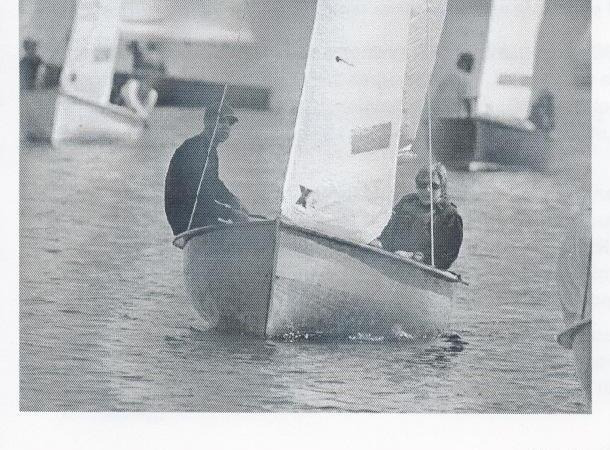
Can larger windows in Albacore sails improve sailing safety through greater visibility while maintaining sail durability and not affecting sail cost? This was the basic question raised by Andrew Callum and Jeff Beitz in their proposal to the International Rules Committee (IRC) of the International Albacore Association (IAA) for an experimental evaluation of sails with larger windows. The IRC welcomed this initiative and, noting that some other classes such as the Thistle and 505 have also tried larger windows, approved an experimental jib development program. The rationale, program details and process are outlined briefly below.
The current rules permit a single jib window with a maximum area of 0.19 m2 in a sail made from a soft, single ply woven material. Typically, current sails have windows which are substantially smaller than the current rules permit. The problem in the past has been that the window material stretched differentially with the sailcloth and, therefore, jibs with large windows lost their ideal shape relatively quickly. Thus, larger windows reduced sail durability. With the development of new transparent window materials, it is reasonable to ask whether the use of new materials and, perhaps, a double window design might create much greater visibility without sacrificing sail durability or increasing sail cost. This is the rationale for the experimental jib program approved by the IRC. Sailors and sail makers are invited to develop experimental jibs with larger windows. The sail must comply with all of the current rule requirements except for the limitations on window size and number. Thus, the aerodynamic performance of the experimental sail will not be affected and anyone using such a sail will have no performance advantage beyond having better visibility. However, since these sails do not measure in according to the current rules, they cannot be endorsed on the boat's measurement certificate. Cost and durability issues precluded the expansion of the test program to include Mylar or other 'exotic' materials.
The process involves having an experimental sail built, measured as done normally, marked clearly with a large X near the clew and keeping a log of sail use, wind conditions and perceived value of improved visibility. This step depends on the willingness of individuals to put up the money necessary to purchase an experimental sail. Clearly, the IRC has no control over this and, since the equivalent of a full sailing season is required for a proper durability assessment, the time limit on this experimental study is open but will be considered complete not more than 1 year from the date of measurement of the first experimental sail. Upon completion of the testing, the experimental sails will be remeasured and compared against a standard sail for stretching and shape distortion. The cost will be known and an informed decision can be made regarding the desirability of changing our rules regarding window size and number. At this point, a wide and informed discussion by Albacore sailors in the various countries can take place and, if deemed appropriate, a new rule can be framed. In accordance with the IAA Constitution, this would have to be approved by the AGM's of IAA member countries before the rule change would become valid.
This is an excellent opportunity to determine whether sailing safety can be improved through better visibility with minimum or no cost in terms of sail durability, price increase or rendering obsolete existing sails. However, this experimental program can only be successful if some sailors are encouraged to work with sail makers to develop and test new sails within the restrictions of this approved study. It is equally clear that the endurance of the experimental sails can only be properly tested if the sails are well used in all wind conditions. Since the jibs authorized for use in this study offer no performance advantage and their use in racing is essential to the success of the program, Race Committees are encouraged to authorize the use of experimental jibs in regattas over which they have jurisdiction. We believe that this experimental jib program is in the best interests of the Albacore Class and hope that it attracts the interest and full support of Albacore sailors.
Anyone wishing to participate in this study by ordering an experimental sail should contact the IRC member in their country for further details: George Roth (Canada), Rolf Zeisler (USA) and Michael McNamara (UK) or myself.
David Weaver, IRC Chairman
Reading The Wind In Parry Sound
A week before the Ontario Albacore Regatta held at the Parry Sound Sailing Centre on Georgian Bay June 23-24, local dignitaries cut the ribbon for this brand new sailing centre. The Albacores were honored to be the first fleet to break water from the PSSC docks. The volunteers, who seemed to out number the sailors, were brimming with pride and enthusiasm for their new location, but understandably short on racing wisdom.
How do you sail a regatta in a venue that has no track record of holding racing events? No local wisdom to go left or go right. No local watering hole for racers who have tried every possible strategy in every corner of the harbour where a committee can drop a mark.
Before heading to the regatta, I scrounged up 24-hour data on wind direction and strength for Parry Sound from the Environment Canada website for the same week in 2006. The data showed a thermal breeze that faithfully arrives almost every day between 11am and 12noon. As the thermal wind develops, the wind backs from the northwest to between 250 and 290 degrees. Between 2pm and 3pm is the windiest part of the day and between 3pm and 4pm it drops off.
When I asked the locals, Jeff Beitz and the Race Committee Chair, about the wind they both said “expect a sea breeze”. Sure enough the sea breeze kicked in both days in time for 11:30 starts. Saturday it picked up to 12-15 knots by mid-afternoon with a light chop. Knowing the wind was likely to ease after 3pm, I felt confident with a powerful rig tuning for the last race.
The course was set about 2 miles from PSSC at the edge of a large but enclosed bay.
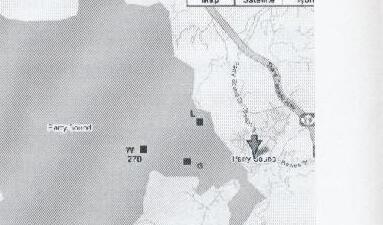 To the right and beyond the windward mark was the longest fetch, about five miles to the furthest piece of land. Had the wind filled in with strength from the northwest it would have been a rough ride. To the left of the mark is a point of land that extended for three quarters of the second leg about half a kilometer from the course. From the starting line if you sailed left upwind on Starboard you were heading toward the point of land. If you headed right you sailed toward open water. Is it better to go left, or right on the crucial first upwind leg?
On both days the race committee set the windward mark at 270 degrees in line with the sea breeze. Why is the sea breeze in Parry Sound at 270 degrees and not at 200 to 240 degrees like the rest of Ontario?
Looking up the course the wind appeared strongest below the section of land on the left. It seemed to wrap around the end of the point of land accelerating as it made the turn. In addition, wind checks showed the stronger gusts were left of the windward mark. While the right was more open, other information indicated the left side of the course upwind would be better.
The left side of the course remained strongly favored for two days with a 100-degree range in tacking angle from 335 to 235. Most of the time we sailed between 305 and 325 on Port and 240 and 255 on Starboard. On Saturday, we raced like we were in Kingston. Started near the pin and sailed left on Starboard down a header. When the compass read 242 we tacked and lifted to the windward mark in a good breeze.
On Sunday, an easterly system was tugging the wind toward the north. It caused the right end of the starting line to be favored and made the right side of the course more attractive. After one start the fleet split and we tacked to Port near the middle of the course to cover boats going right. When a significant shift on the right failed to materialize, we scurried back to the Port lay line. The strongest Starboard lift was 270 degrees for a brief period in the second last race.
Left was the way to go, a strategy that won Jean Paul and I five of seven races and the regatta. Is Parry Sound another Kingston? Go left or perish. Too soon to say but one thing is for sure, it is a fabulous place to sail with predictably strong winds.
There was a request in the closing ceremony from Peter Duncan, head of the U.S. Albacore Association for Parry Sound to be the venue for the next Albacore Internationals to be held in Canada in four years. Terrific idea. Lets do it!
Favourite Internationals
Henry (Pedro) and I got to stomp the fleet in race 1 in Rehoeboth (1999). It was in the 12-16 knot range and the start line was huge. We did our line check midway then sailed towards the boat-end along the line and noticed a persistent shift as I kept having to ease the main. Went back towards the pin end almost all alone… scary time… Bruce said are you sure? We discussed it and agreed to go fully committed as there were 2 different winds. The boats at the boat-end were beating. More left is better, so as we neared the gun we were reaching to get to the pin. After the start we could have tacked and crossed and consolidated but continued on into the knock that kept coming then started to go back as we made our way across on Port. I was told that the sail numbers were too far away to read from the boats starting at the boat end and as we crossed the fleet and after rounding the weather mark enjoyed a half leg lead.. Sometimes you can just see the wind, it's not guessing or playing the odds. We were sailing from our happy place. Other Bruce Baldricks Cunning Plan - Chris Gorton
2nd fav
Hayling Island, my first trip to England (other than being born there) Sometime after midnight and after several very good ales we renamed the British fleet with electrical tape and much consultation. Having started out with um…. "Urinary Tack" and "Big Hands Big Feet" on our own craft we had a good base from which to begin. We felt the existing names were too stale and lacked some essential double entendras. When "Purple Helmet" and "2 Pump Dump" had to be explained we soon realized there were cultural differences to consider and we should have just jolly well brought the 3 pounds of sand fleas through customs anyway (chances are if you have been to Rehoboth you would get that reference). I believe "Blue Job" and "Steak and Kidney" (a real scream because as it turned out the boat name was right on as the owner had had one removed) and "Sheep Shagger" are still on to this day. Chris Gorton Baldricks Cunning Plan AL 7700
It was our (Abby and I) first's Internationals in the UK - Torquay 2001. This is one of my favourite regatta memories because it embodies one of the key attributes of racing and why so many of us continue to persist in this challenging sport - BECAUSE ANY THING CAN HAPPEN OUT THERE!
We were sailing a glass Speed Sail boat set-up and loaned to us by Mike McNamara. Yes we are blessed! The first race was light and shifty. Our strategy was to watch and follow hot local sailor Richard Thompson as we really weren't sure where to go and figured he would. We followed him to the right side of the course while everyone else went left. We rounded the first mark about fifth last of 70 boats. I'm not sure where he rounded as I stopped watching him and started cursing him instead. On the first reach we passed a good bunch of boats that sailed too high. The second reach turned into a run and we did something we seldom do on a run and picked off a bunch of shifts. We rounded the leeward mark in the top third. The fourth leg turned into the last leg of the race. The wind was now becoming even more variable. We caught just about every shift and puff there was and came just short of winning the race a placing third. McNamara finished fourth and sailed by to us after the race to say "the contract on the boat included not beating the person who loaned us the boat."
My second favourite story is the 2005 Internationals in Lyme Regis. Abby and I were sailing the beautiful blue custom 1992 J.D. Young, yes again courtesy of our friend Mr. McNamara. After 5 races we were deep in the results carrying a DNC and an OCS. Sailing out the morning for race 6 it was make or break time. It was a lopsided first beat with a long Port tack just 5 degrees off the windward mark. We got a good clean air start at the pin and raced out with everyone for the Starboard lay line. We rounded windward mark second and passed the leaders on the second reach and held on for the bullet. In actual fact, it was a boring parade of a race without a true windward leg to make it interesting. Certainly it was one of the best boring races I can remember! Cheers,
Raines Koby
5600
From The Top Guns
How do you decide who to cover when your competition (those close in front and behind) are splitting sides on the course? How different is it on the last leg?
We figure there are two types of these situations: when there are close competitors behind and ahead, or when there are close competitors behind who opt for different sides of the course.
When there are close competitors ahead and behind:
- We think about our strategy - the fastest way around the course. If the boats behind us are going the wrong way, then we figure they are no longer a worry, but we still keep an eye on them. If the boats ahead of us are going the right way, then we have to weigh the costs of getting out of phase with the potential gains if/when a shift shows up.
- We think about the overall regatta standings - who do we need to beat, who do we need to ensure finishes behind us? If there is more to gain than lose, then we go after the boat in front. If there is more to lose than gain, then we cover the boats behind and forget about catching the leaders.
- Then we think about our chances of catching (or being passed) depending on who they are and what leg we are on. For example, if it is a windy beat to the finish, and we think we are faster to weather than all of them, then we forget about who is behind and we go after the boat ahead of us.
When there are close competitors behind who split:
- We think about strategy – same as above
- We think about the overall regatta standings (same as above), and generally cover the boat who can cause us greater harm in the standings if they pass us.
- If the opportunity presents itself, we will close cover one boat to force them back into close proximity of another boat in the hopes of starting a tactical battle between them – then they both go backwards.
The answers above are pretty much all about the last leg or two. In the first few legs of a race, we try to stay out of tactical battles so we can focus purely on the strategy. Decisions about covering, who to cover, etc., are only really considered towards the end of a race. The only exception is the last race of a regatta, when finishing ahead of another boat, no matter where we both finish in the race, is key. Then it's a bar fight.
Tim Broughton
7977
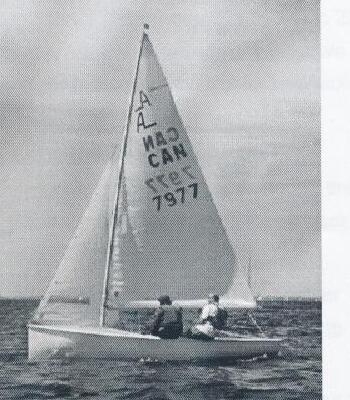
The answer depends on many variables.
From past experience I have been guilty many times of covering but giving away the farm in the process. In other words it's a dangerous game. Often you are better just to sail smart and fast and forget about covering. The problem with covering is you miss shifts and pressure and sail the slow way around the course letting boats behind get past. There are times when that strategy is ok, i.e. you can risk letting others pass as long as you stay ahead of 'so and so' to win or maintain a position in the standing.
In general, it's the last leg or two of the race when the boats are spread out that you will consider covering your closest competitors. If the fleet is still tight it can be very costly if you screw up. Also, at the end of a regatta if you are in the money you might consider trying to cover the competitor you need to beat from early on in the race.
If boats are splitting tacks and you need to decide which pack to cover your thought process would be: as long as I beat so and so I don't mind going the wrong way - so you go that way. Other wise you need to go to the favoured side of the course. Some times you can manipulate the situation by tacking to the favoured side and pulling the boats that count with you.
Also, you also need to consider your speed and tacking ability versus those you plan to cover. It is difficult to cover someone clearly faster so you are better to focus on speed and wind shifts.
Good luck!
Raines
5600
Fleet Update
Peterborough
We continue with our twice weekly series with four or five boats each race. The racing is getting tighter and more tactical as we all get closer to, and sometimes pass, the usual leader. We lost one regular Albacore racer to Hobie cat racing. Pitty, really. However, she left her boat to some other temporarily boat-less racers to use. There is a wooden Albacore being completely refurbished by a cabinetmaker with help from his friends, but as it is summer and sailing takes priority over everything else, it'll take a month of very inclement weather before it is completed. In looking over some old newspaper clippings from 1965 about the Toronto boat show, I noted that there was an article about the building Albacore fleets in Ontario. Most interesting was a note that there was a fleet developing in Peterborough and they had six boats. I can count seven boats right now, so we appear to be growing at an astonishing rate of one boat every forty years! Brian Muir
Sail RA 1947-2007
From time to time I think about the many benefits I have gained from being a member of Sail RA. It's been about 6 years now since I first joined the club. Over this relatively short period of time I have learned a lot about sailing and made numerous new and lasting friendships while spending many fun and exciting hours sailing the Ottawa River. But when considering the short time I have been a member of Sail RA, I am amazed when I realize that this year marks the club's sixtieth anniversary as a small community sailing club based in Ottawa. Way back in 1947, the club was formed and started operating on Dows Lake. More recently, the club has been operating out of its current clubhouse facilities located at the Ottawa New Edinburgh Club building on the east end of the Ottawa River.
The other day I happened to take a look at our website, SailRA.ca, and, in particular, the club's history. It's really interesting and fun to read about the club and the challenges our predecessors had to face in helping to lay the foundations for the club we enjoy today.
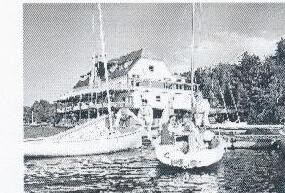 The RA Yacht Club started in 1947 at Dows Lake with membership that first year at 36 and annual fees set at $36. The club's first boats, six Sabot Prams which cost $120 each, arrived in June, 1947. During that first year, one of the prams capsized and was hit by the prop of a tour boat which was coming to help with the rescue. Today, we watch out for those tour boats for a different reason, they have right of way over our smaller sailboats. In 1951, the Club decided to sell the Prams and build new boats. These boats were constructed of plywood, with Nigerian mahogany for centerboard trunks, transoms and thwarts, and Sitka spruce for masts, booms and floorboards. Amazingly, the club members, using their own knowledge, sweat and hands on skills, constructed eight Rhodes Bantams.
Talk about your fleet renewal program, eh! Over the years the club has continued to grow and change boats, from the Rhodes Bantams, to Flying Turns in the early 1960's and in 1974 to the current fleet of 2 person Albacores. The speedier and more agile, one person Laser sailing boats, were added to the fleet in 1976.
During 1977, the RA Yacht Club evolved into the RA Sailing Club or Sail RA. In deciding on the name change, it was felt that it was a bit of a stretch to consider Albacores and the like as "yachts". I tend to agree with their reasoning for the name change since a 16 foot Albacore is nothing like a 45 foot Beneteau, particularly when it comes to capsizing in windy weather, and I consider myself to be an expert in the fine art of capsizing an Albacore. In 1989 the club's Executive voted to move the club to the Ottawa New Edinburgh Club facility.
Over the years the names and the faces at the club have changed, but the devotion and loyalty of its many members to the club have remained strong, names that include Doug Symon, Ted Hollinsworth, Don Rantz, Don Slater, Betty Ward, Bill Kerr, Pete Juneau, Bernie Diepman, Chuck Bain, Martin Rhéaume, Deborah Porter and many more from past to present. So whenever I think about the club and where it's going and how I fit in, I simply take a look to the club's 60 year history and how the club has evolved over the many years and I have my answer.
On July 28, 2007, the club will be celebrating the 60th anniversary by holding an open house and reception at the Ottawa New Edinburgh Club. This event will be of special interest to current and past members. We hope to see you all there. Who knows, you might even have an opportunity to take in an afternoon sail.
Mike Hardstaff, Commodore Sail RA
Update From Hamilton Bay Sailing Club
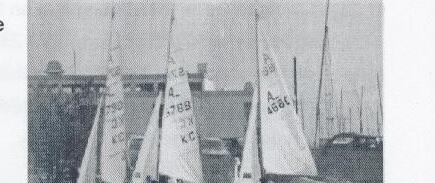
This year's warm weather has brought a great start to our 40th year! That's right, we have been sailing Albacores on the bay for 40 years! It all started with a trailer under the willow trees and 4 Albacores, 4680, 5788, 5789, and 5790. Now I know you're thinking that those boats must be long gone but when I was looking for pictures for this article, I saw 5788 in a picture and had to laugh. I had just been out for a nice evening in that same boat. The old boats are not the fastest anymore but they can certainly take a lot of punishment. I am pleased to say, however, that 5788 is one of our oldest boats and I rigged it only to prep it for our annual weekend of sailing at Killbear Provincial Park on Georgian Bay.
Today, in the basement of the Gartshore Thompson Building, the club is thriving. We easily reach our maximum capacity every year, usually early in the season. Not unlike other clubs of our nature, our future is challenged as we are currently fighting to keep our little spot on the water. The city has big plans to make the waterfront area more accessible to the general public and the current plan will see all the existing clubs moved to one central location. As for us, being the little club on the bay, it doesn't look promising. All this may be years away so in the meantime we keep our voices strong and our attitudes positive and continue as if we will be here forever. Our spirit will certainly help us prevail.
On June 23rd, 12 of our 14 Albacores were on the water for our first race of the season. It was a typical day in the bay with shifty and gusty winds. The course was set for the first race of the day and while the clock ticked down, the wind died, only to pick up again within the final minutes with a full 180deg directional change. It was an odd sight to see wisker poles popping out off the start but everyone seemed to have a clean start so the race committee let it go. As the boats rounded what was supposed to be the windward mark, the wind again changed 180deg then diminished significantly. This was the norm for the rest of the day but in the end, 4 races were completed. Congrats to Bryan Ritskes and Lee Elvin for 1st place, Alyssa Lougborough and Nick Otto in 2nd place, and Terry Wagg and Pam Renton in 3rd. The fun continued that evening as we held our launch the season party to officially kick off our 40th year. Lots of fun, food, games, and dancing kept everyone going until the wee hours of the morning.
Upcoming events for us include the Doug Kelly Regatta on July 14th, in memory of one of our long time members who passed away a few years ago. On July 28th we are hosting the second annual HBSC Open Regatta. All CAA members are encouraged to come and participate in this one day race. There will be prizes and awards for the top finishers. Please note that the date may change as it currently conflicts with the Westwood Regatta. Keep an eye on our website www.hwcn.org/link/hbsc for details of any changes. Our annual lobsterfest dinner will be August 25th, always a great evening.
 The Club Championship Regatta is our final race of the season and it is on September 22nd, one week after the National Championships. We are hoping to have a few boats representing our club in Toronto for the Nationals, after all, we do have that new boat so the excuses should be kept to a minimum…
Have a safe and fun season on the water! Terry Wagg
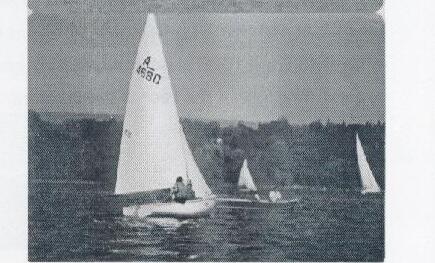
In pictures: 4680, 5789, and 5790 on the original dock. Also 4680 during the Womens Regatta, both pictures were taken sometime in the 70's.
Know Your Rules
This article was originally published in the RCYC Kwasind Newsletter
As I went to write this month's article I found myself watching race 2 of the Louis Vuitton Cup, the challenger series for the America's Cup. By the time you read the article the results of that series will be well known and you may in fact know who has won the America's Cup. There was situation in the pre-start of today's race which I thought would be interesting to discuss. It is a situation that you are unlikely to try in a fleet race but is based on exactly the same rules.
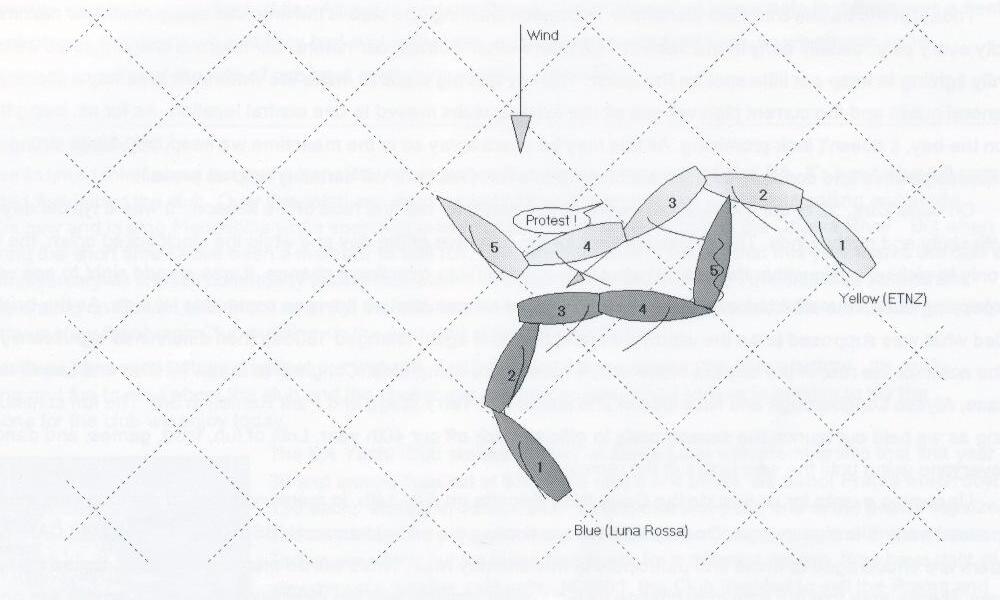
The race was between Luna Rosa (Blue) and Emirates Team New Zealand (Yellow). The two boats were sailing towards the starting line on Starboard probably a little early with Luna Rossa to leeward. Luna Rossa suddenly tacked onto Port. ETNZ then bore off to claim her Starboard tack advantage and created a collision course at position 3 and yelled Starboard. Luna Rossa bore off further and ETNZ went up to avoid the collision. ETNZ then yelled protest and put up their Y flag (in fleet racing this would have been a red flag). Let us look at the rules that apply.
At position 1 ETNZ was windward boat and had to give way.
At position 2 Luna Rossa was tacking so had to keep clear according to Rule 13.
At position 3 Luna Ross is on Port tack, ETNZ is on Starboard tack so Blue is required to keep clear according to Rule 10. This continues through position 4. This means that ETNZ was right of way from position 2 throughout the rest of the incident. Right of way boats changing course are subject to Rule 16.
10 ON OPPOSITE TACKS
When boats are on opposite tacks, a Port-tack boat shall keep clear of a Starboard-tack boat.
13 WHILE TACKING
After a boat passes head to wind, she shall keep clear of other boats until she is on a close-hauled course. During that time rules 10, 11 and 12 do not apply. If two boats are subject to this rule at the same time, the one on the other's port side or the one astern shall keep clear.
16 CHANGING COURSE
16.1 When a right-of-way boat changes course, she shall give the other boat room to keep clear.
When Luna Rossa tacked onto Port she was able to bear off and go behind ETNZ, so she was going to satisfy her obligation to keep clear. When ETNZ bore off she was creating a situation where Luna Rossa was not keeping clear. Luna Rossa bore off more but on her own couldn't really keep clear. Had a collision taken place ETNZ would have been disqualified for not giving Luna Rossa room to keep clear. In the real event ETNZ headed up keeping clear, therefore giving Luna Rossa room to continue to keep clear. She therefore satisfied her requirement under Rule 16. The final decision of the umpires was that there was no foul (a green flag in match racing).
Luna Rossa then tacked back to Starboard to get the right side of the line that they presumably wanted. In the end it didn't really pay off and ETNZ went on to lead slightly at the start, win on the first cross and win the race.
Canadians In Scotland
Whether it is a weeknight race or a weekend regatta, my husband Andrew and I can't leave shore unless we find people to look after our three children and our dog. So when Andrew had a glimmer in his eye to take an extended trip to the Scottish National Albacore Championships I thought it was going to be more of an organization nightmare than it was worth. Boy, was I wrong.
This year's championships took place from June 2 – 3, just outside of Glasgow in Greenock on the Firth of Clyde at the Royal West of Scotland Amateur Boat Club. Andrew had been emailing the regatta organizers at RWSABC for months trying to secure a boat for us to sail but it really wasn't until about two weeks before the race that we found out we indeed had a boat. We crossed our fingers, booked our flights and started calling grandparents and friends to work out the childcare logistics at home.
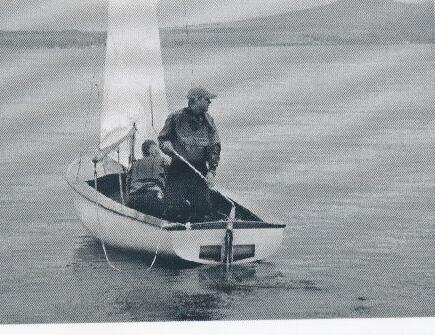
The regatta was supposed to attract an estimated 20 to 25 boats but because of poor weather forecasts only 12 boats started on the cool overcast Saturday morning. We had worked hard the day before to get our boat, Iron Bru, ready for the race. The boat was a 1960's Fairy Marine that hadn't been in a race for a while. Andrew had doubts and we weren't sure if she would be able to race. Still, that morning, we proudly hoisted our sails displaying "CAN" we had brought with us, and headed out to the course.
It was just before the first race when disaster struck. The winds were shifty and building. We were testing the boat in the strong winds. Just before the gun, our tiller extension broke off. Andrew managed to temporarily fix the problem but by the end of our first race, we had lost it permanently and I was the only one that could still hike. We thought that our weekend of sailing was over since we were also taking on a fair bit of water and it also looked like we might lose our rig. We limped back to shore after finishing the first race in 4th position.
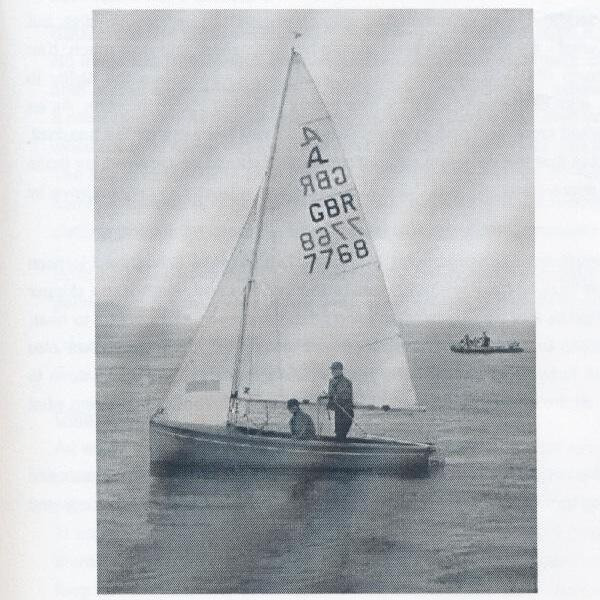
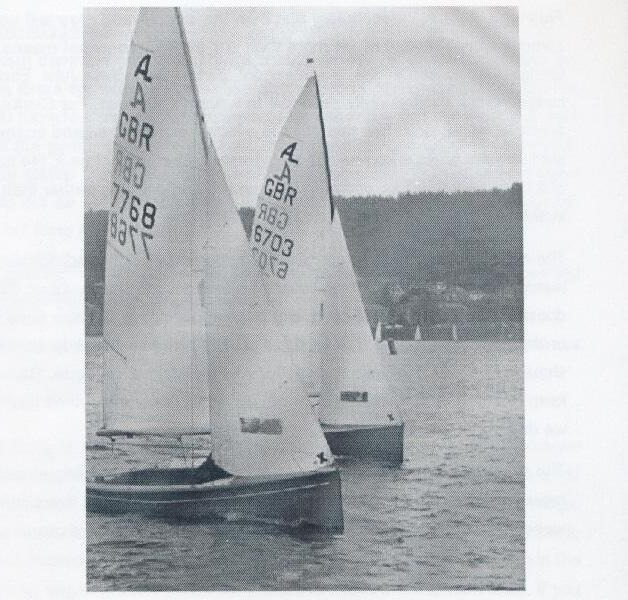
Hauling Iron Bru out of the water, a member from RWSABC came down to the beach and offered us his boat to use. We looked at each other and quickly said Yes! We then hurried out to the course in 7768, a beautiful JD Young. While we missed the second race, we did arrive in time to start race 3. Race 3 went fairly well, we started strong and managed to be first to the windward mark. Despite sailing the boat like North Americans (and not adjusting the shrouds off the wind), we managed to hold the lead and get the gun.
Saturday evening proved to be lots of fun with our new Scottish friends. The fleet assembled at the RWSABC in bar and stayed out late sampling the variety of local fare and cold beverages. The club house is filled with the memorabilia to be expected of a club that is 150 years old. The club has among the largest Albacore fleets in Scotland with about 12 boats.
The next day was also very gray, but mixed with patches of rain and less wind. The race committee did a great job and in spite of the light shifty winds managed to get race 4 off. We struggled late in the race with the tide and slipped to a 4th place finish. The wind filled in to make race 5 a great race. Crafty and talented local sailor Dick Downie managed to get away from us and easily went on to capture the win. We fought it out all race with the eventual Scottish Champ Crawford Reid for second place. We managed to get a last puff just at the line to get second by less than half a boat length.
Our weekend regatta in Scotland was a fantastic experience. We had dealt with breaking gear and a leaky boat. Our sailing conditions varied from strong winds to dead calm in a downpour. We learned all about the saying, “If you don't like the weather, wait a minute”. We also raced with a fantastic group of Albacore sailors.
We couldn't thank our hosts enough, particularly Steven Haldane who worked so hard to find us Iron Bru and to Donald McMillan who generously let us use 7768. While we received a bit of attention for coming from Canada, our trip was a mere 6 hour flight - Angus MacNeil traveled 12 hours on various ferries to attend from the Shetland Islands.
On our way to the airport Andrew and I found a traditional Scottish pub and over yet another nice cold local ale, we started planning on how we could come back next year. There is no reason not to. With rumours that the 2009 Internationals might be held just around the corner from Greenock in Largs, it would be good to go back and get used to the local conditions.
Andrew Callum
Ingrid Jurman
AL 5009
Making The Team Work
Talent wins games, but teamwork and intelligence wins championships.
-Michael Jordan
A typical forgetful male, Dave Harris believes (but isn't exactly sure) that he and John McHutchion will celebrate their fifth anniversary this year. Anne White and J.P. Bureaud hooked up in 2003 and it's been smooth sailing ever since. Abby MacInnes and Raines Koby are coming up to a decade of a dominance. Jeff Beitz and Ian Brayshaw are still going strong after 25 years and are looking forward to what the future will bring.
Admittedly, it's not really a secret (one need only look at the standings which are dominated by teams who have sailed together for years), but there's never enough said about the importance of teamwork when it comes to successfully racing the albacore. It is, after all, a two-person boat, and in order to go fast, it needs two people acting as one. The important question is, how do these teams make it work in the long run?
The Dating Game
If there's no such thing as love at first sight, then there's also no such thing as knowing right off the bat that you can race with someone in the long term, even if there is an initial spark the first time you race together, or even if you get along like gangbusters off the boat. Once you have figured out that you have compatible temperaments, the process of becoming a team takes time, patience, and a concerted effort to make things work. David Harris, one of the fleet's most experienced and talented albacore skippers, believes you need at least a couple of years to work out the big bumps. According to Harris: I think most people know if the personality side of the equation is going to work fairly quickly, but making the team work is entirely different because there are so many intangibles.
Constantly thinking about and discussing the key elements of your relationship is an integral part of a successful sailing campaign, and it doesn't matter how long you've been sailing together - being a team requires an ongoing effort. What follows are just a few things that new (and even old) teams may want to think about when it comes to forging a successful team.
Communication: Say What?
Sailing has its own specific discourse (don't believe me? The next time someone asks you how to find the washroom, tell them to tack onto port when they reach the hall), and skippers and crews have still managed to figure out a million different ways to express an order for the same thing. When calling for the main to be gybed, for instance, I've heard skippers do a countdown, some say "boom", some say "now", and some uninspired ones just go for a "gybing". Trimming the jib? I've heard orders ranging from the specific - "jib in an inch"; to the less specific - "jib in"; to the vague - "you're luffing"; you get the point.
Figuring out a basic vocabulary that both the skipper and crew will understand is an important first step on the path to partnership bliss, but communication means much more than just agreeing on what means what - it's also about what should be said, when, and how much. Ken Clarke, who is still in the "honeymoon" period with crew Julia Erichsen (this will be their second year as a team), views the ability to communicate as absolutely essential to a team's success. For Clarke, a lot of the early work for new teams is tied to communication. As an example, he understands that Julia is a highly experienced and competent crew, and he has every reason to trust her work on the headsail, but there are times when he still feels inclined to comment on it. He notes that the comments are intended, and should be received, as those of a team searching for optimum boat speed and pointing (rather than micro-management). After all, team effectiveness can only improve by evaluating the results of sail trim changes together.
The right level of chatter also, of course, depends on the individuals involved. Laurie Harrison, the (better?) half of the Broughton/Harrison team, said she prefers a high level of narration from her skipper. She likes to hear his or her entire thought process, even if the skipper doesn't ultimately do what he or she talks about doing. But she does realise this play-by-play isn't something that every crew wants to hear, or that every skipper wants to do. Again, the right volume is something that has to be discussed and tested. Skippers and crews also shouldn't be afraid of asking questions to maintain a dialogue. Raines Koby says one of Abby's strengths is that she's incredibly keen to keep learning, and asks him a lot of questions. "I certainly don't have all the answers, but it creates a fertile environment of improving what we do."
The discourse, Clarke adds, should also work towards building empathy between the team - there should be a feeling that both skipper and crew are a unit. There are times, he acknowledged, when the skipper has to make a decision, but the majority of the time, strategy and tactics should be an ongoing discussion between skipper and crew.
Somewhat ironically, communication for a team that has been sailing together long enough will eventually move far beyond words. After 25 years, Jeff Beitz says of his partnership with Ian Brayshaw: Not a lot needs to be spoken on our boat and we both seem to know what the other is thinking or doing. I guess it could be said we are close the "zen" style of sailing, doing instinctively rather than thinking about it too much.
Clarke and Erichsen have also experienced the same ability to "silently speak" after sailing long enough with respective former crews and skippers. Erichsen was once part of a team that had reached a level of synchronization where she knew before her skipper did what he was going to do. Now in their second year, there are still issues of coordination in the boat for Clarke and Erichsen to work out, but it is something they are confident will come with time and continual practice.
Delineation: Whose job is it anyway?
In Harris's opinion, the teams that work the best are those with a clear delineation of duties; for Harris, the skipper is responsible for speed, while the crew focuses on the tactics. He notes: The best crews are great tacticians. They are able to read the course, decide what side to go on and don't hold it against you if/when you disagree on a strategy. The best crews move with the skipper as they understand balance; call out the gusts (and based on the wave direction, if they're headers or lifts); and, know intuitively when to speak and not speak (e.g., if you're trying to overtake a boat a crew providing the play-by-play is unhelpful as well as provocative). I also think the best crews won't allow a skipper to slack off and if the skipper isn't into the race, know how to fire him/her up without being emotional. I would also say the best crews don't rehash poor decisions and punish the skipper for boneheaded moves which are undoubtedly going to happen. If you can get all that in one package, hang on tight.
This division of duties may not necessarily be the order of the day for every boat (time will tell where strengths lie – e.g., some crews might not be good tacticians but may be excellent observers and can feed the skipper necessary info), but a delineation of duties helps each member of a team understand what is expected of him or her, which cuts down on any confusion in the boat. This means that each person can focus on what his or her task is and do it properly.
A successful sailing campaign also requires a lot of consideration for what will be expected from each team member when you aren't racing. Deciding how running costs will be split, what regattas will be attended, and when you will practice are just a few of the things that should be discussed ahead of time and on an on-going basis (because priorities may change). This is, after all, a commitment, and you have to be honest about what kind of time you can and will give to the other person. Everything, for instance, in Beitz's and Brayshaw's program is split down the middle – costs, maintenance, travel expenses, and new gear – that way neither one feels that the other has contributed more or less.
Honesty Is The Best Policy, And R.E.S.P.E.C.T. - Find Out What It Means To Me
No long-term relationship works out unless both team members share common goals, and there should always be an understanding for both parties as to what these are. But on the path to achieving these, there are some potholes to watch out for. Unless you are sailing with a robot (and I'm sure there are people who wish they were), then you have to deal with human limitations, either physical or emotional, and while some of these can be overcome (can't hike that hard? Get to the gym!), some are insurmountable and have to be worked around. The key is determining what these are and accepting them. As Koby states: I think the key to building a good team is to have very good communications and honest expectations. If things are not working out be fair to each other, acknowledge the situation and move on. Setting goals is an important way to drive the improvement process but keep them realistic.
Beitz also sees respect as a fundamental piece of a successful relationship. He notes that “our key reason for our long term sailing partnership is simply we respect each other and respect each others contributions to our program.”
Of course, what also underscores all of these elements is that both team members are out there having fun with the other person, because if you're not having fun, there's not much of a point.
Conclusion
As anyone who has ever dated knows, compatibility is not an easy thing to define, and racing complicates things because of the intense pressure of the situation that teammates find themselves in. A racer does not have the luxury of time to present his best side to the other person; snap decisions have to be made, social niceties tend to get stripped away, and true (and sometimes ugly) temperaments emerge. In some respects, a long-term sailing relationship is one of the most honest ones a person may find him or herself in. That being the case, there has to be a solid foundation built on communication, delineation, honesty, common goals, fun, and respect to support the team in the long run. And like any other relationship, a successful team requires an ongoing effort from both parties to make it work. Ultimately, if you aren't willing to put the time and effort into the team, well, you can always buy a laser.
2007 Canadian Albacore Association Executive
| Commodore Teresa Miolla [email protected] |
Specifications Chair David Weaver [email protected] |
Membership Janet Duff [email protected] |
| Past Commodore Ann Savege [email protected] |
Chief Measurer George Roth [email protected] |
Treasurer Jason G. Roth [email protected] |
| First Vice Commodore Allan Measor [email protected] |
Rear Commodore Sandy Swiatlowski [email protected] |
IAA Treasurer Raines Koby |
| Second Vice Commodore & Website Henry Pedro [email protected] |
Editor – Shackles & Cringles Christine Short [email protected] |
IAA Representative Barrie Farrell [email protected] |
| Third Vice Commodore Stephanie Mah [email protected] |
Secretary Cathyann White [email protected] |
Canadian Albacore Association 47A Harbour Square, P.O. Box 81085 Toronto, Ontario M5J 2V3 www.albacore.ca |