Volume XLIII, Issue 6, Summer 2002
June 01, 2002
Karen Piatkowski's Letter from the Editor, Barney Harris's "Safety Considerations for Race Committees" drawing on 505 Worlds/Albacore Worlds/Nationals experience, the 2002 Canadian Albacore Championship Preliminary Notice of Race (YMCA Geneva Park, Orillia), a George Wm Roth note on a proposed leeward-reaching-pole rule change, three summer regatta notices (Outer Harbour Centreboard Club, Mooredale Sailing Club, Westwood Sailing Club), Auntie Alb's two-part "Changing Gear at the Corners" and "Those last few seconds..." tuning and starting columns, an unsigned TARTS Regatta 2002 report, Mary Neumann's "Three Great Days of Race Training" clinic recap, the CAA executive directory, and a 2003 Internationals save-the-date.
Letter from the Editor
Finally, the summer weather is upon us! Let’s hope it will be worth the wait. My own experience so far this season has been a variety of conditions, which isn’t such a bad thing. We’ve had more wind in the past few months than entire summers of late, yet we’ve also experienced some extreme no-wind days. Here’s hoping we will get some consistent weather over the next two or three months.
This issue is all about summer events. It was my intention to post as many Notices of Regattas as possible. We want to see lots of albacore sailors registering for this summers regattas. If you are looking for more information than is currently within this issue, take a moment to go to our web site, which is constantly updated, with regatta results as well as notices for future regattas.
Also, George Roth is hoping to start receiving feedback from albacore sailors who have tried the Jib Stick. The rules will be amended this year, so he wants/needs as much input as possible. Please try the Jib Stick if you haven’t already, and if you have, George would like to hear from you. See his request in this issue.
From all accounts, this years Race Training was a phenomenal success. Every one who participated had nothing but positive things to say about all the instructors who went to great lengths to make themselves available. This is a very informal but heartfelt Thank You on behalf of the CAA to all who ‘took the helm’ and guided us to better and more effective sailing techniques.
Happy summer everyone, and keep your boats flat!!!!
Safety Considerations for Race Committees
We spend plenty of time as race organizers, whether at world class events or local regattas, worrying about a myriad of pre-regatta questions. Who will lead the race committee? How will boats get transported to the event site? Who will serve on the protest committee? What is the post-race entertainment? But we often neglect the most important question of all: How will we stay safe? In reviewing my own sailing experiences, I realized that regatta planners too often spend more time on designing T-shirts and figuring out who will bring the beer than how to sail safely in the most challenging conditions.
Planning
Event planning must take into account the expected range in environmental conditions, the type of event and competitors, venue characteristics, and the available rescue assets.
Temperature
Cold water and air temperatures complicate windy conditions and can have a dramatic effect on what a boat’s crew can cope with. Simply stated the colder it is, the worse. Cool temperatures will sap the body’s energy at a surprisingly rapid rate. Poor preparation on the part of competitors will compound the effects of cold temperatures. Some at the 2000 Canadians were heading out into these conditions clothed in fleece under a spray suit. This is foolish to the point of stupidity. I saw one crew heading out wearing cotton jeans and yellow PVC foul weather gear on a day that I was clad in both a short AND a full wetsuit. In addition to exposing themselves and their crews to significant personal risk, ill equipped teams jeopardize the conduct of the race – when they and other similarly unprepared capsize, become fatigued and unable to right their boats, they will saturate the rescue capacity and shut down the event for everyone.
The Santa Cruz Yacht Club demonstrated a great approach at the 2000 505 North Americans. Santa Cruz is a windy venue sailed in the 50 degree water and rollers of the Pacific Ocean. The RC explained during the skippers meeting that competitors having difficulty would be removed from their boats and taken to safety. Their boats would be left to drift and picked up later. This approach allowed the organizers to leverage their rescue craft while maintaining the race schedule. The threat of hypothermia was inherently reduced for sailors stuck in swamped or crippled boats. It should be mentioned that Santa Cruz has the benefit of deep water so temporarily abandoned boats were not in jeopardy of braking masts on the bottom.
More Wind Please
High velocity, gusty and shifty winds all increase the probability that one or more competitors will capsize. Off shore breezes are more dangerous in that crews will be blown away from shore in the event of a breakdown, but have the mitigating factor of smaller chop due to less fetch. On shore breeze is safer in that boat can always be sailed downwind to shore, however, if the seas are large and the shoreline is rocky, this can be less safe.
The last day of 2000 Albacore North Americans, in which winds topped 35 kts in gusts was an excellent example. On this day, the RC trusted the competitors to use their own best judgment as to whether to sail or not. It was great that we as a class did not elect to sit on shore. Too many times a RC will make this decision for the competitors, assuming that just because a race is being conducted that everyone will want to go and sail. In reality, this was not the case. Many elected to sit the day out and several people teamed up with two skippers in a boat. The smaller fleet size increased the crash boat to competitor ratio from 1:10 to 1:4, making for safe circumstances, all things considered. There were some capsizes, but in the end no real damage was done – and we had a day on the water we will all talk about for years.
The 2001 Albacore Internationals were held in Torquay, England and the 1985 Albacore Worlds in Herne Bay. Both were both conducted in high winds – some that bordered on the extreme. These tough conditions were mitigated by the high level of crash boat skill level and overall event organization.
Sea Conditions
Waves alone are usually not a critical deciding factor, but they can make tough conditions more difficult. Generally shorter wave lengths are more difficult to sail in, and tend to break more. Breaking seas can swamp a boat. Really large breaking seas can capsize one. Larger non breaking seas may look intimidating, but are not much of a safety issue for a smaller boat. Often, larger seas will have a greater affect on the rescue and RC craft.
Waves are fun and big waves are even more fun. The only time I felt waves had gotten to the point where they were NOT fun was one afternoon of the 2000 505 worlds in Durban. We were sailing upwind returning to the yacht club in a solid 25 kts with higher gusts. We inadvertently found ourselves a bit further from shore than we should have been, and into the larger seas. We would climb each wave – which ranged from 8-12 feet – spear the boat thru the breaking surf at the top, and then fall seemingly forever till we landed with a loud BANG! in the next trough. After one such impact the compass snapped off its mount and ended up rolling around in the bilge. I am amazed the rest of the boat held together.
Visibility or the Lack Thereof
The RC must be reasonably assured that they will not lose anyone. All the on the water assets in the world won’t help if you can not find the people to rescue. This is less of an issue in a closed sailing area such as a reservoir or small lake. Conversely factors such as an open water course, strong off shore current, and an off shore breeze increases the risk. An excellent example is the final day of the Albacore 2000 UK Nationals which began with breezy mid 20 knot range winds, 3-4 foot waves, occasional squalls, and a strong off shore current. Visibility in these squalls would drop to under a half a mile. The RC elected to cancel racing for the day. While I really wanted to race, I had to admit that the RC called it correctly in keeping everyone on shore, since it would have been possible for a crew in a broken boat to be swept far out to sea during a squall before a rescue craft ever knew they were in trouble – and France was over 50 miles away.
Current
The lakes and bays where we race in North America have no current – at least in comparison to the UK where velocities of several knots are a daily occurrence. Some UK venues must time the departure and return around the tides or arrange towing. Current is an issue if it can carry a stricken boat away from shore and into further danger. Current can increase the severity of wind driven chop and can make capsizing in shallow water treacherous. A most painful example of this was Herne Bay, site of the 110 boat 1985 Albacore Worlds. The course area water depth was fairly shallow and the tidal currents were strong, which, in combination with the high winds, created a very short, steep chop. I recall one race where we capsized three times – and that was on the first top reach! Fortunately, the crash boat capability at Herne Bay was some of the best I have ever seen anywhere.
Water Depth
Where sailing upwind in choppy conditions is physically grueling, running in steep chop can be more difficult since its easy to stuff the bow into a wave, load the boat up, and death roll. The Albacore mast is supported up to the hounds – where the shrouds connect to the mast. Above the shrouds the mast is tapered and is flexible. This serves us well while sailing upwind, the top of the mast flexes and feathers the top of the main sail in gusts. However, this tendency contributes to instability when sailing down wind. When the main is eased nearly to the shrouds, twist will permit the breeze to flow from the mast to the leech, and imparts a heeling force on the rig to weather. Newton again – damn that guy! A death roll occurs when the rig is suddenly loaded up from either an increase in apparent wind strength due to an increase in true wind or a decrease in boat speed – as when running into the back of the short choppy waves characterized by high wind and shallow water.
Shallow water can lead to broken masts in a capsize. This occurs when the boat is blown over, if the crew are not fast enough to be on the centerboard when the mast hits the water after a capsize to leeward, the combination of wind and wave action will drive the mast under water and into the bottom. Once stuck in the mud the pain does not stop there as wind and wave action will drive the mast further into the bottom and can break it. If one is unlucky enough to have the mast fail below the shrouds it will likely come unstepped. Now it is a battering ram constrained to the boat at the partners but free to contact the boat anywhere – and can punch holes through the hull making self rescue impossible. A RC must consider the water depth and, if possible, place the jybe mark in deep water if possible.
Distance to Safe Harbor
The 1999 Canadian National Championships were conducted in breezy conditions several miles to the east of the Portsmouth Olympic sailing harbor. The conditions on the second day were cold and rough. Fortunately the racecourse was very close to the Kingston Yacht Club, which served as a convenient haven for crews who had suffered a break down of their boat or otherwise. Some competitors elected to forego the long beat back and hauled their boats from KYC to over land to Portsmouth Olympic harbor. The proximity of the shelter of KYC to the racecourse on that day was of benefit to many competitors, effectively increasing the capacity of the crash boats. If the RC is conducting races on a course several miles out to sea, the inability of tired competitors to easily get to safety must be considered.
Rescue Assets
The rescue assets of a high wind event must be well coordinated to ensure that all those really in trouble are taken care of while never turning one’s back on the big picture – keeping one’s head out of the boat – sound familiar? Communication is essential. There must be a clearly understood hierarchy of what each support boat should be doing. Which boats should be assisted first? Should an RC boat move a mark or assist a downed competitor? Clearly laid out contingency and emergency plans are also very important.
I attended the 2000 505 Worlds in Durban South Africa, an event which featured sailing in some truly extreme conditions, I bring these observations. The RC has a number of craft on the course – but none of them seemed well suited for the purpose of assisting small lightweight dinghies. All were large, relatively heavy craft – some upwards of 30 feet in length. A large heavy motorboat is more of a liability than an aide – unless your objective is to mix rum drinks, since it is impossible to bring it alongside a stricken craft without inflicting significant damage and placing the crew of both craft into danger. Furthermore, the rescue craft were not equipped with some of the most elementary capabilities. Radios either didn’t function or were not being used – as evidenced by the fact that many competitors drifted with broken boats for hours at a time while in visual contact with race management. The lack of on the water rescue ability manifested itself in a string of early morning race cancellations in what should have been, for a World Championship, sailable conditions.
Having Trouble? Here’s an Anchor
It is imperative that rescue assets not become mired with any one competitor. I have often witnessed a stricken crew attempt to right a capsized boat time and time again, the affects of fatigue becoming more and more obvious even from a half a mile away. Throughout this ordeal a rescue craft will stand off, unable to assist, and totally become occupied with this one team’s futile efforts to get themselves up and sailing. An alternative to this is for the rescue craft to carry several sets of mooring tackle consisting of an anchor, rode, and a large highly visible float. When fatigue sets in, simply anchor the downed boat and remove the people. With the crew safe, the rescue boat is free to assist others. The anchored boat can be dealt with later on, even the next day. Three boats were completely lost in the 2000 505 Worlds in Durban due to the rescue boats not having this basic gear.
The Ideal Rescue Craft
I have found that the larger and heavier the crash boat, the less utility it has on the race course, the ability to store cold beer excepted. An ideal rescue craft is small, light weight, maneuverable, soft, and has no propellers and is as unsinkable as can be – a jet propelled RIB (rigid bottom inflatable) checks just about all the boxes. Each rescue craft should be equipped with the following: Several 40 or so foot polypropylene tow lines with small floats, several anchors with rode adequate for the water depth and moderately sized hippity hop floats, waterproof radio with spare battery, extra bailers or buckets, basic navigation capability such as a hand held GPS and a compass, and be crewed by two able bodied persons, one of which is equipped to enter the water.
Championship Events
Knowing when to call it quits and when the day can be salvaged requires the ability to calmly assess the conditions and weather predictions, the state of the fleet, and the number and capability of rescue boats available. The RC must keep composure and not get spooked by the wind and a few capsized boats – and keep their eye on what they, and the sailors, are trying to accomplish.
The 2000 Canadian Albacore National Championships were held on the Georgian Bay and sailed out of Meaford, Ontario. Our first day started off with clear sunshine, unlimited visibility, a solid 18 knot onshore breeze, and 2-3 foot waves. A couple of boats elected to go out early and practice for what promised to be one of the best racing days ever. In spite of the event’s stature and near perfect conditions, the RC elected to cancel for the day well before noon, claiming that the circumstances were “unsafe.”
With the organized racing for the day cancelled, several additional boat owners elected to go for a sail in some of the most spectacular conditions one could imagine. Boats were coming and going all afternoon, scattered over a wide area, with no safety net of crash boats. If someone had a problem who would have been there to assist? Racing for the day would have been an organized event in which everyone would have gone out, sailed around a closed course, and returned pretty much on cue with constant crash boat supervision. Ironically, canceling racing on that day in the name of “safety” created an unsafe situation.
For major, end of the year regattas, all teams have typically had some practice time sailing during the course of the season, and have come to the event with their best foot forward. Everyone wants events to work out; the RC wants to do a good job – and no one wants to take undue risk. People are ready to sail and, having often traveled long distances, its always a let down when racing is cancelled for the day.
The Final Answer
Most truly unsafe conditions that do not involve lightning are due to a combination of high winds, cold temperatures, rough sea conditions, and shallow water, compounded by poorly prepared competitors and inadequate or mismanaged on the water rescue capability. A small amount of fore thought on the expected and potential range in conditions, event site characteristics, the participants skill level, and a careful assessment and potential augmentation of the rescue assets will go a long way to running an great – and safe – event
Sailing in high winds is great fun. Racing in these conditions tests a different set of skills, one’s physical fitness and equipment preparation. Surrounded by other boats and rescue equipment with nothing better to do than keep an eye on everyone and pick up the pieces when they fall down, organized racing is arguably the best and safest circumstance to get the stick time to become proficient at high wind sailing.
Hans Gottschling
The Dinghy Boatcover Specialist for 30 Years
Tel. 905 277-3306
www.Gottschlingboatcovers.com
1655 Coram Crescent, Mississauga, On L4X 1L1
2002 Canadian Albacore Championship — Preliminary Notice of Race
| Invitation | YMCA Geneva Park and the Canadian Albacore Association (CAA) invite you to attend the 2002 Canadian Albacore Championship Regatta to be held Friday through Sunday, September 13 – 15, 2002. |
|---|---|
| Site | The 2002 Canadian Albacore Championship will be held on Lake Couchiching, Geneva Park, Orillia, Ontario. |
| Eligibility | The 2002 Canadian Albacore Championship Regatta is open to Albacore class sailors who meet all class membership and yacht measurement requirements and who have paid all event fees before beginning official competition. All entrants must be members in good standing of the CAA and/or USAA. There will be a Championship fleet and a Challengers fleet. Helms who have won the Challenger fleet trophy are not eligible to helm in the Challenger fleet. |
| Rules | The 2002 Canadian Albacore Championship Regatta will be governed by the 2001 – 2004 Racing Rules of Sailing including changes issued by the ISAF, the prescriptions of the Canadian Yachting Association (CYA), and the rules of the CAA, except where altered by this notice of the Regatta Sailing Instructions. In the event of conflict, the Regatta Sailing Instructions will take precedence. |
| Scoring | The low point scoring system will apply. The completion of one (1) race constitutes a series. One throw-out will be allowed providing at least five (5) races are completed. The intent is to complete at least seven (7) races. |
| Measurement | All boats must be accompanied with a valid measurement certificate and a current buoyancy endorsement. All boats must comply with CAA measurement specifications for this event. No provisions will be made for issuing new measurement certificates or buoyancy endorsements at this regatta. |
| Registration and Fees | On site registration will be available. The entry fee is $160.00 Canadian per boat. Please make cheques payable to Canadian Albacore Association. The entry fee includes all racing, regatta awards, Friday barbeque and Saturday dinner. |
| Accommodations | Accommodations are available at YMCA Geneva Park. Rates include overnight accommodation, three meals and 24 hour access to beverage stations. The following have been reserved for the regatta: Geneva Lodge – 15 double rooms, each room contains one double bed, one single bed and a 4 piece en-suite. Double Rate: $110.00 per person, per day Single Rate: $140.00 per person, per day. Lee & Crocker – 25 double rooms in a student dormitory type building. Block washrooms with showers are adjacent to the building. Double Rate: $63.00 per person, per day Single Rate: $73.00 per person, per day. For more information, contact YMCA Geneva Park at (705) 325-2253, website www.genevapark.ymca.ca. |
Schedule
| Day | Time | Activity |
|---|---|---|
| Friday, September 13 | 09:00 – 11:30 | Registration |
| 12:00 | Skipper’s Meeting | |
| 13:00 | First Gun. 2-3 races, no race to start after 16:00. | |
| 19:00 | Barbeque and AGM, YMCA Geneva Park. Door prizes will be drawn. | |
| Saturday, September 14 | 10:00 | First Gun. 3-5 races, no race to start after 16:00. Lunch will be on the water. |
| 19:00 | Dinner, YMCA Geneva Park. | |
| Sunday, September 15 | 10:00 | First Gun. 2-3 races, no race to start after 13:00. |
| Awards to follow ASAP after racing. |
Proposed Rule Change: Leeward Reaching Pole
There will be a proposal regarding the Leeward Reaching pole as to be defined within the class rules for acceptance or non acceptance, to be voted upon by all Association members during the process of the 2002 CAA annual meeting.
The wording of this proposal, is yet to be defined by the International Rules Committee as of this date. It will be available in written form as part of the notes distributed prior to the Annual meeting.
Outer Harbour Centreboard Club Albacore Regatta — July 6, 2002
| Schedule | 9:00 a.m. Registration 10:00 a.m. Skippers Meeting 11:00 a.m. 1st Race, 2nd Race to immediately follow first Race Lunch time to be determined by the Race Committee 2:45 p.m. 3rd Race, 4th Race to follow 3rd Race, time permitting 4:45 p.m. Cocktails 5:15 p.m. Dinner Awards |
|---|---|
| Registration | Outer Harbour at OHCC |
| Races | On the lake, weather permitting. |
| Cost | $50 per boat. |
| Includes | breakfast – coffee, juice, muffins… happy hour, dinner, prizes (for best cross-dresser) |
| Lunch | Bring your own. Lunch is on the water. |
| Extra Dinner | $15 |
All times are approximate and weather dependent. (If 4 races, best 3 to count, if 3 or less races, all to count.)
2002 Mooredale Sailing Club Albacore Open Regatta — Saturday, August 10, 2002
| 1. Rules | This regatta will be governed by the rules as defined by The Racing Rules of Sailing. |
|---|---|
| 2. Eligibility | All boats must be helmed by members of the Canadian Albacore Association or other national Albacore Association. |
| 3. Schedule | 6 races are planned, time permitting, with one drop if 3 or more are sailed. 9:00am to 10:00am — Registration in the Mooredale Clubhouse. 10:00am — Competitors’ Meeting 11:00am — Warning signal for Race 1. Races 2 to 6 to follow. Lunch time determined by the Race Committee. 5:00pm — Refreshments on shore. 6:30pm — Awards. 7:00pm — Dinner. 8:30pm — Party! |
| 4. Registration | Registration 9:00-10:00am on Saturday at Mooredale. |
| 5. Entry Fee | $60.00 per boat, includes light breakfast, lunch, dinner and party with a band. |
| 6. Scoring | The low-point scoring system, Appendix A will be used. If 3 or more races are sailed, there will be 1 drop. Otherwise all races will count. 1 race will constitute a series. |
| 7. Location | Races will be sailed in Toronto’s Outer Harbour. |
Have You Tried a Jib-stick?
Have your opinions and thoughts on how the Stick works for you? Please Forward your comments to:
Sooner rather than later, to help the International Rules Committee formulate wording for the upcoming vote at the September 2002 Annual Meeting.
Thanks to all.
Westwood Sailing Club Open Albacore Regatta — July 27, 2002
Westwood will provide a light breakfast in the morning, lunch, a sumptuous dinner, and, of course, well-run races. A DJ dance will follow.
How much? $60.00 per boat. (Certainly easily affordable for all true Albacore racers.)
When and where do I register? At the Waterside Bistro Friday night July 26 after racing and at the Westwood Clubhouse Saturday morning before 10:00 am.
When do the festivities begin? Breakfast at 9:00, Skippers’ meeting at 10:00, warning signal for race 1 at 10:55.
When do we eat? Lunch is off the water. Party gets started around 6:00 pm.
Separate dinner tickets: will be available for a nominal $12.00 fee.
WESTWOOD OPEN ALBACORE REGATTA SATURDAY JULY 27, 2002.
Changing Gear at the Corners
There is no doubt that Albacore racing is close and getting closer. This is great news for the class and those sailors who were lucky enough to be at Torquay for the “Worlds” will remember only too well how exiting the races were. Sometimes the last beat was so nerve wracking that it was hard to find time to breathe let alone sail properly…
One thing that the “ Worlds” proved is just how difficult it was to get the most out of the boat whilst at the same time trying to choose the right way to go. Yet those sailors who could adjust their boat to suit the ever changing conditions almost without conscious thought had more time to think about the best way to go. Consequently they were the ones who more often than not were the ones leading the fleet.
The “Worlds” also showed that despite all our efforts in trying to create straight-line speed, it was hard to find any one boat going significantly faster than the others.
As this is also true of our everyday racing we have to look elsewhere for a chance to gain an advantage. One of the best opportunities to do this occurs when turning corners. This is especially true at the windward and leeward marks and by working out the best way to change from beating mode to reaching mode and back again quickly. We have a chance to gain both distance and places. In fact this is not that difficult to organize because there is only one principle involved. A principle, which like so many things in sailing, is really down to common sense revolving as it does around altering the vital “go fast goodies” first and leaving the less important changes until there is time.
1) Changing from the Beat to the Reach.
The immediate need at the windward mark is to create power to get the boat up and away from that mark. This means that the sails have to be made fuller yet the leeches have to allow the air to escape.
So, get the mast upright by slackening the shrouds and tightening the jib halyard. Marking the mast gate where the mast is at right angles to the deck makes it easy for the sailors to get it right. As moving the mast this far forwards tightens the leech the kicker has to be skied simultaneously. Creating twist is everything to immediate downwind speed yet there isn’t time at the windward mark to deal with the decimal places of getting it right. So, have a go before the start by bearing away to what you think the reaching angle will be and then after putting the mast upright to that deck mark ease the kicker UNTIL the luff of the mainsail backwinds in the insignia panel and then tighten it just enough to prevent this happening. This setting can then be repeated as you bear away round the mark. Even if it is only 90% right it is, for the moment good enough anyway. The detail can then be sorted as time permits.
The clew can then be eased and the centerboard raised …to the positions tried out in that pre race practice.
As the boat needs only enough board to stop it going sideways it should be raised until the helm feels “heavy” (because the boat will be making leeway) then lower it a fraction. But do remember to always leave enough outside the boat to stand on if you happen to capsize!
During all of this the boat may well be under assault from other boats so defending is important. It is also essential to keep the boat flat and very upright and if there are waves they will also have to be played. All of these considerations mean that it is only as the mark is left astern that the other details can be dealt with. Mast ram should be pulled on just enough and only just enough to stop the mast moving at deck level. The helm holds the mainsheet directly from the last boom block. The leeward shroud is eased away further to stop that leeward spreader ridge and finally if the angle is right the leeward whisker pole attached to the jib clew. If the angle is too tight for this the barber hauler should be pulled on just enough and only just enough to stop the upper luff from backing.
2) Changing from the reach to the beat.
In preparing for the beat it is really only the reverse of what was done at the windward mark except that the centreboard should be put down first to give stability whilst the sailors do their stuff. On windy days it is best to approach slightly high of the mark so that the changes can be worked as the boat bears away for it’s final approach. With other boats around there is often pressure to leave things until the last minute. However if it is left too late the mark rounding can be shoddy and perhaps, even worse, the first part of the beat is wasted as the sailors struggle to pull and tension the controls!
As they approach the mark the sailors will have discussed whether the settings for the previous beat were right or whether changes have to be made. If the wind has increased extra rake will be needed. If it has dropped the mast will have to be more upright.
So, the sequence is centreboard down… helm stops taking the mainsheet straight from the boom block and goes back to using the block on the centreboard case… Clew outhaul is tensioned (hopefully the mast will have been marked beforehand to show when the clew is at the black band). …barber hauler or leeward pole comes off…mast ram is put on to beating position… shrouds are equalized… shrouds are tensioned as jib halyard is eased so that mast “lurches” back to it’s beating position…then simply harden up round the mark and sit out hard!
During these procedures the boat will of course be upright.
So, it really is only a matter of keeping cool under pressure and ensuring that as the boat comes away from the windward mark the speed enhancing changes are carried out first as you work through the list of jobs to be done. Whilst at the bottom mark the sequence is reversed so that the speed reducing changes are left to last. Of course as we have seen both the speed enhancing and the speed reducing changes are identical.
Those Last Few Seconds…
Out of the many thousands of letters I receive the majority are concerned with starting problems. It seems that many sailors get into positions where they find it impossible to recover. So, why don’t we go through the routines…
Sweaty hands; racing heart; shortness of breath; weakness in muscles … sounds familiar? Of course it does. Rather, it will do to every dinghy racing helm. As those last few seconds to the start tick away – taking an eternity – we are assailed by all sorts of emotions. There’s hope, of course, anticipation; even fear perhaps. They’re all in there squirming away trying to drive us over the edge into … raw panic.
That’s the panic that causes us to oversheet; to pinch, to heel over; to stop; to forget our acceleration routines … in short that causes us to make a bad start.
Yet we shouldn’t have to feel like condemned people about to be shot. We should be able to control our destinies. All we need to do is follow the golden rules … they obviously aren’t foolproof but they go a long way towards keeping things cool.
- As those seconds tick away there is nothing that we can do about our position on the line. That was taken care of long ago when we went through our “checking which is the right end to start” routines.
In fact, there are quite a few ways to find out which is the best end. The most simple and therefore the easiest one, is to sail along the line, sheeting the mainsail in as perfectly as possible. Once you’ve got that organised, tack but be careful not to alter the mainsail setting as you do so. As you sail away back down the line, check to see if the mainsail is set as perfectly as it was before. If it is not , then one or other end of the line is the paying end.
So, if the mainsheet has to be eased the wind is further behind and so the end you are sailing from is the paying end.
If the mainsheet has to be pulled in the wind is further infront and so the end you are sailing towards is the paying end.
If the wind is shifting, you will have to check and keep checking. So don’t sail outside the end of the line because it may be impossible to get right back to the end if the wind changes.
- If it is obvious to you which is the paying end then it will be obvious to everyone else. That leads to the fleet all ganging up together in one place.
The result of this congestion is that the wind drops as it goes up and over the top of the mass, wash increases and confuses the wave pattern and worst of all boats congregate early and as they stop they raft up. If it is a big committee boat you can even run out of wind under it. So, I’m sure that as we know to our cost, it is only one or two boats maximum that get away. The rest all wallow in their dirty wind.
Much better to be just away from the paying end. To leeward of the bunch, at the windward end for example, with all the luffing rights etc. that gives you. Hidden from the race officer’s eyes, you can nibble up to the line and be ready to bear away, accelerate and go as soon as the gun goes. O.K., so you’ve lost a few metres by being further down the line, but at least you’re safe. Besides, the raft of boats to windward acts as a buffer against those poor unfortunate naive sailors who come down from beyond the committee boat hoping to find space.
If its the leeward end that pays, then this playing for safety is even more important. The timing to get it right has to be so perfect that it just isn’t worth the risk to start right next to the buoy.
- Never go outside the windward end of the line. As windward boat you have no rights. Rule 42a is clear when it states that you are not entitled to water at a starting mark surrounded by navigable water.
Besides which, as you bear away hoping for a gap it will already be closed and you’re speeding up to a certain 720° or worse.
- Try to keep speed on. If you have to hover, do so a few seconds away from the line. Then you’ve got a chance to build up speed before the hordes envelop you and envelop you they surely will if you try to hover exactly on the line.
You will already have worked out how long it takes to get going in the conditions; so that is your guide to the safe hovering distance.
- Practice your acceleration techniques and keep the boat upright, otherwise you will be in the dirty wind of the boat to leeward. Try to bear away as the gun goes to get a bit of speed. You can only really do this if, as you nibbled up to the line, you luffed up minutely from time to time to create a gap between you and the boat to leeward. Don’t overdo this otherwise the gap will be spotted and will be filled by a boat coming in from behind, who then has rights over you because you’ve windward boat! How unfair can you get?
- As the fleet comes up to the start the wind will drop all the way down the line. So ease kickers; don’t oversheet jibs; don’t sit too far forward (or aft). Then as the fleet spreads out bring the controls back on to their proper settings.
- Keep a good watch out all around and get your crew to do the same, reporting in all the time. Crews should be doing the timing too.
In big fleets don’t expect to hear the gun. There will be too much other noise and besides it is visual signals that count.
- Don’t try to tack too soon around the front of the committee boat. His anchor warp is dangling there desperate to entangle you. So, in your pre-start checks have a look at the anchor cables at both ends.
- If you’ve made a really good start don’t blow it in the euphoria of the moment,. Relax and get on with the race but a small smile is permitted!
If you’ve blown the start DON’T PANIC – be consoled that everyone does from time to time but you don’t have to make a habit of it. Just get on with things – getting into the tacking routine as you hunt for clear air, keeping the boat moving. It is possible to make a comeback, after all there is the whole race in front of you to do it … all it needs is patience.
In club races, if you have the courage, try starting at the back just to experience the feeling. Then if it happens in big time stuff you won’t get so grumpy.
- favourite routine is to sail along the line on port, towards the right end looking for a gap to tack into. If you remember in Golden Rule No. 5 there will be gaps being created all the time. All you have to do is find them!
- It was Paul Elvstrom who said that “if you’re not over the line once in every five races then your not trying”. Well if that’s you view too, be over the line in non important races but I bet that it will be the other way round!
Finally, if all else fails, keep your cool. There is a whole lot of race left to go.
TARTS Regatta 2002
The TARTS Regatta on the weekend of June 1 and 2, hosted by Toronto Sailing & Canoe Club, was magical.
The wind conditions were ideal for practising strong-breeze skills, the race committee did an outstandingly good job and all the competitors enjoyed the close, friendly and fair competition.
Saturday morning was warm and the wind was blowing the dog off its chain, with frequent gusts in excess of 25 knots. Undaunted, the small fleet made the most of the conditions and the “triangle/sausage” course to test what we had been practising at the “Mac Clinic” the previous weekend — handling the Albacore in a breeze with choppy waves. After several capsizes during this first race (mostly from the International 14s and Wayfarers, which also had starts on the same course), the race committee decided to give the fleets an unscheduled lunch break on-shore.
Around 2 pm, while the other fleets and one well-wetted Albacore crew took a well-deserved siesta, the Albacore fleet went out for three more exhilarating, but manageable back-to-back races. Winds veered between W and WNW blowing in the high teens and gusting in the low 20s.
At the end of the first day, Kevin Smith was comfortably in 1st place after demonstrating a sound ability to read the wind shifts while raising the bar to a new level for reaching technique in these conditions. Finishes among the rest of the fleet who sailed in the afternoon were close and exciting. In one race, after 4 miles, four boats crossed the finish line together and there were only 3 points separating those competitors at the end of the day.
On Sunday the winds were more moderate in the 15-17 knot range with some blustery gusts up to the low-twenties. The wind progressively veered from NW to NNW and as the windward mark was rotated closer to shore the associated customary radical shifts, lulls and gusts changed the emphasis from boat speed to wind strategy. Big gains and losses were made depending on how the shifts were played.
After seven excellent races, with a drop, Kevin/Sharon won the regatta, Ken/Sharon/Janet placed second and Marek/Robert third, followed by Ann/Rebecca; Mary/Kirk/Jean Paul, and Heather/Suzanne.
This was the first regatta in Canada allowing the trial reaching poles. Three boats tried them, but it seemed that the technique for getting them up and down needs practise.
There is a big penalty for spending too much time at it and it isn’t easy to do quickly in a high wind. Kevin was the most practised at it, and while nobody felt his use of the reaching pole was an overwhelming factor in his success it made a difference on the broader reaches. For example, during the 6th race, Ann White had effectively held Kevin off on a close-reaching leg but found there was no way she could effectively defend on the broader reach. In the stronger breeze Ann’s crew, Rebecca, could not go to leeward to properly trim the jib. Kevin passed two boats on that leg.
TS&CC were great hosts and ran the races very well and efficiently. By 2pm on Sunday we were on-shore with the results posted after three races. Certainly a stationary start/finish line 1/3 up the windward leg and a no-nonsense committee enabled the multiple fleets to enjoy the racing without long waits between races.
A special vote of thanks should go to Derek Griffith, who not only took registrations, served behind the bar, drove a rescue boat and handed out awards, he acted as nurse when Ken Clarke managed to stab himself on Saturday morning. Sorry folks, but after Derek’s care Ken is recovering very well.
The one pity about the weekend was only six Albacores showed-up to enjoy the event. Many have stopped attending TARTS because of a string of no-wind regattas in Humber Bay and the closing of Lakeshore on the first Sunday in June for the Walkathon. We can report that TS&CC has made its peace with both the wind gods and the Toronto cops and everything worked perfectly. This was the 31st TARTS regatta.
LET’S MAKE THE 32nd A BIG ONE.
Three Great Days of Race Training
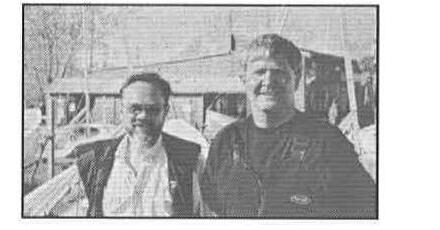
What does one need for a successful advanced race-training clinic? Wind, and wind we had. What else do you need? Michael McNamara from England, the current Albacore International Champion and lecturer extraordinaire and fount of endless wisdom regarding sailing Albacores, as well as our own home-grown Alan Humphreys who ably took on the job of second coach.
As the organizer of the event (with Abby McInnes as my right hand woman) I don’t really think it’s my job to write it up but I forgot to delegate this task along with all the others I tried to get rid of, so here goes because the deadline is tomorrow. The group was made up of 38 keen sailors who had qualified for this clinic through their results at sailing events last year, but also keenly listening and gathering pearls of wisdom were the volunteers who were driving boats and helping make the event work. Many of our very best sailors participated rather than running a second clinic on the same weekend for those who could not be included in this clinic because they wanted to be trained by the best in the world and who could blame them. Van and Chrissie Sheppard drove down from Ottawa. The second clinic is going to happen on June the 8th and 9th instead.
There was a rocky start when the sailors were assembled with boats rigged and Mike was missing. Fortunately Mike and Abby appeared in the knick of time to save the day and the rest of the three days ran almost without a glitch.
For three days with winds varying from light to strong we sailed and were lectured to. But lectured just doesn’t do it justice – Mike is such a good presenter that I was never sure that I wanted him to stop and go sailing, rather than continue to sit there and be entertained and informed. One of the points that came through loud and clear is that in strong winds when you are overpowered you must keep the leading edge of the jib and the leech of the main tight and that means that you must be able to crank on lots of vang. Heather McNaughton did and it broke; I did and found I had to move the point where the vang attaches to the boom aft in order to get the boom down low enough. However by the end of day two Mike pronounced that we were doing a much better job of setting our sails for the relatively heavy winds.
We were broken into two main groups for most of the clinic with a small group of people who regularly win races in one group and the rest in another. I don’t know much about what happened in the first group but I believe they sailed one on one for some considerable period seeing what worked and what didn’t. In the second group we did some standard training exercises such as tacking and gybing on the whistle and stopping and starting and short races but it was clear that many of us were rusty and all of us had lots of room for improvement. I am not sure why, but I will put it down to having too much on my mind, but I seemed to have more room for improvement than most capsizing regularly.
After the first day when we couldn’t get the video camera to work with the TV, we had feedback on land using video clips. It is a wonderful way to see what you should (and shouldn’t) do.
On Sunday we had a detailed look at sail shape and adjustment on land, and then went out on to the lake to practice sailing in waves. This was by far the nicest day being sunny and relatively warm (on the other two days I was wearing a wool sweater under my wet suit it was so cold) and though the winds were dropping the waves were big enough for us to have to work our way upwind not allowing the waves to slam into the boat and try to plane or surf off-wind. It was a lot of fun but once again exhausting.
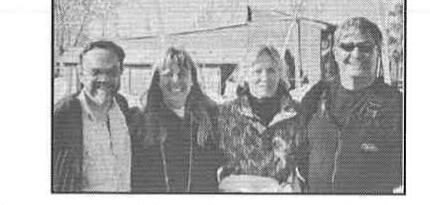
The one surprise of the weekend was that after all my effort to have lots of beer (and it really did take a lot of effort to find someone to pick up the kegs and the ice which Bob Logue kindly did for us) the drunken sailors over three days only managed to drink one of two kegs. But perhaps part of the problem was that after our dinner on Saturday I did not let the keg go over to Mooredale for their party because I thought all the non-sailors would polish everything off. Only some of those trained had the stamina to party; for as long as I lasted I had a great time but I faded before Barrie Farrell and his band came on, but the reports were enthusiastic.
After everything was over on Sunday a bunch of us went out to dinner to a new restaurant at Queen and Leslie with Alan and Mike. Unfortunately the restaurant is so new that it does not have its name up on the outside yet and some people couldn’t find it despite Robert Macdonald standing outside trying to hail lost sailors. He did capture some but a couple got away. The food and company were great but we were tired and at a respectable hour we sadly said out good-byes and thank yous to Michael and Alan, but were secretly glad that we didn’t have to rouse our aching bodies to do it again tomorrow.
Last but not least, thank you again to the many volunteers who made the event a success.
Canadian Albacore Association Executive
| Commodore | Ann Savege 35 Church St. #302 Toronto, ON M5E 1T3 [email protected] H 416-361-1808 B 416-922-5322 |
|---|---|
| Past Commodore | Heather Macnaughton 99 Harbour Square, unit 1812 Toronto, ON M5J 2H2 [email protected] H 416-367-9898 B 416-868-8205 F 416-868-3817 |
| First Vice Commodore | Dave Smith 30 Dancer’s Drive Markham, ON L6C 2C4 [email protected] H 905-887-8422 B 416-493-9020 |
| Second Vice Commodore | Henry Pedro 2210-736 Bay St. Toronto, ON M5G 2M4 [email protected] H 416-593-4438 C 416-991-8581 |
| Third Vice Commodore | Mary Neumann 135 Ulster Street Toronto, ON M6G 1E7 [email protected] H 416-968-1696 B 416-968-9081 |
| Rear Vice Commodore | Van Sheppard 509-215 Parkdale Avenue Ottawa, ON K1Y 4T8 [email protected] H 613-729-8939 B 613-599-7603 x282 |
| Specifications Chair | David Weaver 14 Lansdowne Rd North Cambridge, ON N1S 2S8 [email protected] H 519-623-4402 B 905-525-9140 x 24907 F 905-572-7944 |
| Chief Measurer | George Roth 212 Willowdale Avenue Waterloo, ON N2J 3M1 [email protected] H 519-746-1300 B 519-746-1300 F 519-746-1162 |
| Treasurer | Jason G. Roth 60 Cheviot Cres. Brampton, ON L6Z 4G7 [email protected] H 905-840-5395 B 905-362-4435 F 905-362-4605 |
| Secretary | Teresa Miolla 326 Riverside Drive Toronto, ON M6S 4B2 [email protected] H 416-769-0990 B 416-236-1871 F 416-769-0660 |
| Editor, Shackles & Cringles | Karen Piatkowski 350 Laird Drive Toronto, ON M4G 3X9 [email protected] H 416-429-0432 B 416-449-7880 |
| Membership | Abby MacInnes 29 Burlington Crescent Toronto, ON M6H 2L5 [email protected] H 416-654-0685 B 416-978-2600 F 416-978-6168 |
| Committee Member, Ontario Championships | Andy Roy 15 Claudette Court Peterborough, ON K9J 7Y7 [email protected] H 705-750-0189 B 705-743-9249 |
| Co-organizer Canadians | Myles Wilson 21 Webster Grove Rd. Newton, NH USA 03858 [email protected] H 603-382-4696 B 978-465-1900 Ext. 267 |
| Wistowe Island | Minett P.O. Minett, ON P0B 1G0 |
| Albacore Class Marketing | Barrie Farrell 46 Bellefair Ave. Toronto, ON M4L 3P8 [email protected] H 416-693-6223 B 416-243-0848 F 416-243- |
| IAA Representatives | Ken Clarke 1236 Queen Victoria Avenue Mississauga, ON L5H 3H3 [email protected] H 905-891-5742 |
| Heather MacNaughton 99 Harbour Square, unit 1812 Toronto, ON M5J 2H2 H 416-367-9898 B 416-868-8205 F 416-868-3817 | |
| Raines Koby 5 Cosdale Place Palgrave, ON L0N 1P0 [email protected] H 905-880-1866 B 905-792-6080 |
Canadian Albacore Association
47A Harbour Square, P.O. Box, 81047 Toronto, Ont. M5J 2V3
www.albacore.ca
2003 International Albacore Championships
Kingston, Ontario, Canada (at the Cork site). Sunday July 20 (practice race) to Saturday July 26, 2003.
In addition to incomparable sailing conditions, Kingston boasts an impressive concentration of quaint buildings and historic sites which give it an ambiance quite unlike other North American cities. It has a great variety of night spots, pubs and restaurants. Accommodations range from inexpensive university residences, intriguing B&B’s and fine hotels.
Mark your 2003 calendars and be there! For more information on sailing at Cork, check out the Cork web site at www.Cork.org.