Winter 2014
February 15, 2014
Dr. Frank Loritz on preventing and managing common sailing injuries, the CAA's winter promotion push at the Lake of Bays 50th and the Toronto Boat Show, and the full 2014 CAA race schedule.
Commodore's Message
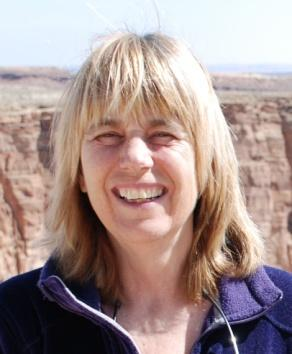
The winter has been quite brutal and it is still going strong. It is a good time to think about the pleasures of sailing. If you can't wait for spring there is still time to get down to sunny, warm Sarasota for the Albacore Mid-winters that are being held from Friday March 21st to Sunday March 23rd. The weather is usually lovely and many people camp out. Definitely a recommended event for those who crave summer. If you are looking for a helm/crew/boat put a note up on the Facebook page Albacore Racing.
To get you into the sailing spirit the Canadian Albacore race schedule for 2014 is on the back of this issue. There may be some changes still in what we are expecting will be a very busy season. Consult the CAA website for the most up to date information. The season starts with the OHCC ice breaker regatta on May 3rd. The Ontario's are being held on June 13th and 14th at the Toronto Sailing and Canoe Club on Humber Bay where for many years people had fun at the Tarts and Balls regatta, which used to be the first Canadian regatta of the year. The North Americans will be at CORK in Kingston on the 16th and 17th August – one of the few places in Ontario that reliably has good winds in August. College residences will be open for cheap accommodation and all the tourist activities will be happening to make it a fun time for hangers on too. The Canadians will be in Mid-September at Nepean Y.C, when they expect good winds.
You can prepare for the sailing season by taking one of the courses that the CAA and Ontario Sailing are putting on. Please see the notice in this issue of those events that are coming up soon.
The CAA Executive has been working away over the winter. One task that was time consuming, but not a lot of fun was preparing new by-laws to meet the new Canada Not-for-profit Corporations Act. These by-laws have to be in place by and will therefore need to be approved at the CAA Annual General Meeting at Nepean this fall. John Cawthorne, Treasurer, put a lot of time into preparing not only the by-laws but documents to help members understand the changes that have been made. We have made as few substantive changes as possible as our by-laws were updated only a few years ago and there were no pressing issues that needed to be addressed. The by-laws and explanatory documents will be sent out to all members and clubs very soon and be placed on the CAA website. Please let us know if you have any concerns as soon as possible so that we can address them well before the AGM.
Looking forward to a great season of sailing,
Mary
Mary Neumann
Sailing Injuries And Prevention
Most people believe that it would be a real challenge to injure yourself while sailing. Nevertheless injuries do happen and according to some studies, dinghy sailors are more likely to injure themselves than keel boat sailors. The most common injuries that occur are lacerations and contusions and sprain and strains of the knees, low back, and shoulders. Injuries usually result from inadequate fitness, overuse, overtraining, fatigue, and accidents. What I want to do here is give a brief overview of the type of injuries that you may encounter while sailing an Albacore and what you can do to prevent an injury and minimize its impact.
The Knee
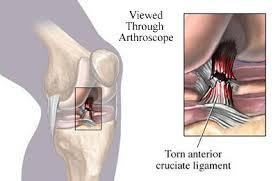
Knee sprains, either acute or chronic, appear to be the most common injury affecting dinghy sailors. They are also more prevalent during training than during actual sailing. Cartilage and ligament injury can develop after repeated jolts when travelling through waves which can result in chronic inflammation and lead to arthritis. The knee cap transmits the pull of the upper leg quadriceps across the knee and is subject to wear and tear and possible dislocation.
The knees are also particularly vulnerable to chronic injury from hiking (see hiking guide below). The anterior cruciate ligament (ACL) stabilizes the knee preventing the lower leg from sliding forward and this ligament is under shear stress while hiking. ACL damage is incremental.
Prevention Tips: The general rules of injury prevention apply. Keeping fit and minimizing the opportunity for accidents in the boat apply. Straight leg hiking is less damaging to the knees and can be achieved by keeping the toes pointed and hiking straps snug.
Management: Minor symptoms of strain and overuse can be treated conservatively with rest and ice. Twist injuries from slips in the boat or during training can often be stabilized with a tensor bandage or a knee brace but persisting, recurrent or evolving symptoms as well as injuries involving loss of function or instability should be assessed by a professional.
The Neck And Back
The spine and lower back experiences stresses placed on it by the nature of the sport: hiking and prolonged sitting without support. It is easily sprained due to awkward postures, repeated twisting or by sudden changes in a fixed posture. Sailing can put some harsh loads on the lower back and damage discs, inflame ligaments and lead to muscle spasm. Lower back injuries are often due to weak abdominal muscles and exhaustion of hip and quad muscles with resultant imbalances in the strength of muscles that work against one another. Leg pain due to nerve entrapment may signal a deterioration in the integrity of the spine. Neck strain from overuse due to repeated upward gaze is also common.
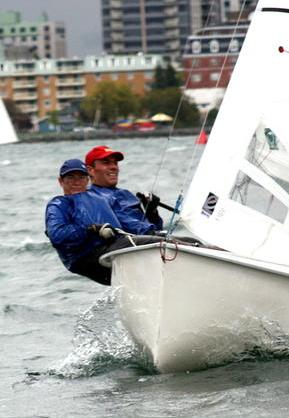
Prevention Tips: It is best to avoid injury through training and developing proper technique to minimize the strain on the back. Recognizing the demands of weather and course is also important. Back sprains can come and go but the gradual development of chronic pain or loss of function indicates a process of deterioration much the same as the loss of tread on a tire. Medical advice is again advised.
Management: The majority of back injuries do not need diagnostic imaging and resolve with appropriate attention to rest, fitness and mitigating the cause. Many professional therapists are available to accelerate the recovery from back injuries. More persistent or recurrent symptoms typically should receive attention from a therapist.
Upper Extremities
Shoulder, elbow and wrist sprains usually are due to an acute accident or overuse. Rapid powerful bursts of muscle contraction needed to operate the sheets can cause tennis elbow/bursitis. Carpal tunnel develops as a numbness in hands following repeated isometric gripping of the sheets.
Prevention Tips: Adequate fitness, recognizing a developing overuse strain and attention to correcting the cause is again the key to avoiding injury. The use of gloves and making sure that the boat sheeting runs freely will also minimize strain.
Other Injuries
Wet clothing and boots should be removed at the earliest opportunity to avoid skin maceration and infection. A urea based skin cream and cotton work gloves worn overnight for a few days works wonders at restoring chapped hands and fissured dry skin. Sunscreen and sunglasses with UV protection are essential to minimizing the risk of skin damage and the formation of lens cataracts due to prolonged and chronic sun exposure. Cuts and bruises due to impact with boat hardware are also common and can be minimized by taping sharp corners or protruding hardware fittings and patching frayed rigging. Concussions and whiplash can occur when the head collides with the spars and some sailors already wear a helmet. Head protection is certainly advised if you have been previously concussed.
Summary
The key to injury free sailing is keeping fit for your level of sailing through off the water training, using protective equipment according to the conditions (which includes sufficient protective clothing to keep warm), outfitting the boat so to minimize contact hazards, and recognizing the signs of developing injuries so that their impact can be corrected or minimized.
Hiking Guide
The hiking straps should be kept tight with the top of the feet under the straps, legs kept reasonably straight and flat to the deck, and spine kept straight and not rounded. The upper torso is the weighted load that balances the angular torque of the wind against the sails. The idea is that your legs stay in the same position and that you bend your body at the waist to change the righting moment while keeping your back straight. This way if you're tired or in a lull you can decrease the righting moment while keeping your hiking efficient. Avoid leaning out too much as this causes arching and disk compression in the spine either through overextension or flexion of the spine. Most people have muscle imbalances in their quads and are under fit for the demands of prolonged hiking in heavy weather. Training should focus on strengthening the inner thigh muscles (for the knees) and core muscles (for the back). Plans for a hiking bench are linked below.
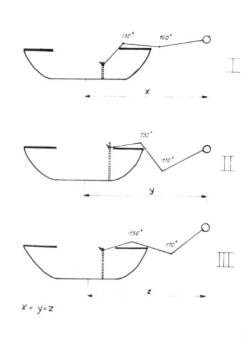
A Swiss ball to do leg extensions can be a great substitute for a hiking bench. Start with 15-20 reps, rest for 5 sec, then do 15-20 reps and continue through to 100 reps in total. Work the hip flexors, abdominals and core muscles. In the hiking position, your hip flexors hold your torso up and leverage your in/out movements while your knees connect your torso to the anchor point at the hiking strap. Your core abdominal and lower back muscles stabilize your spine. Injuries occur when the core muscles and hip flexors are weak or fatigue easily and are no longer able to adequately support the weight of the upper torso and you struggle to maintain balance with alternative muscles or joints. This causes an excessive load on the joints of the back and knees. Also remember that after a day of hiking in heavy weather, hip flexor stretches will tighten and it is important to prevent cramping and shortening of the muscles by stretching this area between races.
Ideally, position III shows a good combination of a neutral anatomical position that places relatively little load on the lower back while applying a large righting moment to the boat.
The specifications for a hiking bench can be downloaded from: caribwind.com (search “hiking bench specs”)
More technical information on sailing fitness can be found in “Sailing Fitness and Training”, available from Amazon in print or as an eBook.
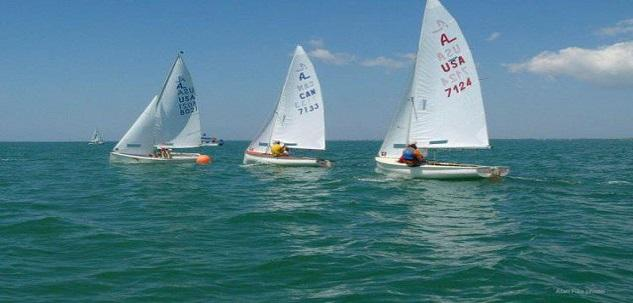
2014 Mid Winter Championship: Sarasota
21 Mar – 23 Mar 2014. Details: usaa.albacore.org
Promoting The Albacore And Sailing
Lake Of Bays Bash
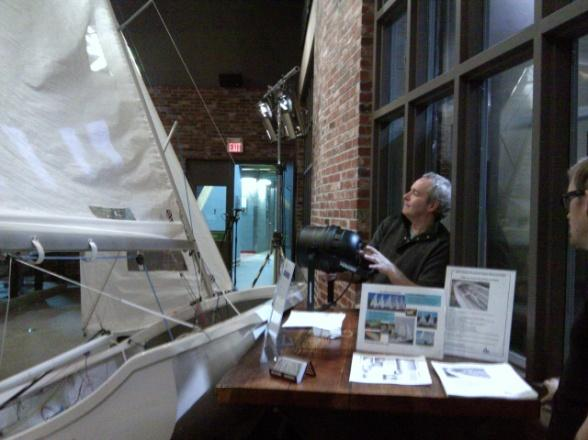
On February 21 the CAA joined the Lake of Bays Sailing Association in celebrating its 50th Anniversary of sailing on this Muskoka lake.
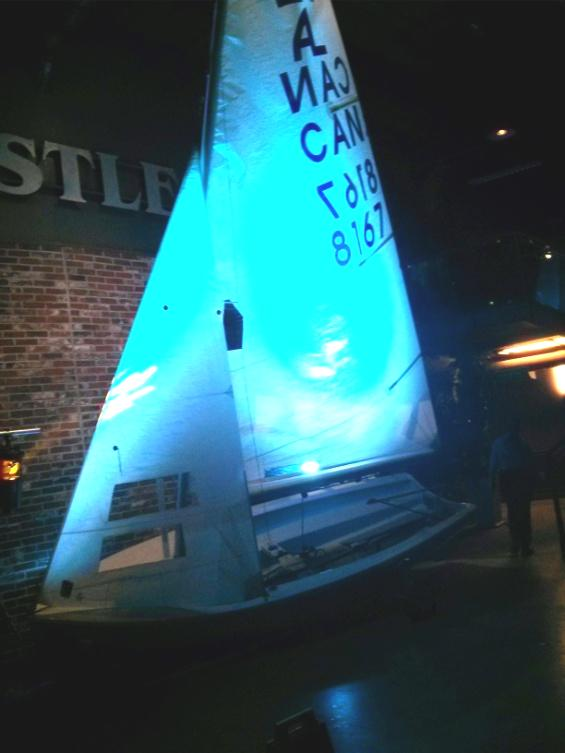
The event was held at the Steam Whistle Brewery in downtown Toronto. With a ceiling just a foot too short for the mast, the boat was tilted and given some backlight, making a pretty racy package and a great backdrop for the festivities. (See cover photo)
Lots of the 300 or so guests dropped by to talk sailing, marvel at the modern boat (“not like our woodies”) and pick up some info on the fleet.
One guest told us of the foils he used to make and his views of the various hull shapes, then mentioned he was the Canadian Champion for 5 years in the 70's. Barry Poyntz still looks more than fit enough to give us a run.
Founded in 1964, the Lake of Bays Sailing Association has an interest in developing both sailing and recreational facilities for the community. They started with two Albacores, with additional Albacores loaned for instructional use. Over 2000 youngsters have enrolled over the years in their junior sailing program.
Thanks to Ken Yamazaki for hauling the boat out of the snowbank, and to Peter Macaulay and Ralph Glass for sacrificing their evening to spread the word, gorge on sushi and sample the beer.
Toronto International Boat Show
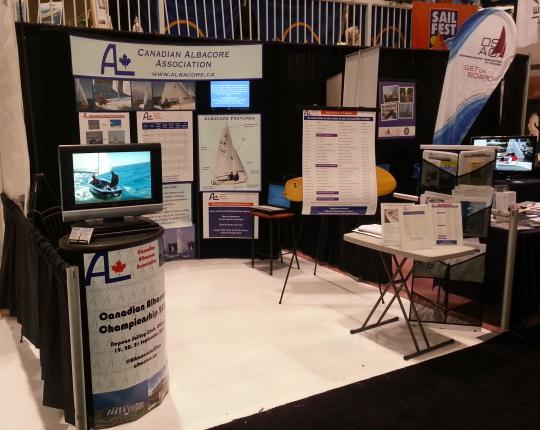
Each year, we invest some of your membership fees to promote Albacore sailing at the Toronto International Boat Show (TIBS 2014) in the depths of winter. We set up in “Sailing zone”, across from the Wayfarer Association, downwind (upwind?) from Ontario Sailing, near our friends at North Sails and Evolution Sails, and round the mark from RS. We were next to some beautiful Beneteau's (Beneteaux?) and Jeanneaux (Jeanneau's?), which you should definitely buy if you have a spare $400k.
CAA's job at TIBS is to promote the Albacore class, as an excellent boat for all types of sailors. The most important messages that we deliver is how easy it is to get into sailing, using the Albacore, and how lively is our sailing scene. We direct visitors to join up at their local clubs. If you are sailing out of Toronto or Hamilton, chances are strong that you will meet some new people on the water this year through the CAA effort at the boat show.
Quite a few of our visitors are current or previous Albacore sailors – what is important is to keep them involved and help them connect with other Albacores and with Albacore parts and boats. Of special note is David Burnes who has bought a whole fleet of Albacores that he sold to friends sailing out of Rose Island in Parry Sound, We had several enquiries looking for fleets to join from Simcoe to Owen Sound in Southern Ontario – if you know of groups of boats in those areas, let us know.
The thing that really grabs the passers-by is our video – search YouTube for “Albacore Boat Show Promo” uploaded by Darren Monster. For next year, I would love to launch a new video, in the spirit of our current video. So I need you all to go out on big wind days with your GoPro and get me footage. Also we always need photos of Albacores and Albacore sailors.
Thank-you to our 35 volunteers in particular Dominic Goodwill, the executive member for Promotions who came down from Ottawa twice to make it happen. Without you, there would be no show.
Ontario Sailing Booth At The Outdoor Adventure Show
The CAA helped Ontario Sailing with their booth promoting “Get into Sailing” at the Outdoor Adventure Show in February. People from all over the province had come to find exciting things to do outside. We helped them understand that sailing could be done where they lived, all summer long. We emphasised that it could be very affordable, by joining a community club, using a club boat, buying a dinghy or crewing. Many people were very surprised to find out how cheap sailing could be.
Up Coming Training Opportunities
Ontario Sailing sponsored Race Management Courses
Level 1&2 Assistant Race Officer and Club Race officer. Registration and course description online at ontariosailing.ca.
Niagara on the Lake: March 22/23 2014, Cost $67.80
Toronto (RCYC) city side March 29/30 2014
Bronte Harbour Yacht Club April 5/6 2014Advanced Sailing Seminar with Geoff Moore, from North Sails – Saturday, April 26 2014, 9 am - 3pm (subject to change). Information on registration to follow. Geoff has held multiple titles in such small boats as Interclub Dinghies, JY15, J/22s, J/80s, Sonar's, Snipe's, Star's, Shield's, and more recently J24s and larger boats.
CAA Race Schedule 2014
- March 21-23 – Midwinters, Sarasota
- May 3 – OHCC Icebreaker Regatta
- May 26 – Victoria Day
- June 14-15 – Ontarios, Toronto Sailing and Canoe Club
- June 21-22 – RCYC Open Regatta & Nepean One Design
- June 28-29 – US Nationals; Lake Skiff Sailing Association, Mississauga
- July 1 – Canada Day
- July 5 – OHCC Regatta
- July 12 – Hamilton Regatta
- July 19 – Westwood Regatta
- July 26 – Ladies Helm, J-Town
- August 2-3 – GRYC Invitational
- August 4 – August Long Weekend; Mooredale Regatta
- August 16-17 – North Americans, CORK Kingston; Pointe au Baril; New Helms, Westwood
- August 23 – TISC Regatta
- August 30-31 – East Coast Championship, Shelburne; Kanata Open Regatta; Baby Duck, Mooredale
- September 1 – Labour Day; QCYC
- September 6-7 – OHCC Back to School Regatta; Nepean Fall Regatta
- September 13 – J-Town Regatta
- September 19-21 – Canadians, Nepean (Ottawa)
- September 27 – Klingers, Round the Island
- October 11-14 – US Columbus Day weekend, TBD
Canadian Albacore Association, 970 Queen Street East, PO Box 98093, Toronto ON M4M 1J8
albacore.ca or 416-968-1696