Winter 2015
January 15, 2015
Robert Bartlewski and Felipe Recaman on winning the North Americans at CORK, Darren Monster's advice for beating the mid-fleet blues, a preview of the 2015 Internationals in Sarasota, and a refresher on proper course from Andrew Alberti.

Message From The Commodore
Happy New Year Sailors!
2015 is underway and the new CAA executive has been diligently working away on several fronts to ensure we can have the best year possible for Canadian Albacore Sailors. We will be participating in the Toronto International Boat Show again this year as part of our ongoing efforts to promote the class as the boat of choice for double handed adult sailors. The boat show runs from January 10th through the 18th and, as usual, we need your help to ensure that the class is adequately represented. So, please offer up your volunteer services using the on-line sign up sheet that is easily accessed from the Albacore website.
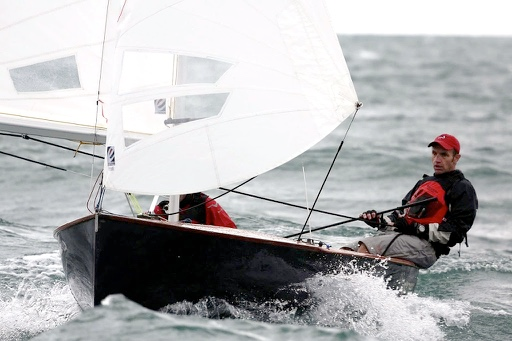
The 2015 Internationals are being hosted this year by the United States Albacore Association at the Sarasota Sailing Squadron. The International championships are being held immediately following the US midwinter championships, which makes for 8 days of sailing in this great place! The US organizing committee are putting in a great deal of effort to make this a memorable event, including a confirmed container full of boats coming from the UK! They would like as many Canadian sailors as possible to attend this event. There is an ongoing effort by the CAA to encourage and assist in getting the Canadian sailors who want to participate, or who are undecided at this time, down to Florida. If you have questions or would like more information refer to the article in this issue of Shackles and Cringles for details, or the USAA website for more information.
We hope to update the membership on the new boat committee progress with regard to the new builder for the class. This also includes revisions to the molds to provide an easier and faster build process for our new boats. This is an important step for the executive as the Albacore class needs a ready supply of good quality boats, at the best possible prices. George Carter will be providing these updates on behalf of the committee as progress is made.
Our tentative race schedule for the 2015 season has been drafted, it just needs review by the various clubs. We are hoping to enhance the Harbour Masters and Fall Series events as we are juggling with some scheduling changes around the upcoming Pan-Am Games.
That's it for now, hope to see you all on the water!
-- Ian
Congratulations Nepean Albacores!
The 2014 Commodore's Cup, Nepean Sailing Club's highest annual award, recognizing the member or Group of members who have made the Most Significant & Meritorious Contribution to the cause of NSC's Competitive Sailing, was awarded the NSC Albacore Fleet this year!
In 2014, members of this group:
- Actively organised getting newer-to-sailing members into boats and racing, including lending out their boats to near strangers.
- Continued to be one of the most proactive NSC Fleets at the Interclub level
- Played key volunteer roles to support the LTS/Youth Program.
- Played key volunteer roles in organising nearly all NSC's major Regatta events, including co-organising one of the most successful Fanfare Regattas in recent history.
- Brought, organised, and ran a very successful national Championship's Regatta to NSC.
Congratulations to you all!
In Memorandum Of Derek Shenstone
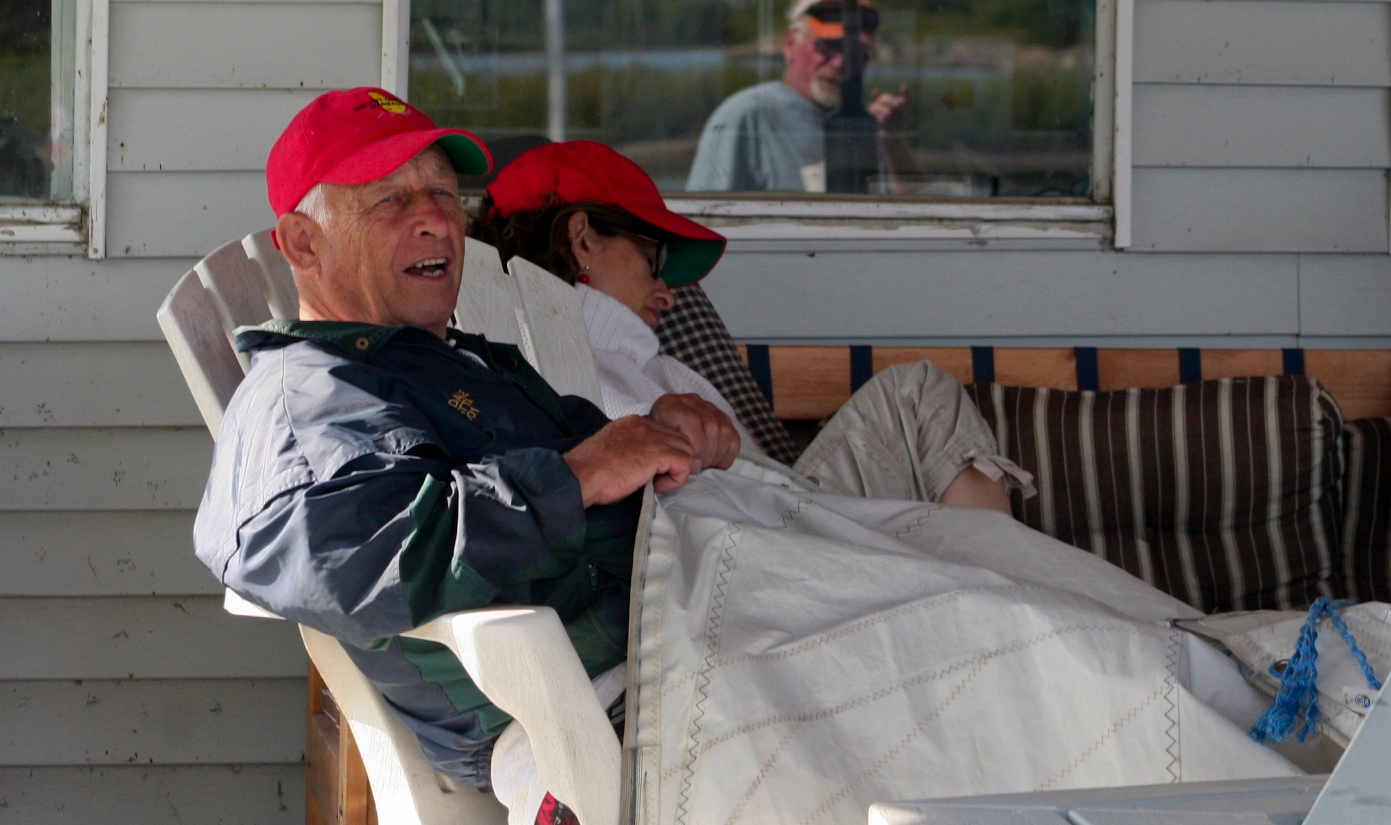
It has only been a short while since we all gathered to celebrate the life of Derek Shenstone. It was extremely moving to see so many of those people who knew Derek, sharing their stories and their best memories of him. Here and there, I still find myself thinking about him and remembering the kind and generous soul he was. Derek had lived a full life, and most would say he had many more full years to come. Derek remains in all of our hearts with the teachings he gave to us, his wisdom about life and sailing, his friendship and loyalty. Derek had a generous heart, he was always willing to help others with anything and everything. He was the first to offer to take the new can-sailors out, and often the last to come back in! Derek was always rocking his colourful flower print board shorts, participating in social events, club run activities, helping out in the kitchen and fixing the boats. When it wasn't sailing, he was busy with the North Toronto Ski Club riding the slopes. With anyone, there was always a great sense of camaraderie, a feeling of good friendship amongst those who knew and loved him. The kind of person Derek was, is the kind of person I hope he instills in everyone who knew him. His generous heart to us all, will always be remembered for many lifetimes to come.
With Love from us all. May you rest in Peace, Derek.
-- Susan Phillips, Member, Mooredale Sailing Club
The North American Albacore Championship Experience
The 2014 North American Albacore Championship was held August 16 and 17 at CORK, Kingston, Ontario. CORK can offer the finest freshwater sailing in Canada. Well, at least it does on average. Robert Bartlewski & Felipe Recaman took first place at this regatta. Here's how they describe the experience.
Robert's Perspective, From The Helm:
That was an awesome regatta for Felipe and me. I didn't expect to do it that well but we were very focused during all regatta and, at the end, it paid - the last race decided who won. First day was very hard working day for everybody, three races in 15-25 knots S-SW and wavy conditions remind me a little bit of sailing on Baltic Sea in Poland. Race committee did great job, however first race was late 1hour and everybody was nervous that it took so long. Courses were prepared really good, Every race was about 40 min long average. The competition started!
For Saturday, I moved the mast step forward and pinned down 3-5 positions, opened jib travelers to get more speed, and in the waves the boat had decent speed up wind, and was very fast downwind especially on a run in the last race when it started blowing to 25 knots. It was good tuning.
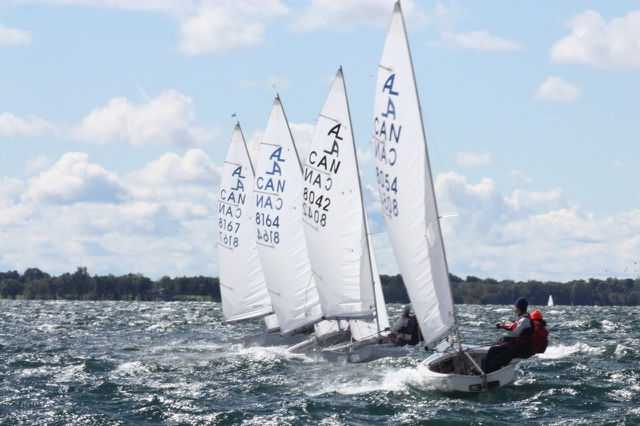
After first day of the North Americans, Barney & David were leading with 5 points and we were tied 2/3 with Allan & Richard - same points but they had better tie-breaker races.
Sunday was a disaster....not for Felipe and me but overall: wind was so unpredictable and we had the race area in a very bad place, wind from the shore...very shifty. Anyway, I moved the mast step back, pin number 1, and first two races very focused on boat speed, working on rig tension, pre-bend, mast rum and outhaul because wind was from 0-12 knots during race 1 & 2. In the second race, the wind died completely. We all expected to shorten the course just after the sausage, but it didn't happened, so we raced in 0 wind conditions upwind – that wasn't nice for some boats!
The last race decided who will win. The sequence started 5 minutes before 3pm (sailing instruction said that no more races after 3 pm). The wind changed to S-SW and we got nice breeze of 8-12 knots.
Barney told us before that race “It is not done yet”. I knew it and that made it even more exciting. Barney & David blocked us on the start line close to the Committee Boat and on the first upwind they covered us. We were late after the start, but close to them which was good. First mark, Barney & David were second, we were fourth (not bad), then down wind was a disaster...we were sitting in the middle of the fleet. Barney & David were left, boats passed us, close to downwind gate we were maybe in 12th position. Barney & David chose left mark to round, I chose the right one...and miracle: Steve & Mary blocked Allan & Richard on the mark then we snaked between and we got a bunch of boats, maybe 5-6. Then we went left, we got a nice shift and we finished second in this race. It was awesome!
I want to thank everybody for a great regatta and very fair play sailing. Mary Neumann did also an amazing job to organize everything so well.
-- Bartsky
Some Heartfelt Words From The Crew, Felipe:
Unique experience!
First year for me as part of the sailing family in Toronto, and I have to say that I consider myself lucky to be part of this amazing experience in Kingston.
Everyone told me about how nice is Kingston for sailing but I never imagined how wonderful it was: windy, white crests, exciting planing are some of the memories that I'll keep in my mind.
I have to be honest, next time I'll bring my wetsuit. Ten seconds after we sailed out of the port I was completely soaked, and I was like that for the next 6 hours. Also I want to say I had never drunk so much water from any lake where I sailed before. It was a unique experience.
Finally I want to thanks Bartsky for inviting me to be part of his team. He is not only an amazing sailor but also an incredible mentor.
-- Felipe Recaman
Three Perfect Days — Warming Up For The 2015 Albacore Internationals
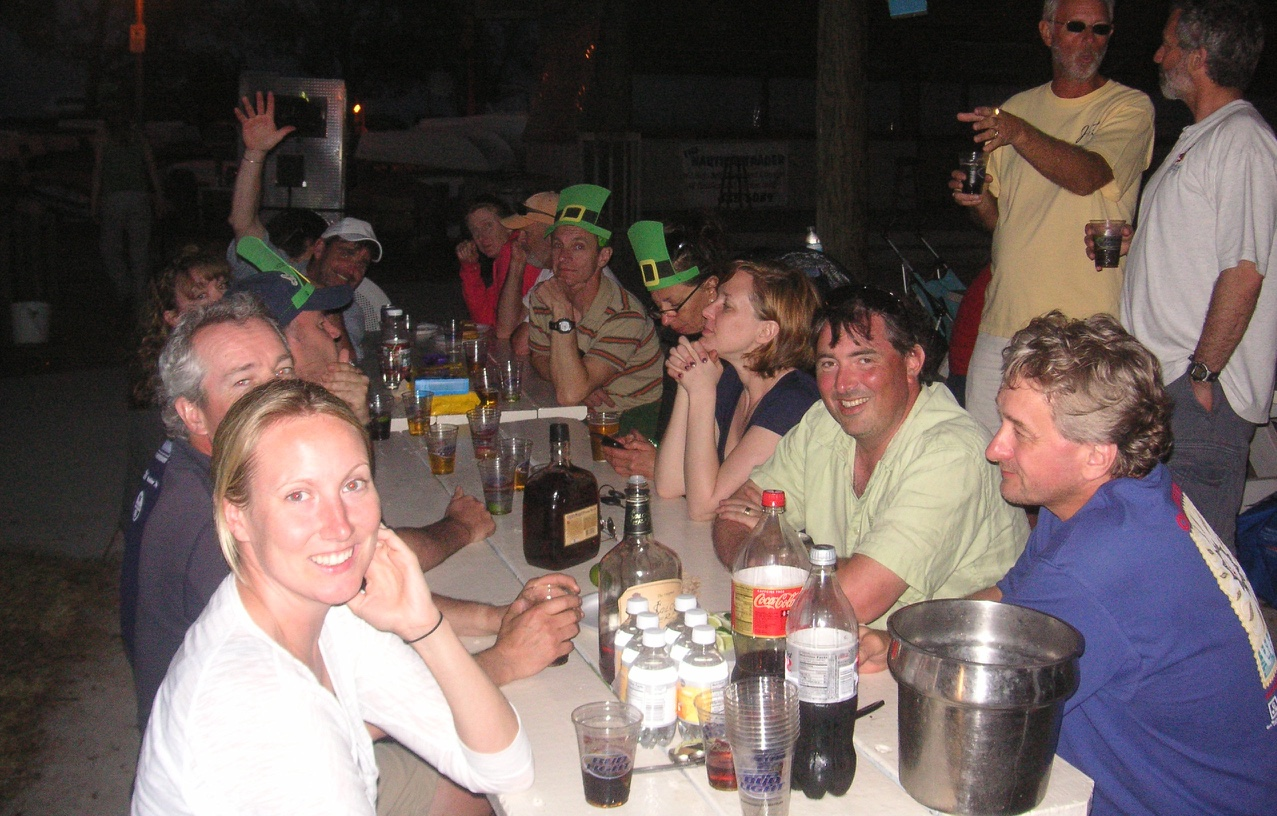
Let's think about ending the winter early, trading in all the white, frosty stuff for the blue waters and mild air of Sarasota Bay. We are gearing up for the 2015 Albacore International Championship and will try to get rid of all the cobwebs by sailing in the USAA Mid-Winter Championship at the Sarasota Sailing Squadron March 20 - 22 - come and join in! Just to get you thinking about it, here is how it may be:
Day 1, Friday: The night may have been a little crisp, but sunshine will quickly make up for this when we crawl out of our tents and welcome the new day. All depends a bit on how we dealt with our arrival on Thursday, perhaps having joined the around the island sail and the arrival party at SSS. Then off we go to grab breakfast at Salty Dog for a good morning wake-up meal. Afterwards there is plenty of time to deal with fine-adjustments or setting up the boat before the competitors' meeting. Around noon we are out in the Bay with a sea breeze filling in, ready to race. We may have a couple of other classes on the course, showing us where to go before our start. This is getting hot now … count down ... start, oh no, how did we manage to get buried? But then the sailing is just great. Completing three races or so, we sail back to the beach, pull out the boat, and have a well-deserved refreshment. Later for dinner we may venture to the mainland and find a Cuban restaurant. And into the night we hang out on the porch, telling how the day was, what happened last summer, how good life is when sailing.
Day 2, Saturday: We wake up to the busy bustle of this core day of the Michelob Light One Design Regatta, many more fleets and sailors are showing up. SSS is providing a good continental breakfast; some of the seasoned campers supplement it with sausage and eggs. Another competitors' meeting assigns the fleets to the courses and off we go. Sailing to the course, a cormorant sweeps down and hunts for fish in the shadow of the boat, again and again - smart bird! By the fourth race we had our work-out and opt for a screaming reach back to the club instead of the race. Might as well be ahead of the crowd and grab a beer. In the evening the SSS volunteers treat the crowd of more than hundred sailors to a seafood gumbo feast, with plenty of beer to wash it down. The mild night lets all hang out till late.
Day 3, Sunday: The good life routine is on: grab breakfast, launch the boat, go sailing. Wonder what we did last night - feels like a hangover? The fresh breeze blows it all away. Too early we return to shore to close out this regatta. We have a beer and then join the awards ceremony. Our standing? Never mind, it was great sailing! We wrap up the boats, load the gear in the car, hook up the trailer, and leave with a lot of happy memories, with a picturesque setting sun over the bay, riding back home with the commitment to come back.
Of course this was 2014 and we will be back for the Albacore Internationals Championship - can you bear another 5 days of the good life?
-- Rolf Zeisler
2015 Albacore Internationals — March 23 - 27, 2015
The Internationals will officially start Sunday March 22 with late afternoon registration and an evening welcome party. Two containers (~24 boats!) are expected from the UK, as well as everyone from Canada. Racing is planned for Monday through Friday with perhaps a lay day on Wednesday. The evenings will be filled with both ad hoc and planned parties, with a closing awards ceremony and a dinner party on Friday.
SSS is located at the eastern end of the small peninsula south of New Pass so, launching from SSS, we sail north into Sarasota Bay. There is a dependable sea breeze developing in the spring with often exciting strength in the afternoon. Or, sometimes strong system breezes mix up the conditions after a frontal passage.
SSS and its members are known for their outstanding hospitality and friendly assistance to all competitors in their events. We have been treated to many fine dinners over the years, with volunteers cooking for crowds of 70 or more. In addition, we have some not so secret cooks among the Albacore sailors who have treated us to unexpected meals after a long day of sailing - great since you just don't always feel like driving to one of the many restaurants Sarasota has to offer.
Sarasota is the place to be at the end of winter! “Where urban amenities meets small town living” only begins to tell the whole story of what lies within this incredible city! Enjoy the soft white sandy beaches or experience history at the museums and old landmarks - whatever you choose to do or see Sarasota is always exciting!
Longboat Key, St. Amands Island, Lido Beach, and Sarasota offer all you can ask for: hotels, motels, and apartments in all price categories, restaurants, bars, beaches, history … just start with the Internet and you will find it all. As well, there is serviced camping on the SSS grounds - those with a tent need only show up. (RV owners need to contact Michael Heinsdorf to co-ordinate.)
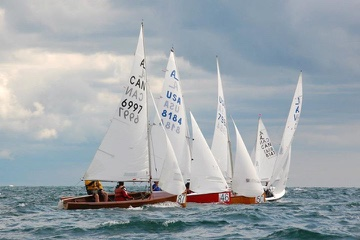
To join in go to: regattanetwork.com/event/9155
(Don't) Feel The Powahhhr — Beating The Mid-Fleet Blues
Got the Mid-Fleet Blues and not sure what to do about it? Here's a few lessons we learned over the years and the changes we made to start placing consistently in the top 10.
A Desire To Improve & The Willingness To Change
Start improving your game with a strong desire to improve and a willingness to change your perspective. The definition of insanity (or the basis of a Hollywood blockbuster) is making the same mistakes over and over with the same results. Your motivation to do better is the only thing that will keep you on the water long after everyone's gone to shore for beer. If you're not seeing repeatable improvement in your standings, don't be afraid to make changes to your program. Just remember, only make one change at a time and mentally note the differences. It's more a trial and error method when it comes to fine tuning - to determine what works best. Understand the difference between having a bad race and something not working with your boat's setup. The best way to tune is to practice with another boat, preferably someone who's faster than you. Experiment with different settings and ask how the other boat is set up. I can tell you, once we figured out the boat speed and set up we rarely deviated from those settings and spent more time focusing on perfecting our strategies and not making silly mistakes.
Practice, Practice, Practice, Practice, Practice, Practice
Practice makes perfect, as the saying goes and it's true. Join forces with someone that has the same desire to move up and start training together. Tony or Joel and I would go out and do windward leeward's for hours perfecting our gybes, tacks, mark rounding's etc. At the height of our training we would be doing Toronto Harbour Master's on Sunday, the occasional Monday night training session, OHCC's Tuesday and/or Thursday night races and any Saturday regattas. In a full week this could be as much as 15 hours on the water. We also used a camera in the boat and later reviewed the footage looking to ensure we moved together as one and as efficiently as possible.
Ship Shape
There is nothing worse than having to retire from a race when a piece of equipment on your boat fails. Always check out your ride before and after you take it for a rip. Blocks, cleats, hiking straps are easy and quickly reviewed to assess wear and tear. When you go to travelling regattas and the mast is off, make good use of the opportunity to inspect your halyards, pole bungees, lines and especially wear on your shrouds where they enter the deck. Also carry extra hardware on the boat like small pieces of line, shackles, rings, etc., so you can make quick repairs. Knowing most of your peers on the water who carry extra equipment is also beneficial. Often a small issue you encounter in a race can be easily fixed between races to ensure you can continue to sail and keep you in the game.
Start Smart
Don't try winning races off the start. Every so often the fleet picks the wrong side of the line, leaving the favoured end (usually the pin) wide open so you could port tack start and cross the entire fleet like the rock star you've always dreamt of being. We had a start in the Toronto Internationals where the line was heavily pin favoured and no one was there. I remember coming into the start at the pin, on port tack, and Tony saying “are we actually doing this” and I responded with “yep we're ‘doin this!!!” We crossed the entire fleet on port. The plan was so beautifully executed even the world champion tipped his Tilly hat, or was it a pelvic thrust? I can't remember due to the euphoric high of the moment. We tried port tacking the fleet 19 more times after that...and failed spectacularly each time. The point being, don't make yourself into a one hit wonder on the start line. Instead, aim to be close to the favoured end of the line rather than fighting to win it. It's better to be at the line on time with speed, clean air and the option to tack if the other side of the course looks favoured. Don't blow your regatta trying to be a hero off the start. Limit your risk and think about the overall results.
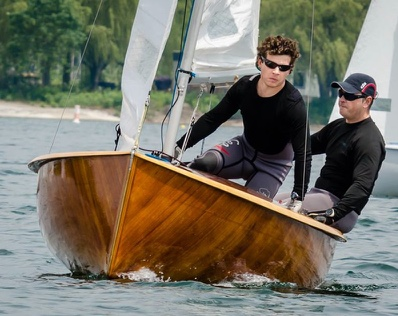
Managing Risk
Learn how to manage risk. Big gambles rarely pay off and are more likely to leave you in a bad position on the course with fewer options to improve your situation. A good example of this is the classic mid-fleet flyer. Don't take them! When you find yourself in a bad position, it's tempting to go the complete opposite direction of the fleet just hoping to find that magical wind shift or a special little puff that no one else gets. This is a potential strategy if you don't like the smell of your competitors or you're at the back of the fleet, because there's really not much to lose. However when you're in the mid fleet it makes a lot more sense to stick with the bulk of the fleet and try picking off one boat at a time, especially if your boat speed is dialed in. If your competition looks like tiny little specks on the opposite side of the course it might be time to reconsider your strategy.
A'Round And A'Round We Go
A great area to make big gains is mark rounding. First, know who's responsible for what. Start setting your boat up for the next leg well before rounding the mark. Have an order in which this is done so it becomes muscle memory so it can be done quickly without too much thought, even in sketchy situations. Have a system that's repeatable. Practice tight rounding's and not losing ground to leeward or letting boats sneak inside. Think of practice as the opportunity to make mistakes without the consequences of losing boats and the ability to repeat the maneuver over and over again until its perfected (or until one of you is so bored he or she waves the beer flag).
(Don't) Feel The Powahhhr
Learn how and when to depower. After years of pinning up and pinning down we learned the full range of our sails and rig and how to depower them. I'm not saying we never pin down but we do it far less often than before. We spent a lot of time asking different people how to depower and how to set up the boat. We then compared the different philosophies trying each one until we found the set up that worked best for our boat, sailing style, and weight combination.
Virgin Air
Always sail in clean air. We will almost always go for it without fail. Notice all the top guys never sail in dirty air. If we have to go to the wrong side of the course in order to get some clean breeze then that's what we do. Just remember the lay lines are the boundaries and we try not to tack on them until at least the top third of the course leaving room to tack out if someone decides to park on us. Basically the way we look at sailing in dirty air is that for every second we're eating it and going slow, someone on the course is going faster and moving ahead of us. The people who shoot out from the start and round the first windward in the top 10 didn't get there by sailing in dirty air.
Basic Math: Flat = Fast
Sail the boat flat!!!! I came from sailing Star boats that have a keel so I was used to sailing with heel and a bit of weather helm. The Albacore likes to sail flat and the reason for this is drag. When you have a lot of heel the rudder creates a significant amount of drag which ends up slowing the boat down. This past season we experimented with steering the boat by heeling to windward or leeward without moving the helm at all. Keep the helm neutral and plant it on your leg for stability and try steering without using the rudder at all. It takes a bit of practice but you'll be amazed at how the boat reacts and how you can stay at maximum speed for the entire leg.
Review
At the end of each race, discuss with your crew about what mistakes you made and how you could have done things differently given the same situation. Remember that all mistakes are team mistakes – even if it was the crew's mistake (and it probably was 80% of the time, just don't state it that way). Just as important, discuss when you have performed well: talk with your teammate about all the great decisions the two of you made that lead to the good result. This is how you cultivate an open discussion for improvement and create what I call your bag of tricks.
And if all of this fails – well, there's always beach volleyball. Good luck and hope to see you all in Sarasota for the Albacore Internationals!!
-- Darren Monster
Know Your Rules — Proper Course I — A Refresher
This article is based on the June 2010 article written by the author for Kwasind published by The Royal Canadian Yacht Club. Copies of the original articles, along with animated gifs, can be found at rcyc.ca > Sailing > Know Your Rules
As I taught a couple of rules seminars this spring, I realized that there is still confusion over the term “Proper Course”.
Proper Course: A course a boat would sail to finish as soon as possible in the absence of the other boats referred to in the rule using the term. A boat has no proper course before her starting signal.
“A course a boat would sail to finish as soon as possible in the absence of other boats” can often be paraphrased as “the course you would have sailed if the other boats weren't there”. It is certainly a convenient way to think about it. I am going to work around the course and discuss a number of common situations.
In the first diagram the starting signal goes at position 1. The yellow boat was sitting luffing waiting for the signal. Her proper course now is to bear off, fill her sails and start up the course. The blue boat was just below the layline for the mark at the leeward end of the line. She is going to pinch up to “shoot the mark” using her momentum, then bear off and sail up the course. For both of these boats these are their proper courses. For most boats, most of the way up a windward leg, their proper course is close hauled. We have to keep in mind that some boats point higher than others and therefore will have higher proper courses.
In the second diagram the boats are at the windward mark. The green boat has approached on Starboard a little below the layline. He will head up and shoot the mark. The red boat has overstood the mark. He will tack. For both boats these are their proper courses.
The next leg is a tight reach. The white boat goes up and over the much slower black boat and sails directly to the mark. The purple boat goes high early on the leg so that she can sail lower and hoist a spinnaker. After rounding the mark the white boat heads directly downwind or even slightly by the lee. This is a good course for a white sail boat sailing winging out its jib or on some single sailed boats such as lasers which sail very well by the lee. The purple boat with its spinnaker up continues on a higher course to maintain optimum VMG. She will probably gybe further down the leg. Each of these boats is sailing her proper course.
Finally approaching the finish, the orange boat sails past the gybe line to the finishing mark. She ends up having to drop her spinnaker and reach back. At position 3 she is above her proper course. The grey boat is sailing down towards the committee boat at position 1. At position 2 she heads up towards the other end of the line. Either of these may be her proper course assuming the speed gained on her course at position 2 makes up for the extra distance sailed.
It is not uncommon that a boat may have to choose between two quite reasonable choices of course. These may both be the boats proper course. If other are sailing that course or if the boat has been or continues to sail that course when other boats are not as close it is probably defendable as a proper course.
© Copyright 2010 Andrew Alberti
Thank you to all contributors, including photos: Robert Macdonald, George Carter and Geoff Webster, Alan Pike. It can't be done without you!
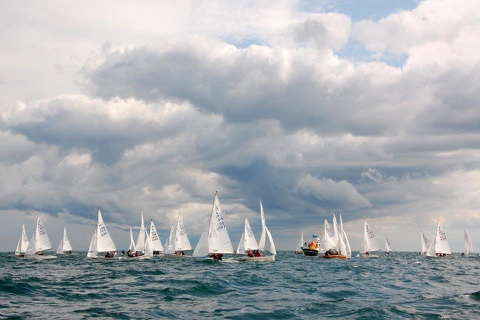
Your New 2015 CAA Executive Board
| Commodore | Ian Brayshaw |
| Rear Commodore & Canadians Regatta Chair | Darren Monster |
| Past Commodore | Mary Neumann |
| First Vice-Commodore & Race Chair | Marek Balinski |
| Second Vice-Commodore & Promotions | Dominic Goodwill |
| Third Vice-Commodore & Education | Frank Loritz |
| Chief Measurer | Ken Yamazaki |
| Specifications Committee Chairman | David Weaver |
| Treasurer | John Cawthorne |
| Secretary | George Carter |
| Membership Secretary | Jason Wattleworth |
| Editor, Shackles & Cringles | Tannis Baker |
Canadian Albacore Association
970 Queen Street East PO Box 98093 Toronto ON M4M 1J8