Year End 2007
December 01, 2007
Commodore Teresa Miolla's year-end message welcomes a new executive slate; Sail RA celebrates its 60th anniversary; Kevin Soldaat reports from the Steel City fleet in Hamilton; Timothy Gillespie profiles the Albacore's surprise new foothold in Shelburne, Nova Scotia; Ralph Glass shares lessons learned racing the B Fleet; the International Albacore Association reports on the class rules re-write; several members share their reasons to attend an Internationals; and the 2007 executive.
Message From The Commodore
Hey Everyone,
Wow it’s hard to believe another sailing season has come to an end, but the snowfall certainly made it clear and Beaver Tales is once more snuggled up in the garage after a busy season. First, a huge thank you to all the members of the CAA Executive who were busy throughout the year making it another successful season for the Albacore fleet. We sadly say goodbye to Sandra (Sandola) Swiatlowski who, once more topped herself by organizing another fantastic Canadian’s Regatta; Stephanie Mah (congratulations are necessary as she has gone on to become the Canadian Contender Commodore) who organized two separate training events in preparation for the busy racing season and finally Christine Short who was the editor of Shackles and Cringles and constantly providing the Executive with great ideas and fabulous input. I will miss all of you but I thank you for your support.
I’d like to welcome aboard to fill their positions: Kevin Soldaat, a keener from the Hamilton Bay Sailing Club, who has already begun to organize the 2008 Canadian Regatta in Kingston; Jelena Balic who is going to report (and beg you for articles) on all the goings on in the Albacore world. Back for more, is Ann Savege, the calm sage as Past Commodore; David Weaver, who with his team, spent the better part of 2007 rewriting the Albacore specifications and rules to fit the ISAF format; Allan Measor who organizes the Race Schedule and who I heard may be a bit more “aggressive” next year; Henry Pedro who organizes the boat show and our website; George Roth our Chief Measurer who has designed a new measurement card which will be put into use this season; Cathyann White as Secretary and scribe; Janet Duff our Membership maven who also has a new membership card (get yours soon it could be a collectors item..ha) to be used for the first time; and Jason Roth who keeps our financial numbers in check. Our representation on the International Albacore Association will be Raines Kolby for another term and myself, with our goal on the next International event which will be held in Canada in 2012. A special thanks to retiring Barrie Farrell who has been the IAA Secretary for the last 2 years.
Now we need your help….we are looking at ways to extend the racing season by having a “Fall Series”, possibly 4 Saturdays in September; we are currently looking at ways to improve the website (a website designer would be a bonus to us); the membership will be called on very soon to ratify the rules rewrite, watch for more news; an Appreciation Party sometime in the early part of the year; the Boat Show which provides a place for community clubs to sell their memberships so look for notices to fill the rotation. If you have any ideas or can help with any of these activities we would love to hear from you!! If you aren’t already receiving our regular email notices please go to www.albacore.ca and sign on. Ongoing is the Paypal option to renew your membership and pay for CAA regattas and the Albacore forum where you can talk all things Albacore.
On a personal note, I have had a fabulous season and have enjoyed meeting many new young sailors who are our life blood. It has been awesome to see a few more members go from the community clubs and buy their own boats to race regularly: don’t give up it’s a tough fleet and we are proud to be the largest, oldestone design fleet in North America! This year we saw record speeds set at the International regatta that has brought about a great debate. Racing with George Carter has been an experience onto itself, even though he talks too much, I have learned a few more new swear words (usually directed AT me) it has been a lot of fun and he even turned me onto some new music….bonus!
Ahhhh Sarasota….seems so far away, but after the blast we had last year, I’ll just count sheep until the day we hit the road with Beaver Tales, once more in tow.
See everyone soon,
T
Au Revoir
Well, the time has come for me to pass my jib sheets on to another keen albacore sailor, who now will become your editor of Shackles & Cringles. Please welcome Jelena Balic as your new editor. I have enjoyed the position as your editor and have met many fun and interesting sailors and have learned LOTS. Thank you to everyone who contributed articles, photos and ideas, please continue to do so with Jelena. This is your class your newsletter. Thank you to the members of the CAA executive that I have had the pleasure of working with and for. The CAA executive really are a very dedicated group, keep up the great work!
See you on the water,
Christine Short
Now that your Boat has been packed up, here are some books to read over the winter
- How To Master The Fine Art Of Bladder Control — Teresa Miolla, Christine Short
- Is Mast Bend The Same As A Bent Mast? — Steve Brown (pronounced Bloom)
- The Best Show Tunes For Those Light Air Days — Richard Piercey
- Not Shaving Your Legs – It DOES NOT Slow You Down — Teresa Miolla
- Removing A Keg Gracefully Unnoticed…Oops Busted…. — Neville Herbert
- Bent Pole…Tricky But Can It Be Used Elsewhere…Franny? — George Carter
- Hey Nice Shoes — Jeff Beitz
- Combos – A New Food Group — Christine Short
- Not All Gummy Bears Are The Same — Christine Short
- Chicks With Sticks….Mary Neumann
- How To Love Tapioca — Jennifer Yap
- Is An Albacore Also A Submarine? — Ian Brayshaw
Canadian Albacore Class Measurers
Chief Measurer: George Wm Roth ([email protected])
Chief of Specifications, CAA & IAA, Chair of International Rules Committee: David Weaver ([email protected])
CAA Measurers: Gord Chu ([email protected]), Ross King ([email protected]), Rick Clayton ([email protected]), Jeff Beitz ([email protected])
Sail RA Update
Sail RA, a club which is part of the Recreational Association of the Public Service of Canada but is not restricted to civil service members, was founded in the Spring of 1947. The club in its formative years was known as the RA Yacht Club (RAYC) and somewhat later it was agreed the term “Yacht” was stretching the truth if not misleading, so hence the name change to the RA Sailing Club, short term, Sail RA.
Since every Club, no matter what the activity, is more dependent upon its members, and not simply its activities, I would like to give a little recognition to some of those in this writeup.
Sail RA celebrated its 60th Anniversary this past July. That is certainly no mean feat for any club, but especially for one that has, throughout its entire history, been entirely comprised of volunteers. The pulse of this Club would never have kept beating that long if it were not for the efforts of a number of persistent folk, and I believe we have been very fortunate to have had their guidance along the way. A few of the more recent of those are named below, but time and space have restricted the recognition that I can give here. Others will remain anonymous in name, but have not been forgotten for both their devotion and hard work, especially in their volunteer work and Fleet Work Parties. Thanks to All! Although this was only my second season with Sail RA, I can honestly state that the camaraderie within this club is very much like a large, close family.
Bill Kerr, a long-time and valued club member, was the driving force behind our Anniversary from the first organizing meeting in January to the day of the event. In addition to his various responsibilities on the organizing committee, he developed a pictorial presentation of the club’s history which included numerous pictures, newspaper articles and other club memorabilia covering the 60 years the club has been operating.
That event and our annual Don Rantz Regatta were the two highlighted events of the season. Both were considered great successes, even though the two day Regatta was ultimately won by Robert Bartlewski, a member of the Mooredale Club in Toronto. We do hope he will return next year to defend his victory, and that he will, once again, bring his family with him.
While the weather certainly cooperated overall this season, none of our activities would have been possible without the excellent support afforded by our members. We could not have even begun without our Registration Night, and Neil Baisi, together with his membership committee, did a great job of preparing for, and the registering both new and returning members, and encouraging them throughout the season, as they worked on refining their techniques.
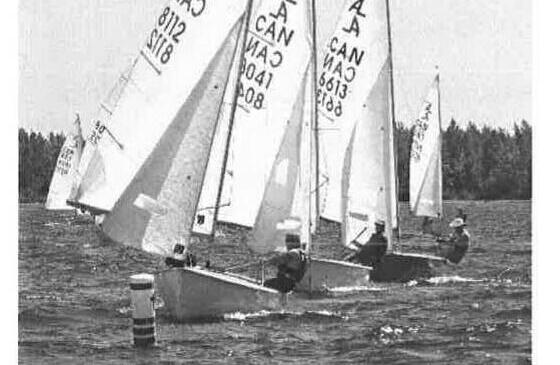
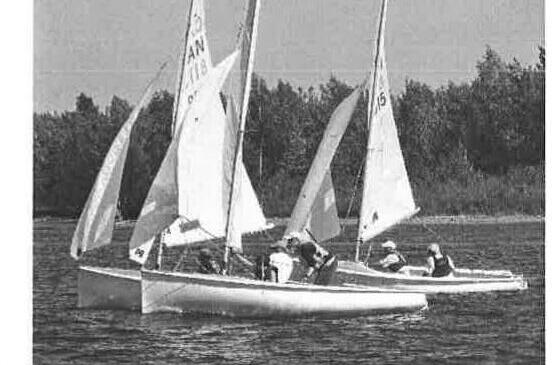
Alan McCullough and his crew of head trainers and trainers went beyond the call of duty in offering a training program that is unsurpassed. Perhaps the last member to join our Club this year in August revealed both the calibre of that training and the determination of our members. He was still able to attain his certificates as skipper for both the Albacore and Laser in the time remaining, even though we closed our House the weekend before Thanksgiving..
Colin Fyfe and David Martin ensured that the club was blessed again with well maintained boats and a safe and accessible harbour. This is certainly no easy task when considering our aging fleet and docks that are continuously battered by the relentless Ottawa River, the many passing power boats and the changeable Ottawa weather. Kudos also go to Chuck Bain and Ross Misner for keeping the fleet afloat and the rescue boats at the ready to answer the call when needed.
Martin Rheaume was once again able to put together a strong set of racing series this year, starting with the Hollingsworth series and the Bill Kerr Commodore series in the Spring, and finishing up with the club’s Albacore Championship in late September. He also ran the club’s sailing racing school in July and August with two Laser series of races. Through Martin’s efforts and those of his team of trainers, the club’s racing program remains very strong.
We also held two successful distance races. The Around Kettle Island and the To Parliament Hill races were held in July, and with some of the stories I have heard from participants, the competition among them, although fierce, was not without its moments of laughter. August brought the Match Race for both Albacore and Laser, and Mixed Couples Championship which was held for Albacores only. Our Sailing Skipper Championship Race is another for both Laser and Albacore skippers, and was held at the beginning of September this year.
Of course it goes without saying, but should still be noted, that a team cannot successfully pull together without good leadership. As evidenced last year at my first Fleet work party, even if a large number of volunteers materialize to help, if no one pulls them together with tasking, it is highly unlikely that the outcome will be close to the original objective. Just look what happens with any dog team without a lead. Pure chaos! I may be biased, but do firmly believe that Mike Hardstaff’s dedicated efforts and easygoing approach brought us a much superior outcome than would otherwise have occurred.
With a fleet of twenty year old Albacores and Lasers the club still races towards tomorrow and the tomorrows after that, with the certainty that although we may not have foreknowledge of the future, if the past 60 years is any indicator, we can be sure that in whatever format it will continue, due to the wind, sailboats of some type, and perhaps most of all, due to the dedication of its volunteers.
Until next time…
Pauline Tiraoui
Communications
Sail RA
The Steel City Report
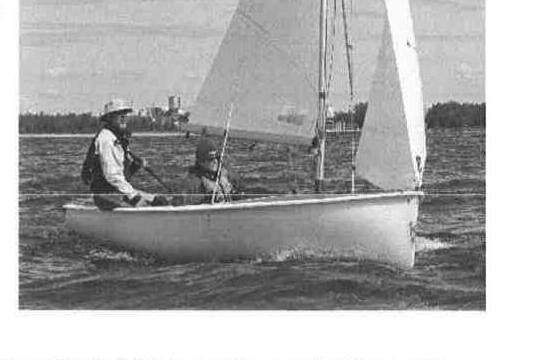
Just a few thoughts from Kevin all the way down here in Hamilton. It’s been another very exciting year here. We’ve done our regular activities, including the club camping trip to Killbear Provincial Park, and a sailing excursion with our little boats under the bridge and around the corner to the Catamaran Club, for what was a wonderful day on the beach! We, of course, have had our regular Monday through Friday teaching nights where we get to pass on our passion and knowledge for sailing to newcomers. Through these nights it appears we also passed on a bit of our love for racing too. This was the first year in a long time that I had seen 9 boats get together at a mark and run little races with rabbit starts.
As to follow our club tradition we had our social committee working in full force making sure that there was always a party somewhere. We hosted a Burgers and Blues night where we got to listen to some excellent jazz music and feast on burgers and salad under a beautiful summer sky. After the excellent summer atmosphere had past we moved in to September, my personal favorite time to sail. The days get shorter, the breeze picks up, and you can go out with the wind coming right down the bay and just plane back and forth.
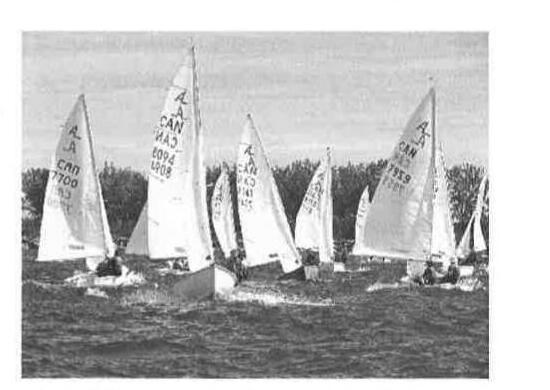
Personally it was a great year for me. I got the opportunity to attend the racing clinic that the CAA put on. In my opinion, it was the most helpfull lessons that I have ever received and I strongly recommend it to anyone wanting to improve their skills. As much as it was useful it was fun. I got to meet a lot of fun and knowledgeable people, and I had a great time. To cap the weekend off we raced the Harbour Master series in the inner harbor, a place that I had never sailed before. I quickly discovered, though, that the ferries only go in a straight line and they will not move for you!
Later in the season I got the chance to race with my Mom in the HSBC open and, with only a little bit of yelling, we won the Regatta. I think she was happier then me because she had not won a Regatta in 18 years! On a high from my win I raced in the Mooredale Regatta and put my new sailing skills to the test in the big fleet. With a placement of 40th, however, I figured there was still some more room for practice. This is now easier than ever, though, to do, with our clubs new excitement about racing. Any night of the week you could go down and find another boat or two, sometimes even eight, to hone you skills against.
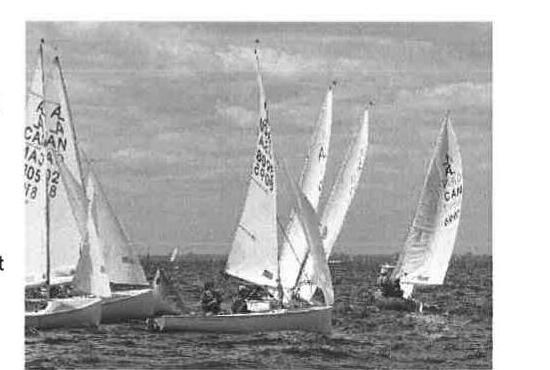
As a club we only had two boats go to Toronto for the Canadians but when we got back there were a lot of people who had wished they had gone. I was personally ecstatic because all the practicing and hard work was paying off and I found myself moving up the fleet and reaching my goal for where I wanted to place.
What can you say about a year more then that? There were more events and sails than what I have mentioned here, but writing all of them down would just bore everyone. Besides, if I keep a few now, I can tell you a story or two later over a beer.
Albacores In Nova Scotia
Albacores are no small matter in Nova Scotia
When the Shelburne Harbour Yacht Club (SHYC) had the chance to acquire 35 Albacore Dinghys from government surplus in 2006, some members urged the club to jump at the chance. One of those souls was Eric MacIntosh, long-time sailor and Albacore fan. “I just thought it was too good a chance to pass up”, says MacIntosh. It turns out he was spot on.
The SHYC, located on the rural and rugged South Shore of Nova Scotia and on what is often described as one of the finest harbours in the world, kept some of the boats and auctioned the others off in a lottery for $300 each.
What happened next was a surprise to some, but not to MacIntosh. Several Yacht Club members and others who bought boats started to turn their attention to repairing, refurbishing and sailing these mainstays. The boat has attracted sailors who are used to bigger craft, but like the personal nature of the dinghy. Ed Preston, who has been a key player in the SHYC weekly yacht races, now races his Albacore because, he says, “It’s person-to-person, with the best sailor coming out on top.”
Three of the new-to-them boats were added to the learn-to-sail fleet of the SHYC and a group of hard core enthusiasts – some recent converts - have even been racing up to ten of the two-handers twice weekly during the summer and expect to continue for many more weeks.
One of the avid Albacore sailors is recent Shelburne emigre and competitive sailor, Guy Tipton. He moved to Shelburne after he and his wife fell in love with the town – and harbour – during a honeymoon visit. Guy has raced internationally for eight years in the 470 Class and was a bronze medalist in the U.K. in 2005 in the Fireball Class.
Both Tipton and King see great potential for Albacores in Shelburne and the entire eastern region. “We’ve had thoughts and discussions about starting an eastern Canadian association headquartered here,” says Tipton, “and have even discussed the possibility of hosting an Albacore regatta in 2008 or 2009.”
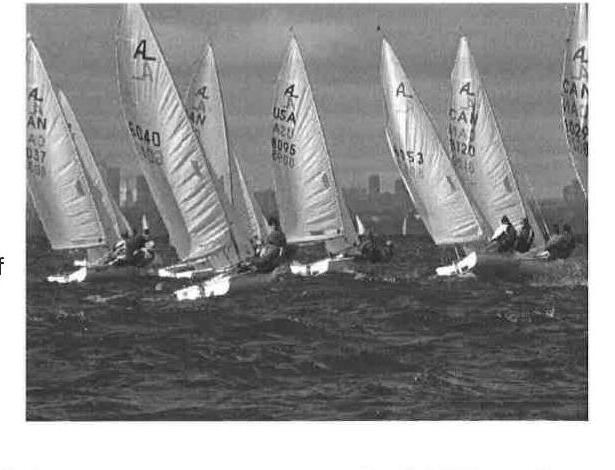
2007 was a banner year for Shelburne and the Yacht Club. In the same week in July, the Club hosted the big annual event for the visiting Cruising Club of America and was one of the founding sponsors of the very successful Historic Shelburne Tall Ships Festival. “People are now seeing how vital this harbour could be to the future well-being of the town and the area,” adds Guy Tipton. “Having an active Albacore club or association here can only add to the vibrancy and hosting an association and a regatta would add that much more.”
The View From The B Fleet
or, Lessons Learned While Chasing Sail Stems
Bono. Madonna. Nevile. Ann. Barney. The Barney Boat. Ralph… the Ralph Boat. Sweet.
Slow down there, champ. You may have won some hardware, but there’s still a million tacks between you and being a legend. Better to relax, contemplate the season and think about what you learned. Maybe if you write it down you won’t have to learn it again come next April.
Sure. Fine. Dave Perry stresses preparation, so what did I do to prepare? Last winter, resolved to try some racing, I read through his book and some articles I found on the various Albacore sites. These seemed like an excellent primer on not just sailing, but how to make a boat go fast. Like a kid with a new bike I took to the water for Jtown’s first race training night of the year, on April 16, only to blow a tack and dump Cathyann and me into the cold Lake Ontario.
Lesson #1: It all looks easier on paper. This will take some practice.
A quick word on Cathyann White. She’s how I got into this. Last January, after a rally to protect our club’s waterfront access, I told me she was looking for a helm to sail with me. Sensing a case of mistaken identity, I questioned her closely before abandoning my plan to crew this year. Cathyann has been racing 4 years, with some excellent helms, often right up there in the fleet, and I’m just a rookie. Well, what I had done was team me up with a crew who would explain the hard parts throughout the racing year. That was my good luck, and also Lesson #2: A helm may hold the tiller, but he’s not necessarily steering the boat.
We survived that first dump and kept plowing on, concentrating mostly on boathandling in an effort to keep warmer and drier. As Cathyann would say, we had three moves on the water – tacks, gybes, and “what the heck was that?” By June we found ourselves in a very strong fleet at the Ontario Championships in Parry Sound. First day, second beat, we heard a loud “bang” from somewhere near our feet. Having blown out our second tack, we looked down to see what it was, but couldn’t see anything. We carried on upwind, we were slipping down fast from Theresa and tacks approached from the port layline. Our pointing was lousy – we were slipping down fast from Theresa and Barrie – but that was nothing new.
What was new that we tacked and rounded and looked out for an instant, saw the bottom end of our broken centreboard. OK, so centreboards break, fine. But we didn’t notice? That’s so lame. We now had end of our lesson.
Lesson #3: The centreboard is very important. Without one, everything’s a header.
The Ontarios also presented the challenge – to a newbie at least – of breaking down the boat, dragging it to some distant beach, putting it together and then, after some sailing, doing it all over again to get home. It’s not that I couldn’t put the boat together, but that I’d never had to do it fast. You know, so we could get out on the water right night now.
So it would be ready for the white sail classes on the day after we got back.
Lesson #4: Pointing high is very hard, and simply not possible when your rake measures 22 inches.
One quick one. I was cleaning the boat one day in July and – to my surprise – found a diamond in the much beside the centreboard trunk. It turned out to be fake, but taught me Lesson #5: Clean your boat regularly, as you may find treasures.
Well, at the following week’s Harbour Master races we did very poorly even with a new centreboard, frustrated again with our lousy pointing. It was worse than ever, to the point where Cathyann and some of our coaching staff took a hard look at the boat and concluded we had put the mast foot in the wrong place, way too far back in the step. This had put our lousy pointing, but ever, so we were now looking pretty stumped by more useful lessons on the water.
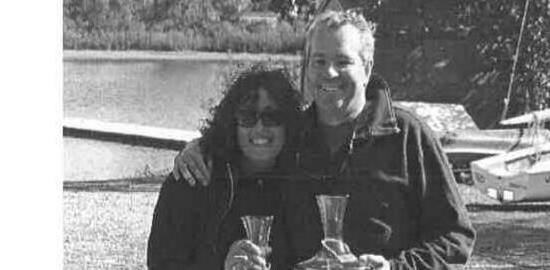
OK, so the season is moving along, we’re not sailing as much as we’d like with all the zigging and zagging of summer holidays and the real world, but we think we’re ready to take a shot at the Canadians. Then the question – to B Fleet or not to B Fleet? To be thrashed yet again by the one-name wonders, or to breathe the fresh air of a smaller pack? The forecast of 20 knot winds and the waves it would bring helped us (me, actually) decide. After a summer of soft winds, better to crash out in our familiar Outer Harbour than to risk The Lake.
And it did blow on Friday, and then again Saturday morning. Facing more heavy air than we’d seen for a while, we asked the usual suspects for some advice. One tip was that when the boat is overpowered even with a lot of vang, easing the vang will allow some twist to spill air and keep the boat flatter. This helped a bit and also taught me, or more accurately confirmed to me, Lesson #6: Sometimes it’s hard to explain how to make a boat go fast – with experience you just know. In hindsight it’s simple: in higher winds you should crank on the vang, except for when you should ease it off.
The last lesson I’ll share was learned at the US Nationals/Internationals held in October on Chesapeake Bay. While sailing back to shore on our last day of racing we talked about our starting, which had generally been pretty good, if not as aggressive as it could have been. I wondered about the last race that day, and asked Cathyann whether she thought she’d called the start line a little low – I reckoned we were a couple of lengths under. “What do you mean I called it low?” she responded. “I mean, we seemed quite a way below it… there was lots of room at the gun… or maybe you were right… I’m not really sure.” “No”, she said, “I mean I never call the start line. Don’t you call it?” “Well, no… I thought you did… you’re closer to it!”
So we had raced together all season, in maybe 40 races, and neither of us had kept an eye on the start line. There is an obvious lesson here, but I prefer to think of Lesson #7: Even if you don’t get some things right, you can still do OK and have a lot of fun doing it.
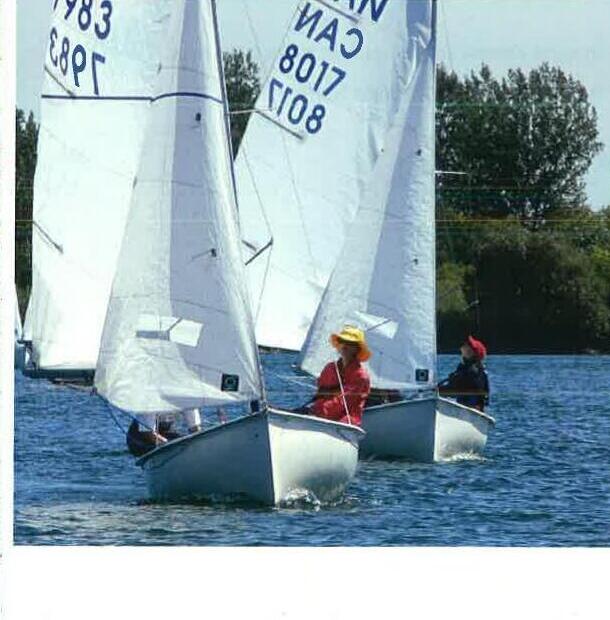
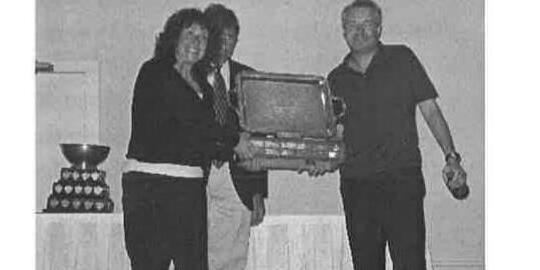
**Against all expectations, Ralph and Cathyann White sailed 8016 to the B Fleet titles in both Canada and the US**
International Albacore Association
Albacore Internationals take place every two years and alternate between the United Kingdom and North America
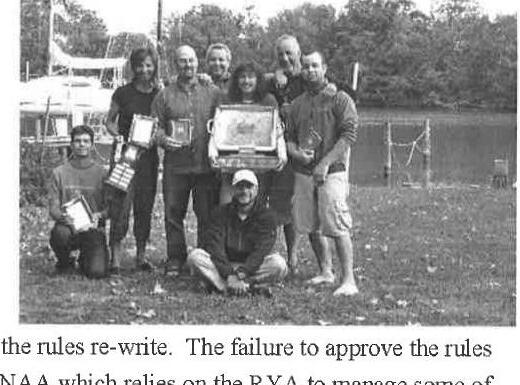
This past October, West River, Maryland was the host of the 2007 Internationals. An Internationals event is a week of fun, hard work and friendship making. During the week, there is approximately two hours of seriousness given to the IAA Meeting, where a meeting of the class of alboacore is meant to discuss the future, and ideas from our members. As boring and mind numbing as meetings can be, it is important to attend class meetings to hear from others and perhaps do some serious brainstorming.
At the past IAA meeting, the class was represented by Jean Simmons GBR - sitting in for Crawford Reid – IAA VP, Jeremy Rook GBR Representative, Barney Harris USA Representative, Peter Duncan USA – IAA President, Teresa Miolla CAN – acting as IAA Secretary for Barrie Farrell, Raines Koby CAN - IAA Treasurer.
The current national association membership levels affect the vote on IAA proposals. Based on current membership the national vote structure is: GBR 8 votes CAN 6 votes, USA 4 votes.
At the meeting, the status of the re-write of class rules for ISAF was discussed. There is a very strong need for this project to stay on schedule. When the re-write of the rules is ready for review, all national associations will need to move promptly to review, vote and endorse or otherwise the rules re-write. The failure to approve the rules re-write would have a serious consequence for the NAA which relies on the RYA to manage some of its services such as boat measurement. So stay tuned albacore fans you will be contacted and called upon to act.
Mark your calendars NOW
Albacore International Championships 18th - 24th July 2009
The location is Largs on the Clyde Estuary, check out their site www.Largsc.co.uk. The main container port of Greenock is very close by. The event will be run by The Scottish Sailing Institute under the burgee of Largs Sailing Club www.Scottishsailinginstitute.com
2009 is also the 250th anniversary of Robert Burns and for the whole year and throughout-out Scotland, great strides are being made to encourage “Continentals” back to Scotland for a visit. Check out www.homecomingscotland.com (get your passport!)
Reasons To Attend An Internationals
Raines Koby
- Test against the best
- Adventure of travelling to another country
- Making new friends
- The more boats the higher the exposure the class receives, which will keep the fleet strong in the future
- A great way to look at the boats and how they are sailed
- You catch up with old friends and make new ones
GOOD SAILING Alan Humphreys
- To have a fun, new experience away from home and work
- To improve your skills as you sail for several days in a row
- To get to know your fellow sailors better
Mary Neumann
- lets you see how you rank against the best in the world, even if that requires months of subsequent therapy. *can be very impressive to your family and friends, until they find out that qualifying to compete requires three hundred and fifty US dollars and an Amex card.
- *recommend sailing away events because the experience of sailing different water is exhilarating and improves learning, the comradarie that comes with sharing time on the water and off with people who share a passion for the sport and sailing a fleet and long mile sailing beats is a different ballgame combined with 25 hours or more of sailing time it exponentially increases the learning curve and you learn a lot about people you thought you knew well on road trips.
Ralph Glass
- Exposure to different levels of competition. Generally in most classes the top sailors make a point of sailing National or International regatta’s. Nice to know how you fair in your class Nationally or Internationally.
- Meet new people, see different styles of sailing/boat set ups.
- Love road trips, kinda like a mini vacation.
- Most if not all our best sailing memories are from regatta’s we had to travel a distance to get too. For the ’07 Internationals, any chance we get to sail in or near Annapolis we always jump at. A great place to visit and sail.
Jeff Beitz
Canadian Albacore Association — 2007/2008 Executive
| Position | Name | |
|---|---|---|
| Commodore | Teresa Miolla | [email protected] |
| Past Commodore | Ann Savege | [email protected] |
| First Vice Commodore | Allan Measor | [email protected] |
| Second Vice Commodore & Website | Henry Pedro | [email protected] |
| Third Vice Commodore | TBA | |
| Specifications Chair | David Weaver | [email protected] |
| Chief Measurer | George Roth | [email protected] |
| Rear Commodore | Kevin Soldaat | [email protected] |
| Editor – Shackles & Cringles | Jelena Balic | [email protected] |
| Secretary | Cathyann White | [email protected] |
| Membership | Janet Duff | [email protected] |
| Treasurer | Jason G. Roth | [email protected] |
| IAA Treasurer | Raines Koby | |
| IAA Representative | Teresa Miolla |
Canadian Albacore Association, 47A Harbour Square, P.O. Box 81085, Toronto, Ontario M5J 2V3
www.albacore.ca